Notes on “The Company’s in Love”

Fabrizio del Wrongo writes:
968full-the-company's-in-love-screenshot

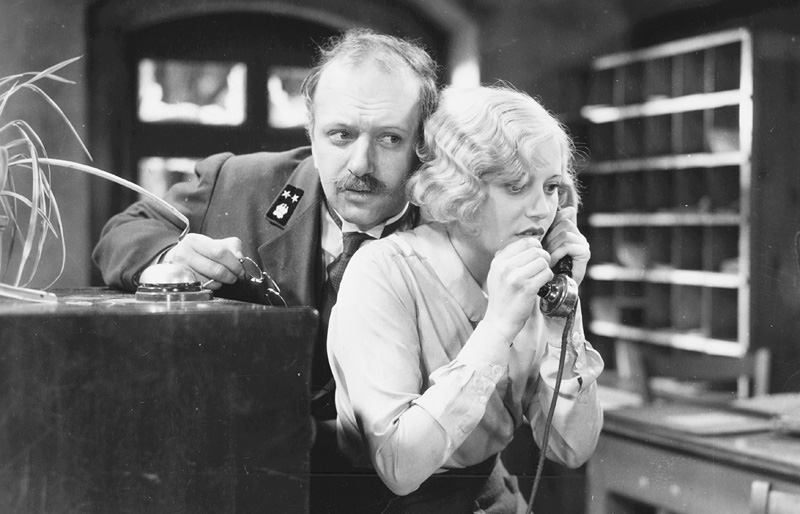
Max Ophuls’ first feature, released in 1932, seems a conscious emulation (and sort of send-up) of Lubitsch. Not only is it set partly in the Bavarian Alps, the setting of several early Lubitsch films, it features operetta elements, and when its characters describe a stereotypical movie director, he’s portly, smokes a cigar, and has a “touch.” The picture is of the movies-about-making-movies genre: It focuses on a Bavarian girl who skis into a location shoot, then is considered for the lead role when the star of the production quits. The entire film crew pays court to the ingénue. The cinematographer promises to make her beautiful. The composer promises to write great songs for her. The writer promises to give her great lines — and is promptly told to shut up, because who cares what writers think?

Ophuls gives the picture a glancing, slapdash quality that’s a far cry from the silky elegance of his mature style; yet it’s confident, light on its feet, and pretty sharp about the way in which movie making tends to be all mixed up with sex and titillation. The movie is probably at its cleverest when poking around issues of fame and celebrity. When the girl — she has the comically un-Hollywood name of Gretl Krummbichler — boards the train that will take her to Berlin, the whole town sees her off; her association with movies has transformed her from a routine postal worker into a sort of aristocrat. Realizing this, Gretl’s onetime suitor wears a rueful expression. He’s waving goodbye to a dream.

Surprisingly, the screenplay undermines the fantasy inherent in its premise. It gradually becomes apparent that Gretl’s lack of talent is insurmountable, and she’s fired while shooting a musical number on an opulent, Venice-inspired soundstage. When the original lead actress returns — she’s made up with her costar husband — everything finally clicks, both in the fictional movie and in the one we’re watching. Ophuls signals this with a long, complicated tracking shot — hey, a Max Ophuls shot! — that brings together the crew members in a way that emphasizes their shared professionalism and dedication to the craft of movies. The shot reminded me of the one surveying the orchestra in Sturges’ great “Unfaithfully Yours.” Both reveal secondary players as essential cogs in highly functioning systems.

The system here is the film crew, and it’s a system that’s incapable of assimilating the unrefined, workaday Gretl. But she eventually finds her place. In the final scenes she departs Berlin with a new lover. They go not to Bavaria but to Venice — the real one this time. They’re a truly modern couple: Their lives reflect the movies even as they remain apart from them.

Related

  • “The Company’s in Love” shares some themes with “Thomas Graal’s Best Film,” which I wrote about back here.
Posted in Movies | Tagged , , , , , , | Leave a comment

Architecture Du Jour: The Hallenhaus House Barn

Blowhard, Esq. writes:

Once found in a wide arc right across the eastern Netherlands and northern Germany, the Hallenhaus is a form of wood-frame house barn that contained, under one roof, living quarters, stables, and crop store. It was in the use from the fifteenth to the twentieth centuries and numerous fine examples survive to this day. The basic three-aisle form of the Hallenhaus possibly developed from an early longhouse of the seventh to tenth centuries, to which the aisles were gradually added. Although there is a great deal of regional styling and variation in construction details, the basic form of the Hallenhaus remained consistent throughout.

The support system for the central nave of the building was constructed in a post-and-truss form, with long beams running across the top of parallel rows of posts, capped with a wood framework. This wide hall space (Diele), which was covered with large floorboards, was used for all important tasks, including the threshing in wintertime. On either side of the Diele were the stables and stalls, for cattle and horses…

— Building Without Architects: A Global Guide to Everyday Architecture

Posted in Architecture | Tagged , , , | 2 Comments

Showtune Saturday: “Well, Did You Ever?”

Eddie Pensier writes:

The combined nonchalant swingin’ coolness of Bing Crosby, Frank Sinatra and Cole Porter may cause swooning fits of “why can’t I be that awesome?” nostalgia.

From High Society (1956), the Charles Walters-directed musical adaptation of The Philadelphia Story. Also features Grace Kelly in her last film role, as well as Celeste Holm and Louis Armstrong.

Related

Posted in Movies, Music | Tagged , , , , | 3 Comments

Movie Poster Du Jour: “Devi”

Fabrizio del Wrongo writes:

100_8323

Satyajit Ray famously designed the posters used to advertise his movies. He had a knack for it.

Related

Posted in Commercial art, Movies | Tagged , , , , , | 4 Comments

Naked Lady of the Week: Orsi Kocsis

Fabrizio del Wrongo writes:

ok-cover

Is it possible for a girl to be so good looking as to be somewhat bland? Our Orsi here might fall into that trap. A Hungarian, she’s blessed with a nearly flawless body and face that might be described as “classical” if it wasn’t so elfin. Her sleek, aerodynamic qualities mean that her photographers don’t have to try particularly hard. In fact, they treat her a bit like an objet d’art — and in the process make her look like a really, really appealing hood ornament. Neither I nor my ornament are complaining, of course. Still, I’m glad that Petter Hegre, who’s probably shot her more than anyone, has gotten her to open up a little; she even acts a little goofy in some of his sets.

She has great nipples.

According to Wikipedia, she’s given up taking off her clothes in favor of modeling for big outfits like Maybelline and Aston-Martin. Can’t say that I blame her. Still, a body like that was made to show.

Wiki also reveals that she grew up a tomboy. Have you ever noticed how many hot chicks claim to have grown up as tomboys? For all I know, they’re all telling the truth . . .

These low-res shots come from ATK, Hegre-Art, and Body in Mind. Worth paying a visit to all of ’em.

Nudity below the fold. Have a great weekend.

Continue reading

Posted in Photography, Sex, The Good Life | Tagged , , , , | 3 Comments

Then and Now: Downtown L.A.

Blowhard, Esq. writes:

thirdandhill

The intersection of Hill and Third in downtown Los Angeles, 1919 v. 2014. The concrete structure on the left is the parking lot for the Grand Central Market.

Click on the image to enlarge.

Posted in Architecture, History | Tagged , , , , | 12 Comments

Architecture Du Jour: The Shaker Style

Blowhard, Esq. writes:

The basic standards that defined both the buildings and their interiors were simplicity and utility. The Shakers frowned on any kind of decoration, and they favored pure, clean forms that were highly functional and economic to make. The house interiors were bright and airy, well-heated and clean, uncluttered and serene.

…As the Shaker movement developed, they began to systematize the layouts of their communities…What enabled the Shaker style to grow and develop was the fact that all unknown artisans involved were able to innovate, providing they held to the group’s essential tenets. “This freedom to experiment in the interest of betterment,” says [design writer Richard] Shepherd, “saved Shaker architecture from the blight of institutionalism or stereotype.”

— Building Without Architects: A Global Guide to Everyday Architecture

Posted in Architecture | Tagged , , , | 5 Comments

“Inherent Vice” by Thomas Pynchon

Sax von Stroheim writes:

200px-Inherent_vice_cover

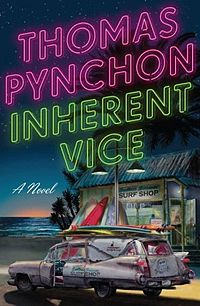
Short enough and readable enough that I sailed through it, but I only ever semi-enjoyed it, and, looking back at it, overall, holistically, it’s a bit of a bummer. Pynchon’s Raymond Chandler/Philip K. Dick trip is skin deep and the gags either become a burden (all the gonzo character names get old after a few chapters-worth of reading about the likes of Japonica Fenway and Puck Beaverton), never really get off the ground (the plotting seems to be deliberately rudimentary, in the manner of a second-rate Chandler knock-off, but deliberate or not it makes the book less interesting), or remain inscrutable (why all the references to Arrested Development?). Halfway through I started to think my time would be better spent: re-reading The High Window or A Scanner Darkly or going back and reading The Crying of Lot 49 again to remind myself why I liked Pynchon in the first place.

And I do like Pynchon: Crying is one of my favorite novels, and I think V. and Vineland are pretty terrific (despite their flaws). Speaking of Vineland, one of the things I really dig about that book is that it seems to express some kind of authentic 1960’s, counterculure sensibility, but in Inherent Vice that sensibility seems second hand: “The Sixties”TM rather than the 1960’s.

Finally, every now and then some genre author will complain about how “lit fic” writers get undeserved accolades from high brow critics for doing the same things their more pop oriented brethren are doing to less acclaim. But even though I’m probably a bigger fan of pop writing than “lit fic”, I usually find those complaints to be misguided at best and sour grapes at worst, mainly because “lit fic” authors aren’t doing, simply, the same thing as pop writers: they’re doing something weirder, more esoteric, and more hermetic than trying to tell a compelling story with interesting characters. In this case, though, I did keep thinking that Inherent Vice was sailing awfully close to being one of the gonzo caper novels that Carl Hiaasen used to be the master of, and that the only reason high brows were taking it at all seriously was because of Pynchon’s pedigree.

Posted in Books Publishing and Writing | Tagged , , | 6 Comments

(Mostly) Clothed Ladies Of The Week: Art Gallery of New South Wales

Eddie Pensier writes:

My long weekend in Sydney included not only culture of the liquid sort, but actual art. I’ve been to Sydney dozens of times and somehow failed to visit the AGNSW, an oversight I regret after having spent the morning there. I took enough photos of art for multiple blog posts, so here’s the first — a feminine-themed one that I hope you’ll enjoy.

A few standouts: John Dickson Batten’s supremely ghoulish Snowdrop and the Seven Little Men, which will put any mental images of plump, sexless Disney dwarves firmly out of your head and replace them with menacing, slavering goblins; John Everett Millais’ The Captive, an oddly confronting name for this vision of pre-Raphaelite prettiness; Violet Teague’s Dian Dreams (Una Falkiner), with its Madame X-like bare shoulder broadcasting eroticism of a very subdued sort; Robert Peake’s Elizabeth, Queen of Bohemia, a rare loan from London’s National Portrait Gallery, and the three smashing portraits by the Russian-born Australian George Washington Lambert, especially The Red Shawl, which held me enthralled for a good three minutes.

Two of the paintings contain partial nudity, so possibly NSFW.

Continue reading

Posted in Art, Travel | Tagged , , , , , , , , , , , , , , , , , , , | 10 Comments

“The 50 Year Argument” (2014)

Blowhard, Esq. writes:

50YearArgument

Co-directed by Scorsese and David Tedeschi, this is Scorsese’s second documentary chronicling the intellectual and cultural life of New York. Although I enjoyed Scorsese’s PUBLIC SPEAKING, a profile of Fran Leibowitz which I thought was a good evocation of a writer’s life in 70s and 80s NYC, ARGUMENT struck me stodgy, worshipful, and dull.

A celebration of the the New York Review of Books, the film is less a history of the publication and more like a greatest hits anthology. Scorsese and Tedeschi mix footage of co-founder and editor-in-chief Robert Silvers at work (making phone calls, dictating emails) with scenes filmed at the publication’s 50th anniversary party in 2013 along with the usual talking head reminiscences by contributors like Zoë Heller, Ian Buruma, Mary Beard, Mark Danner, and Michael Chabon. The movie recalls the NYRB’s combative glory days in the 60s and 70s with entertaining glimpses of Gore Vidal v. Norman Mailer, Susan Sontag v. Mailer, and a room full of angry women v. Mailer. But the film is tied together thematically by scenes in which some of its most notable writers read from their signature pieces, for example Sontag on photography, Joan Didion on the Central Park 5, and Derek Walcott on Robert Lowell. They read extended excerpts, up to three minutes long, while the filmmakers illustrate the narration with archival photos and pull quotes. However, the directors don’t provide much context for these scenes so it’s easy for the audience to tune out. And do we really need two segments, one three minutes long the other four and a half, of Darryl Pinckney droning on about how influenced he was by James Baldwin?

At a time when venerable East Coast literary brands like The New Republic and The Atlantic are devolving into clickbait farms, I appreciate that Scorsese and Tedeshi want to honor an institution that has resisted New Media trendiness. In the scenes of Silvers working, the only thing that makes his job look different from photos taken decades ago is the presence of a Mac; both then and now the primary feature of his workplace are stacks and stacks of books. The NYRB blog is mentioned, but the blog’s editor is quick to note that one contributor is so helplessly maladroit with technology that he faxes in his posts. One shot prominently features the book Social Media is Bullshit in case the point isn’t being driven home. But despite the parade of luminaries recounting the paper’s highlights, I don’t think the documentary adds much that can’t already be gleaned from the paper’s Wikipedia entry.

THE 50 YEAR ARGUMENT is currently streaming on HBO Go.

Related

Posted in Books Publishing and Writing, Movies | Tagged , , , | 3 Comments