Anti-Anti-David French-ism

There has been quite a dust-up in conservative circles over Sohrab Ahmari’s article “Against David French-ism” in First Things.  As my doppelganger wrote in that other site:

You may have heard of the recent dust-up over who has proper ownership of the term “conservative”, a fight that is related directly to the role of Trumpism in the Republican party and the conservative movement.  Sohrab Ahmari wrote an article in the conservative First Things criticizing the conservative National Review’s anti-Trump commentator David French.

Ahmari argues that the NR-style conservatism, descended from Buckley more than Burke, is obsessed with the liberty of the individual and ignores how life actually unfolds in communities and groups.  It is thus easy prey for a hard-edged Leftism whose demands for “personal autonomy” seem congruent with a libertarian view but the ultimate effect of which will be social change at the collective level that undermines values conservative hold dear.  That is, the Left talks autonomy but knows at a deep level it is playing for keeps in the realm of culture.

We may have gone too far with Diversity, and with cultural power masquerading as autonomy.  Conservatism’s opponents may already know that.  As the cycles of history move, we may jettison the cultural free-for-all at play since the 60s and return inevitably to more cultural cohesion and to a greater sense of shared values.  And so the question arises: whose? 

It’s musical chairs time, and the Left, to mix a metaphor, is packing the court.  Under the circumstances it may not suffice to argue, as French does, that all will be well if we tend our respective gardens, act in civil fashion and call for others to do the same.

The Ahmari-French proxy war goes on over how conservatives should handle its current pass, with some taking sides, some saying the taking of sides is necessary and inevitable and some bemoaning the taking of sides as inviting destructive internecine warfare on the Right, an updated version of fights between red factions in the 1930s and between anti-communists and anti-anti-communists in the 1950s.  I say, per Pete Seeger: don’t interfere with the folk process!  And pass the popcorn.

French himself has weighed in on the matter.  You might be surprised that he defends himself since the gist of Ahmari’s argument is that David French, as the  quintessential David French-ist, qualifies as a liberal under the Robert Frost definition: someone who is too broad-minded to take his own side in an argument.

But while French is broad-minded on political matters he is no slouch when it comes to defending his personal honor, and even though he is allegedly the nicest of guys he  strikes back at Ahmari quite hard.

Alas, despite his military valor, his shots here seem to be off the mark.

He writes:

When Sohrab Ahmari wrote his now-famous (at least in conservative circles) essay called “Against David French-ism,” he made three core points. Politics is “war and enmity,” “civility and decency are secondary values,” and the right should fight the culture war “with the aim of defeating the enemy and enjoying the spoils in the form of a public square re-ordered to the common good and ultimately the Highest Good.

That’s not a fair accounting of what Ahmari wrote.  Ahmari does not equate politics with war.  He is quite clearly saying that the situation we are in is one of cultural warfare, and when at war one employs the methods of war.

I recently quipped on Twitter that there is no “polite, David French-ian third way around the cultural civil war.” (What prompted my ire was a Facebook ad for a children’s drag queen reading hour at a public library in Sacramento.)

I added, “The only way is through” . . .

Such talk—of politics as war and enmity—is thoroughly alien to French, I think, because he believes that the institutions of a technocratic market society are neutral zones that should, in theory, accommodate both traditional Christianity and the libertine ways and paganized ideology of the other side. Even if the latter—that is, the libertine and the pagan—predominate in elite institutions, French figures, then at least the former, traditional Christians, should be granted spaces in which to practice and preach what they sincerely believe.

In other words, Ahmari treats French’s default individualistic view with respect–but he does not believe it is appropriate under the circumstances.  French does not engage with this argument.  I’d rather hear French–a man acquainted with combat and bravery–describe how he thinks his strongly individualistic views can withstand what amounts to a cultural assault.
Posted in Politics and Economics, Uncategorized | Tagged , , | 4 Comments

Elsewheres

Fenster wrote:

I am Fenster here but my doppelgänger pens under a different name–he says it is his real one, the fool!–at another site.  He says he knows UR is about politics and culture, and that there is a deep connection.  But I think he feels UR is already burdened with too many of his often overly political rants, and that discretion obliges him to take it outside from time to time.

Anyway, here are some links for any UR readers who are inclined to take it outside.

Continue reading

Posted in Uncategorized | Leave a comment

Weekend Linkage

Paleo Retiree writes:

Posted in Linkathons | Leave a comment

Walls and Bridges, Bridges and Walls 3

Fenster writes:

I have been writing about walls.  I first described my reaction to David Frye’s book Walls, then took a rough turn to the poetic and considered Robert Frost’s poem “Mending Wall”.  Here I will finish by discussing James C. Scott’s book Against the Grain, which is, like Frye’s book, a history of walls, albeit an account with a heavier emphasis than Frye’s on the interconnected cultural systems that grew up on both sides of them.

Continue reading

Posted in History, Politics and Economics, Uncategorized | Tagged , , | Leave a comment

Walls and Bridges, Bridges and Walls 2

Fenster writes:

In this first post on the subject I wrote admiringly of Davids Frye’s book Walls.  He argues convincingly that while walls are not always good all of the time their virtues have been unfairly passed over relative to their David Haskell-like pal Bridges, and that the old adage “love thy neighbor but don’t pull down your hedge” has a high degree of relevance in today’s world still.

However I also remarked that he was a little uncharitable to Robert Frost, who he described as “bland” and whose famous line from “Mending Fences” (“good fences make good neighbors”) was already a “trite cliche” when he wrote it in 1914.  So I am here to defend Frost from Frye’s somewhat cavalier besmirching, and to take another look at the poem, considering whether it is as bland and trite as Frye says.

Continue reading

Posted in Uncategorized | 5 Comments

Note to K—-, on Frank Zappa

Fenster writes:

K—-

The excellent music blog run by Jeff Meshel has a nice appreciation of Frank Zappa up, focusing on the song—if you can call it that—“Help I’m a Rock”, from the Mothers of Invention’s first album Freak Out!

Continue reading

Posted in Music, Performers, Uncategorized | Tagged | 2 Comments

Walls and Bridges, Bridges and Walls 1

Fenster writes:

Number of Google hits for the phrase “walls not bridges”: around 5,000.

Number of Google hits for the phrase “bridges not walls”: around a half-million.

Continue reading

Posted in Uncategorized | 4 Comments

Weekend Linkage

Paleo Retiree writes:

Posted in Linkathons | 1 Comment

Elysium Now!

Fenster writes:

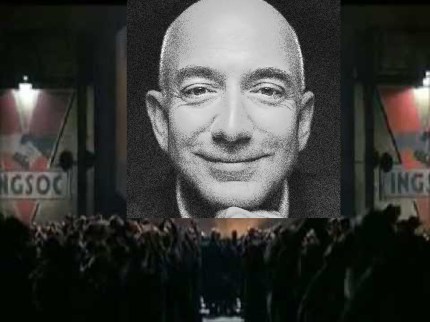
So Jeff Bezos, the world’s richest man, wants humans to live in floating space cities.

(W)ith bucolic, futuristic illustrations, Bezos publicly broadcasted his affinity for O’Neill colonies, a hypothetical megaproject, first theorized by physicist Gerard O’Neill, that envisions enormous manufactured worlds inside of a rotating cylinder in space.

“These are very large structures, miles on end. They would hold a million people or more each,” explained Bezos to a quiet audience made up of supporters, media, and elementary school robotic students.

He went on to show images of cities, parks, mountains, and waterfalls all in a self-contained rotating space cylinder. He talked about how they could differ in gravity, perhaps affording humans an opportunity to become birds.

“You could have a recreational [colony] that has zero Gs so that you can go flying,” Bezos said dramatically pausing, “With your own wings.”

I find this distasteful if a pipe dream and scary if a real possibility.

For one the concept ignores the irascible nature of real humans, at least in their current version (on which more below).

Bezos set out his utopian vision. Humans will live peacefully together among the stars in these contained O’Neill colonies rather than spreading to inhospitable worlds like Mars.

Peace?  Possible . . .  but the price?  More below.

The idea is radically anti-nature.

“This is Maui on its best day all year long; no rain, no storms, no earthquakes,” he said, “People are going to want to live here.”

Except it is not Maui.  It is artificial.

And then there are the reasons Bezos cites for why the Earth simply won’t do in the future.

. . . energy consumption, increasing population, resource depletion, and climate change . . .

Climate change will render the earth uninhabitable?  Where will the resources have to come from to build, maintain and refresh the artificial environment in space?  If we have depleted non-renewable sources of energy and have failed to create new energy sources on earth how will energy be supplied to the floating cities?  And then the argument about too many people on Earth, redolent of Yogi Berra’s crack about a New York restaurant: “nobody goes there any more.  It’s too crowded.”

To me this is a hugely pessimistic idea dolled up as optimistic futurism.  It tells me that the world’s richest man thinks things are going to go haywire on planet Earth, and that it is time for those who can afford it to take to the skies, and to get away.

It is not good if the world’s richest man thinks this way.  For one, his sentiment could be a tell-tale in the wind as far as our elites are concerned.  Get out while the getting is good.  Even if the space cities are a fantasy the idea of elite secession, even just to underground bunkers in New Zealand, is hardly a comforting thought.

And then there is the tremendous misallocation of resources if the world’s richest man decides on a whim to spend untold billions on an impossible vanity project.  One of the problems of the extraordinary level of inequality in our current society is that civil society is hijacked by the wealthy.  Granted, government should not be in charge of every project with public benefits.  Private spending with public aims, as with philanthropy, is generally to be admired.  But when great wealth essentially determines large public outcomes we are, so to speak, in another world altogether.

Worst of all: what if the project is feasible?  Who goes?  Who stays?  How do you avoid a situation like that dramatized in Neil Bloemkamp’s film Elysium,

a film which depicts the “haves” living in a paradise-like space colony and the “have-nots” stuck on Earth dealing with a planet ravaged by climate change and centuries of pollution.

Indeed, is it not likely that at base this is probably what the idea is mostly about in the first place?  If Earth is going to pieces the space city can only be seen for what it is: a redoubt.

Indeed, the pessimistic Elysium view is likely the only way one can come to some optimism about the project itself.

Yes, a parasitic space colony could well draw enough resources from a mother planet to survive.  And yes one could colonize it with Earth’s better people, more likely to behave in civilized ways.

But that probably would not be enough.  For the project to work one would need at least two other preconditions to be met, neither impossible in the long run.

First, the privatization of the concept would need to be mirrored in the privatization of public life in space.  Public life would cease to have its current meaning.  We would all be wards of Bezos.  Ironically the reverse would also be true.  Our own “private lives” would vanish and we would all be part of a large corporate public realm.

Second, human nature will have to change.  Some may doubt this.

While we could one day change where we live, there’s one thing that cannot be changed—and that’s human nature.

But why be so pessimistic about changing human nature?  We may be uncomfortable with the implications of the surveillance state but maybe . . .  we can get over it?  Past utopias failed mostly on the question of human nature.  But if that nature is malleable, and able to be directed?  Perhaps it won’t take too many generations of genetic tinkering to brew up with a bunch of settlers who truly love Big Bezos.

bbr2

Posted in Uncategorized | 2 Comments

Juxtaposin’: Rage

Blowhard, Esq. writes:

Rage–Goddess, sing the rage of Peleus’ son Achilles,
murderous, doomed, that cost the Achaeans countless losses,
hurling down to the House of Death so many sturdy souls,
great fighters’ souls, but made their bodies carrion,
feasts for the dogs and birds,
and the will of Zeus was moving towards its end.

Homer, The Iliad, translated by Robert Fagles

The special counsel investigation that threatened Donald Trump’s presidency was born of the commander-in-chief’s rage.
In his first months in office, Trump had seethed over FBI director James B. Comey’s refusal to tell the world that the president was not being scrutinized personally as part of the bureau’s investigation of whether the Trump campaign had coordinated with Russia to interfere with the 2016 presidential race.
On May 9, 2017, Trump snapped. In a sharp break from Washington norms that afford FBI directors ten-year terms to give the bureau independence from politics, the president unceremoniously fired Comey. He conveyed the news in a terse letter, hand-delivered to FBI headquarters by his former personal bodyguard.
Trump’s closest aides had warned him that the move could trigger a political uproar and lead to an expansion of the Russia inquiry—and it did.

Rosalind S. Helderman and Matt Zapotosky, The Washington Post edition of the Mueller Report

Posted in Books Publishing and Writing, Politics and Economics | Tagged , , , | 1 Comment