R.I.P. Seth Roberts

Blowhard, Esq. writes:

sethroberts

I’m shocked and saddened to learn that scientist, professor, self-experimentation advocate, and best-selling author Seth Roberts has died. I was an avid reader of Seth’s blog for years and even met him in person a couple times. Being a fan of his, I was tickled when on a few occasions he rang me up to get my opinion on ideas he was kicking around. Not only was Seth a tireless critic of academia and the medical establishment, he went one step further by actually showing how the average person can do things better than the so-called professionals.

For those who don’t know about Seth, here are some good places to start:

Seth was a brilliant and generous person. He will be missed.

Posted in Science | Tagged , , , , | 6 Comments

Like Hot Iron

Fabrizio del Wrongo writes:

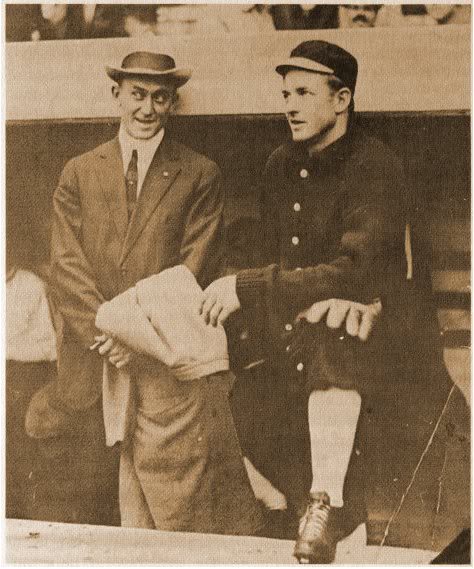
cobbIf one were to take the time to document a thousand instances in which Ty Cobb went out of his way to be kind to people, including black people, would this change his image? I fear it would not. No one really knows whether or not J. Edgar Hoover was a homosexual, yet stories of his attending parties in a dress, stories which are not only false but preposterous, have stained the culture, and cannot be bleached out . . . In any case, it isn’t that the stories of Ty Cobb as a violent racist are false, but rather, that there is another Ty Cobb as well, undocumented because he is less dramatic.

In the first edition of this book I wrote an essay about a photograph, a photo of Ty Cobb and Christy Mathewson. Here, I’ll re-print it:

In photographs (make it a point to notice) Ty Cobb is often shown hiding one hand or both, twisting an arm behind his back or burying it in an article of excess clothing. One photograph of him with which I am particularly taken shows him posing with Christy Mathewson in the dugout before the third game of the 1911 World Series. Mathewson, as always, looks poised and confident, staring out toward right field. Cobb is peeking out of the corner of his eye at some unseen distraction — another photographer, probably — but what makes the photograph remarkable is that, to begin with, Cobb is wearing a suit that doesn’t look as if it could possibly have fit any of his relatives. Cobb was a big man (he is usually listed at 6’2″, 180) yet this suit has got to be four sizes too large for him — it is hard to believe that a reputable haberdasher would have let him leave the store with it. He is holding what looks like an expensive overcoat, and he appears to be dragging it on the ground. His hat is jaunty and his smile is decidedly nervous, and he looks frankly a little bit crazy.

There was such a contradiction in that dugout. Cobb was then a five-time American League batting champion, with more or less seven seasons under his belt — and yet he was also a twenty-four-year-old hick from Nowhere, Georgia, a little in awe of Matty, of the photographers, of the crowd. He had no weapons, at that moment, to defend himself against his inadequacies — no spikes, no bat, no glove. He was so crude that he must have felt that whenever they took those things away from him, his shortcomings glowed like hot iron. And whenever he saw them glowing, he got angry. You can see it in his face, I think, that if he could just put on that uniform and go out on the field it would be such a relief to him, out where manners and taste and style were all defined by bases gained and bases lost. And everyone, for a change, would have to apologize to him.

Since then I have noticed several other photographs in which Cobb has the same crazy look on his face. It is not an angry look; it is, rather, a look of acute embarrassment, a look of inadequacy. Ty Cobb’s racism and his anger, I believe, were fueled not by smugness or even resentment, but by an unusually intense fear of his own limitations. No one is more macho than a man who feels inadequate; no one walks straighter than a man who is half drunk. When Ty Cobb felt threatened he lashed out at the world. He felt threatened a lot — but as long as he wasn’t challenged, he was a very nice man.

— Bill James

Related

  • “The New Bill James Historical Baseball Abstract” is an intriguing read even if you aren’t a baseball fanatic. It’s available at Amazon.
Posted in Books Publishing and Writing, Sports | Tagged , , , | 4 Comments

Ben Heppner–Recollections

Eddie Pensier writes:

Canadian tenor Ben Heppner has announced his retirement from the opera and recital stage, at the age of 58.

Heppner found his calling as a heldentenor, specializing in German repertory, specifically Wagner. He won the Metropolitan Opera’s National Council competition in 1988 singing Walther’s Prize Aria, “Morgenlich Leuchtend”, from Die Meistersinger von Nürnberg. Here he is singing the same aria in 2006, sounding fresh as a daisy.

I never felt Heppner had the temperament (or voice) for the Italian dramatic rep he sometimes dabbled in. However, he showed a great affinity toward both English-language opera and contemporary works–he was well-known for his interpretation of Britten’s Peter Grimes, for instance. Here he appears in a San Diego Opera “video podcast” discussing the origins of Jake Heggie’s opera Moby Dick, in which he created the role of Captain Ahab.

My favorite Heppner role, and one I was privileged to hear him in several times, was Florestan in Beethoven’s Fidelio. His rendition of Florestan’s suicidally difficult second-act aria comes pretty close to definitive. (Close second was his Tristan, the only performances of that opera I’ve ever seen live, and which knocked my socks off.)

Heppner has decided to concentrate on broadcasting: his show “Backstage with Ben Heppner” can be heard on the CBC.

Posted in Music | Tagged , , , , , , | 3 Comments

Antoni Gaudi’s Analog Computer

Sir Barken Hyena writes:

Here’s something amazing about Gaudi’s design methods. Take a look at this:

Maqueta_funicular
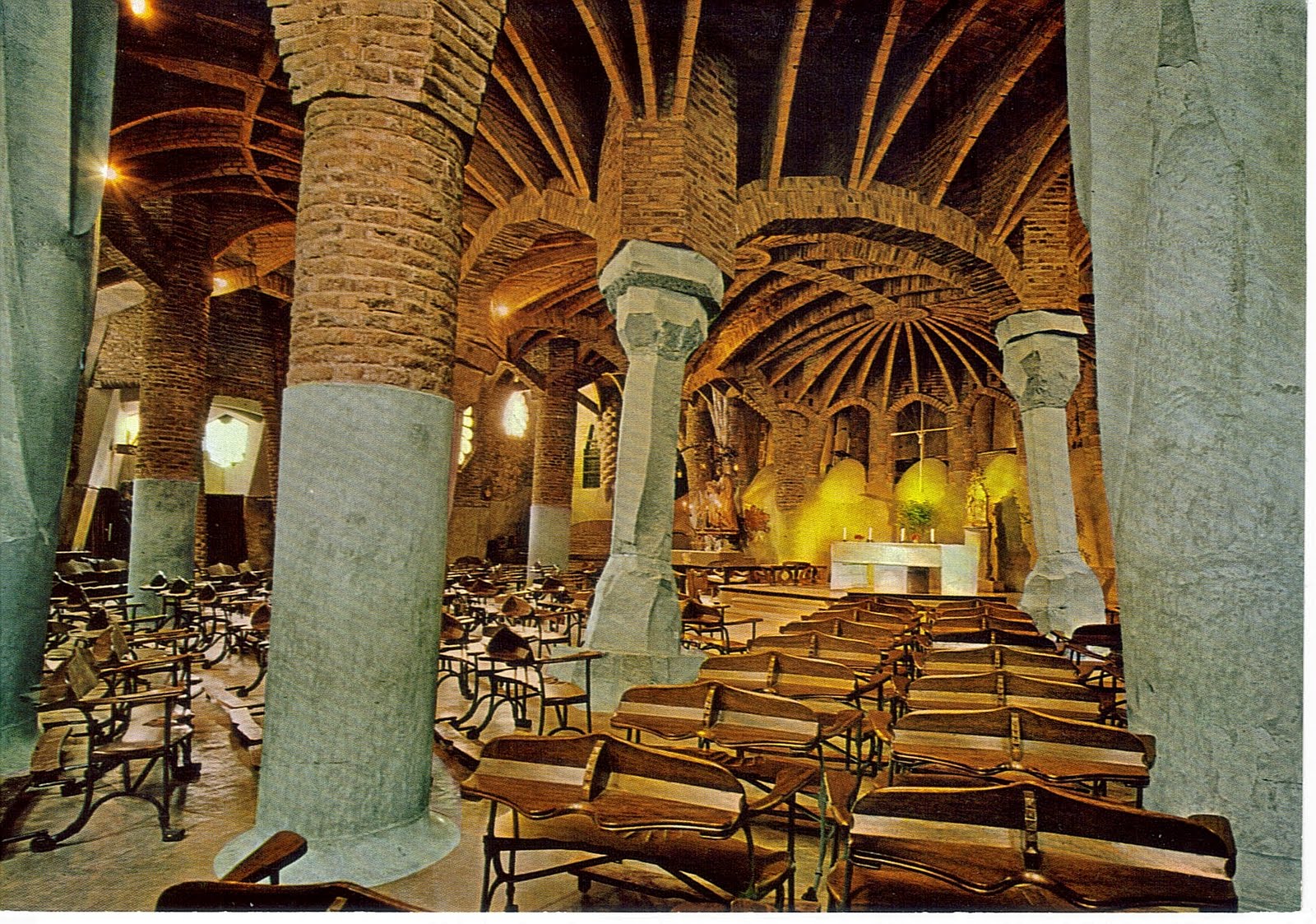
The Catalan architect used “a scale model to calculate structures: for the church of the Colònia Güell, he built a 1:10 scale model with a height of 4 metres (13 ft) in a shed next to the building. There, he set up a model that had strings with small bags full of birdshot hanging from them. On a drawing board that was attached to the ceiling he drew the floor of the church, and he hung the strings (for the catenaries) with the birdshot (for the weight) from the supporting points of the building—columns, intersection of walls. These weights produced a catenary curve both in the arches and vaults. At that point, he took a picture that, when inverted, showed the structure for columns and arches that Gaudí was looking for.” (From Wikipedia)

And this is the building that resulted

Colonia GuellI don’t think this method could pass the codes today, though these buildings have stood for over a century with no problems. Does that mean a genius of this depth couldn’t make it in today’s world? Gaudi also worked very closely, on site with the builders. The model above was made in a shed next to the building site. So details were left to evolve based on the ongoing construction process, another benefit.

Part of the reason we don’t make nice buildings anymore is that we’ve made it much harder for nice buildings to get built.

Posted in Architecture | 1 Comment

Sunday Jazz Selection

Fenster writes:

Coming Home, Art Farmer.

Posted in Music | Tagged , | Leave a comment

People Are More Typical Than You Can Possibly Imagine

Atypical Neurotic writes:

Some years back, a friend of mine was visiting a married couple that he had worked with previously, but who had relocated to a different city. During the visit, the three of them were invited to dinner by an acquaintance of the couple. It quickly became apparent to my friend that the couple had set him up, and sure enough, at an appropriate break in the evening’s hilarity, they bowed out discreetly. My friend spared me the details, since he knew I wasn’t interested in them. But he did say that the host had black table napkins. To that I responded, “I’ll bet he had black bedsheets too”. My friend was flabbergasted at what he took to be my uncanny perceptiveness. I don’t recall what I had said after that, but it was clear to me that black napkins are a tell. Incontrovertible evidence, in fact, of the truth of the title of this post.

Now I am going to put my MacBook in sleep mode and go for a walk in the beautiful sunshine. At this latitude and with my skin pigmentation, I make it a point never to let a single photon go to waste.

Have a great Sunday, everyone.

Posted in Personal reflections | 2 Comments

Marriage by Any Other Name

Atypical Neurotic writes:

This is a revision of a comment I just made on a Facebook post on the topic of marriage equality, specifically on whether opposition (or even skepticism) was prima facie evidence of bad will, if not bigotry, intolerance and hate, and thus deserving of punishment. Even though the battle is won, men and women of all sexual orientations are still being forced to choose sides. Very well. Here goes.

I have been in a Norwegian civil partnership for almost twenty years with the man I fell in love and wanted to spend the rest of my life with. Not once have I ever thought that I was being treated like a second-class citizen simply because the rights and responsibilities attaching to civil partnership were laid down in special legislation rather than in a revision of the Marriage Act. In fact, the Civil Partnership Act gave civil partners most of the rights and all of the responsibilities under the Marriage Act, the relevant sections of which the Civil Partnership Act cited by name in every applicable case.

But even before this law was passed in 1993, same-sex couples had been treated exactly like heterosexual cohabitants without children in common. Exactly. No difference. And this equal treatment was real. Even for the purposes of immigration. That’s why I’m here. All civil partnership did was codify and regularize existing practice. For where it really counts, civil partnership was not “marriage-light”. It was truly marriage. And it was treated as such in all areas of civil society. Just read any insurance contract or pension enrolment form from the civil partnership era. Without exception the list of definitions always contained the clause “Under these Terms and Conditions, ‘spouse’ shall also be understood to mean civil partner under Act No. 40 of 30 April 1993 relating to civil partnership”. Except for the dates in the citation, which I had to Google, I can still rattle off this clause from memory. That’s how often I had to translate it. Civil partnership entailed a serious commitment. Cohabitating couples do not have to petition the county governor for permission to dissolve their households. Civil partners do: division of property, alimony, the whole ball of wax. And the reason for this is that civil partners are automatically each other’s heir intestate and are expected to make painful life decisions like signing commitment papers for a partner who has temporarily lost his mind or giving consent to the doctors to pull the plug when all hope is lost.

In 2009, the Marriage Act was not just amended but completely rewritten in parts to enshrine “full marriage equality” in Norwegian law. The second to last section of the revised act repealed the Civil Partnership Act. Even so, civil partnerships were not automatically dissolved because to do so would have been unconstitutional. Those civil partners who wished for a “marriage-class upgrade” were required to apply specifically for it. We have not done so, and we never will. For one thing, there’s no point. We have all of the responsibilities anyway, and are uninterested in or physically incapable of exercising the additional rights. These all relate to adoption of “exogenous” children and, to put it bluntly, free fertility services paid for by the National Insurance Scheme, i.e. same-sex spouses are treated as infertile couples, because, that, children, is what they are.

I suppose the main reason that we have not petitioned the district court for an upgrade is laziness. But I have an additional reason. Keeping my partnership is my way of signalling my sympathy with the people of good will who wondered whether adding neologisms like “co-mother” and “co-father” to the body of family law was imprudent and might not have unintended consequences, and had the courage to say so. In any case, my partnership was upgraded to marriage in the hearts of those who matter: our families. For example: on her first and only visit to Norway 15 years ago, my devoutly Catholic sister spontaneously and without “air quotes” said to my partner’s sister, “You’re my first sister-in-law that I like”. That continues to mean more to me than any legislation any parliament could possibly pass. And I know for a fact that I can count on my in-laws for any support I may need. They know I’d never ask for it, unless I really had no choice, and they’ve told me so. No matter what my future legal relationship is with their brother, I am still and will always be a loved and honored part of the family. They’ve told me that too, and that’s enough.

My stand should not be construed as disparagement of the choice by others to take the upgrade. Marriage in name as well as fact is deeply meaningful to them, and I know people who have taken the opportinity marriage equality offers them to resolemnize their bond or legally declare their love in the first place. This brings me back to the issue of honor, which the question of same-sex marriage (and all same-sex equality issues) really concerns. In affairs of the heart, justice is just another word for legally sanctioned revenge outsourced to the courts. But honor is sacred. Throughout history, men and women have died for it – and killed for it. I think that I have made my position clear. Barred from any compromise that honored everyone’s legitimate feelings, the avenue that eventually secured marriage equality was the only way for my homosexual brothers and sisters in my ex-homeland to regain their honor. Enough of their fellow citizens of good will took note of the injustice, have agreed with them, and now they have it. Full marriage equality. I continue to maintain that the original sin in this debate was the fact that Bill Clinton signed the Defense of Marriage Act. An honorable man would have had the balls to let it pass over his veto. No guts, no glory. But, then we should not be surprised. The man is a draft-dodger, and an especially disingenuous one at that. Character always tells.

One final note. Please do not label my refusal to obsess over words “internalized homophobia”. This is a serious charge, graver even than calling me a Nazi. As it happens, there is such a thing as internalized homophobia, but it is not refusing to toe the rainbow alphabet soup party line du jour. It means hating the core of your being so deeply that you are incapable giving or receiving true and full intimacy from a person of the sex you despise yourself for so ardently desiring. Anyone who has lived with and loved such a man or woman will know exactly what I am talking about. It’s the closest thing to hell on earth. It is an affliction of the soul far more debilitating than hearing voices, and not just because there is no pill for it. In fact, it’s usually self-medicated with alcohol. So before you accuse me of self-hatred, take a deep breath and count to ten. I don’t hate anybody. There are a lot of people (mostly men) that I hold in contempt, merited for underhanded behavior towards me or people I love. I find them contemptible but I don’t hate them. If I were to give them even a moment’s thought, I suppose what I actually feel for them is pity. If you have read this far and understand where I am coming from, you know that this is far more serious judgment than mere hatred.

Finally, I will not delete any comments, no matter how poisonous. So fire away. Maybe I’ll respond. Probably I won’t. Lest anyone think that I am being a weenie by refusing to engage in “debate”, all I will say is that people who are unable to tell the difference between forbearance and running away from an argument or allowing myself to be a punching bag simply don’t get it.

Posted in Personal reflections, Politics and Economics | Tagged , | 10 Comments

Movie Poster Du Jour: “The Passion of Joan of Arc”

Fabrizio del Wrongo writes:

100_8920

This poster for Dreyer’s “Joan” must be one of the earliest products of Boris Konstantinovitch Bilinsky’s cinema advertising company, Alboris, founded just a few months prior to the film’s Parisian opening in October 1928. A Russian expat and modernist designer extraordinaire, Bilinsky was a favored poster creator of major European directors of the ’20s. His posters for Lang’s “Metropolis” are some of the most iconic of that era. Though this “Joan” design conveys little of the anguish or heat of the picture — or of Falconetti’s unforgettable performance — it does manage to do justice to its gravity and austerity; the unprinted expanses of paper cleverly convey the layered minimalism of Dreyer’s painstakingly constructed sets. The weirdest aspect of the design: the relegation of Falconetti’s Joan to a supporting role. Instead, it’s Joan’s inquisitor who dominates. His figure looms over the praying girl with a craggy-faced superiority that’s familiar to anyone who’s endured the movie.

Related

  • A terrific appreciation of Boris Bilinsky’s poster design work. Note the compositional similarity between this poster and Bilinsky’s design for “Father Sergius.”
  • Another nice appreciation of Bilinsky.
  • A look at some of the other posters produced for the original “Joan” campaign.
Posted in Commercial art, Movies | Tagged , , , , , , , , | 5 Comments

Architecture Du Jour

Blowhard, Esq. writes:

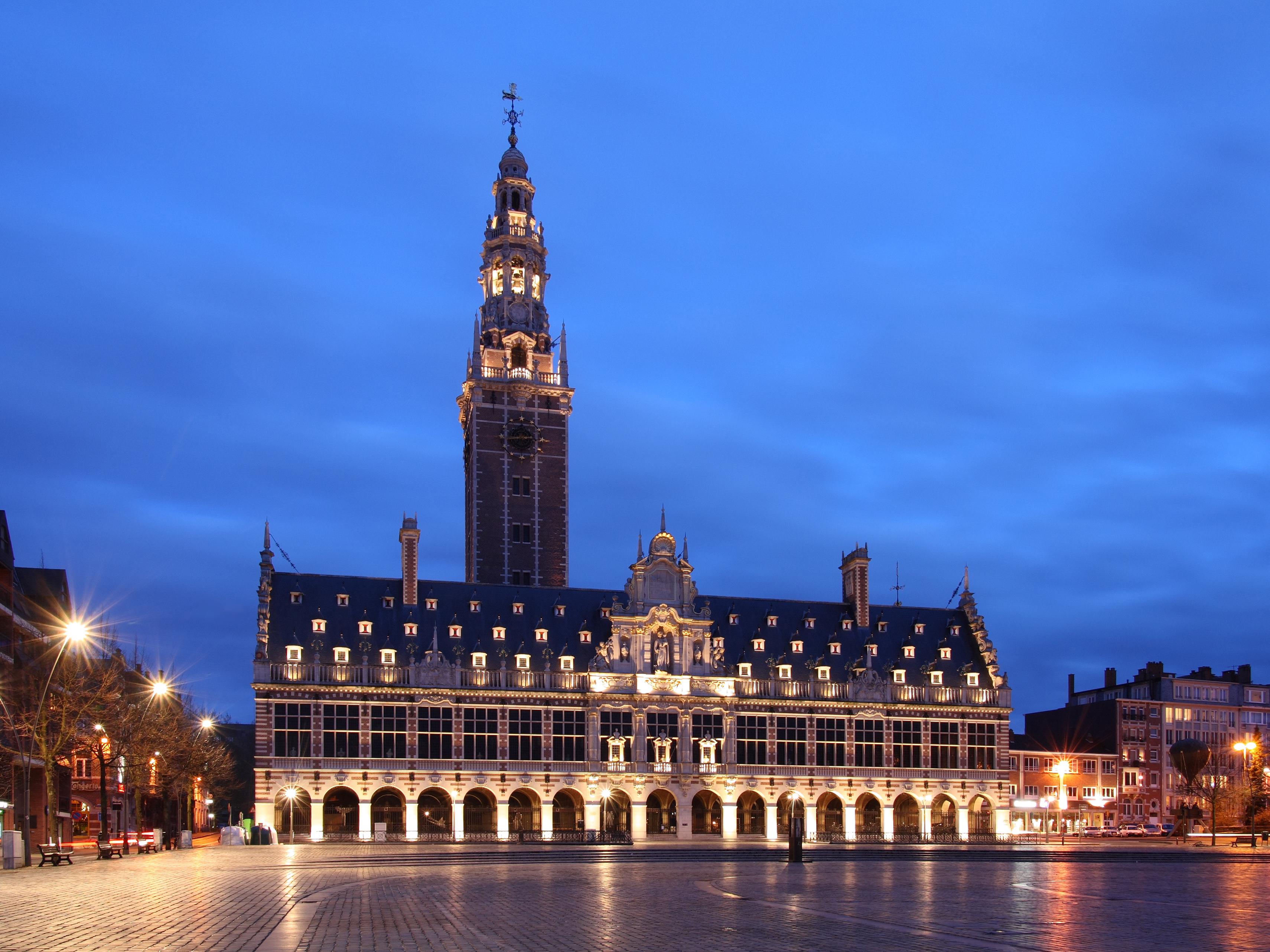
universitylibraryku

University Library KU, Leuven, Belgium. During WWII the building and all of its books burned down. It was rebuilt according to the original design.

Click on the image to enlarge.

Posted in Architecture | Tagged , , , , , | 1 Comment

Discretion Is The Better Part Of Fashion

epiminondas writes:

Hey, you never know when you might need one of these things.

Posted in Humor | Leave a comment