Linkage

epiminondas writes:

    • Usually, it takes a long time for technological change to trickle down into the interstices of our lives.  The changes come almost insensibly, and only in looking back do we see effects.  But every fifty years or so, something very profound happens.  We’re now about to see an explosion of robot technology that will take your breath away.
    • Let’s stop fooling ourselves about Wall Street’s high speed trading technology.  It’s all about cheating.
    • Class envy and hatred is what drives socialism.  No matter how many pretty pictures we draw, the idea of economic equality is what people expect.  It is one of the tragic myths of modern man.
    • And you thought the European debt crisis was over?  Silly you…
    • Fifty years ago the Beatles stepped in front of national TV cameras on the Ed Sullivan Show.  The nation was ripe for change.  It got more than it bargained for.
    • And if you thought the Beatles made money in the sixties, wait till you see what they earn today.
Posted in Linkathons | Leave a comment

NOT The Beatles

Fenster writes:

Emitt Rhodes, the so-called “one man Beatles”, from his 1970 release.

Posted in Music, Performers | Tagged , , | 7 Comments

Notes on “Here’s to the Young Lady”

Fabrizio del Wrongo writes:

HERE'S TO THE YOUNG LADYThe 1949 “Here’s to the Young Lady” stars Setsuko Hara as an upper-class woman pressed into marriage by her family’s economic tribulations. The man with whom she’s set up, played by the affable Shuji Sano, is a new Japanese type: a resolute bachelor who works on American cars for a living and dreams of becoming an Eastern Ford. Director Keisuke Kinoshita brings his characteristically populist touch to the material — he and protege Masaki Kobayashi seem to have been Shochiku’s go-to guys for cheery Westernization parables — yet the picture’s attempts at generating amorous tension fall flat. Though I know nothing of the production’s history, this may be due to an apparent disconnect between writer Kaneto Shindo’s socially realistic screenplay and Kinoshita’s urge to poeticize. Kinoshita, a devotee of Rene Clair, wallpapers the picture’s soundtrack with music, much of it diegetic, in a seeming attempt to transform this workaday tale into something lyrical and maybe a little transcendent. Mostly it makes the movie feel mannered. Hara is another problem. Though Kinoshita tries mightily, he fails to get inside the actress. Hara’s contemplative, icon-like quality — employed so effectively by Ozu — is all surface here, making her suffering read as empty miming and leaving us wondering why Sano is so eager to upend his life in order to win her. Kinoshita even manages to make Hara look unappealing: she’s shot and dressed in a manner that highlights all of her physical peculiarities; I’d never before focused on her wide, blocky shoulders or her strangely inelegant man-hands. I kept thinking of Joan Crawford — and that’s not a comparison I make happily. Still, “Lady” is short enough to be an easy sit, and it has a merit that exists apart from its success or failure as a vehicle for entertainment. In particular, its images of a new Tokyo, one emerging hesitantly from war and politely energized by Western influence, have the kind of social documentary value that only the movies are capable of providing.

“Here’s to the Young Lady” is available to stream on Hulu Plus’ Criterion channel.

Related

  • Kinoshita’s “Carmen Comes Home,” which I wrote about here, is, to my mind, a much more successful mix of music and social satire.
Posted in Movies, Performers | Tagged , , , , , , | Leave a comment

Art Du Jour

Blowhard, Esq. writes:

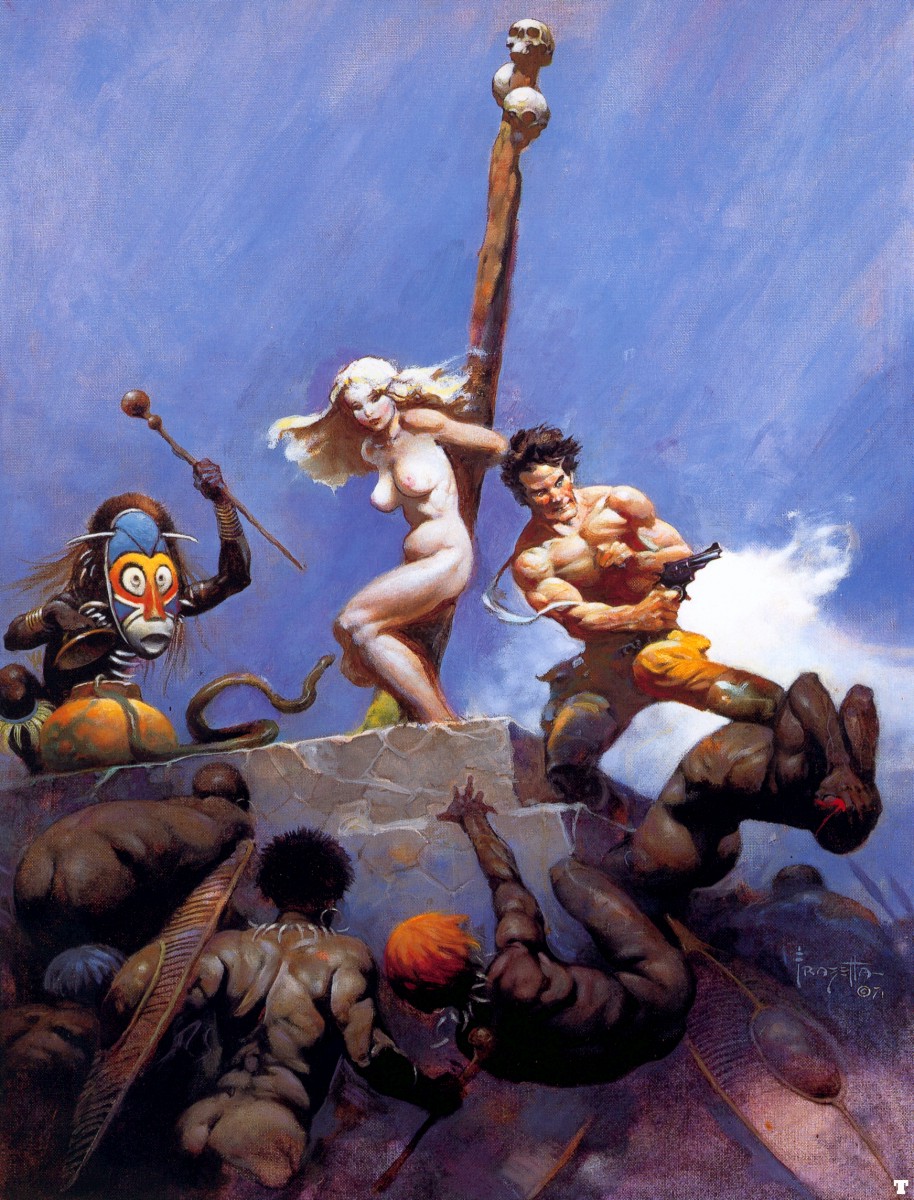
frank_frazetta_desperationFrank Frazetta, “Desperation,” 1971

Click on the image to enlarge.

Posted in Art, Commercial art | Tagged | 11 Comments

Art Greats Perceive the Future

Fabrizio del Wrongo writes:

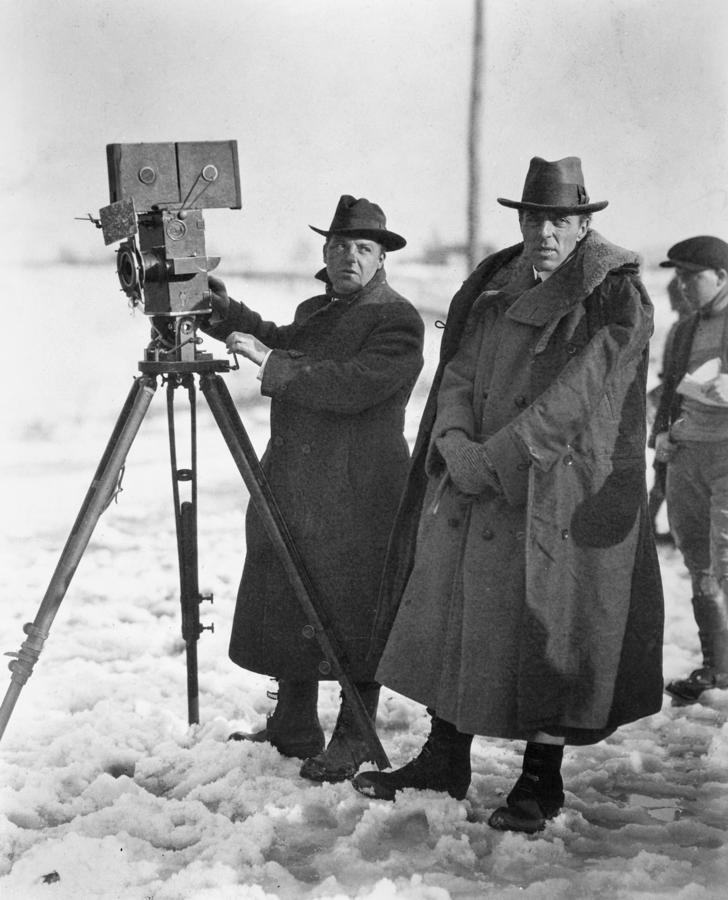
1-dw-griffith-1875-1948-granger

The great publishing industry will be the publishing of motion pictures instead of print.

Motion picture libraries will be as common as private libraries – more so.

Theatres will have the same relation to these libraries as the spoken theatre today has to the printed copies of dramatic works.

By their very scope and area of appeal the films must vastly outrank the stage in importance. The artistic development should be parallel since one will always draw more or less from the other.

Talking pictures will have been perfected and perhaps have been forgotten again. For the world will have become picture trained so that words are not as important as they are now.

— D.W. Griffith, 1923 (Source)

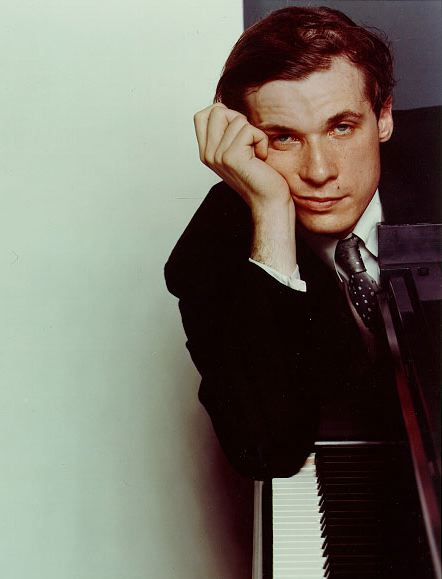
glenn-gould1

I’m all for the [personalized recording] kit concept . . . I’d love to issue a series of variant performances and let the listener choose what they themselves most like. Let them assemble their own performance. Give them all the component parts, all the component splices, rendered at different tempi with different dynamic inflections, and let them put something together that they really enjoy — make them participants to that degree . . . [This approach] compels the performer to relinquish some control in favor of the listener, a state of affairs, by the way, which I find to be both encouraging and charming, not to mention aesthetically appropriate and morally right.

— Glenn Gould, 1968 (Source)

Posted in Movies, Music, Technology | Tagged , , , , | Leave a comment

Architecture Du Jour

Blowhard, Esq. writes:

brugesBruges, Belgium

Click on the image to enlarge.

Posted in Architecture | Tagged , , , | 3 Comments

Naked Lady of the Week: Vasilisa Mudraja

Fabrizio del Wrongo writes:

vm-cover

According to the ever-helpful Boobpedia, the Russian Vasilisa — who has modeled under names like Danita, Danica, and Anita — has retired to focus on a career as a schoolteacher. Our loss is her students’ gain. Seriously, can you imagine sitting at your desk and watching this walk into the classroom? Let’s hope she works at an all-girl institution — because no boy in Putin’s Big Not-Gay Russia is going to pay attention to calculus with Ms. Mudraja standing in front of the whiteboard.

Apparently she’s from Moscow and is of Jewish ancestry. Aside from her face, which is a mix of girl-next-door cute and Disney-princess dreamy, her boobs are probably her best feature. Not small, yet not too large either, and topped with nipples that look as though they’ve been scooped from a tub of strawberry ice cream, I’d say they’re about perfect. They’ve got a lovely ski-jump shape, too.

Okay, I admit it — I’m smitten.

The watermarks suggest these low-res images come from 66 Beauty, FederovHD, Femjoy, Met-Art, and Just Nude. Consider this an advertisement for their excellent full-resolution content.

Images below the jump are NSFW. Happy Friday.

Continue reading

Posted in Photography, Sex, The Good Life | Tagged , , | 3 Comments

Linkage

Paleo Retiree writes:

Posted in Linkathons, Sex | Tagged , , , , , , | 1 Comment

“Consumerism…cannot make sense of art.”

Glynn Marshes writes:

Meanwhile, over at Metro, Eleanor Catton’s been thinking about elitism, literary criticism, and consumerism.

And yes, she’s standing atop the capital-L Literature bulwark, and yes, she’s wringing her hands — difficult to avoid when you’re an elitist defending elitism from the unwashed hordes. That said, she makes some good points about the way readers-as-consumers approach the task of so-called “book reviews:”

I spent some time this week trawling through customer reviews on Amazon and Goodreads, in order to look for trends — paying particular attention to the scathing one-star reviews that inevitably warn all other readers against buying or reading the disliked book . . .

Although there is a great deal of variation in the five-star reviews, the one-star reviews are overwhelmingly alike, even across genres and styles of literature. I noticed the recurrence of three principal objections: (1) this book was confusing; (2) this book was boring; and (3) this book was badly written.

“Confusing”, “boring” and “bad” are fine complaints, and in many cases may be pertinent complaints, but they are not criticisms. They are three different ways of saying that the work in question failed to evoke any response from the reviewer at all. Far from describing and critiquing a literary encounter — the job of criticism — such “reviews” only make it clear that a literary encounter never took place.

In other words, such reviews say more about the reader than the book.

She also dances near something related that, to my mind, is equally as interesting: that reviews are highly personal; that posting 1-star reviews is — perhaps primarily — a demand for validation:

The machine of consumerism is designed to encourage us all to believe that our preferences are significant and self-revealing; that a taste for Coke over Pepsi, or for KFC over McDonald’s, means something about us; that our tastes comprise, in sum, a kind of aggregate expression of our unique selfhood . . .

I freaking HATED that book, therefore I aaaaaaaaaammmmmmmmmmm 😉

Posted in Books Publishing and Writing | 3 Comments

Oh, My

Glynn Marshes writes:

IT’S WELL KNOWN AMONG THE SMALL WORLD of people who pay attention to such things that the liberal-leaning reporters at The Wall Street Journal resent the conservative-leaning editorial page of The Wall Street Journal. What’s less well known—and about to break into the open, threatening the very fabric of the institution—is how deeply the liberal-leaning reporters at The New York Times resent the liberal-leaning editorial page of The New York Times.

The New York Observer has learned over the course of interviews with more than two-dozen current and former Times staffers that the situation has “reached the boiling point” in the words of one current Times reporter.

Lots more at the link. Meow.

Posted in Books Publishing and Writing | 3 Comments