
Sax von Stroheim writes:

From journalists to mythologizers to metaphysicians. Not their first great album, but the first album that could arguably be considered their greatest.
Sax von Stroheim writes:
From journalists to mythologizers to metaphysicians. Not their first great album, but the first album that could arguably be considered their greatest.
Fenster writes:
When tree trimming this year I dispensed with iPod Christmas songs and just put on Pandora. I was about to set up a holiday station when I noted Pandora just started up with holiday songs by default. Well, who says there’s a war against Christmas?
But about a half hour later I asked the family what was missing. They didn’t immediately get it. Then my wife said: Jesus. They eventually played one song with a vaguely Christian theme (Carol of the Bells–still not religious but nominally a “carol” and not about snow or good cheer or whatever).
I’m secular and don’t care and don’t go on about Christmas being obliterated. But it is true that there’s a common denominator quality to the culture that leaves that baby Jesus out in the cold once again.
Paleo Retiree writes:

Whenever I enter or pass by an upscale or hipster coffee shop these days, it’s not at all uncommon for every single person I see there who’s on a computer to be using an Apple product. Does the connection between “upscale and/or hipster coffee spot” and “Apple products” boil entirely down to “trendiness”? Or is something more than that going on?
Eddie Pensier writes:
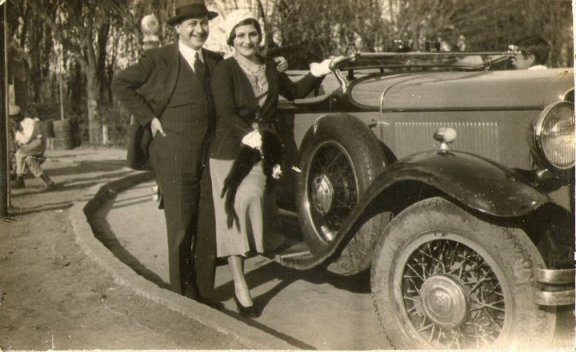
Grandma and Grandpa Pensier, early 1930’s. Best guesses as to location: London or Buenos Aires.
Can any Uncouth readers identify the automobile?
Paleo Retiree writes:
Thanks to Diesel for this very hot set of posters I ran across the other day:

 Suicide Girls goes Bollywood on a Harley is my best stab at describing the feel of the concept. Can you do better?
Related
Fenster writes:
I had coffee this morning with an old friend with kids about the same age as mine, late teens. As we talked about little-kids-little-problems/big-kids-big-problems we touched on an aspect of life at that age that we’d more or less forgotten. Namely, as parents and authority figures swiftly descend in influence, to be replaced just as swiftly by peers, young people are pitched willy-nilly into a Hobbesian kind of place.
Now I know that’s true, intellectually, but I don’t feel it as true so much. Sometimes you need to be reminded, viscerally, of what what maturation does in its creative destruction.
One of the reasons I liked Lonergan’s Margaret as much as I did was that it pitched me back, swiftly, into that uncertain and dangerous place. As I wrote on UR, “Margaret is just another coming of age story, though it is one that shows quite plainly what is gained and what is lost in the forging of mental constructs we refer to as maturation.”
Simon & Garfunkel’s line in the 1968 song Old Friends was “how terribly strange to be seventy.” Now, I am not there yet but I am getting close. And my life does not seem all that strange, which when you get down to it is not all that strange. But age 20? That seems like another country.
But it is a country I have visited. Heck, I used to live there. And the right set of experiences can be capable of stripping away the civilization I have been happy to accrete in my own process of maturation, and remind me of the Hobbesian quality of post-adolescence.
This is prelude to another movie that had a very similar effect on me: Crystal Fairy & the Magical Cactus and 2012. Like the wandering and erratic title (note the ampersand in one place and the word “and” that follows), this is a wandering and erratic movie. It concerns two Americans, one male and one female (note I am intentionally avoiding having to refer to these two as boy or man, or girl or woman) who fall in with several Chilean males of their own age.
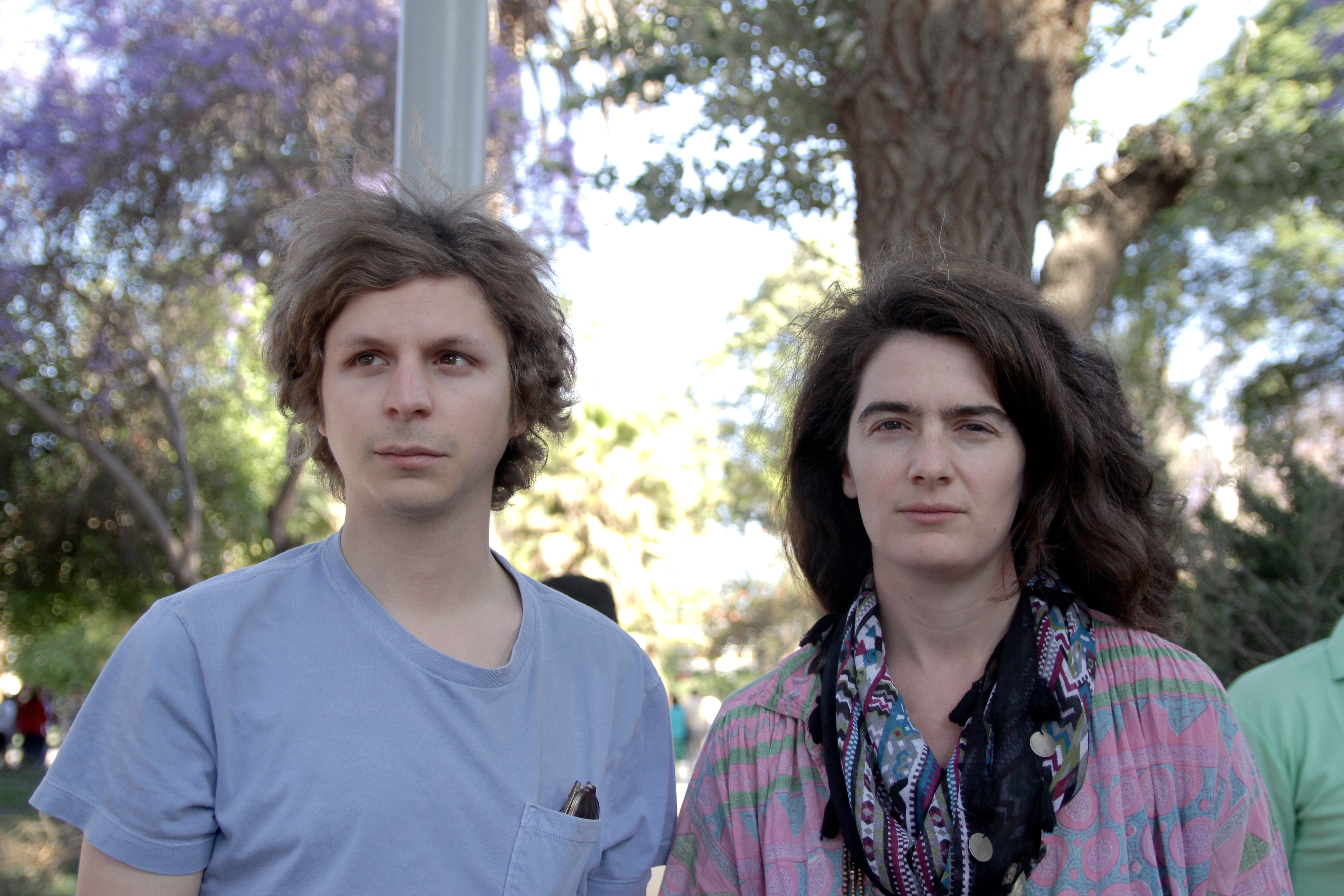
If there is a plot driver, it is the quest on the part of the American male (Michael Cera) to locate a cactus with psychedelic qualities and to engage in some sort of collective religious experience. As the plot proceeds, such as it does, we get to observe the interactions of these almost adults in excruciating detail. These include a lot of scenes concerning power, sexuality and presentation-to-others, with the characters all groping to figure out what to do and how to be (and yes, Mr. Steyn, this is liberty, too!)
It is sometimes remarked that few films have been produced that captured the Sixties. In part that’s because the studio system held a tight grip on film production in the era itself (with the result being cheesy productions like The Strawberry Statement and R.P.M.–Anthony Quinn helming the latter!) And by the time the Young Turks were able to make their own films in the Seventies, the Sixties were already something of an embarrassment. As a result there have not been many films made that capture that particular Hobbesian youth moment, all the more Hobbesian for the certainty that youth in that era possessed that the world was to be made anew, and that old habits and systems had to die.
For me at least, Crystal Fairy has a decided Sixties quality, and not just because it centers on a pyschedelic quest. Even more compelling for me at least is how it captured that odd, uncentered quality that was often present in the era. Time and again, we see individuals poised between childhood and adulthood trying to figure out what the rules are when there are no rules. Thankfully, it is comic more than tragic, but the laughs are hard won.
Cera is wonderful in the role. They talk about “fearless” performances. This is one. I was almost embarrassed for him, and had a hard time thinking that the odd mixture or bravado/weakness and masculine/feminine he presented could not be, really, him.
I am passing at present on the film’s merits as film, formal quality-wise. It got under my skin, but that could be idiosyncratic.
Anyway, if you’ve seen the movie, you’ll appreciate this musical coda from the Mothers, released a month before Simon and Garfunkel’s Bookends:
There will come a time when everybody
Who is lonely will be free…
To sing & dance & love (dance and love)
There will come a time when every evil
That we know will be an evil…
That we can rise above (rise above)
Who cares if you’re so poor you can’t afford
To buy a pair of mod a go-go stretch-elastic pants…
There will come a time when you can even
Take your clothes off when you dance
Blowhard, Esq. writes:
To piggyback on Paleo Retiree’s recent post, I caught this couple at the table next to me a few months ago.
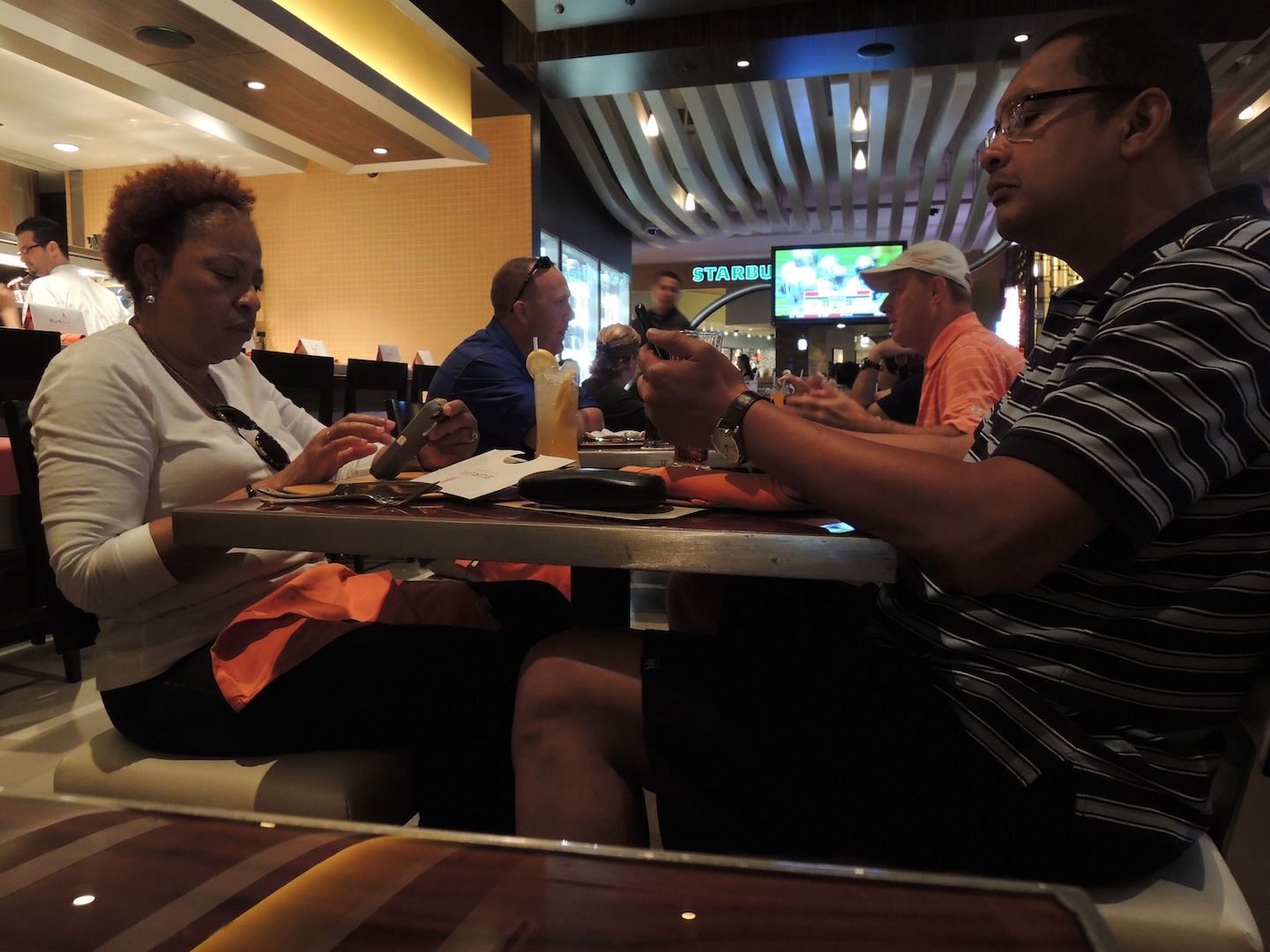 They were on their phones most of the time I observed them. There wasn’t much conversation.
Sherbrooke writes:
Photographer Whitey Schafer distills the attractions of film noir. Thou shalt not!

Paleo Retiree writes:
I was nursing an Old-Fashioned and messing with my new iPhone at the corner saloon when I looked up and saw this scene before me:
 Counting me, as I suppose we must, that means four out of the six people at this bar were sitting there drinking and staring into electronic screens. Wasn’t socializing one of the main things we used to go to bars for?
Fenster writes:
Another right-leaning pundit acknowledges inequality as an issue, which is better than the historic brush-off.
 Blowhard, Esq.
 Callowman
 Sherbrooke
 Eddie Pensier
 Enzo Nakamura
 Epaminondas
 Fabrizio del Wrongo
 Fenster
 Brundle Guy
 Glynn Marshes
 Paleo Retiree
 Atypical Neurotic
 Question Lady
 Sax von Stroheim
 Sir Barken Hyena
 The Mistaken
 Uncouth Reflections