Quote of the Day

Blowhard, Esq. writes:

“The degeneration of philosophical schools in its turn is the consequence of the mistaken belief that one can philosophize without having been compelled to philosophize by problems outside philosophy….Genuine philosophical problems are always rooted outside philosophy and they die if these roots decay….These roots are easily forgotten by philosophers who ‘study’ philosophy instead of being forced into philosophy by the pressure of nonphilosophical problems.” — Karl Popper

Posted in Philosophy and Religion | Tagged , | 5 Comments

Joe Dante

Sax von Stroheim writes:

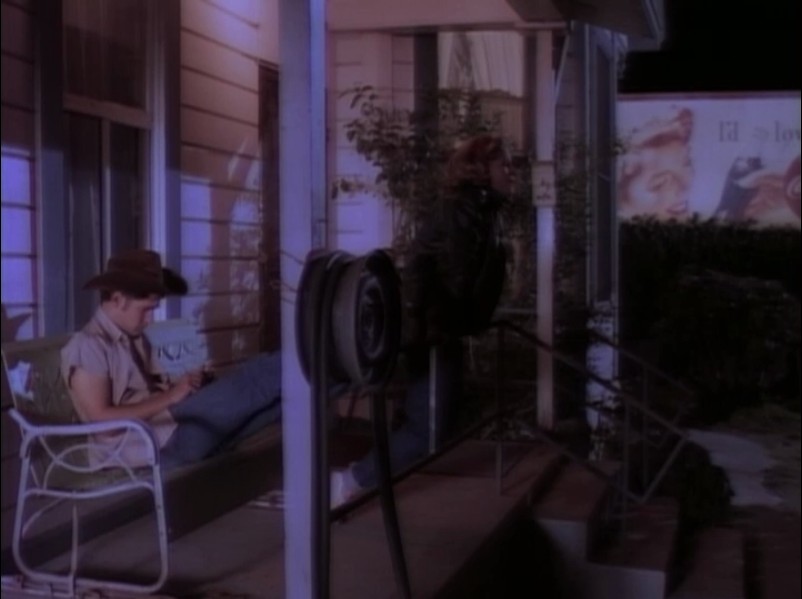
I enjoyed reading this recent interview with Joe Dante (the auteur of Piranha, Gremlins, and the great, under-appreciated William Castle tribute Matinee, among other worthy movies) in the Chicago Reader (part 1, part 2). Dante is another one of those filmmakers who, like Dan O’Bannon, came up in the late-1970s or early-1980s and tried to bring a MAD Magazine-like sense of irreverence to big budget Hollywood moviemaking. Dante did the interview to promote a Chicago screening of  his first film, The Movie Orgy: a mash-up of commercials, trailers, and 1950s sci-fi movies, so that — like a schlock Intolerance — Attack of the 50 Foot Woman, Speed Crazy, Tarantula, Beginning of the End, and Earth vs. the Flying Saucers all seem to reach their climax at the same time, in the same B-movie world.

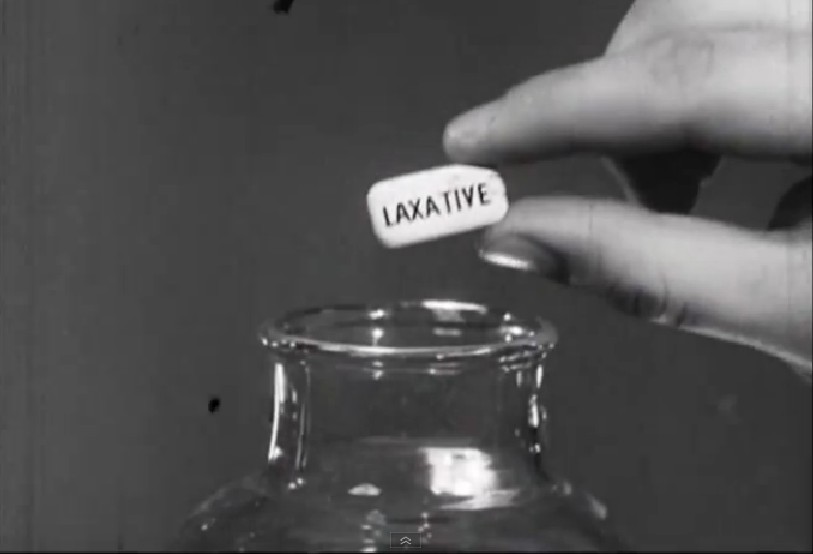
One of the commercials featured in The Movie Orgy

The version I’ve seen lasted about four-and-a-half hour (earlier cuts ran up to seven hours) and sitting through it is an amazing, consciousness-altering experience that I recommend to anyone who has a chance to see it. It isn’t on DVD, but Dante has been screening it around the country over the last few years.

Getting back to the interview, though, I liked what Dante had to say about the difference between practical special effects and CGI:

Those [Gremlins] movies were both defined by the limitations of the technology at the time. There are things we would have loved to have [the Gremlins] do that we couldn’t have them do. By the time of the second movie, the technology had improved to the point where we could show Gizmo’s whole body—so we could have him walking and dancing—and we had a Gremlin who could talk. Those developments opened the door for a lot of new jokes.

I think the reason why there hasn’t been a third [Gremlins movie] is that now, with the advent of CGI, there’s really no structure to what you can do. Anything’s possible. But if anything’s possible, then everything’s possible.

Well, when I say I liked this, I have to admit, I liked it because it fits with what I’ve been saying for years: the charm and appeal of a lot of old-fashioned movie magic doesn’t have to do with perfecting an illusion, but rather with taking delight in the kind of ingenuity necessary for someone like Ray Harryhausen to bring his army of skeletons to life. There’s a hand-made, artisinal quality to Harryhausen’s creatures, Rick Baker’s make-up effects, and the Gremlins in Gremlins that seems to be missing from CGI effects. My guess is that the programming process ends up smoothing out all the rough edges, but it’s the rough edges that give those effects a sense of liveliness.

Filmmakers like Tim Burton and Terry Gilliam were at their best when they were working with a physical medium. Their art wasn’t simply an unbridled expression of their imagination, but, rather, it was in the collision of their imagination with the real world — in how they managed to shape material (props, sets, prosthetics, and puppets) into a vision of a fantastic world. CGI took away what seems to me (and to Dante) to have been an important stage in the process: unhindered by any physical restraints, the fantasy worlds of Tim Burton’s Alice in Wonderland and Terry Gilliam’s Imaginarium of Dr. Parnassus have no weight to them at all (see also: most of the action sequences in the fourth Indiana Jones movie).

The best uses of CGI seem to come when filmmakers adopt a set of rules to guide them in their choices. Dante’s Small Soldiers is a good example: in that movie, the CGI effects are all quite modest and restricted to making it seem like the eponymous action figures (and their enemies) have come to life.

Two of the Small Soldiers

Small Soldiers is one of the Dante movies currently available on Netflix Instant. I don’t think it’s quite as strong a film as the Gremlins movies — the lengthy action sequence that ends the movie is accomplished but wearying — but it has several great moments and it  does a good job of making fun of standard Hollywood action movie jingoism. I also recommend Runaway Daughters:

Paul Rudd (doing Paul Newman) and Julie Bowen in Runaway Daughters

It’s a made-for-Showtime quasi-remake of the 1956 AIP flick, that takes a bit of inspiration from Speed Crazy, one of the centerpieces of The Movie Orgy.

Posted in Movies | Tagged , | 9 Comments

Why Don’t Professors Teach Appreciative Thinking?

Blowhard, Esq. writes:

Ask a professor the purpose of college and you are likely to get in response, “to learn how to think” or, more specifically, “to learn critical thinking.” Indeed, this was what I was told at my undergrad orientation. All of use eager students were herded into a room to learn about the wonderful programs, facilities, and opportunities at the university. But, as fun as all that other stuff may be, the main purpose of everything was to teach us to think critically.

So what is critical thinking? How is it done? I was never required to take a class in critical thinking in college, nor as part of my transfer prerequisites at the community college I attended. Unlike the scientific method or legal analysis, there seems to be no commonly accepted method of critical analysis. How can that be given that virtually any major university’s mission statement includes the teaching of critical thinking as a major, if not the major, goal?

But while I may not have learned any formal method, I surely learned one informally. The purpose of critical thinking was to uncover biases, assumptions, and flaws in the work being studied. Ah! Well, OK, I’m good at that — we’re all pretty good at that here, right? So even if we didn’t learn a formal method of critical analysis (perhaps because one doesn’t really exist), that’s not to say the university didn’t fulfill its mission.

But is critical thinking enough? Seth Roberts says no. He likens a university teaching only critical thinking to a flight school that teaches only take-offs but not landings. Critical thinking by itself is woefully insufficient, it is ignoring what is valuable and promising in a rush to point out what is imperfect. He writes:

The overemphasis — the total emphasis — on critical thinking has big and harmful consequences on graduate students. At Berkeley, in a weekly seminar called Animal Behavior Lunch, we would discuss a recent animal behavior paper. The dozen-odd graduate students could only find fault. Out of hundreds and hundreds of comments, I cannot remember a single positive one from a graduate student. Sometimes a faculty member would intervene: “Let’s not be too negative…” But week after week it kept happening. Relentless negativity caused trouble for the graduate students because every plan of their own that they thought of, they placed too much emphasis on what was wrong with it. Trying to overcome the problems, their research became too big and complicated. For example, they ran control groups before obtaining the basic effect. They had been very poorly taught — by all those professors who taught critical thinking.

Roberts advocates what he calls “appreciative thinking.” I know, I know — sounds Pollyannaish, right? He explains:

To learn appreciative thinking is to learn to appreciate, to learn to see the value of things. More or less the opposite of critical thinking.

That I had to make up a phrase shows the problem. I have complained many times about an overemphasis on critical thinking at universities. Sometimes I’d say, “Have you ever heard the term appreciative thinking? No? How many times have you heard the term critical thinking?”

When it comes to scientific papers, to teach appreciative thinking means to help students see such aspects of a paper as:

1. What can we learn from it? What new ideas does it suggest? What already-existing plausible ideas does it make more plausible or less plausible?
2. How is it an improvement over previous work? Does it use new methods? Does it use old methods in a new way? Do it show a better way to do something?
3. Did the authors show good taste in their choice of problem? Is this a problem both important and possibly solvable?
4. Are details done well? Is it well-written? Is the context of the work made clear? Are the data well-analyzed? Does it make good use of graphs? Is the discussion imaginative rather than formulaic?
5. What’s interesting or enjoyable about it?

I don’t know about you, but to me all of those questions sound just as valid, interesting, and intellectually stimulating as those asked during a critical analysis. Isn’t probing for what’s right about a given work just as important as probing for what’s wrong? If so, why isn’t it taught more?

A few other points:

  1. Perhaps the over-emphasis/exclusive emphasis on critical thinking is attributable, at least in part, to human nature. Don’t we find it much easier to tear down than to build up? Doesn’t writing a pan of a movie come much easier than writing a positive one?
  2. Maybe it’s just a function of semantic confusion. As a commenter points out in one of the above posts, “to criticize” has two meanings: to examine closely and to find fault.
  3. As another commenter points out, it may be a function of professorial status-seeking. A professor does not usually make a name for himself praising the work of others. No, you command attention by ruthlessly pointing out flaws. Because this mode of inquiry is necessary for professors to acquire their jobs, it’s the only way they know how to do business. They’re simply not equipped to teach any other method.
Posted in Education, Personal reflections | Tagged | 3 Comments

Seekers of Bad Public Art are in luck!

Sir Barken Hyena writes:

Seekers of Bad Public Art are in luck, that is, as long as you’re in the enlightened and progressive state of New Mexico (why do they need public art there at all? Aren’t the sunsets enough?). Use this nifty interactive map to locate and view all of the Bad Public Art sites in the Land of Enchantment. True, the map doesn’t claim to show you “bad” art sites, merely “public’ art, but a bit of clicking around will quiet your fears, son.

Interactive Bad Public Art Map

Bad Public Art

“Give me your tired, your hackneyed, your overconceptualized”

Posted in Art, Humor | Tagged , , | 4 Comments

What Makes for a Compelling Protagonist?

Blowhard, Esq. writes:

A while back The Question Lady asked:

Question: Do you as a reader or writer need a “likeable” protagonist? We just read a blog review of a Donald Westlake Parker novel. Now, we LOVE Westlake. But they complained that Parker’s not “likeable.” My attitude: Uh, he’s an anti-hero. And is Lady Macbeth likeable? Would you be BFF with Daphne DuMaurier’s Rebecca?”

Usually, I hear writers say that readers don’t really want “likeable” characters, they want “relatable” ones. I think that’s true, but words like “likeable” and “relatable” are mere conclusions, right? What makes a character “relatable”? Here are a few traits that are usually good hooks for me.

1. Confidence. Characters possessed of confidence are always intriguing. People like spending time with other people who know what they’re doing, who seem to have it all figured out. This trait is usually possessed by evil characters, which is why they don’t have to be likeable for us to spend time with them.

2. Adept at their job. This is closely connected to number 1. Don Draper in Mad Men and Jimmy McNulty in The Wire on paper should not be likeable. Draper is a liar, emotionally distant, and a serial adulterer. McNulty is a selfish, self-destructive alcoholic who makes life miserable for almost everyone around him. But both are great at their jobs. Ebert said in his review of Cast Away, “I find it fascinating when a movie just watches somebody doing something. Actual work is more interesting than most plots.”

3. Funny. Funny forgives almost everything. People will put up with a lot so long as you’re funny.

4. Weaknesses. This is what makes a character relatable since we all have them. No one wants to read a story about perfect people who encounter no obstacles. There’s no conflict in that. We want to see people struggle against their weaknesses. If it’s a Hollywood movie, the weaknesses are overcome. If it’s an independent movie, people remain prisoners to them.

Going back to Holmes for a second, I was reading Kyle Freeman’s introduction to volume 1 of The Complete Sherlock Holmes. He asks, “Just what is it about Sherlock Holmes that has captivated people for so long?” His answers illustrate my rules pretty well:

  • “His intelligence, his self-assurance, his mastery of every situation, and his unerring judgment are all enormously appealing.” In other words, his confidence that springs from skill at his profession.
  • “We are also attracted by Holmes’s sense of humor…This quality goes a long way toward humanizing him, making it easier to feel affection for a character whose abilities could well make him seem more machine than human.”
  • “His eccentricities add to his appeal…Devoting his life to fighting crime, for instance, is surely unusual.” Furthermore, “Holmes’s attitude toward class distinction is also unusual for his time…His judgments about people arise from the content of their characters, not from the color of their coats of arms.”
  • “Lest he seem impossibly superior, Holmes is given some counterbalancing weaknesses.” For example, he’s sometimes wrong, can be overly critical of others, and he’s manic-depressive.
Posted in Books Publishing and Writing, Movies | Tagged , | 1 Comment

Songs That Define You

Fenster writes:

Here is the site Six Songs of Me.

According to an NPR article on the site:

(Musicologist Eric Clarke and others have) set up a special site (fueled by Spotify) where you can pick your most meaningful songs in six categories. They’re hoping to gather enough data, Clarke says, to “help us think more fruitfully about the ‘big questions’ that lie behind the sounds of our lives.”

The categories, in the form of questions, are:

  • What was the first song you ever bought?
  • What song always gets you dancing?
  • What song takes you back to your childhood?
  • What is your perfect love song?
  • What song would you want at your funeral?
  • Time for an encore. One last song that makes you, you.

Mine:

Bought: can’t really remember though it may have been the 45 of The Lion Sleeps Tonight.

Dancing: Devil With a Blue Dress–Mitch Ryder (guilty pleasure from the 1970s: Instant Replay by Dan Hartman).

Childhood: The Click Song by Miriam Makeba.  Mostly because while a lot of what I like goes back to childhood (Rhapsody in Blue, Sorcerer’s Apprentice) I have heard them many times since whereas I don’t think I have heard Makeba but once or twice in the last x decades and so it brings me back in a way that others do not.

Perfect Love Song:  Rainbow Sleeves by Rickie Lee Jones–Tom Waits songwriting at its emotional, even mawkish, best.

Funeral: Im Abendrot, from Strauss Four Last Songs.  (Runners up: The Power of Love–John McLaughlin and Michael Tilson Thomas or Peaches en Regalia–Frank Zappa.)

Makes you you.  Too hard to answer at the moment.  Will mull over and return in comments, prob’ly.

Posted in Music | Tagged | 1 Comment

Politics

Fenster writes:

Fabrizio has opted out of politics.  That’s a temptation but I remain something of a junkie.  I tell myself it is about good citizenship, and that’s partly true, but how much really?  And how much is it the society of the spectacle?

I am sure it is a lot more the latter than people like to think.  Anything wrong with that?  I mean, if Fabrizio could only warm to politics as a kind of reality show, he might tune in more often.

I admit to letting the news wash over me like a warm bath of cat piss, and liking it for the most part.  But I feel guilty about it too, and not just because it is cat piss.  It’s sort of  like forgetting that you can find the divine in the everyday world all around you . . . maybe, just maybe, there is a bigger meaning to the wash?  Maybe good citizenship remains a possibility?

It is hard to see the forest for the trees–or, in Orwell’s words, to see what is in front of one’s nose requires a constant struggle.  Habit, ideology and groupthink are just oh so tempting.

For years one of my go-to blogs has been Real Clear Politics.  I go there still daily.  Here’s the problem, though.  Now that most pundits are bought and paid for spinners for one side or another, what you mostly get are predigested memes deemed suitable for public persuasion.  The Ryan VP pick?  Check out RCP from yesterday: it is a collection of propaganda from the two “sides” on the Ryan pick.  You will look mostly in vain for non-self serving accounts.

I know the return of middlebrow is not likely, or recommended.  And while highly suspicious of pomo, I am not one to believe in eternal verities, and so I understand the logic of letting Fox be Fox and letting CNN be CNN.  But a little more in the way of intellectual honesty and integrity would be nice.

Posted in Personal reflections, Politics and Economics | Tagged , , | 5 Comments

More Lyons

Fenster writes:

I posted some photos of a Victorian again gracefully in Lyons, NY.

Actually, the photo didn’t do justice, and I mean to the deterioration, which is pretty far advanced when you see it in person.  In truth, a lot of the Erie Canal towns are pretty tired.  Which is a shame since there are some wonderful buildings, mostly going downhill.

Here are some more photos, over-romanticized and gauzified just a bit.

The two hot dog wagons, right on the Erie Canal, are just around the corner from one another.  There is a market for hot dogs upstate.

Posted in Architecture, Travel | Tagged , | 7 Comments

Head, Meet Sand

Fabrizio del Wrongo writes:

Are the Olympics over yet? I overheard a word or two that would seem to indicate that they are. If so — phew! I made it through the entire, agonizingly tacky spectacle without hearing an anthem, digesting an inspirational story, or seeing a single spandex-enhanced wedgie. (Although, now that I think about it, I sort of regret forgoing the wedgies. I’ll make a point of Googling “Sharapova Olympics upskirt” as soon as I finish posting this entry.)

I am, I confess, quite proud of this accomplishment; it’s one of the rosier benefits of my recentish media blackout, which began when election hysteria started ramping up a few months ago. My ultimate goal is to make it all the way through the presidential election without learning anything substantial about the candidates. If I’m lucky, I’ll be even more ignorant by the time election day rolls around than I am now. I will consider this a great victory. Scoff if you must, but I figure I’m better off knowing next to nothing about this stuff. When Chthulu comes knocking at your door, you don’t look him in the face; you turn away and try to pretend you didn’t hear the knock. Your sanity might depend on it.

Some tips on remaining ignorant:

  • Ditch cable and get a Netflix Instant account. Watch cool movies and non-political documentaries instead of Fox News and CNN. Of course, you can keep cable and use it very sparingly, but don’t come crying to me if you accidentally catch a few seconds of Bill O’Reilly and end up ruining your entire day.
  • When in the car, use your iPod rather than listen to the radio. Recently, I’ve been enjoying listening to lectures produced by The Teaching Company. Fellow blogger Paleo Retiree was kind enough to gift me one on religions during the Axial Age, and I enjoyed it thoroughly. I’ve now moved onto one dealing with the Roman Empire. I’m thankful to have avoided hearing Don Imus’ voice for a good three months.
  • If a friend (or even an enemy) tries to strike up a political conversation with you, or even wants to talk about some quasi-political thing, like one of those awful awareness campaigns that are so popular now, just pause for a few seconds, look him straight in the eye, and change the topic to something having to do with ’80s sitcom “Perfect Strangers.” He’ll either engage you in a conversation about Balky Bartokomous or he’ll assume you’re sleep deprived and leave you alone. Either way, you’ve won.

I’m telling you, this works. Since implementing this regimen, I feel as though my soul has been douched.

I do confess to absorbing a fair amount of political information via the internet, especially on Facebook. But on the internet everyone is an information hunter/gatherer; you’re free to linger and absorb as you choose. That’s a lot different than television, which is more of an Alex-in-front-of-the-video-screen-in-A-Clockwork-Orange sort of experience.

So, yeah, I pick up things here and there. For instance, I recently learned that someone named Paul Ryan was chosen as a VP candidate. Judging from what I read about him on Facebook, he’s either Mussolini or Jimmy Stewart in “Mr. Smith Goes to Washington.” Either way, I’m voting for Kodos.

Posted in Personal reflections, Politics and Economics | 11 Comments

Book Notes: My Reading List So Far This Year

Blowhard, Esq. writes:

What books are you guys reading right now? Here’s what I’ve managed so far in 2012:

  • A Renegade History of the United States — Thaddeus Russell
  • What the Dog Saw — Malcolm Gladwell
  • Sin in the Second City: Madams, Ministers, Playboys and the Battle for America’s Soul — Karen Abbott
  • Launching the Innovation Renaissance: A New Path to Bring Smart Ideas to Market Fast — Alex Tabarrok
  • In Praise of Commercial Culture — Tyler Cowen
  • The Hunger Games — Suzanne Collins
  • The Big Con: The Story of the Confidence Man — David W. Maurer
  • The Psychopath Test: A Journey Through The Madness Industry — Jon Ronson
  • Stop Stealing Dreams (What is School Good For?) — Seth Godin
  • Linchpin: Are You Indispensable? — Seth Godin
  • You Are Not So Smart: Why You Have Too Many Friends on Facebook, Why Your Memory Is Mostly Fiction, and 46 Other Ways You’re Deluding Yourself — David McRaney
  • An Economist Gets Lunch: New Rules for Everyday Foodies — Tyler Cowen
  • The Black Swan: The Impact of the Highly Improbable — Nicholas Nassim Taleb
  • Bloodbath (A Tim Holt Adventure #1) — Lloyd Fonvielle
  • Culturematic: How Reality TV, John Cheever, a Pie Lab, Julia Child, Fantasy Football…Will Help You Create and Execute Breakthrough Ideas — Grant McCracken
  • Why We Get Fat: And What To Do About It — Gary Taubes
  • King City — Lee Goldberg
  • Reamde — Neal Stephenson
  • What Are You Laughing At? A Comprehensive Guide to the Comedic Event — Dan O’Shannon
  • The Adventures of Sherlock Holmes — Arthur Conan Doyle

Right now I’m on a Western fiction kick — Elmore Leonard’s Hombre and Valdez is Coming, then Cormac McCarthy’s Blood Meridian.

I’m always looking for recommendations. What have you enjoyed lately?

Posted in Books Publishing and Writing | Tagged | 8 Comments