Hooker Style, Cont.

Paleo Retiree writes:

Back here, Blowhard Esq. explored some of what tourist life is currently like in Vegas, with a special emphasis on what he called “hooker style.” My eyes having thus been opened, I was able to spot an inspiring example earlier today. She was walking into a small café, where she then ordered a cup of coffee.

But I’m not sure. Does her getup — which was quite striking, especially given how semi-slovenly everyone else was at 3 pm in and around this particular minimall — really qualify as “hooker style”? To me it doesn’t seem tacky or flashy enough. Her LBD (little black dress) … Her non-spike high heels … Pretty classy in their own way. Hence my verdict: What we have here is an example not of “hooker style” but of “escort style.” Important distinction!

Your evaluation?

Posted in Photography, Sex, Women men and fashion | Tagged , | 15 Comments

Question Lady Question

The Question Lady writes:

What does “existential” mean to you?

Posted in Uncategorized | 7 Comments

“Journey’s End”

Fabrizio del Wrongo writes:

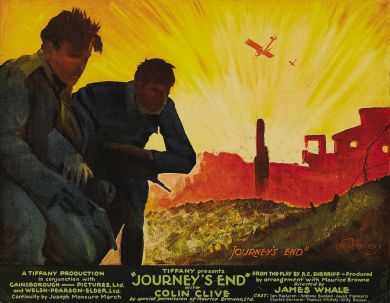
Based on a play by R. C. Sherriff, the 1930 “Journey’s End” is a good example of a movie which benefits from its stage origins. It’s less a war film than a waiting-through-a-war film: for most of its length the camera remains penned inside a British dugout, the grime-smeared characters trapped in two-shot or three-shot or four-shot as they play cards and haggle over unsavory meat. (Meanwhile, ordnance zoots and claps on the soundtrack.) When director James Whale (this was his first film) breaks out of that setting in order to show a raid through no man’s land, the movie loses instead of gains tension. The sequence is jumbled and storyless, making you wonder why the action wasn’t kept offscreen or shown, like everything else, from the perspective of the trench. (Probably, the producers wanted a WOW! sequence to compete with “All Quiet On the Western Front” and “Westfront 1918,” both released the same year.) Combat is secondary here: it’s in the ant-like existence of the trench dwellers that the movie finds its theme. The character of the chief ant, Captain Denis Stanhope, was originated on stage by Olivier. Here he’s played by Colin Clive, who makes a veritable garment out of existential agitation. (Has any actor ever done overtaxed nudginess in quite the way Clive did?) Stanhope has been at the front a long time, and he’s managed to avoid cracking only by steeling himself against normalcy — he drinks a lot and abstains from talking about home. But he’s tested when childhood friend Raleigh is assigned to his unit. Played by a young, overly-scrubbed David Manners, Raleigh represents everything Stanhope is trying to squelch (he’s the embodiment of pre-war life), and when Stanhope is forced to send the young man on a probably fatal mission, his ambivalence provides “Journey’s End” with a shot of moral paradox. There’s a part of Stanhope that wants to see the kid destroyed, but it’s in conflict with his role as the unit’s commander — a role which is like a Bizarro World version of his peacetime office of chummy mentor. As a character Stanhope is in that fertile, Hemingway-bred tradition of boys who went to war to locate manhood but instead found emasculation, and with his drinking, his cynicism, and his angst at being turned into a human sausagemaker, he may have provided the model for the Richard Barthelmess character in “Dawn Patrol.” If you can forgive the shouty awkwardness of early sound acting, the performances here are pretty good, especially Ian MacLaren as a schoolteacher whose dapperness and collegiality are undiminished by the shells, the mud, and the dying.

Posted in Movies, Performers | Tagged , , , , , , , , , , , , , , , | 2 Comments

Cocktail Du Jour

Paleo Retiree writes:

I asked the bartender at a steakhouse where we ate recently what made this such a good Manhattan. “A few drops of Grenadine swirled in the shaker and then poured off,” she said.

“Is that really all?” I persisted.

“Well, what really makes it good is that it’s nearly all whiskey,” she said.

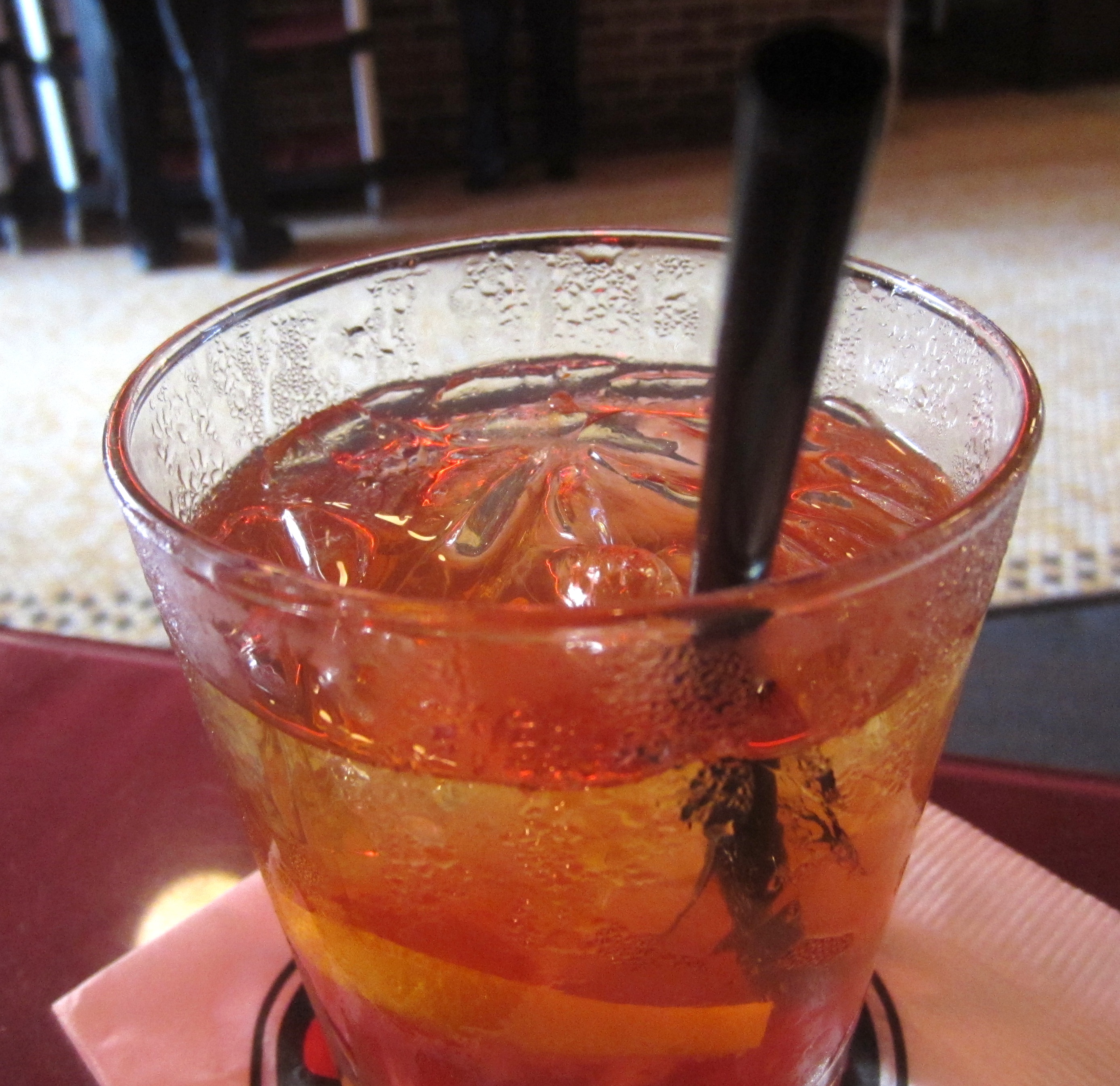
I asked the bartender at another steakhouse we ate at recently what made the above Old Fashioned so good, as well as so strong. (I snapped the photo at the moment when I was starting to feel tipsy — just a few sips in.)

“What you’re probably picking up is that our basic Old Fashioned is a double,” she said.

The wisdom of the bartender.

  • My favorite cocktail blogger is film-noir and crime-fiction buff Vince Keenan.
  • Novelist and filmmaker Lloyd Fonveille enjoys sharing retro pleasures too.
Posted in Food and health, The Good Life | Tagged , , , | 4 Comments

Retro: Barber Shops

Paleo Retiree writes:

These days I often find myself enjoying retro things. Is it my age that makes me so partial to old things, and to new things done in old styles? (If I’ve achieved true fuddy-duddyism, I have to say that it feels surprisingly good. No more need to “keep up” with things — yay to that.) Is it spending so much time using flashily modern electronic gadgets that leaves me in the mood for something more solid and material?

In any case, I feel a reliable and deep rush of satisfaction when a well-kept old car drives by … or when I visit a steakhouse, and settle in beside The Wife in a red-leather booth … or when a classic cocktail is placed before me.

Urbanistic moments and touches often do it for me too. The other day, for instance, I was was strolling through the downtown of a small California burg and noticed that it supported two traditional barber shops. Not hair-stylists but barber shops, dammit — the real deal, with the requisite poles, seats, signs and relaxed, guyish camaraderie. What a lovely little experience it was to explore them for a few minutes.

Here’s a visual impression.

Do such places detract from our experience of “downtown,” or are they part of why we bother with downtowns at all?

Posted in Architecture, The Good Life | Tagged , | 12 Comments

Orcas Failing to Launch

Fenster writes:

A scientist from the University of Exeter says that “prolonged life after menopause remains one of nature’s great mysteries.”  What is the adaptive value to the selfish gene of living way beyond childbirth?

That got the researcher, Dr. Darren Croft, to look into the lifespan of the orca.  Orcas are like people in that they tend to live a long time after childbirth.  Female orcas tend to give birth in their thirties but can live another 50 years after that.

Part of the answer comes from something that the scientists knew before the study: that orcas, like a few other species, tend to stay in family groups permanently, with the mother always around to provide for and care for her adult children.   But what do mothers do, and does it make a difference?  Croft’s approach was to analyze whether adult orcas without mothers were more likely to die than those with mothers.  That might indicate that there is actual value in prolonging the mother-offspring bond.

And that is what they found, and especially so for males.

“Our research shows that, for a male over 30, the death of his mother means an almost 14-fold-increase in the likelihood of his death within the following year,” explained Dr Croft.

But for females, the chances were only three times greater for the over 30s, and remained unchanged for those that were younger.

Still unexplained is exactly how mothers care for their offspring, or what other factor would be responsible for the different death rates.

Also to be explained is how this relates to people.  Everybody is upset over the recent phenomenon of “failure to launch”.

Maybe it’s the most natural thing in the world.

Posted in Animals, Personal reflections | 2 Comments

Question Lady Question

The Question Lady writes:

What’s your idea of the perfect restaurant?

Posted in Uncategorized | 7 Comments

Vegas: Land of 1,000,000 Women in Hooker Dresses and Their Shlubby Guyz

Blowhard, Esq. writes:

The architecture is great and all (and I’ll return to it), but Vegas is one of the great people-watching destinations. So let’s take a look at the indigenous wildlife, shall we? [1]

Continue reading

Posted in Photography, Sex, Travel | Tagged , , , , , , , , , , , , , | 25 Comments

Sometimes I Feel Like an Alien …

Posted in Politics and Economics | Tagged , , | 6 Comments

Campus Cuties, by Louis Marx and Company

Fabrizio del Wrongo writes:

During the years immediately following the Second World War, Louis Marx and Company was the largest toy producer in the world. The outfit was mainly known for its molded plastic figures, many of them sold in boxed playsets through the Sears catalog. If you were a male child in the ’50s, chances are you had a few of these sets. They generally featured some cardboard architectural elements, some bits of mock scenery, and scads of plastic figures in a variety of poses. The sets were generally based on famous historical events or settings, like the battles of Little Big Horn and The Alamo. They were cheap, but they contained entire worlds. Stuck inside on a rainy afternoon, crouched low on the living room floor, an imaginative kid could really get lost in one.

Continue reading

Posted in Commercial art, Personal reflections | Tagged , , , , , , , , , , , , , , , , , , , , , , , | 21 Comments