Oh That Awful Madonna-Whore Complex

Sir Barken Hyena writes:

I come from good old WASP/Athiest stock so I don’t think I ever even encountered this odd phrase until I was in my twenties. I thought it baffling. An early exposure was Tess. Dude she’s beautiful and she’s all yours now what’s the PROBLEM!? Again, baffling.

But recently it’s become clear to me that MW complex was there in me, and the whole wider society all along, just wearing different clothes. Now, most men will readily distinguish the two types. These are viewed as two populations of women, however vaguely bordered, and son you better damn well be sure just which one she is before you tie that knot. Hint: you want an madonna. The other kind? They’re good for sex but nothing more. Better for sex, in fact.

Is this view a cultural creation or something rooted in human nature? To find out I deeply researched (googled for an hour) the subject of sex relations among primitive humans, living in something close to the ancestral environment. It seems that the picture there is quite different. While they do possess the institution of marriage, relations are more equal, divorce can be initiated by either party and each retains more freedom than in civilized settings. Women were not property. The typical marriage seems to last about 10 years, long enough for the child, in that environment, to achieve a high degree of independence and more or less take care of themselves. Often the couple will split amicably after this point and find new partners. Trysts are common but usually kept secret.

I don’t want to get all Noble Savage here because it’s not all a rosy picture, of course. There were passion murders, love triangles and all the other staples of Opera, out there in the bush. But once civilization arrives there’s a big change. I can oversimplify it this way: previously men and women were free, but poor. With civilization, freedom is given up for material gain. The men, before free to range the bush and hunt as they liked, were now bound by law and property to support more powerful men. In exchange, civilization made women their own property. The men exchanged freedom for control over their wives and became their own mini-despot of the household. Patriarchy was born.

While in the bush the children were raised to a larger extent by the whole group, once in civilization this becomes the job of the family relations. Now paternity raises it’s head. Women seem to have a hard time grasping how it effects the male psyche that we can’t know for sure if our kids are truly our own. A man doesn’t want to squander his resources raising someone else’s kids that he thinks are his. All of this complicates the question of choosing a mate and escalates all issues revolving around trust, for both sexes. Civilization leads men to solve this problem by controlling female sexuality.

At this point female desire can become a threat to male interests, but not the other way around. If a man strays and impregnates another man’s wife, the child is provided for by the woman’s husband, as long as the secret is kept. It’s a boon to the man (from a “selfish gene” perspective) and no loss to the woman. But for the other guy, it’s a total loss, he’s wasting his resources.

So the new patriarch has got to keep his woman sexually exclusive to himself, and the number one threat to this is her natural desire for sex. So this must be stigmatized, as it never was in the bush. The Slut is born, and as her compliment, the Madonna too.

These are conceived as two distinct groups of females, and each potential mate has to be assessed as one or the other; as good for sex, or good for a wife. While men actively making a social pariah of “the slut”, it doesn’t mean they don’t like them. They like them very much indeed, but not in the home. Meanwhile, “the madonna” is not really liked all that much, she’s kind of a drag to be honest, but respected and valued. And feared a little because the contrast to doglike male sexuality is a little too plain.

This basic pattern is to be seen in all civilizations and, it seems to me, no primitive societies. The two types are evident in literature from across the world, and through history.

In the present day, Feminism has been used to promote the ideal of the two types. This may seem counter-intuitive but it works through putting women on a pedestal, which is equally done by Feminism. Women are either much much better than men, or fallen in prior societies. Under Feminism, they are either much much better than men or totally under their influence, “fallen” in other words. Same thing, either way young men grow to believe women are better than them, and are the path through which their gross nature can be elevated to a higher more spiritual plain.

But what really implants the pedestal view is the mother. I believe that of all human relations, none evinces the unconditional love of a mother for her son. Yes, mothers love their daughters but they judge them more harshly. Yes, fathers love their daughters and sons too but we know that nature has no force like an enraged mother.

Men, such as myself, who come into the world with this kind of motherly love are simply predisposed to believe females are of a more elevated character by this first and most profound contact. And those that don’t, that have a bad mother, also develop this Madonna ideal as what they lack and desire from a woman but aren’t getting.

When we grow up and go out into the world as men to find our soul mate, we naturally seek one like our mothers…or rather, what we imagined our mothers to be. Because hard as it is to see that, she was not that, never was that, and never will be. She was simply showing that side of her because of her love.

Because the problem with the whole Madonna-Whore complex is that these are not separate groups of women, they are the same woman in different contexts, around different men, and at different times. There are no sluts nor madonnas, but simply human women with multidimensional characters that change with every moment, with a range of behavior.

Which is what men are like as well! This is a hard pill to swallow, but it’s most liberating once absorbed. It means, no, women are not more elevated, not better, not kinder but these things can come from them when she really loves you. Then you can have the slut and the madonna at once.

But can you keep her?

Posted in Personal reflections, Sex, Women men and fashion | 3 Comments

Quote Du Jour: From Pulp Fiction to Sober Reporting

Blowhard, Esq. writes:

The Old Bailey Session Papers [the law reports for London’s main criminal court] originated close to an earlier genre of popular literature, the sensation-mongering chapbooks, which were pamphlet crime reports that date back to Elizabethan times. The chapbooks were produced for sale to the general public. Each pamphlet recounted the detail of a recent crime, together with (typically) the ensuing investigation, trial, conviction, and execution. The earliest exemplars of the Old Bailey Session Papers survive from the 1670s. The pamphlets were quite selective, recounting only a few cases likely to have the most popular interest. The early Session Papers also exhibit a moralizing tone that was characteristic of chapbooks.

From these beginnings the Session Papers were published in a substantially continuous series for nearly two and a half centuries. The series underwent incessant change in size, format, content, and function. From their origins as episodic chapbooks they became a periodical, published immediately after each of the eight annual sessions of the court, and sold separately for a few pence. In the 1680s the pamphlets became semi-official, under license from the City of London; by the later eighteenth century, the City was subsidizing the publication. Instead of limiting themselves to a selection of higher-profile cases, the Session Papers began to report increasing numbers of mundane property crimes that comprised the bulk of the court’s caseload. Crude sensation-mongering died out from the title pages, and moral instruction disappeared from the accounts. The series came to operate under an obligation of completeness; at least the outcome of every trial held at the particular sessions was noted. As the eighteenth century wore on, the Session Papers lost interest in street-corner sales and became a stodgy, quasi-official crime calendar, published under license of, and ultimately with financial support from, the City of London.

John Langbein, The Origins of Adversary Criminal Trial

Posted in Books Publishing and Writing, Law | Tagged , | Leave a comment

Treatments Bad and Good

Paleo Retiree writes:

It’s been a long time since I’ve wanted to link to an article at The Atlantic. For decades a great magazine that was reliably substantial and well-written, it’s now an SJW-infested clusterfuck that too often reads like it’s being written and edited by ambitious Cultural Studies undergrads.

Forgive a short detour: In the last ten years, many media outlets, in their struggle to cut costs in the digital age, have sent their older employees packing. The impact of this trend on our public discussion hasn’t received nearly enough recognition, IMHO. Whatever the faults of the older crowd — and I say this as one of them (I was retired-with-a-bonus from a MSM magazine in 2008) — they’d seen a lot and they’d dealt with a lot. They had thick hides as well as a healthy cynicism towards both their subjects and their bosses. By contrast, today’s youthful MSM staffers, while having the virtues of energy and tech-savviness, often seem completely unworldly as well as over-eager to please the powers-that-be. When I scroll or leaf through today’s news-oriented magazines and newspapers, I invariably come away with a general impression of callowness and wet-behind-the-ear-ness. It’s as though the writers and editors are dealing with their subjects for the very first time. Wide-eyed freshness can be a virtue in lyric poetry; in journalism maybe not so much.

Takeaway: if our public discussion has come to feel like it’s being conducted by 13 year olds, it isn’t just because you yourself are growing older and more cranky. It’s also because a lot of the people supplying us with reporting and opinions these days really are near-children.

But back to the point of this posting, which is to link to an article by David Epstein. It’s about unnecessary and unhelpful medical treatments that nonetheless continue getting prescribed, and it’s a well-reported, provocative beauty. Why, Epstein asks, even in cases when the best studies show that some treatments are useless or worse, do patients continue demanding them? And why do doctors continue providing them?

Excerpt:

For all the truly wondrous developments of modern medicine—imaging technologies that enable precision surgery, routine organ transplants, care that transforms premature infants into perfectly healthy kids, and remarkable chemotherapy treatments, to name a few—it is distressingly ordinary for patients to get treatments that research has shown are ineffective or even dangerous. Sometimes doctors simply haven’t kept up with the science. Other times doctors know the state of play perfectly well but continue to deliver these treatments because it’s profitable—or even because they’re popular and patients demand them. Some procedures are implemented based on studies that did not prove whether they really worked in the first place. Others were initially supported by evidence but then were contradicted by better evidence, and yet these procedures have remained the standards of care for years, or decades.

Even if a drug you take was studied in thousands of people and shown truly to save lives, chances are it won’t do that for you. The good news is, it probably won’t harm you, either. Some of the most widely prescribed medications do little of anything meaningful, good or bad, for most people who take them.

Epstein’s piece is full of eye-opening examples. One of my favorites is treatments that will make your body hit the sought-after numbers — pills, for example, that bring some blood marker into the desired range, or that lower your blood pressure to “normal” — yet that won’t prolong your life or help you avoid catastrophes. What’s the point of them? Does it matter if your numbers look good if you get sick and die anyway?

Epstein got me thinking over a number of things. I’ve been accompanying an in-law to the hospital for chemo treatments, for example, and so have had a lot of time to observe the scene there. Good lord but there are a lot of fat people and smokers among the patients. People who have just had dumb accidents and homeless people too. One ambulance guy I gabbed with recently told me that 70-80% of the ambulance runs he and his team make are for homeless people. “A lot of them are drunks and addicts. Sometimes they really need treatment but often they just want attention,” he said to me. “You run out of compassion for them pretty quickly.” And a surgeon I knew once said to me that American hospitals would be half as crowded as they are — and America’s perpetual health-care crisis would be much alleviated — if Americans did four things: 1) Avoided getting obese. (“Overweight isn’t a problem,” he said. “Obese is.”) 2) Avoided getting addicted to drugs or booze. 3) Didn’t smoke. 4) Took more care to avoid preventable accidents — falls from ladders, that kind of thing.

These musings led me to two (very amateurish, but hey, I been around) reflections:

  • It’s probably a mistake to think of our bodies as mechanical things — or, to be more up to date, as cyborgs. That view tends to lead people to think of their bodies as a device detached from them that needs the occasional visit to the garage, or maybe the occasional attentions of Apple Geniuses. If you’ve got a pain or a gripe, drop your body off at the hospital and get it worked on. Problem solved. In my experience it all too often doesn’t work out quite so simply. For all the things that modern medicine is good for, I can’t tell you the number of times friends have had back operations or knee replacements or heart stents that haven’t finally done them much good. And, even when these treatments do work out well, the pain, horror and shock of the experience is something people are rarely ready for. Bodies aren’t machines; they’re sacks of wet, gloppy biological materials. They really don’t like being knocked out and cut into. Another big surprise: trauma to the body (and surgery is extreme trauma to the body) tends to have big, unpredictable mental and emotional consequences. You aren’t just dropping your jalopy off at the shop; you’re putting your very being on the line. It isn’t at all rare for people having surgery to come out of the experience feeling quite changed (and often not in a good way) by it.
  • We’re mistaken when we look to Western medicine to make us feel good. Western medicine is brilliant at fixing bone-breaks, at sewing up bullet holes, at curing some cancers and helping with diabetes. But can it really make you feel good in the “I’m experiencing ease and purpose” sort of way? Is it even meant to? Yet that’s exactly what many people look to it for. I can’t tell you the number of friends I have who are, in their quest to feel a little better, taking a half a dozen pills a day. People get hooked on a medication then need more medications to take care of the side effects of it. “There’s no such thing as a medicine that doesn’t have side effects,” a Harvard Med School doc once told me. “Even aspirin has side effects.” My friends swirl around and around, getting groggier and groggier, trying to extinguish symptoms that they themselves have created, and never ever achieving the desired state of feeling pretty good.

Epstein is, btw, very good on the “why?” part of his topic: Why do doctors prescribe these treatments? Why do patients demand them? I think it’s beyond-understandable that people today should look to medicine for miracles. These days, where else are they going to look? It’s too bad, though, if doctors and medicine hold out promises they can’t really deliver on, and it can backfire when people project their larger hopes onto medicine. A little less confusion, heartbreak and pain would be nice.

Fwiw, my working theory about how to proceed is: use Western medicine for what it’s good for, but generally avoid it. For everyday health — and especially for that elusive “feeling good” thang — rely first on eating well, on moderate exercise, on living a modest and low-stress life, and on being conscientious with your mental/emotional hygiene. Qigong, yoga, meditation, massage, swimming, etc, can all do a soul a world of good. Incentive: it never hurts to remember that doctor and hospital goofs may be the third leading cause of death in the U.S. If you’re hit by a car or need a tumor removed, by all means get yourself to a doctor, and do it pronto. Otherwise, why expose yourself to more medical treatments than you probably really need?

Related

  • At my old blog I wrote about receiving a diagnosis of cancer and going through surgery for it. An epilog to that story: I’ve begun to wonder if the surgery was necessary. As thinking about prostate surgery has progressed in the years since my operation, many doctors have come to suspect that there may be several different kinds of my kind of cancer, some of which will kill you no matter whether you’re treated or not, and some of which won’t kill you no matter the treatment. That would certainly jibe with my experience. A good friend of mine was diagnosed with the same cancer I had. His markers and my markers were almost identical — in other words, as far as medicine was concerned and could tell, we were virtually identical cases. And we received identical treatments. Yet he was dead from his cancer within five years while I’m still around and in good shape. So: given that I may have had a brand of cancer that I’d have survived in any case, why did I go through the gruesome, life-changing procedure I did?
Posted in Food and health, Uncategorized | Tagged , , , | 13 Comments

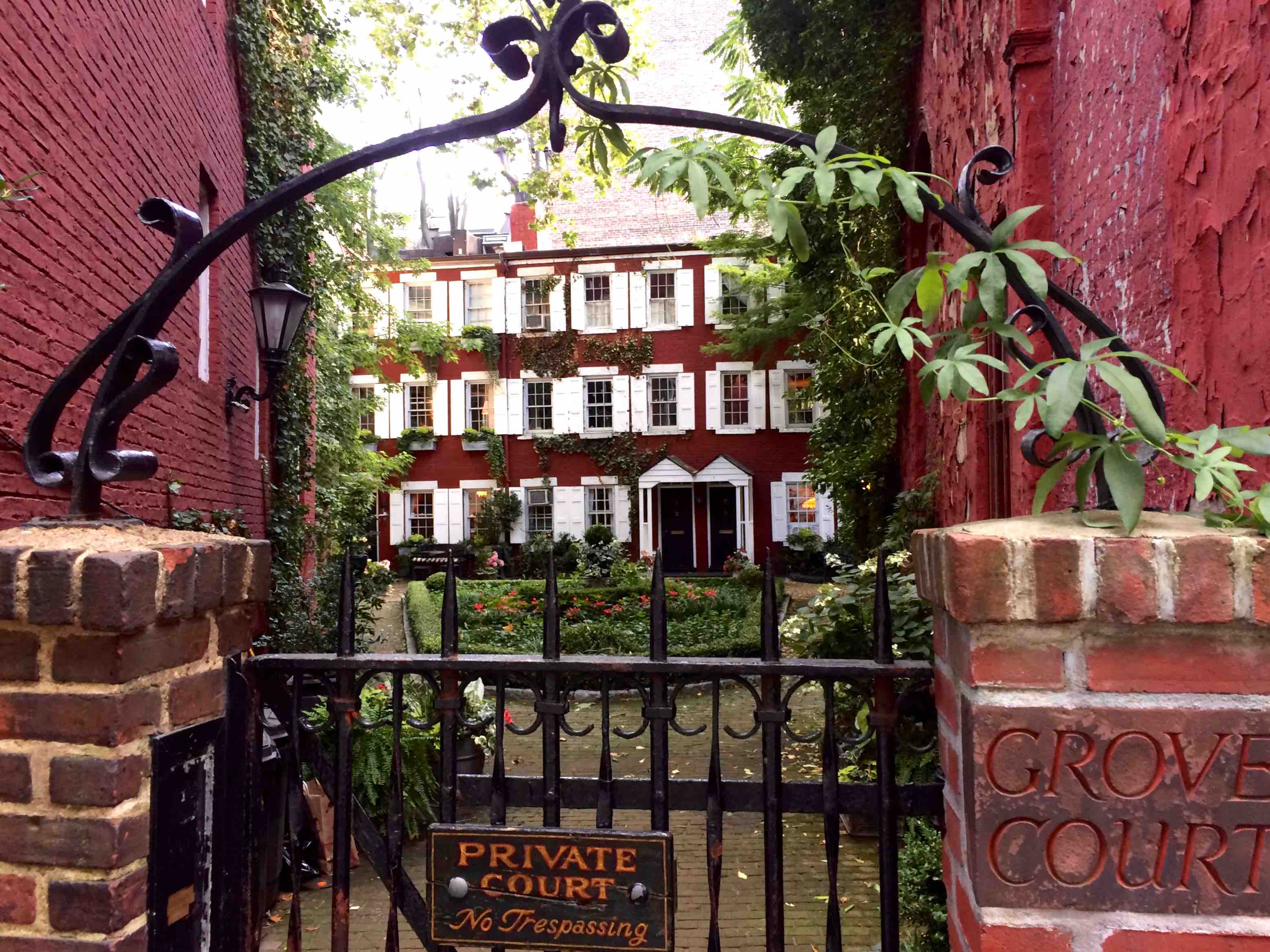
Architecture and Color

Paleo Retiree writes:

Posted in Architecture | Tagged | 1 Comment

Naked Lady of the Week: Kira the Little Redhead

Blowhard, Esq. writes:

kiracover

We’re reaching back into vault of remembrance of faps past today for this week’s selection. Kira the Little Redhead wasn’t just a diminutive, freckle-faced ginger with big boobs and an endless appetite putting on, and then taking off, different outfits — she was an Internet pioneer. Her site, active from 1998 to 2002, was one of the first amateur subscription sites. At least it was one of the first amateur subscription sites that I was aware of. How much did I pay? $10, $20 a month? Sure, the flat lighting and bland backdrop (95% of her photosets look like they were shot in her apartment) don’t compare to the slick professional quality you get today, but Kira and her luscious body were just so eager to please. And now that I take another look, the aesthetics of these photos (a style not limited to her of course) prefigure the later American Apparel ads, don’t they?

There are pictures and some softcore videos floating around the tube sites, or you can download a rip of Kira’s old site on the torrents. Enjoy your weekend.

Continue reading

Posted in Sex, The Good Life | Tagged , , | Leave a comment

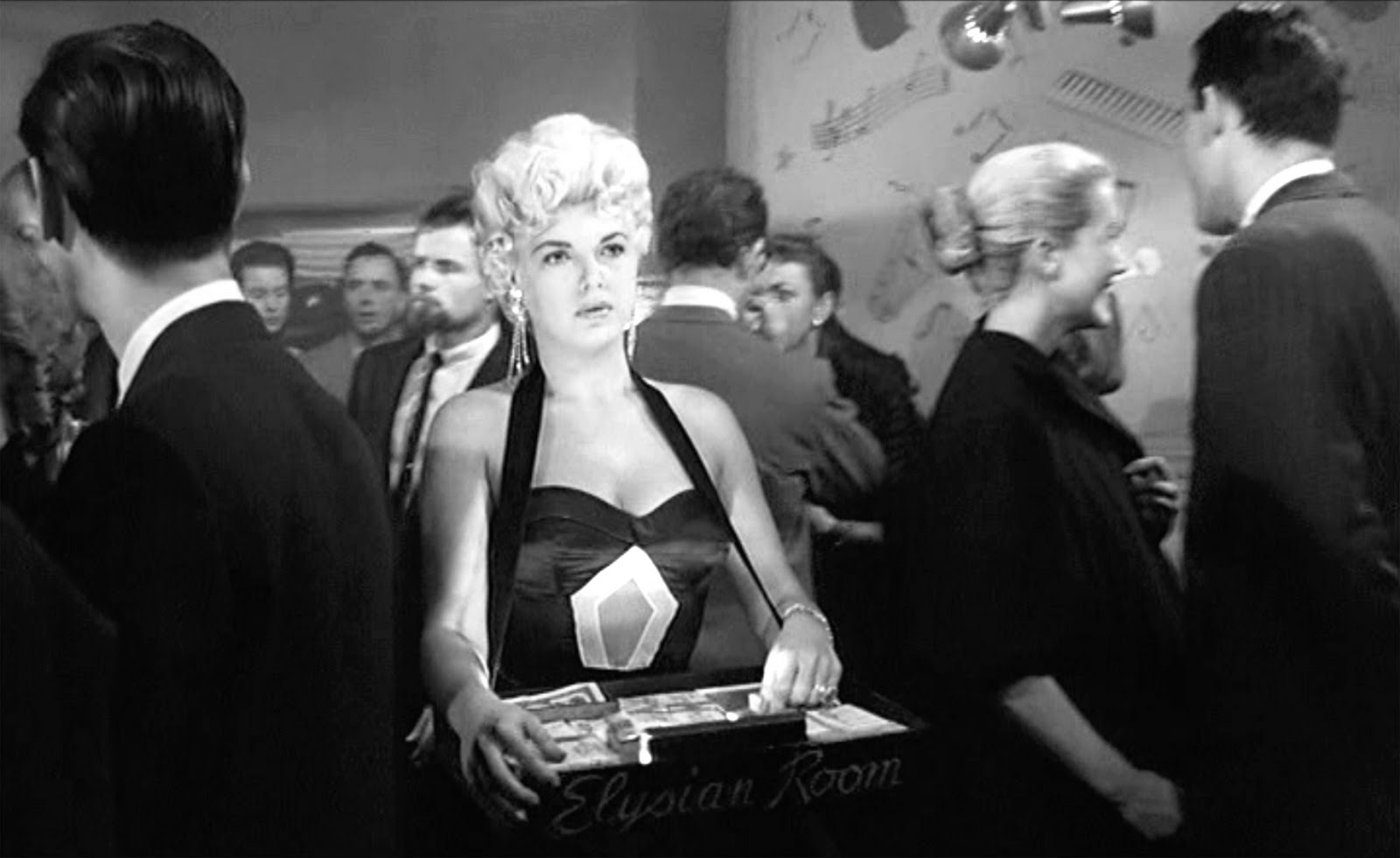
Movie Still Du Jour

Blowhard, Esq. writes:

ssosnichols

Barbara Nichols as the cigarette girl in SWEET SMELL OF SUCCESS (1957).

Posted in Movies | Tagged , | 2 Comments

Trump and Sweden

Paleo Retiree writes:

I was taken completely aback by the reaction of much of the mainstream press, as well as of many of my lib/left/Dem friends, to Trump’s recent claim about Sweden and crime. They didn’t just question him or fact-check him. They laughed at him. He wasn’t fumbling and/or exaggerating. No, he was completely wrong. Sweden’s PM himself indulged in some yuks at Trump’s expense. Har har har.

The notion of the Scandinavian paradise seems to die hard in certain crowds. OK, there has been some awkwardness in the Netherlands, and Norway may be getting comfortable with the notion of limits. But in Sweden, everything continues to work out brilliantly. Despite the lies and hysteria of those who are either Nazis or who look occasionally at nonstandard news outlets — same people, really — the international liberal project remains in fine shape. And, of course, it’s in fine hands. If only those wicked ethnonationalists wouldn’t keep throwing dirt in the gears …

Could my impression that the immigration-and-refugee issue has indeed become a fraught one in Sweden really have been so mistaken? Perhaps I’ve been hanging out ‘way too much in the darker, crime-think corners of the web. Time to fact-check myself. So I did some more websurfing and turned up a few links others may find interesting.

  • An interesting article/posting that was up on the Huffington Post for a few hours. For the life of me I can’t imagine why the editors deep-sixed it. But, thanks to the magic of the internet, a copy of it survives.
  • I also enjoyed a Reddit AMA with a young guy of Somalian background who has grown up in Sweden. When asked his opinion of the current immigration/refugee situation there, he responds:

I’m thankful Sweden took in my parents as refugees … But the Swedish immigration policies have been way too irresponsible and unsustainable in my opinion (despite its good intentions), and Sweden is now in way over its head. Now I wanna stress that refugees should have the right for asylum, but Sweden can’t take in them all! As much as ‘humanitarian politics’ sound nice it’s not sustainable for such a small country to take in as many has they have, not economically or socially!

It really is a difficult situation with all the refugees, but there are also a bunch of people who have gotten to Sweden (and Europe overall), that don’t fulfil the conditions for asylum; who wouldn’t have gotten here if it wasn’t for (what was) the open borders. I think regulated borders are important both for the countries safety and to not waste the time and money of migrants who aren’t eligible to stay anyway! I also think more effort should be taken to integrate the ones that are already here!

Excuse a quick detour: I find it bewildering how hard the MSM (and my lib/left/Dem friends, who without exception take their cues from the center-left MSM) find it to wrap their minds around Trump. Is he really so hard to understand as a character type?

As far as I can tell, the source of their difficulty is his personal style. The MSM and many of my friends don’t just seem indignant that Trump isn’t a silver-voiced, verbally-slick law school valedictorian — evidently a type they’re comfortable with. They take his style as proof that he’s incompetent, terminally narcissistic and/or crazy.

Now it seems incontrovertible to me that, whatever Trump’s faults, he’s a shrewd guy who’s capable of being effective on a large scale. In other words: I take it as a given that he isn’t incompetent, he isn’t crazy and, though he may well be narcissistic, so is just about every other big-league public figure. Given these assumptions, I find myself wondering: Why is Trump’s style so hard for so many lib/left/Dem people to make sense of?

OK, he blusters. OK, he feints left then goes right. OK, he often says outrageous, hyperbolic things. Even so, it doesn’t seem to me to be terribly hard to square such behavior with the notion that he’s effective and sane, at least so long as we’re allowed to bring a little real-life experience into play. For one thing, as Scott Adams has repeatedly argued, Trump is a “persuader.” (Trump hasn’t exactly kept his deal-making nature a secret.) He’s always manipulating, he’s always playing negotiation games.

For another, it’s completely missing the point to judge Trump by the standards of an Oxbridge debating society. Instead, he’s a man-of-action businessguy. I’ve met plenty of these, and among them the combination of effective, driven and smart AND verbally not-very-dazzling isn’t an unusual one.

I’ll add one notion of my own to the above list. To me, Trump can be usefully pictured as an improv-acting genius. He wings it, he works instinctively, he employs shock and surprise, he makes it up as he goes along … yet he always manages to forge forward. If you’re locked into an idea of performing as a polite, by-the-books thing, improv-style acting can look chaotic, even berserk. But if you’ve had experience with the form you can easily recognize it as its own discipline and art.

My conclusion: Hey, lib/left/Dem colleagues and friends, Trump is a man-of-action businessguy/negotiator with the soul and instincts of a Second City performer.

Just for the record, let me point out that in this posting I’ve said precisely zilch about whether or not I approve of Trump’s actions and policies. I’ve only argued that he’s sane and effective, and that his behavior can be understood without recourse to “He’s crazy.” Glad to agree that there are plenty of reasons to object to Trump, and plenty of reasons to put him down. I’m just arguing that “he’s crazy” is a lousy and misleading argument.

But back to the announced theme of this posting. As the days passed by it was interesting to see that the MSM was beginning to moderate their original hooting and jeering about Trump and Sweden.

  • The New York Times: “Recently Swedes also find themselves questioning the wisdom of their generosity to outsiders in need, and its potential limits, leading to the country’s harshest debate ever over immigration.”
  • Stockholm-based economist Tino Sanandaji: “The situation is both less bad than America’s Fox News addicts want it to be and considerably more dire than the MSM and the Swedish ruling class would have us believe. (Not just that: TPTB in Sweden have mechanisms in place to prevent us from knowing.)”
  • Even Carl Bildt, Sweden’s amazingly smug PM, admits that the liberal order generally is in crisis.

(Perhaps these admissions had something to do with that little riot that broke out in a Stockholm suburb the day after Trump’s remarks.) But will my friends-who-take-their-cues-from-the-soft-left-MSM notice these updates, let alone be open to these facts? My best guess: they’ve already moved on to other excuses to proclaim Trump crazy.

All of which reminds me of a book I just finished, Michel Houellebecq’s “Submission.” More on that very amusing, and very alarming, novel soon.

Posted in Politics and Economics | Tagged , , | 4 Comments

One Nice Thing About Tenure. . .

Fenster writes:

. . . is that it permits tenured professors to write what they see.  Of course this can cut the wrong way but tenure is a double edged sword.  Here, an article skeptical about unlimited low-skill immigration is published in of all places the New York Times and is written by of all people a Harvard professor.  And not just any Harvard professor but George Borjas, long considered a leading scholar of immigration.

It seems to me he gets to the nub of it. At least as regards a thoughtful approach.

Now, it could be that some issues are so filled with emotion that there is no need, or room, for sustained thought.  People are often not motivated by complex, nuanced and wonky policy arguments. The side that has held the whip hand on immigration has not been afraid to use it, keeping up a steady drumbeat of pro-immigration emotionalism. Emma Lazarus! The Statue of Liberty! We are a nation of immigrants!

In turn the challenge to that was also mounted in emotional terms. Rapists! Terrorists!

So there we are.  The argument has been successfully joined in moralistic terms but such terms often do not provide traction for resolution short of warfare.  It would be nice, and I hope not naive, to suggest that a reasoned approach may find traction under the current circumstances.

As Borjas’s piece suggests, the truth is that immigration is like any other policy argument. There are winners and losers to whatever approach you want to take.  Let’s talk about it dispassionately and see where it goes. That is the “immigration debate we need.”

As far as arguments go, I am persuaded by Borjas’s skepticism. Emma Lazarus did not repeal the law of supply and demand. A large influx of low-skilled low-wage labor likely has several effects:

1. it will depress wages of the least advantaged, like blacks, poor whites and immigrants already arrived.
2. it will differentially benefit capital over labor, increasing inequality.
3. it will reduce pressures for assimilation, leading to ethnic enclaves and less of the social solidarity that the communal impulse requires–i.e., it undercuts what the  Left itself most values.
4. there will be negative fiscal effects on government finance given the high cost of benefits provided.

Add to that the looming pressures of technology and automation . . . how again do we benefit by an uncontrolled influx of low skilled labor?

Oh wait, I remember now: we educated liberals get to have our yards maintained for cheap and we get to feel virtuous about it!

Posted in Politics and Economics | Tagged , | 1 Comment

Architecture and Color

Paleo Retiree writes:

Posted in Architecture | Tagged | 2 Comments

Naked Lady of the Week: Sasha Grey

Fabrizio del Wrongo writes:

sg-cover

Is it fair to call Sasha Grey a legend? I feel like it is, in part because her meteoric plummet through the hardcore porn industry now seems like part of a past era.

Upon seeing her for the first time I was astonished by her combination of ferociousness and self-awareness. In her performances she was clearly giving it all, and she wanted to be damn sure you recognized it, often barking metronomically at her partners like a punk singer — a porno Karen O. But despite the fluids, the contortions, and the smeared eyeliner, there was a coolness to her act, a removed-from-it-all collectedness that might have read as contempt if not for her dedication.

Was there anything behind the Evel Knievel daring and zoned-out comportment? Any hint of personality or soul? Possibly not, and yet the routine was hot, memorable, and daringly nihilistic, like the Dead Boys’ blaze through “Sonic Reducer” at CBGB. It was influential too: There is a lot of “gonzo” porn these days, and whenever I see an example of it I think of Sasha Grey.

Nudity below. Have a good weekend.

Continue reading

Posted in Performers, Photography, Sex, Uncategorized | Tagged , , | 3 Comments