Quotes Du Jour: On the Intellectual Yet Idiot

Blowhard, Esq. writes:

Over here, commenter Gary Jones shared some wisdom for ages:

Having a high IQ doesn’t prevent you from being stupid. In fact, it lets you be stupid in ever more complex ways.

Amplifying on that, Nassim Taleb writes about the Intellectual Yet Idiot:

What we have been seeing worldwide, from India to the UK to the US, is the rebellion against the inner circle of no-skin-in-the-game policymaking “clerks” and journalists-insiders, that class of paternalistic semi-intellectual experts with some Ivy league, Oxford-Cambridge, or similar label-driven education who are telling the rest of us 1) what to do, 2) what to eat, 3) how to speak, 4) how to think… and 5) who to vote for.

But the problem is the one-eyed following the blind: these self-described members of the “intelligenzia” can’t find a coconut in Coconut Island, meaning they aren’t intelligent enough to define intelligence hence fall into circularities — but their main skill is capacity to pass exams written by people like them. With psychology papers replicating less than 40%, dietary advice reversing after 30 years of fatphobia, macroeconomic analysis working worse than astrology, the appointment of Bernanke who was less than clueless of the risks, and pharmaceutical trials replicating at best only 1/3 of the time, people are perfectly entitled to rely on their own ancestral instinct and listen to their grandmothers (or Montaigne and such filtered classical knowledge) with a better track record than these policymaking goons.

Posted in Philosophy and Religion, Politics and Economics | Tagged , | 1 Comment

Naked Lady of the Week: Niemira

Fabrizio del Wrongo writes:

n-cover

In the 18th century Edward Gibbon speculated that the world’s most comely women derive from the areas bordering the Black Sea. “It is,” he said, “in the adjacent climates of Georgia, Mingrelia, and Circassia, that nature has placed, at least to our eyes, the model of beauty in the shape of the limbs, the color of the skin, the symmetry of the features, and the expression of the countenance.” The women of this region, said Gibbon, were “formed…for love.”

Ukraine is a bit to the north and west of Circassia, but it’s close enough to convince me that Gibbon was onto something. For as anyone who has trawled the vast holdings of the pervy internet will attest, an inordinate number of the world’s most striking nude models are Ukrainian.

This is just my long-winded manner of explaining why I wasn’t surprised upon discovering that the subject of this week’s post is from Ukraine. She’s a splendid creature, isn’t she? She’s currently the top-ranked model at TheNudeEU.

Nudity below. Enjoy the weekend.

Continue reading

Posted in Photography, Sex | Tagged , , , , , | Leave a comment

Epistocracy Bah Humbug

Fenster writes:

Jason Brennan is the “Robert J. and Elizabeth Flanagan Family Associate Professor of Strategy, Economics, Ethics, and Public Policy at the McDonough School of Business at Georgetown University.”  Which makes him, I suspect, a smarter man than I.

But I am hesitant to concede that point too quickly to someone who, as Brennan does, advances an argument for “epistocracy”.

In an epistocracy, political power is to some degree apportioned according to knowledge. An epistocracy might retain the major institutions we see in republican democracy, such as parties, mass elections, constitutional review, and the like. But in an epistocracy, not everyone has equal basic political power. An epistocracy might grant some people additional voting power, or might restrict the right to vote only to those that could pass a very basic test of political knowledge.

No doubt this will include Associate Professors of Strategy, Economics, Ethics, and Public Policy, at least at well-regarded universities.

Especially if said professors are not mainly interested in political science but philosophy and, even better, ethics.  The world sorely needs a firmer hand from academic ethicists.

Brennan’s brief article shills for a forthcoming book and if I read the whole book I might well see a more fully developed argument and might well be more impressed than I am from this short piece.  In truth I find this article very weak.

Take one of the central metaphors Brennan uses: the conduct of public affairs as the practice of medicine.

Imagine, as an analogy, that you are sick. You go to a doctor. But suppose your “doctor” doesn’t study the facts, doesn’t know any medicine, and makes her decisions about how to treat you on a whim, on the basis of prejudice or wishful thinking. Imagine the doctor not only prescribes you a course of treatment, but literally forces you, at gunpoint, to accept the treatment. We’d find this behavior intolerable.

Yes we would.  But has Brennan never considered that politics is not simply, or even mostly, a matter of technical competence?  He may not agree with this notion, which is at the heart of a good deal of Western political thought.  But he is not entitled to ignore it, or elide by it as if it is nothing at all.

Now it could be that he finds notions like pluralism incorrect, or just unworkable.  If so he owes the reader more than a facile comparison of politics to medicine.  Politics is about values at least as much, or more than, technical policy outcomes.

And who says the experts are even right on the technical aspects?  He starts the article via the rhetorical device of Brexit to provide self-evident ballast for his contentions.

The Washington Post reports that there is a sharp uptick today in the number of Britons Googling basic questions about what the European Union is and what the implications of leaving are. This is a bit like deciding to study after you’ve already taken the final exam. . . .

Leaving the EU is no small affair. It probably will have enormous effects on the UK, Europe, and much of the rest of the world. But just what these effects will be is unclear. To have even a rudimentary sense of the pros and cons of Brexit, a person would need to possess tremendous social scientific knowledge. One would need to know about the economics and sociology of trade and immigration, the politics of centralized regulation, and the history of nationalist movements. But there is no reason to think even a tenth of the UK’s population has a basic grasp of the social science needed to evaluate Brexit.

This was written last June.  Odd isn’t it?  While the jury is out on Brexit, one can hardly say that the last several months have supported the alarm of the elites, especially the highly talented tenth whose views would be given extra weight.

There is also a straw man character to his argument.  Brexit was, as a national referendum, something of a one-off case.  Most decisions in a representative democracy are made not by the people directly but by their representatives–an elite. Why lead off your argument for wholesale change with the threat of referendums?

Actually, I doubt Brennan would argue for a major change in our political system to block the occasional referendum that would go the wrong way.  No, once we get past the Brexit gambit we see he has bigger fish to fry.

Speaking of the need to reduce the power of incompetent decision makers, he suggests that

republican democracy, with checks and balances, was meant to do just that. And to a significant degree it succeeds. But perhaps a new system, epistocracy, could do even better.

So the problem is not that we don’t rely on elites.  We do.  The problem by Brennan’s lights is that they are just not elite enough.  Even if referendums are rare we must be shielded from the power of the unwashed in electing the elites that already run things.

It is an argument, I will concede that.  But if I look around I see less evidence of mob rule than I do of elite failure to manage the public trust.  The reaction of the people to this is predictable: they don’t like it.

This is how politics happens.  Of course we don’t have a direct democracy–never did.  Of course the talented tenth will know more of the details of issues.  Of course our representative system relies on elites, and on those elites running things with sufficient care, prudence and restraint as to maintain legitimacy.  When they don’t they may get hit very hard on their heads with a blunt instrument, and we hope they will get in line.

Posted in Politics and Economics | Tagged , | 3 Comments

“Everybody Wants Some!!”

Fabrizio del Wrongo writes:

everybody-wants-some-austin-amelio-tanner-kalina-forrest-vickery-tyler-hoechlin-ryan-guzman

Richard Linklater’s new college comedy, “Everybody Wants Some!!,” takes place over three or four days in 1980, but it may have more to say about growing up, experience, and relationships than all of the 2013 “Boyhood” with its decade-long frame of reference. I took “Boyhood” to be a noble failure. Except for the searching, trying-to-stay-afloat father played by Ethan Hawke, the movie’s characters are dull and predictable. Lacking a compelling focal point (Ellar Coltrane seems to have little to offer as an actor or personality), Linklater falls back on underscoring banal ideas concerning childhood. And his treatment of Patricia Arquette’s mom is too reverent. We’re asked to celebrate her every time she does something routine, like gain weight or go back to school. It’s possible that in “Boyhood” Linklater’s methods and his intentions were at cross-purposes. He posited the boy as an observer, the position the director occupied in movies like “Slacker” and “Waking Life,” but he’s also the movie’s subject. In asking the kid to be both Linklater consigns him to being nothing.

The gimmick of “Boyhood” — the long shooting period — is what it was most frequently praised for, and yet I felt Linklater was neutered by it. His most distinctive movies — “Slacker,” “Waking Life,” the “Before” series — are temporally concentrated; they’re records of peculiar moments, characters, and locations. “Boyhood” attempts to be a synthesis of many non-peculiar moments, and in the process it loses specificity and potency. The picture wanders from one ordinary scene to the next. The critics who praised “Boyhood” for its novelty seemed to have forgotten that Linklater had already treated aging with documentary frankness and intimacy. In the three “Before” pictures one can see Hawke and Julie Delpy grow progressively older, and it’s (mostly) fascinating because the actors rarely fail to provide their director with personal material onto which he can embroider his thoughts and observations. The best Linklater films have the quality of collaborative essays – a quality largely lacking in “Boyhood.”

That quality is also lacking in “Everybody Wants Some!!” — or at least the collaborative aspect of it is. In form it’s one of Linklater’s most conventional films, a cousin to “Dazed and Confused.” It features actors who are performing according to a set script, one that’s firmly grounded in genre. And yet I think that at the commentarial level it’s more potent than either “Dazed” or “Boyhood.” It may be the director’s most successful merging of the experimental and conventional strains of his work.

Initially, the specter of “Boyhood” looms over “Everybody Wants Some!!” The earlier film ended as its subject departed for college; this new one begins as he arrives at Texas State. But right from the start it’s clear we’re on cheerier, less sanctimonious ground. As Blake Jenner’s Jake arrives on campus, conspicuously slow-driving his muscle car and grooving to “My Sharona” (a callback to the opening of “Dazed and Confused”), he ogles the girls in their hip-hugging mom jeans, thereby signaling the lowbrow thrust of the project.

“Everybody” is proudly lowbrow. In fact, it’s possible to take both it and “Dazed” as homages to the teen exploitation pictures of the 1970s. Not to “American Graffiti” or “Big Wednesday,” which tackle big themes and feature showy directorial flourishes, but to more downmarket fare like “The Van” and “The Pom Pom Girls,” both products of the underappreciated Crown International Pictures. At their best the movies released by CIP were bright and unpretentious records of plebeian culture and attitudes, and they remain among the most casual American movies made outside of the ’30s. While “Dazed” never quite achieved that level of casualness — it was Linklater’s studio debut, and watching it one can feel the director willing the cast and material into a shape consistent with commercial viability — “Everybody” is so nonchalant that I suspect many will take it as aimless. But if, like me, you value Linklater as the least pushy of major American filmmakers, you may experience “Everybody” as a reprieve from the ever-increasing aggressiveness of popular culture. It has the unhurried feel of an oasis.

Jake plays baseball; so do the guys with whom he’s living. The picture is about Jake’s absorption into this motley male unit. Though in establishing its relationships the screenplay hits familiar beats, Linklater’s handling of the characters is Renoir-like in its generosity. Those introduced as possible villains slowly reveal new facets, until we’re able to see them in the round, and understand their contributions to the group’s dynamic. As McReynolds, Tyler Hoechlin wears a Keith Hernandez mustache and maintains a bubble of confidence peculiar to those set apart by talent and proficiency. He’s the leader not by virtue of popularity or consensus, but because he’s the best, and because he constantly proves he’s the best. When Jake beats him at ping pong, McReynolds explodes — he takes it as a challenge. In a more conventional screenplay this moment would pay off in a showdown between veteran and newcomer. But when we next focus on McReynolds he’s captaining a practice and smoothing over interpersonal rough spots with the deftness of a seasoned leader. By this point Jake’s place on the team is established. He and his teammates are synced to McReynolds’ bravado, and his acceptance of the prevailing hierarchy is a measure of his unselfishness, his willingness to collaborate. Rather than serving as a springboard for conflict, the tiff between the two men has humanized them, and brought us closer to understanding their bond.

For a sometime director of art films Linklater has an unusually developed sense of the roles played by competition and gamesmanship in the development of young men. A former baseball player (there’s more than a little self-portrait in Jake), he’s wholly nonjudgmental about sports, and he takes the semi-cruel jousting that goes on among dudes to constitute the fabric of male relationships. Though Linklater doesn’t make a big deal of it, one can sense his attitude toward the in-your-face touchiness of contemporary college life. Among other things “Everybody Wants Some!!” is an appreciation of the social role of the microagression.

The parts of “Everyone” that are focused on Jake and his baseball-playing buds are so effective that I think it’s fair to call it the best baseball movie in recent memory despite the fact that it contains very little actual baseball. Unfortunately, Linklater fumbles when handling Jake’s romance. Though Zoey Deutch, in the role of Jake’s love interest Beverly, has a cultivated brittleness that makes for an amusing contrast with the laidback baseball guys (Beverly is a theater major), she and Jenner have little chemistry, and Linklater hurries through their scenes together, presumably because he’s in a rush to return to the film’s raison d’être, its male relationships. (How good is Linklater at writing for women? He gets by when he has Julie Delpy as a collaborator, but his concerns strike me as largely male in emphasis.) The picture’s worst scene may be a split-screen telephone conversation between the young lovers. Its editing, which is nudgy and impatient, betrays the easygoing quality of the surrounding movie. It may be an example of a scene whose failure was aided by an attempted rescue by editing.

Yet the screenplay’s sports-arts nexus provides some benefits beyond the dramatic beats of its love narrative. Linklater uses it to sketch in an essayistic commentary on the broadening of perspectives afforded by college, and to eulogize the cultural free-for-all of the early 1980s. “Everybody” constantly reminds us that it takes placing at a time when punk, new wave, and hip hop were starting points rather than ends, and some of its best scenes involve the team’s straight-and-narrow jocks happily giving themselves over to the wildness of punk and the grandiloquent self-involvement of the theater.

This is essential to Linklater’s plan. He wants to show that adventurousness and openness are vital to the development of nascent personalities. Maybe that’s why he puts the movie’s philosophy into the mouth of its charlatan, Willoughby, a leftover from the ’70s played with boho righteousness by Wyatt Russell. After breaking the school record for longest bong hit, Willoughby tells the guys that college is “about finding out who you are, in the space between the notes they’re offering you.” In Linklater’s films, as in those of other talky directors (Eric Rohmer among them), the wisdom often clonks you on the head. You bristle at, then appreciate, its obviousness. Here Willoughby’s words obtain a special glow after we learn that he’s an older man who’s used his baseball talent to bullshit his way into a series of universities, presumably breaking the record for bong hits at each of them. He’s kicked out of Texas State upon being discovered. His aura remains, though, as does his plea to “find the tangents within the framework.” If the alpha-dog McReynolds provides his teammates with a standard by which they can measure their achievements, this genial fraud offers them a way, however loopy, towards soul and poetry. Wherever Willoughby’s path takes him, you can’t help but hope he stays between the notes.


Posted in Movies, The Good Life | Tagged , , , , , , , , , , , | 3 Comments

A Third Way for Campus Speech?

Fenster writes:

Shulamit Reinharz, the director of an academic center at Brandeis, has an op-ed in the Boston Globe calling for a third way on campus speech.  Alluding to the tension currently present between free speech and those who would curtail it in the name of other, presumably better, things, she writes:

Although the tension between these two positions now defines the educational discourse, I believe there is a sorely missing third point. My concern regarding this third point arose years ago when I wrote to the president of my undergraduate alma mater, Barnard College, asking why a certain faculty member was being considered for tenure when so much of her work was inflammatory and of questionable validity. The president’s answer was that Barnard seeks to present a wide variety of views.

What was missing in her answer was the question of whether some views have more value than others.

What is missing in the statement issuing from the University of Chicago is equal emphasis on the two words in the iconic phrase “free inquiry.” In our rush to embrace freedom of expression, we have forgotten about the meaning of inquiry.

Should a person espousing Nazi ideology, for example, be allowed to speak on a campus just because students or faculty invited her/him? I would choose to avoid such a speech not because I wanted to be safe, but rather because the speech would be based on faulty reasoning. Are all ideas valid? Can we use information to invalidate ideas and then not have those ideas repeated as part of the diversity of perspectives?

Reinharz is raising some important issues here worth grappling with.  But it is volatile stuff and one must proceed with care.  It is easy to call bravely for a new approach and then find some slipping, sliding and eliding in one’s own position.

Reinharz herself does some slipping in the passage above.  Note how she answers whether a Nazi should speak on campus following a faculty or student invitation: she slides by the question, saying that she “would choose to avoid such a speech” because it would be based on “faulty reasoning”.  The first part of the sentence (“would choose to avoid”) suggests that the speech is happening and she has just chosen not to go.  The second part (“based on faulty reasoning”) is just the argument she uses for her third way.  If she really believes the reasoning is faulty, why would she not oppose the speech?

The argument gets even dicier when the rubber is asked to meet the road of how to implement a third way.  Here, Reinharz is somewhat mealy-mouthed.

I believe that a great education falls neither in the “free speech regardless of what a person is saying” camp nor in the “protect students from being hurt by speech” camp. I believe, instead, that a great education requires, first and foremost, teaching students how to evaluate ideas, how to define criteria upon which reasonable people will agree.

Under this view, all we need to do it recommit to critical thinking and we will magically find consensus.  Reasonable people will agree.

Really?  In what world do reasonable people actually agree?  The fact that we have huge disagreement now on important matters between people who fancy themselves reasonable is not in dispute.  It is the problem.  Expecting more critical thinking to magically delineate acceptable from unacceptable (Nazis no; alt-right OK depending on topic) is just a tad utopian.  As the political writer Decius wrote recently in a very different context, expecting good thinking to result in consensus is “like saying health will save a cancer patient. A step has been skipped in there somewhere.”

Still and all, I think Reinharz is quite right to look for a third way. And she is looking in the right place: in the academy itself, and in its academic core not its administrative superstructure.  She is looking in the right place.  I don’t think she is analyzing the problem in the right way.  She needs to be willing to actually face institutional issues.

We all subscribe to what we think of as clear-cut, black-and-white morally-based views on things like free speech, academic freedom and the like. But a moment’s reflection–critical reflection of the very type Reinharz endorses–leads an honest observer to note that all such morally binary propositions quickly get ragged in practice. That’s especially true for academic freedom, a term that has so many slippery meanings that it often verges on the useless.

Of course it is the case in practice that there will always be boundaries for speech, and these boundaries will ebb, flow and vary over time and depending on venue. Speech denying the Holocaust should certainly be permitted in the public square. It is arguably OK at a campus event. But is it OK for a professor to teach it in class, especially if her peers consider it based on bad scholarship? Very likely not.

The point is that an Overton Window we will always have with us. And make that plural–Overton Windows–since what is considered in and out of bounds will and should vary.

So now let’s get to the heart of Reinharz’s argument, which really needs to deal more openly with Overton Window management in an academic setting.  In the end, a practical matter.

Her basic conclusion is that it is not enough in the academy to say that we must be open to all ideas and everyone should be able to say anything. I think she is right about that. The academy is not a collection of individuals who mysteriously gain entrance into a Magic Circle and then are permitted to say whatever they want, as self-absorbed cats. There is a dog quality too.

Entrance into the academy is via a community of scholars. The academy is–or should be–a kind of self-regulating enterprise, one in which the ideas of individual scholars and the ideas of the community of which the scholar is a part are in constant tension.

That does not mean Ward Churchill should definitely have been fired for calling workers in the World Trade Center “little Eichmanns”. But neither does it mean he definitely should have kept his position. That’s just the point to decide, and the question is less the precise metrics for a judgment as it is the proper venue for a healthy and muscular one.

You can’t always find a right answer but you might be able to get to the best possible one. And that should be done at the intersection between scholars and the communities of which they are a part.

Alas, faculty seem to do all of this kind of stuff rather poorly. All too often faculty shrug off any real world concerns, ignoring any responsibility they might have over things like resources, then retreating comfortably to a criticism of administrators to whom they have ceded the issue.  The same tendency is often on display as regards playing an active role in a community of scholars, one with a real backbone.

Indeed, a lot of the zaniness currently on display in our nation’s campuses is bound up with faculty unwillingness to play the kind of role that Reinharz’s critique implies. It was, after all, the academic department and not the administration that just cancelled James Watson’s talk at NYU.  And where is the faculty as a community to be found in many of the recent campus dust-ups? Unless faculty members are on the barricades themselves they are usually silent.

So two cheers for Reinharz.  A third way is needed, and it needs to be centered in the academic core.  But it is hard to see it will develop properly in the current climate.

In which regard–

Posted in Education, Uncategorized | Tagged , , , , | 3 Comments

“Weiner”

Paleo Retiree writes:

weiner

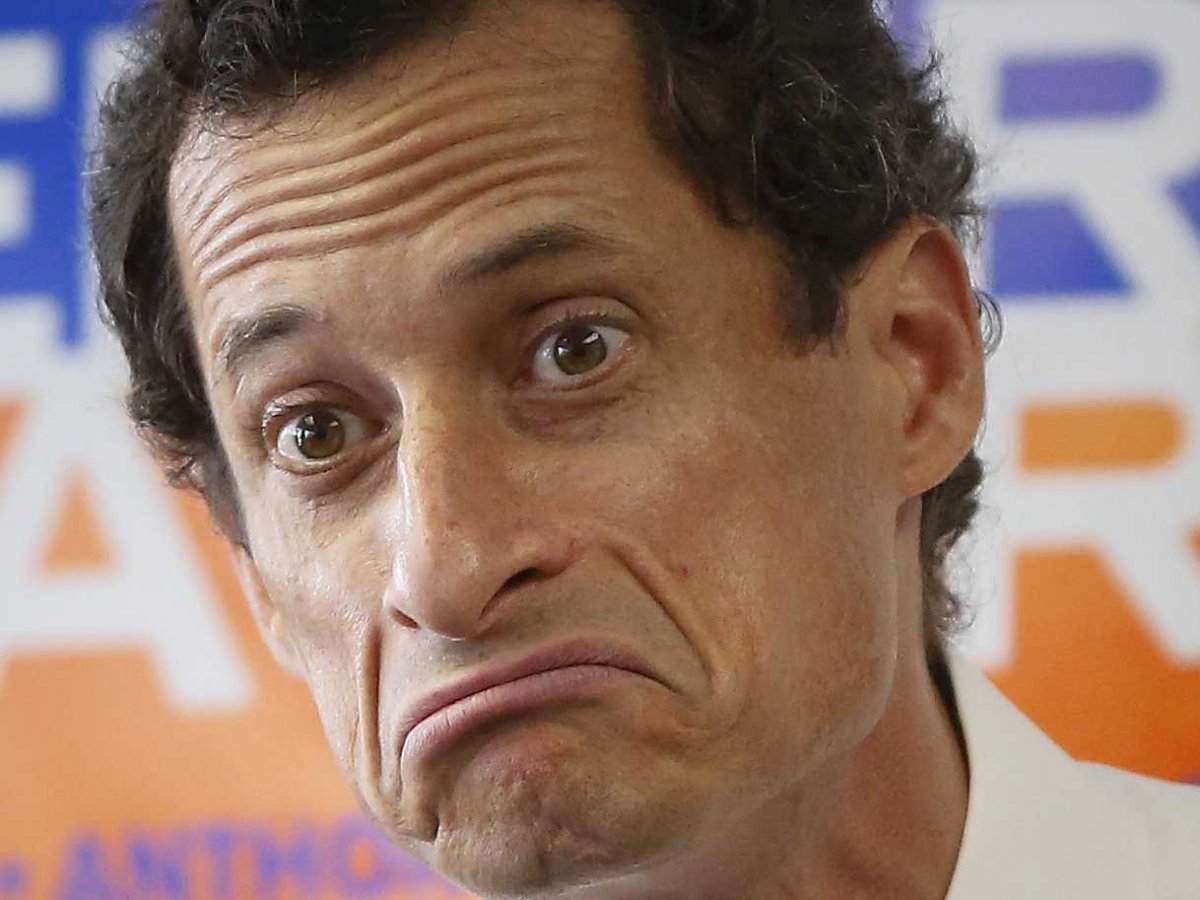
Thanks to the brouhaha about Anthony Weiner these past couple of weeks, I’ve let myself get fascinated by the case.

My verdict on the guy: Anthony Weiner is almost certainly someone who in person would strike me as an egomaniacal jerk, and why on earth hasn’t he been more careful about his online escapades? But, all that aside for a minute, the amount of abuse and ridicule Weiner has received for having done some sexting amazes me. Although he wasn’t caught consorting with prostitutes, although no telltale stain on an intern’s blue dress has been discovered, and although he wasn’t putting government secrets at risk, his political career is over. Let me underline that: Bill Clinton committed worse indiscretions and Hillary Clinton has been professionally more careless. Yet their careers continue to thrive while Weiner’s is kaput. Why?

And, on a more simple, human level, Weiner has been condemned not just as a wicked man but as someone with an addiction, maybe even a mental illness. When I suggested on Facebook that the reaction to Weiner’s misdeeds has been over the top, and when I wondered how warm and sexy a wife Huma Abedin had been to him, dozens of angry comments quickly accumulated on my postings. Apparently today’s husband is expected to feel thrilled and honored that his wife works 80 hour weeks and is on the road for 11 out of 12 months. Reflected glory should be enough for any man, I guess.

Continue reading

Posted in Movies, Politics and Economics, Sex | Tagged , , , | 11 Comments

Architecture and Color

Paleo Retiree writes:

Some views of Jodhpur, India’s famous Blue City.

jodhpur01 jodhpur02 jodhpur03 jodhpur04

More.

Posted in Architecture | Tagged , | Leave a comment

Naked Lady of the Week: Cherry Rain

Fabrizio del Wrongo writes:

cr-cover

According to some sources Cherry Rain was born in Death Valley and raised in Las Vegas. That’s kind of poetic, isn’t it? Well, Cherry herself is kind of poetic, at least in that Las Vegas, not-sure-if-it’s-real-or-canned sort of way.

A leggy sex kitten whose name would seem to derive from her auburn hair, Cherry began appearing in nude photo spreads and porn movies around 2000, when she was about 21 years old. She looked a bit younger than that, a quality which her photographers emphasized by presenting her in school uniforms, pigtails, and the like. (Remember when the term “barely legal” was synonymous with internet porn?) Cherry filled that role very well: few models were better at mixing insolence and submission.

Are the slightly too-prominent upper teeth goofy or charming? Maybe both?

Cherry married smut entrepreneur Paul Fishbein in the mid-2000s. In this profile he describes her as “the perfect girl.” I wouldn’t argue much against the validity of that assessment.

Nudity below. Have a great weekend.

Continue reading

Posted in Photography, Sex, The Good Life | Tagged , , , | 1 Comment

Our Favorite Albums of the 21st Century

Blowhard, Esq. writes:

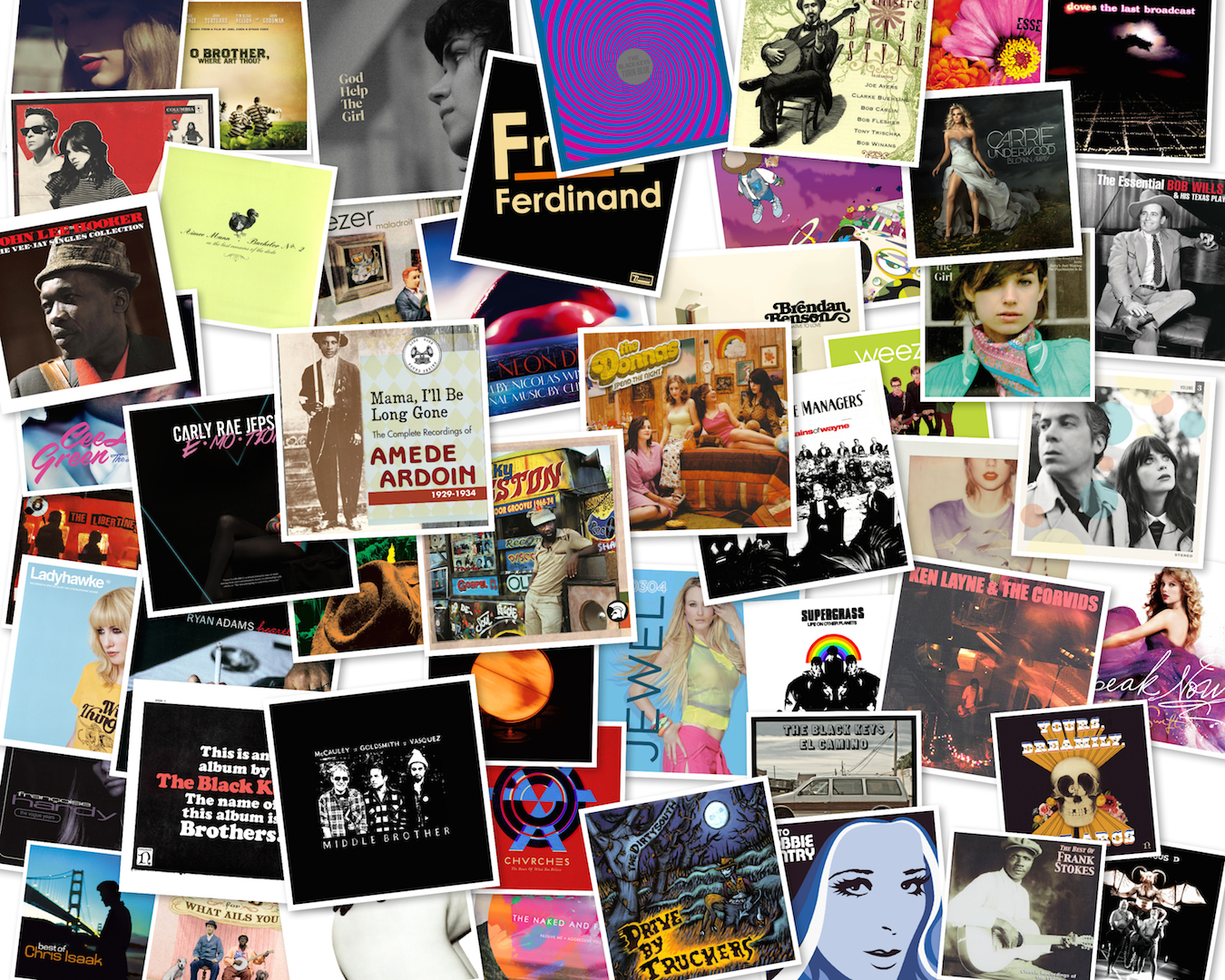
Our recent stab at picking our favorite movies of the far-from-completed 21st century put some of us in a list-making mood. Please enjoy these selections from me, a special guest blogger, and Sax. Feel free to pitch in with your own choices in the comments and/or tell us what awful taste we have.

betop50albums

Heartbreaker — Ryan Adams (2000)
Parachutes — Coldplay (2000)
Ode to Bobbie Gentry — Bobbie Gentry (2000)
Smile — The Jayhawks  (2000)
Bachelor No. 2 — Aimee Mann (2000)
O Brother, Where Art Thou? soundtrack — Various Artists (2000)
The Vogue Years — Françoise Hardy (2001)
Is This It — The Strokes (2001)
Tenacious D — Tenacious D (2001)
The Green Album — Weezer (2001)
Essence — Lucinda Williams (2001)
Spend the Night — The Donnas (2002)
The Last Broadcast — Doves (2002)
Up the Bracket — The Libertines (2002)
Life on Other Planets — Supergrass (2002)
Maladroit — Weezer (2002)
Funky Kingston: Reggae Dance Grooves 1968-1974 — Various Artists (2002)
Welcome Interstate Managers — Fountains of Wayne (2003)
0304 — Jewel (2003)
The Dirty South — The Drive-By Truckers (2004)
Franz Ferdinand — Franz Ferdinand (2004)
Fought Down — Ken Layne & the Corvids (2004)
The Alternative to Love — Brendan Benson (2005)
The Best of Frank Stokes — Frank Stokes (2005)
Good For What Ails You: Music of the Medicine Shows 1926-1937 — Various Artists (2005)
Best of Chris Isaak — Chris Isaak (2006)
Graduation — Kanye West (2007)
God Help the Girl — God Help the Girl (2009)
Stills — God Help the Girl (2009)
Minstrel Banjo Style — Various Artists (2009)
Brothers — The Black Keys (2010)
The Lady Killer — Cee Lo Green (2010)
Speak Now — Taylor Swift (2010)
Mama, I’ll Be Long Gone: The Complete Recordings 1929-1934 — Amede Ardoin (2011)
El Camino — The Black Keys (2011)
Middle Brother — Middle Brother (2011)
Passive Me, Aggressive You — The Naked and Famous (2011)
Blown Away — Carrie Underwood (2012)
Red — Taylor Swift (2012)
The Essential Bob Wills & His Texas Playboys — Bob Wills & His Texas Playboys (2013)
The Bones of What You Believe — Chvrches (2013)
The Vee-Jay Singles Collection — John Lee Hooker (2013)
Volume Three — She & Him (2013)
Turn Blue — The Black Keys (2014)
Classics — She & Him (2014)
1989 — Taylor Swift (2014)
Yours, Dreamily — The Arcs (2015)
E-MO-TION — Carly Rae Jepsen (2015)
Wild Things — Ladyhawke (2016)
The Neon Demon soundtrack — Cliff Martinez (2016)

Honorable mention to these retrospective box sets that are so comprehensive and essential that it didn’t seem fair to include them in the regular list:

The Stax Story — Various Artists (2000)
The Complete Hot Fives & Sevens — Louis Armstrong (2003)
Unearthed — Johnny Cash (2003)
Keep My Skillet Good and Greasy — Uncle Dave Macon (2004)
Country Music Pioneer — Riley Puckett (2011)
The King of Soul — Otis Redding (2014)

Richard Marxist writes:

rmtop50albums

Music has been my go to escape for the majority of my life as opposed to novels or cinema. I get more out of music because I enjoy the experience of listening more than I do looking. Alternate realities begin to form out of the subject matter from the mood of an album or song. I find this is more difficult to do when watching a movie or reading a novel. In the end though, choosing which realities (albums) I escaped to the most proved more difficult than originally anticipated.

When I began to assemble this list I figured it’d be an easy task. The top 50 movies of the 21st century on UR got me wanting to do the same thing but with music. Objectivity gets thrown out the window immediately because of the pull these albums had on me throughout these years, and still do. While I can certainly explain why I think a particular song objectively sounds good — for example, Carly Rae Jepsen’s “Call Me Maybe” — I can’t explain why YOU should think so too. I’ve never been one to try to force an opinion or change a mind without the facts because listening to music doesn’t require facts, just taste.

The following 50 albums constitute not only a certain taste in music, but an emotional connection to something or someone. There are albums tied to unrequited love, traveling, being drunk, and a swath of other occurrences and situations in life during the 21st century. Do they necessarily represent everyone’s experience during those years? Of course not, but it represents mine, and that is what makes them some of the best albums of the past 15 years and 9 months.

Stories From The City, Stories From The Sea – PJ Harvey (2000)
White Pony – Deftones (2000)
O Brother, Where Art Thou? soundtrack – Various Artists (2000)
Dwightyoakamacoustic.net – Dwight Yoakam (2000)
Stankonia – Outkast (2000)
Gorillaz – Gorillaz (2001)
Bleed American – Jimmy Eat World (2001)
Fever – Kylie Minogue (2001)
Amelie Soundtrack – Yann Tiersen (2001)
Songs For The Deaf – Queens of the Stone Age (2002)
Phrenology – The Roots (2002)
The Execution Of All Things – Rilo Kiley (2002)
Turn On The Bright Lights – Interpol (2002)
Decoration Day – Drive-By Truckers (2003)
Permission To Land – The Darkness (2003)
Lesser Matters – The Radio Dept. (2003)
…Burn, Piano Island, Burn – The Blood Brothers (2003)
The Dirty South – Drive-By Truckers (2004)
O.C.M.S. – Old Crown Medicine Show (2004)
Let It Die – Feist (2004)
Demon Days – Gorillaz (2005)
Frances The Mute – The Mars Volta (2005)
Robyn – Robyn (2005)
Back To Black – Amy Winehouse (2006)
Silent Shout – The Knife (2006)
Yellow House – Grizzly Bear (2006)
Fox Confessor Brings The Flood – Neko Case (2006)
Boxer – The National (2007)
Because Of The Times – Kings of Leon (2007)
Night Falls Over Kortedala – Jens Lekman (2007)
The Age Of The Understatement – The Last Shadow Puppets (2008)
In The Future – Black Mountain (2008)
xx – The xx (2009)
Actor – St. Vincent (2009)
Brand New Eyes – Paramore (2009)
Teen Dream – Beach House (2010)
Brothers – The Black Keys (2010)
The Girl With The Dragon Tattoo Soundtrack – Trent Reznor & Atticus Ross (2011)
Circuital – My Morning Jacket (2011)
R.A.P. Music – Killer Mike (2012)
Fear Fun – Father John Misty (2012)
Kill For Love – Chromatics (2012)
The Bones Of What You Believe – Chvrches (2013)
Run The Jewels 2 – Run The Jewels (2014)
Saudade – Thievery Corporation (2014)
Way Out Weather – Steve Gunn (2014)
Sometimes I Sit And Think, Sometime I Just Sit – Courtney Barnett (2015)
E-MO-TION – Carly Rae Jepsen (2015)
Eyes On The Lines – Steve Gunn (2016)
Everything You’ve Come To Expect – The Last Shadow Puppets (2016)

Sax von Stroheim writes:

saxtopalbums

Love and Theft — Bob Dylan (2001)
Carnival of Souls — Pere Ubu (2014)
American IV: The Man Comes Around — Johnny Cash (2002)
Inward City — The Numbers Band (2009)
Masada Rock — John Zorn/Rashanim (2005)
Welcome Interstate Managers — Fountains of Wayne (2003)
Everything Must Go — Steely Dan (2003)
St. Arkansas — Pere Ubu (2002)
A Single Sky — Dave Douglas (2009)
Super Taranta! — Gogol Bordello (2007)
That’s Why God Made the Radio — The Beach Boys (2012)
Modern Times — Bob Dylan (2006)
Barfly — Rocket from the Tombs (2011)
Pruflas: The Book of Angels 18 — Dave Krakauer (2012)

Posted in Music | Tagged , | 11 Comments

Juxtaposin’: We’ll Meet Again

Blowhard, Esq. writes:

Posted in Music | Tagged , | Leave a comment