Blowhard, Esq. writes:
Fenster writes:
Occupied (or Okkupert in the original) is a Norwegian mini-series, a 10-part political thriller on the subject of a Russian occupation of Norway. With a budget of $11 million, it is the most expensive mini-series to be produced in Norway, and it made quite a splash there when it aired. It made a splash, too, in other places, especially upsetting Russia.
It is based on an original idea by the Norwegian novelist Jo Nesbø, author of the Harry Hole detective series and the quite entertaining stand-alone thriller Headhunters, which was made into a film of the same name.
Occupied, which is available on Netflix streaming, is a really interesting production. Spoiler alert from here.
Fabrizio del Wrongo writes:

Dinah said she would prefer anything to being shot at again. I said it was all right with me, though I would rather have tried to find some path back to the city.
We followed the dirt track cautiously until our headlights settled on a small clapboard building that badly needed the paint it had never got.
“Is this it?” Dinah asked Reno.
“Uh-huh. Stay here till I look it over.”
He left us, appearing soon in the beam of our lights at the shack door. He fumbled with keys at the padlock, got it off, opened the door, and went in. Presently he came to the door and called:
“All right. Come in and make yourselves at home.”
Dinah cut off the engine and got out of the car.
“Is there a flashlight in the car?” I asked.
She said, “Yes,” gave it to me, yawned, “My God, I’m tired. I hope there’s something to drink in the hole.”
I told her I had a flask of Scotch. The news cheered her up.
The shack was a one-room affair that held an army cot covered with brown blankets, a deal table with a deck of cards and some gummy poker chips on it, a brown iron stove, four chairs, an oil lamp, dishes, pots, pans and buckets, three shelves with canned food on them, a pile of firewood and a wheelbarrow.
Reno was lighting the lamp when we came in. He said:
“Not so tough. I’ll hide the heap and then we’ll be all set till daylight.”
Dinah went over to the cot, turned back the covers, and reported:
“Maybe there’s things in it, but anyway it’s not alive with them. Now let’s have that drink.”
I unscrewed the flask and passed it to her while Reno went out to hide the car. When she had finished, I took a shot.
The purr of the Marmon’s engine got fainter. I opened the door and looked out. Downhill, through trees and bushes, I could see broken chunks of white light going away. When I lost them for good I returned indoors and asked the girl:
“Have you ever had to walk home before?”
“What?”
“Reno’s gone with the car.”
“The lousy tramp! Thank God he left us where there’s a bed, anyway.”
“That’ll get you nothing.”
“No?”
“No. Reno had a key to this dump. Ten to one the birds after him know about it. That’s why he ditched us here. We’re supposed to argue with them, hold them off his trail a while.”
She got up wearily from the cot, cursed Reno, me, all men from Adam on, and said disagreeably:
“You know everything. What do we do next?”
“We find a comfortable spot in the great open spaces, not too far away, and wait to see what happens.”
“I’m going to take the blankets.”
“Maybe one won’t be missed, but you’ll tip our mitts if you take more than that.”
“Damn your mitts,” she grumbled, but she took only one blanket.
I blew out the lamp, padlocked the door behind us, and with the help of the flashlight picked a way through the undergrowth.
On the hillside above we found a little hollow from which road and shack could be not too dimly seen through foliage thick enough to hide us unless we showed a light.
I spread that blanket there and we settled down.
The girl leaned against me and complained that the ground was damp, that she was cold in spite of her fur coat, that she had a cramp in her leg, and that she wanted a cigarette.
I gave her another drink from the flask. That bought me ten minutes of peace.
Then she said:
“I’m catching cold. By the time anybody comes, if they ever do, I’ll be sneezing and coughing loud enough to be heard in the city.”
“Just once,” I told her. “Then you’ll be all strangled.”
“There’s a mouse or something crawling under the blanket.”
“Probably a snake.”
“Are you married?”
“Don’t start that.”
“Then you are?”
“No.”
“I’ll bet your wife’s glad of it.”
I was trying to find a suitable come-back to that wise-crack when a distant light gleamed up the road. It disappeared as I sh-sh’d the girl.
“What is it?” she asked.
“A light. It’s gone now. Our visitors have left their car and are finishing the trip afoot.”
A lot of time went by. The girl shivered with her cheek warm against mine. We heard footsteps, saw dark figures moving on the road and around the shack, without being sure whether we did or didn’t.
A flashlight ended our doubt by putting a bright circle on the shack’s door. A heavy voice said:
“We’ll let the broad come out.”
There was a half-minute of silence while they waited for a reply from indoors. Then the same heavy voice asked: “Coming?” Then more silence.
Gun-fire, a familiar sound tonight, broke the silence. Something hammered on the boards.
“Come on,” I whispered to the girl. “Well have a try at their car while they’re making a racket.”
“Let them alone,” she said, pulling my arm down as I started up. “I’ve had enough of it for one night. We’re all right here.”
“Come on,” I insisted.
She said, “I won’t,” and she wouldn’t, and presently, while we argued, it was too late. The boys below had kicked in the door, found the hut empty, and were bellowing for their car.
It came, took eight men aboard, and followed Reno’s track downhill.
“We might as well move in again,” I said. “It’s not likely they’ll be back this way tonight.”
“I hope to God there’s some Scotch left in that flask,” she said as I helped her stand up.
— Dashiell Hammett
Blowhard, Esq. writes:

Please do not make eye contact with Her Royal Highness when she’s communing with the Muses on Mount Olympus.
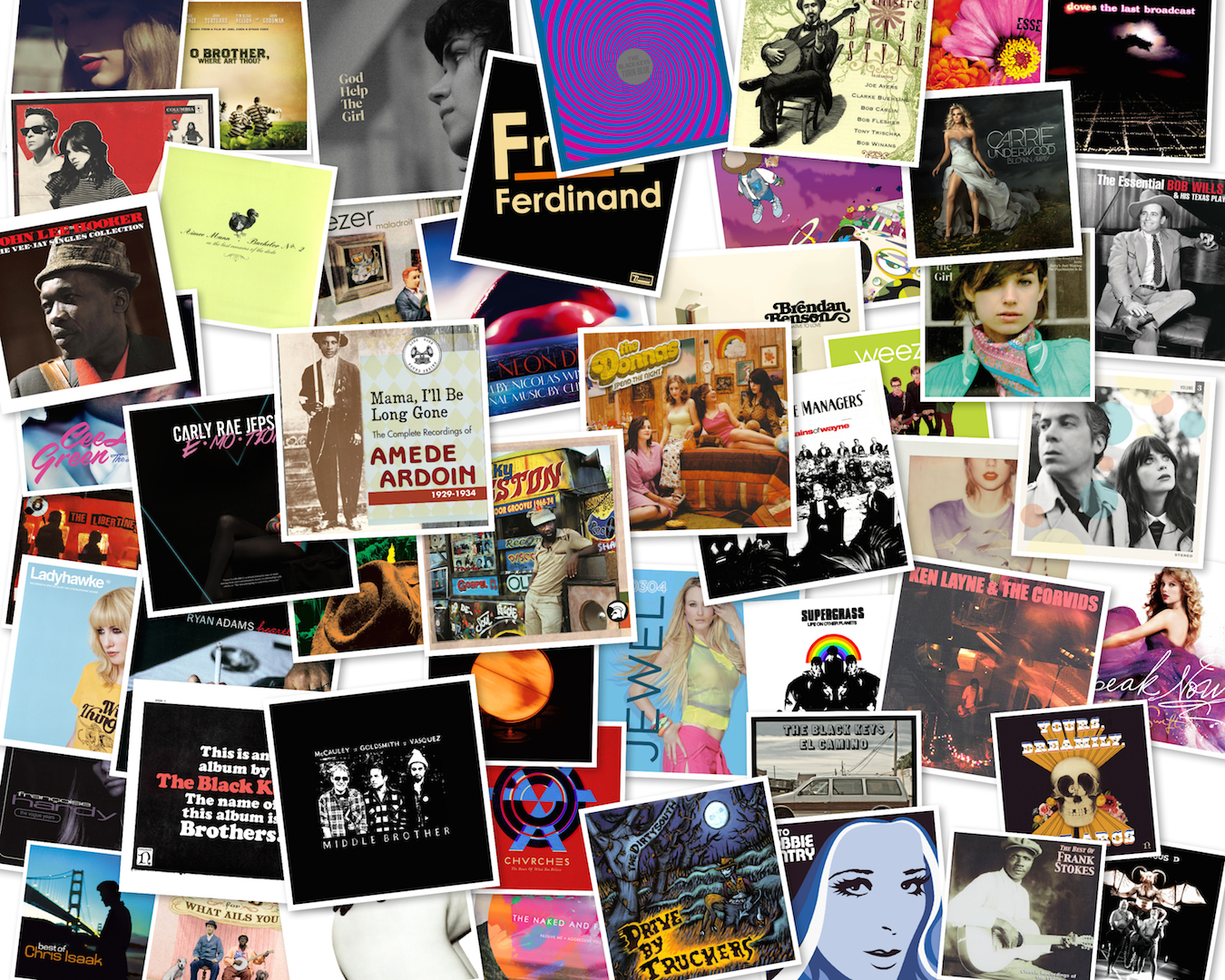
Beyoncé has released a new album, Lemonade, to predictably rapturous reviews. Ever since her halftime performance during the 2013 Superbowl, her every emanation has been greeted by the Beyhive with an ecstasy that puts the average Marvel movie fanboy to shame. Curious about they hype, I decided to give it a listen and, though I have absolutely no shame about proclaiming my girlpop fandom, I thought the album was pretty boring. Fans have lauded its musical eclecticism, but it sounded unfocused and schizophrenic to me. “Hold Up” has a nice vocal hook, but I liked it the first time when Karen O did it in “Maps.” “Sorry” features a herky-jerky rhythm that recalls the black debate style that’s en vogue. “Love Drought” consists of airy vocals over moody atmospherics that wander aimlessly. (I was reminded of Zayn Malik’s latest — is this kind of production a trend in contemporary R&B?) “Sandcastles” is a lumbering piano ballad while in “Freedom” Beyoncé exhorts herself to “keep running because a winner don’t quit on themselves.” The only song I enjoyed was “Daddy Lessons,” a jazzy country rave-up. Don’t put your money on me, but I don’t see any future radio staples like “Crazy in Love” or “Single Ladies.”
What the album lacks in pop songcraft it makes up in raw attitude. It reminded me of contempo literary fiction — sure, it may be a drag to listen to, but it feels vital because it hits all the right themes. In this case, it’s “intersectionality,” that of-the-moment combination of black nationalism (“Freedom” and “Formation”) and feminism (“Hold Up,” “Don’t Hurt Yourself,” and “Sorry”). It’s the kind of work that gives Pitchfork writers and Millennial cultural critics a lot to gas on about.
Beyoncé’s undeniable success the past few years is a good reminder that, above all, a pop star has to project a larger-than-life personality to command the public’s love. Good songs aren’t enough. Take the case of Emotion released by Carly Rae Jepsen last year. Song for song, Jepsen’s work is superior to Lemonade in terms of pure craft. Heavily influenced by 80s pop, Emotion bursts with candyfloss vocals, electro-dance beats, and perky hooks all held together by slick production. The album has plenty of fans, but sales have been disappointing and it hasn’t produced any major singles like Jepsen’s monster hit “Call Me Maybe.” As many critics have pointed out, the Canadian-born Jepsen doesn’t have a distinctive persona. All you learn from Emotion is that she likes boys and being in love. Like many former Idol contestants, she has the technical ability but lacks an interesting point of view. Even her album title is nondescript.
But the main thing that struck me about reviews of Beyonce’s album, and even Jepsen’s, is that the music press and fans seem to have a deep need to believe that La Knowles isn’t just a star performer — they need to believe she’s a musical genius. This GQ writer praises the album as a showcase for “the most formidable musical prowess on the planet.” He commends the “endless procession of musical details to freak out over” and is gobsmacked that “one artist is capable of making all [of the album’s] stylistic transitions.” At no point does he mention that the record had fifty-two — that’s a 5 followed by a 2 — writers and producers. This piece acknowledges Beyoncé’s phone book-like roll call of collaborators, then goes on to cite that as proof of her brilliance before likening her to Michelangelo overseeing a workshop of assistants. “Pop music is a kind of auteurism,” she writes:
It’s undeniable that Beyoncé had her hand on the controls for the creation of every piece of this album. Beyoncé is a credited writer on every single song. She is also a credited producer on every track but one. She touched everything. She tweaked the lyrics. She remixed the vocals. She made decisions big and small and perfected her art until it was ready for public consumption.
Right, and she probably mastered the album too before sitting down at a drafting table to create a new typeface for the liner notes. Look, Beyoncé has been in the music biz for almost two decades. During that time she’s been a part of 11 albums as either a group member or a solo artist during her climb to the top, so I’m not about to deny her musical savvy, but there’s little evidence that she’s an auteurist studio maven like Phil Spector, Brian Wilson, or Stuart Murdoch. More importantly, there’s nothing wrong with admitting that. Ella Fitzgerald, Billie Holiday, Frank Sinatra, and Aretha Franklin, to name just a few, are all considered titans of American song even though each did very little songwriting or producing during their careers.
Fans nowadays are determined to elevate their favorites to the status of golden gods. This Bustle article tells us that Jepsen, like a modern day Berlin or Gershwin, “wrote” 200 songs for songs for Emotion which she then whittled down to a mere dozen. Uh-huh, sure. More accurately, this review notes 200 songs “were assembled” from which Jepsen selected twelve. The passive voice of “were assembled” nicely avoids telling the reader those 200 tracks were written by a legion of professional songwriters.
Why the deception and weasel words? Have the recent deaths of Bowie, Prince, and others created an anxious need for musical svengalis? Madonna is irrelevant, Rihanna is floundering, and Lady Gaga is too weird, so perhaps there’s a Pop Queen vacuum that needs filling. OK, fine. But why are so many music writers clueless about how songs are actually created?
Maybe these questions are swirling around my head because I recently enjoyed The Song Machine: Inside the Hit Factory by John Seabrook. Seabrook, a staff writer at The New Yorker, gives a good tour of the music industry over the last couple of decades — from the death of CDs to the rise of filesharing and streaming services like Spotify. He looks at not only how the business of music has evolved, but how music production (at least for top 40 pop) changed. The book also contains a number of mini-bios of hitmakers like Dr. Luke and Max Martin. Martin, a Swede who prefers anonymity, is probably the closest heir we have to studio geniuses like Spector and Wilson. He’s written and produced dozens of hits, including:
If you hate this crap, now you know exactly who’s responsible for it! But what I appreciated most about the book was the songwriting anecdotes and behind-the-scenes gossip. For example, we learn that Martin was a huge fan of the Yeah Yeah Yeahs’ “Maps” but was frustrated by its lack of a killer chorus. So he rewrote the song with a killer chorus and came up with “Since U Been Gone.” As for gossip, I’ve read my fair share of pop music history and I’ve lost track of the number of times a singer is introduced to a song, they hate it, they’re practically forced by their record company or management to record it at gunpoint, yet the song goes on to be a huge, career-defining hit. To the list that includes The Supremes with “Where Did Our Love Go” and Françoise Hardy with “Tous Les Garcons et Les Filles” we can add Clarkson and “Since U Been Gone.”
People are already calling Martin’s latest work for Justin Timberlake the song of the summer. Hey, Beyoncé worshipers, this is what a pop genius sounds like.
Related
Blowhard, Esq. writes:
This one is a two-fer: not only is it a celebration of street harassment and the male gaze, you got white boys appropriating soul music. Music for shitlords/Trump supporters.
HT to Callowman for reminding me of this gem.
Blowhard, Esq. writes:
I’ve been listening to a lot of classic albums lately and this collection sticks out as one of the best. Each song is like a little short story — the sometimes dark subject matter belied by Hurt’s warm, smooth voice and marvelous finger-picking guitar. At only $5, the album is a steal. As my friend Lloyd used to say, a copy belongs in every civilized home. Here are a few tracks for your previewing pleasure.
Fenster writes:
Steve Sailer asks if fake hate crimes are against the law. Apparently not, in a lot of places. But should criminal penalties apply? And is a fake hate crime itself a hate crime? And should it be prosecuted in the same manner and under the same legal logic as an “authentic” hate crime?
Sailer discusses the Whole Foods birthday cake dust-up but here’s another: the Albany bus incident. Three black students at the University at Albany got into a fight on a bus as it was entering the campus. They claimed they were attacked and were subjected to racial slurs. Police brought in. Large student protests ensue. University president rushes to judgment before the alleged white perps could be found:
“I am deeply concerned, saddened and angry about this incident. There is no place in the UAlbany community for violence, no place for racial intolerance and no place for gender violence. . . .our student affairs personnel and our Office of Diversity and Inclusion staff are working together to support our young women.”
A video of the incident subsequently demonstrated that the attack was fabricated and that the black students were the aggressors. That is what the video seems to suggest at least, and what civil and university authorities concluded. The three students were expelled and also charged with assault. Two were charged with falsely reporting the incident.
This is the consensus view of what happened. Sites like Jezebel are keeping the door open to alternative explanations:
Still, there’s debate over whether the video of the incident released tells the full story about what could’ve incited the women accused of assault.
But the issue appears for the most part over and done.
Of course it is not over as political fodder, and the right has joyfully used this as another demonstration of the use and abuse of hate crime designations. I am not going to jump in on that aspect here. But it raises the issue of whether fake hate crimes should themselves be deemed hate crimes.
If we are offended by the particulars of this case we might rush to say yes. But let’s first ask what a hate crime is, or should be.
I was for quite a while against hate crimes for the simple reason that motivation is hard to determine and in a sense irrelevant to actual harm done. Shouldn’t people who murder face similar penalties without having to peer into the perpetrator’s brain to discover a motivating factor? Doesn’t that serve to–if you will–privilege one set of victims and their friends and families over others?
But we distinguish between different kinds of crimes all the time. Manslaughter is different from second degree murder which is different from first degree murder and so on. The distinctions here can be hard to prove but distinctions are nonetheless made. A dead body either way, but both the behavior and attitude of the perpetrator can make a difference ( was it willful? premeditated? committed with wanton indifference?).
In making these distinctions we are making a cultural values statement: we consider a depraved heart murder a more serious thing than other murders. We do this because it both reflects our values and because we hope that a higher level of punishment will deter especially heinous crimes.
The law is not just concerned with righting individual wrongs. Crime and punishment are not truly truly blind in that sense. The treatment of criminal matters is unavoidably bound up with issues of social control and social values. Punishment is not just a matter of socializing private vengeance, with an eye only on rectifying the private harm. Laws as written and laws as enforced aim to do more than punish the guilty in a narrow sense. Some on the right are uncomfortable with socializing private things but then even the “broken windows” approach popular among conservatives is all about foregrounding social effects and backgrounding the effect of the actual acts on the victims.
In this light, it is perfectly fair to argue that a murder intended to instill fear into an entire community–a vicious lynching, say–is a more serious matter than a love affair gone wrong. Looked at this way it is not the motivation per se that is being punished in a hate crime. It is the broad reach of the act beyond the private effect on the victim. Moreover, if there is a social consensus that instilling collective fear is something in its own right to be punished then yes I think hate crime laws, properly written and fairly enforced using this standard, are quite sensible. The State need not read the offender’s mind; it has only to reasonably conclude that the harm had large social effects in addition to smaller private ones.
Sometimes fake hate crimes, like real hate crimes, start with an actual offense. If a Muslim wishing to build sympathy for Islam calls in fake bomb threats to a mosque the harm is as real and as substantial as if it had been called in by an anti-Islamic activist. Terror. Evacuation. Police presence. Disruption of activities. But what of Muslim who falsely claims he was subject to harassment and violence? No actual event occurred. In such a case the only offense is social, there being no actual private act of harm at the bottom of things.
So some fake hate crimes only exist as social harms, and have no aspect of individual harm with which the social may intertwine. What of it? Isn’t the social harm of sufficient consequence to bring the law into play?
Fabrizio del Wrongo writes:
“Band of Outsiders” is, I think, the tenderest of the great Godard films. It’s also, with the exception of “Breathless,” the one that looms largest in the public consciousness: The scenes showing Karina, Frey, and Brasseur doing the Madison in a Parisian cafe, or running through the Louvre in an attempt to break the visitor speed record (held, of course, by an American), are integral parts of the catalog of images we carry in our heads connected with the French New Wave.

This large poster, the key marketing instrument for the film in France, features art by Georges Kerfeyser. I love the image of Karina’s mischief-laden eyes. The idea seems to be to hint at Karina’s role in influencing her male friends to commit ignoble deeds. The vignette of Frey and Brasseur at the bottom of the poster suggests the violence to which this may lead, though, if you’ve seen the film, you know the gunfight it represents is thoroughly mock in nature.

The smaller French poster features a more modernistic design emphasis. It may do a better job of encapsulating most folks’ sense of the movie’s tone. Even so, I think it’s too grim and lacking in charm. The mock gun battle makes an appearance at the top of the composition.

This British poster rearranges the elements of Kerfeyer’s composition to suit the horizontal format of the traditional English poster. It loses something in the translation.

The poster used in Finland combines the elements of the Kerfeyser composition and the mod quality of the smaller French poster. It has an almost musical jauntiness. Note that Karina has been transformed from an effervescent muse into a disapproving grump.

The German poster reproduces the French design.

In the States, the posters used to advertise European art films often featured rudimentary designs and limited color palettes, and this poster for “Band of Outsiders” is no exception. The masked boys, familiar from the other posters we’ve seen, make an appearance, but the most notable aspect of the composition is that image of Karina dancing. As far as I know, this is the only original-release poster for “Band of Outsiders” to allude to the movie’s most famous scene.

This is an American-made poster featuring the Spanish language. It was used either in Spanish-speaking parts of the U.S. or in parts of Mexico reached by American film distribution. The vignette of the masked boys echoes that featured on the English-language American poster in that one of the pair has been given a gun. But I find it more interesting that each has been provided with his own punctuation mark. Unless you’ve seen the movie, it’s hard to know what those hooded figures represent, even on the Kerfeyser original. Perhaps whoever designed this poster thought it best to hint at the fact that their arrival at the role of criminals was not without a degree of surprise and confusion. Though I can appreciate the attempt at liveliness, I think this poster is something of a mess, and fails to communicate a sense of the movie.

Lastly we have an Argentinian take, which repeats the design of the U.S. Spanish-language poster seen above. It’s even more of a mess than its model.
Related
Fabrizio del Wrongo writes:

“Cry Danger,” the first film directed by Robert Parrish, may come closer to the wry, frugal tone of Dashiell Hammett than even Huston’s adaptation of “The Maltese Falcon,” which leans rather heavily — and quite successfully — on comic grotesqueness. There’s little that’s grotesque in “Cry Danger,” though there’s plenty that’s comic: Screenwriter William Bowers salts the action with one-liners, and the actors reliably underplay them, winking at you through their readings. The picture has an air of studied nonchalance, one that seems to emanate from star Dick Powell. You’d call him cool if he weren’t so grave.
Noir fans often debate whether Powell or Bogart best embodies the qualities of the genre’s archetypal leading man. Powell has none of Bogart’s romanticism, which is really a sort of idealism that’s been allowed to decay and marinate in its own putrescence. He also lacks Bogart’s sadism. Rather, his toughness and cynicism are aspects of his wariness, and admissions of his vulnerability. It’s hard to separate Powell’s peculiar self-aware quality from his looks, which even in the raggedness of middle age carried the residue of collegiate cheer. Powell’s later performances are nothing if not negotiations with his ‘30s persona, and the way in which he allows you to sense that internal parley is sympathizing; it draws you into his humanity.
The plot features the expected skullduggery, yet the impression the movie leaves is one of cramped and curdled domesticity. The sets — a rinky trailer park, an apartment filled with atrocious knickknacks, a bookie’s den with its too-neat stacks of anonymous documents — are flatly lit and have a dime-store fatigue, and the Bunker Hill locations look sort of phony even in the scenes that are shot plein-air. Cinematographer Joseph F. Biroc keeps the framing tight, so that everyone seems slightly uncomfortable, as though they’re guests at a party that’s started to wind down. This is probably what makes the movie feel so anxious, itchy, unsettled. It’s a hang-out picture in which relaxation isn’t an option.
All the secondary players are good, especially William Conrad, with his menacing smarm and eyes that blink off the beat, and Richard Erdman, who is unforgettable as a lame wino, the Panza to Powell’s Quixote. Like Lew Ayres’ sozzled heir in George Cukor’s great adaptation of “Holiday,” Erdman’s drunkard has a tenderness that affects the fabric of the surrounding picture. By the movie’s end we’re convinced of Powell’s fortitude, of his ability to stick around, but Erdman we’re not so sure about. He seems in danger of sliding right off the face of the world.
Related