Naked Lady of the Week: Abigaile Johnson

Fabrizio del Wrongo writes:

aj-cover

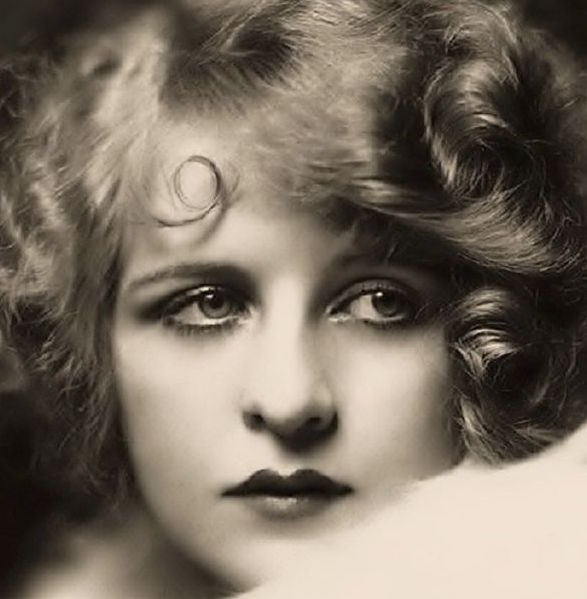
Abigaile Johnson’s real name is surely not Abigaile Johnson. She’s Czech, and she looks it. While putting together this post I was struck by the facial resemblance to former NLOTW Jenni Czech, profiled back here.

What do you reckon makes a girl look Czech? I’m not sure. A face is such a complex, subtly conglomerated thing that it’s often hard to isolate the feature or set of features most responsible for its overall effect. Maybe it’s a proportional thing, and we’d need the assistance of a computer to figure it out? I bet facial-recognition software, tweaked in the right manner, could do a fair job of determining genetic background. But who would want to do that but Hitler?

Call me Hitler if you like (and if you do, please don’t forget the “heil”), but taking notice of ethnic differences among women — a branch of girl watching — is one of my favorite pastimes. What happens when, having successfully averted the scourge of inbreeding, we have no Czech-looking women to admire? I suppose we’ll be so relieved to be living in a Utopia that we’ll hardly notice the loss.

Abigaile started modeling in the late ’00s, then moved on to starring in hardcore movies, where her sweet looks and mousy manner made for a vivid contrast with the likes of Rocco Siffredi. The front page of her website hints that her time spent in hardcore films was not entirely wonderful. Shockeroo. But she’s also frank about the fact that it allowed her to travel to exotic and interesting places. Based on the evidence of her Facebook page, she’s still trading on her beauty (I suppose I’m being naive by wondering if these girls ever feel weird asking fans to buy them presents), but she’s no longer active in the sex industry. If you’re interested in keeping up with her, you can go to her YouTube channel and watch her play video games while smoking a hookah.

Nudity below. Have a great weekend.

Continue reading

Posted in Photography, Sex, The Good Life | Tagged , , , | Leave a comment

Juxtaposin’: Sway

Blowhard, Esq. writes:

Posted in Music | Tagged , | Leave a comment

Juxtaposin’: Strange Love

Blowhard, Esq. writes:

Posted in Music | Tagged , , | Leave a comment

A Curiel Turn of Events

Fenster writes:

Trump’s comments on the judge in the Trump University case are curiel indeed.

He leads with his chin, making the most of the fact that Curiel is “Mexican”.  That allows the mainstream press to pummel him.  Curiel is from Indiana fer chrissakes.  And since when should ethnicity in itself be a reason for disqualification or recusal?  And it’s racist.

Trump himself does little to make a more nuanced argument.  When Jake Tapper describes Trump’s position as being opposed to Curiel handing the case because he is “of Mexican origin”, Trump agrees.  “He’s Mexican descent.  I’m building a wall.”

And so it goes.  Good legal minds like Ilya Somin and Jonathan Adler at The Volokh Conspiracy have little problem tearing through the argument that being Mexican is enough to warrant recusal.

Former AG Alberto Gonzales sort of sticks up for Trump, but it is not a full-throated defense, and consists mainly in maintaining that he has a right to ask.  That’s not very strong stuff, particularly in comparison with the flammable way Trump has chosen to frame the issue–it’s about “Mexican.”

So is Trump crazy or crazy like a fox?

Damned if I know.

Maybe he is just trying to rile up the poorly educated yahoos and that’s all there is to it.  But there could be more.  Is there more to Trump’s objection to Curiel, even if he has yet to articulate it?

There has been a lot of ink spilled on whether the La Raza lawyer’s group that Curiel is affiliated with backs the political program of the larger advocacy group, La Raza.  There is no direct affiliation, and Right and Left are now furiously trying to make or discount connections.  The idea is that the greater the affiliative and personal ties between the two groups the better the argument for recusal.  But it is all kind of gray, a shade which is at odds with the black-and-white way Trump has formulated the issue.

So here maybe is a better, clearer tie.  Curiel may not be a member of La Raza but he does appear to be a member of the Hispanic National Bar Association (HNBA).  That association–which is an association of attorneys, a professional association, and not an ethnic advocacy group–called for a boycott of all Trump enterprises.

The HNBA calls for a boycott of all of Trump business ventures, including golf courses, hotels, and restaurants.  We salute NBC/Universal, Univision and Macy’s for ending their association with Trump, and we join them in standing up against bigotry and racist rhetoric. Other businesses and corporations should follow the lead of NBC/Universal, Univision and Macy’s and take similar actions against Donald Trump’s business interests.  We can and will make a difference.

This looks pretty damning to me.  It is one thing to say “hey, I’m not in La Raza” or “yes I am of Mexican descent but what of it?” or even “yes I oppose Trump’s politics but that would not taint my judicial approach.”  But here, we have a professional association of attorneys openly calling for economic harm to Trump’s businesses.

Now, to be fair, Curiel’s Questionnaire for Judicial Nominees does not suggest a professional record of activism.  Divorces.  Municipal law.  Some criminal cases.  He was for over a decade a federal prosecutor with significant involvement in drug and money laundering cases dealing with Mexico and a few times attended events dealing with Latino issues.  But his legal and prosecutorial work was essentially unrelated to immigration, and his work outside work shows little activism.

As to judicial philosophy, his answers to questions from senators during the confirmation process do not suggest he falls in line with Sotomayor’s “wise Latina” kind of thinking ethnic:

The judicial process must be administered fairly without regard to a person’s background, economic situation or personal situation. Cases must be decided based upon admissible evidence and the applicable law. Empathy does not play a role in the judicial process. . . . A judge protects the “little guy”(and the “big guy”) by applying the law fairly and evenhandedly to all of the parties whether they are“little” or “big.”

On the other hand, he describes himself in the Questionnaire as being a “lifetime member” of HNBA (p. 4).  Additionally, he is quite forthright in describing how he would always take the prudent high road on conflicts of interest and recusal (pp. 45-46).   For instance, he says that if confirmed he would likely step down from a Board position at a non-profit K-8 learning academy, this when the law permits a judge to hold such a position and when he has never had occasion to play a part in a case where any conflict would arise.  So he expresses all the correct careful notes, as he should.  But now here he is–a lifetime member of a group officially on record as favoring damage to Trump’s economic interests–serving as a judge on a case dealing with Trump’s economic interests.  Surely there is enough in just this set of facts to suggest that some concern would be appropriate.

So why does Trump continue to lead with his chin?  He briefly mentions Curiel’s memberships in the Tapper interview but mostly passes the issue by.  Is it because he is a Neanderthal?  That he doesn’t grasp the significance of HNBA’s call for a boycott?  That he is just inarticulate?

Or does he get it?

Trump has sometimes been likened to Ali.  The Donald could be doing a rope-a-dope.

Posted in Politics and Economics | Tagged | 16 Comments

Juxtaposin’: Rides

Fabrizio del Wrongo writes:

Posted in Movies | Tagged , , , , , , , | Leave a comment

“The Roosevelt Myth”

Fabrizio del Wrongo writes:

Planned_Economy_or_Planned_Destruction

I had a good time reading John T. Flynn’s “The Roosevelt Myth.” Even many of Roosevelt’s fans will admit that his administration was, well, a little bonkers. But Flynn presents it as nothing short of revolutionary — though in this case the revolution proceeded by blunder rather than decisive action. Flynn’s FDR is a man utterly without principle beyond what can be ascribed to ego, a great nattering booby drunk on quackery and blank-check billions bestowed by a bootlicker Congress. Writing with dry wit and a skittering, run-on style, Flynn portrays the New Deal as an immense and chaotic traveling circus: profligate, vainglorious, forever changing, it began as a fiscally conservative call to balance the budget, and quickly mutated into something very different (its vagueness was its killer app). At the head of the circus rode the president, chin thrust skyward, an American Quixote summoning windmills from the ether of politics and public opinion, and then ostentatiously galloping towards the horizon. I wonder: Has there ever been a more vivid American character than FDR?

According to Flynn, FDR was neither an intellectual nor a deep thinker; unlike cousin Teddy, he didn’t read books. But he loved the burnish conveyed by learning, and as president he collected around him a gaggle of professorial courtiers. Attracted by the glamor of power and the opportunity to conduct social experiments without constraint of budget or good sense, these men poured into Washington, mostly from the east, where they jockeyed for a place at Roosevelt’s ear. That many of these men were Communists is beyond doubt, but how deeply Roosevelt himself was attached to — or even understood –Communism is anyone’s guess. For Flynn, Roosevelt was too self-involved, too unreflective, to back any particular philosophy. But Communism was in the air at the time, and Roosevelt gave considerable succor to its supporters. (So did the First Lady — she held sleepovers for young pinkos.)

It didn’t hurt that the Reds seemed smart and newfangled. FDR loved novelty, and he eagerly adopted every crackpot scheme then fashionable among intellectuals. He was also a natural showman (Flynn compares him to a romantic actor), and he couldn’t resist the opportunity for theatrics presented by such a surfeit of snake oil. Bureaus, agencies, and committees spread like fever sores (Flynn counts 111 of these bodies), each  headed by a character wilder and more unscrupulous than the last. There was Henry Wallace, head of the Agricultural Adjustment Administration, later a cabinet member and vice president, who commissioned his guru, the mystic Nicholas Roerich, to travel to China to investigate grass seed, where he instead spent his time searching for the mythical kingdom of Shambhala. (Roerich was nominated for the Nobel Peace Prize on three occasions.) And Hugh Johnson, a former Army man who, inspired by Mussolini (one of the heroes of the early New Deal), turned the National Recovery Administration into a de facto police force, able to send to prison a tailor who dared press a suit for 35 cents rather than the 40 mandated by New Deal bureaucrats. “Flying squadrons of these private coat-and-suit police went through the district at night,” writes Flynn, “battering down doors with axes looking for men who were committing the crime of sewing together a pair of pants at night. But without these harsh methods . . . there could be no compliance because the public was not back of it.”

Flynn, whose background was in economics journalism, delights in providing examples of Roosevelt’s profligacy, and denouncing its effects. Elected on a promise to cut spending, FDR proceeded to outspend all previous presidents combined. I’ll spare you the data but for one citation, intended to underscore the ballooning of executive privilege begun by Roosevelt: “In 1928 all the expenses of the President’s office amounted to $585,000. In 1953 they amounted to nearly six billion dollars.”

The billions that flowed through the New Deal were the key to Roosevelt’s power: he used them to buy the support of political minorities. It’s no coincidence that the FDR era saw the emergence of labor unions as a political force and the reorganization of influential “machines” in the big cities. Their principals knew who wrote the checks, and if they (or their constituents) forgot, they were quickly reminded — often by muscle. In Louisiana Roosevelt tried to use federal money to break the influence of Huey Long, himself something of a FDR wannabe. However, Long out-maneuvered him:

[H]e stopped federal funds from entering Louisiana. He forced the legislature to pass a law forbidding any state or local board or official from incurring any debt or receiving any federal funds without consent of a central state board. And this board Huey set up and dominated. He cut short an estimated flood of $30,000,000 PWA projects. Then he provided, through state operations and borrowing, a succession of public works, roads, bridges, schools, hospitals, farm projects and relief measures. The money was spent to boost Huey instead of Roosevelt. The people were taught to thank and extol Huey rather than Roosevelt for all these goods.

The book is full of such stories, as amusing as they are alarming.

Despite all the spending, by the end of Roosevelt’s second term the economy had not recovered:

When he was elected there were 11,586,000 persons unemployed. In 1939 . . . there were still 11,369,000 persons unemployed. These figures are supplied by the American Federation of Labor. In 1932 . . . there were 4,155,000 households with 16,620,000 persons on relief. In 1939 . . . there were 4,227,000 households with 19,648,000 persons on relief. In the presence of these undisputed facts how can any sober-minded citizen suppose that Mr. Roosevelt brought recovery to the United States?

Fortunately for Roosevelt, some economists from Harvard, newly welcomed into the president’s “brain trust,” supplied him with a miracle. The problem, they claimed, was that Roosevelt hadn’t spent enough (sound familiar?). And besides, government debt doesn’t really exist, because it’s money the people owe to themselves. Roosevelt’s spirits immediately lifted. This was like telling Rosie O’Donnell that she needs to eat more Twinkies. But what to spend on?

Prior to the late ’30s FDR had been a staunch isolationist — not because he believed in isolationism, but because that’s what the polls told him he should be. But now Europe was headed towards war, the professors were telling him to spend, and America’s pal (and the object of Roosevelt’s adoration) Uncle Joe Stalin needed our help. Flynn talks of the New Deal having three distinct phases. Is it fair to say that in some ways the war was the fourth?

Related

  • A free eBook file containing the original text of the book can be downloaded here.
  • Flynn was a pretty interesting guy.
  • Foseti’s take on the book.
  • I recently enjoyed re-reading Mencius Moldbug’s debates with the late Lawrence Auster on the topic of FDR . See here and here.
Posted in Books Publishing and Writing, Politics and Economics | Tagged , , , , | 2 Comments

Naked Ladies of the Week: The Work of Alfred Cheney Johnston

Fabrizio del Wrongo writes:

acj-cover

How to describe the the erotic photos shot by Alfred Cheney Johnston during the second and third decades of the twentieth century? It seems to me they intentionally dodge easy categorization. Cheney plays with classical ideas of poise and lyricism. Using a modern mode, he invokes the prerogatives of poetry, dance, painting, sculpture, and theater. The invocation is sincere but not wholly earnest; he often seems to be asking us to see the impetuous urban girl below the pose, the histrionics. And in his peculiarly fragrant way he celebrates that impetuosity. This may be most apparent in the shots in which his subjects stare directly at the camera. These have the effect of perforating the screen of fantasy — of asserting the specificity of personality. They remind me of the moments when Anna Karina breaks the fourth wall in her performances for Jean-Luc Godard.

In many ways Cheney is a thoroughly Beaux-Arts character. Augustus Saint-Gaudens would have understood him perfectly. And yet, like another late Victorian, D.W. Griffith, his place as a pioneer requires that we compare him with those who followed in his wake — with Hugh Hefner, Larry Flynt, and that girl on Reddit who shares nude selfies for no reason but the joy that she derives from it.

This vantage displays Cheney in a light that is perhaps unfair, because it forces us to reckon with the antique quality of his brand of artiness. Yet it’s flattering in that it highlights the foundational qualities of his take on American femininity. Cheney was the house photographer for Flo Ziegfeld’s famous “Follies,” a forum that preceded the movies as an engine of female sexual entitlement (what our enemies would describe as “rape culture”). Indeed, it’s difficult to understand the phenomenon of the flapper absent the influence of Ziegfeld’s showmanship, which celebrated the showgirl as the embodiment of youth, freedom, glamor, and modernity. Before she ever titillated a movie audience,  Louise Brooks appeared in the “Follies,” and shed her clothes for Alfred Cheney Johnston.

Nudity below the jump. Have a great weekend.

Continue reading

Posted in Photography, Sex, The Good Life | Tagged , , , , , , , , | 2 Comments

Juxtaposin’: Lies

Blowhard, Esq. writes:

Posted in Music | Tagged , , , | Leave a comment

Juxtaposin’: Dreams

Blowhard, Esq. writes:

Posted in Music | Tagged , , , | 3 Comments

Eddie’s Spirit Chronicles: Whisky Live

Eddie Pensier writes:

whiskylive

I was hesitant when I purchased my $99 tickets for Whisky Live Canberra: Would it be worth the money? I was mindful of the fiasco that was the recent Australian Barbecue Festival in Sydney and set my expectations low.

I shouldn’t have doubted WL. I was extremely and pleasantly surprised by the event, held at the University of Canberra’s Refectory on a cold night a week ago. All three sessions were sold out, and the levels of patronage ensured a lively but never overcrowded evening. The admission fee included a messenger bag, a lovely tasting glass, a guide and a pen, plus a wide variety of high-quality munchies including wings, pork sliders, tacos, wedges, prime rib sandwiches, pastries and fruit. There were about twenty stands featuring different manufacturers and distributors, with about 100 beverages available for tasting. Here are my impressions of a few of them.

Aberlour 16
With Aberlour 12 already one of my top single malt Scotches, I was excited to try the more aged expressions that are out of my budget. I was disappointed that the 16 was actually harsher and spiritier than the 12, despite being the same ABV. The signature curranty sweetness (from the sherry casks) and the cakey spiciness (from the Bourbon barrels) were still there but it had a throat-searing, grappalike astringency that disappointed.

Continue reading

Posted in Food and health, The Good Life | Tagged , , , | Leave a comment