Linkage

Blowhard, Esq. writes:

Posted in Linkathons | 1 Comment

Music Du Jour: Vince Guaraldi’s “Jazz Impressions of Black Orpheus”

Blowhard, Esq. writes:

jazzimpblackorph

I’ve been exploring West Coast cool jazz and bossa nova a lot the past couple of months. This is one my favorites so far. You can listen to it here.

Posted in Music | Tagged , , , | 1 Comment

Juxtaposin’: Donald Trump

Blowhard, Esq. writes:

GeneralTrump

“Trump is Hitler!” says the Washington Post on 2/21/16.

“No, Trump is Charlemagne!” responds the Washington Post on 2/22/16.

“Where’s Charlemagne When We Need Him?” wonders the New York Times in 2012.

Posted in Politics and Economics | Tagged , , , , , , | Leave a comment

Notes on “Kumiko, The Treasure Hunter”

Fenster writes:

This was a hard movie to like, in large part because the main character Kumiko is so hard to like.  Impossible, probably, but tell me if you felt a glimmer or two.  I did not, at least during the movie.

Kumiko is a youngish Japanese woman who becomes fixated on a scene in the film Fargo in which a briefcase of money is buried in the snow.  She takes the fiction to be fact and undertakes a voyage to claim the treasure.  That’s what I knew when I saw it, and so I thought while the movie might have dark elements it might also have some Coen-like black humor along with interesting characters and odd plot twists.

As to character: Kumiko goes beyond dark humor.  She is depressed, lethargic and out-of-touch with life.  And as to plot: there is precious little.  The viewer does not know it at the outset but from the first frame Kumiko is doomed.  No learning takes place.  No Achilles heel is discovered that triggers tragedy.  No saving grace is found.  Step by unrelenting step Kumiko heads down, inexorably.

The film’s disdain for convention was to me off-putting.  I kept waiting for something–anything–to happen that would derail the poor girl’s deluded, one-dimensional descent.  But no.  True, the filmmakers in a sense avert their eyes at the end for decorum’s sake but make no mistake: this girl is helplessly falling from the sky from the start and we are the observers as she invents a story for herself during her freefall.

But did I like the movie?  Well, as I say, it was a hard movie to like.  But yes, at least after the fact, as I noticed it had gotten under my skin.

I wrote about The Revenant, another movie about wandering through a cold landscape, that is was not as good as it looked.  Here, the opposite it true.  The Oscar baiting Revenant makes a big to-do about not very much.   His son, the Indian presence, the bear and so on and so forth.  All in the name of . . . what?

Kumiko may not have the classic trappings of tragedy but it is a tragedy nonetheless, and one that in its stark simplicity feels somehow true, despite the ludicrous plot premise.  Poor Kumiko has no idea how very far she is from anything real.  She has no chance of making it, and to present her story in any other way would be false to her, and to all of those who are fumbling in the darkness, millions of miles from anywhere and not able to grasp how far from grace they are.

Posted in Movies | Tagged | 1 Comment

Architecture and Color

Paleo Retiree writes:

Posted in Architecture | Tagged , | Leave a comment

Notes on “Snow Trail”

Fabrizio del Wrongo writes:

e0349c598cbf022ded5b4aad440ed0d9

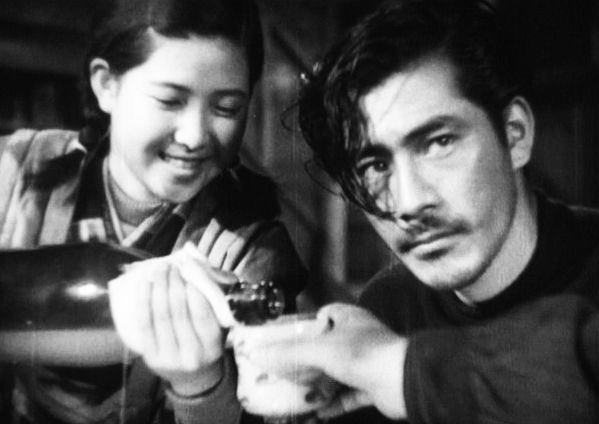
This 1947 suspense melodrama was written by the young Akira Kurosawa, and it stars two of Kurosawa’s screen alter egos, Takashi Shimura and Toshiro Mifune. They’re playing bank robbers (Japan has bank robbers?) on the run from the law, who take refuge in mountainous winter terrain. Mifune is the cruel, self-centered bastard (a role I wish he’d played more often); Shimura is the pair’s soul and conscience. The screenplay is notable for the way in which, during its early portions, its point of view refuses to remain fixed: Opening on a group of lawmen in pursuit of the criminals, it quickly skips to a pair of boys who uncover some clues regarding the crime, and finally lands on the robbers themselves. In structuring the movie in this manner Kurosawa may have intended to slowly zero in on the core of the story’s action, but director Senkichi Taniguchi doesn’t have the finesse to sell the device — it feels odd, confused, arbitrary. The plot of the movie is heavily indebted to American crime films in the Bogart tradition, things like “The Petrified Forest” and “High Sierra.” (At one point the Mifune character professes an interest in American movies.) But it’s equally indebted to German films of the ’20s and ’30s, the mountain genre in particular — a weird correlation given the state of world affairs at the time of the movie’s release. Taniguchi is well-suited to the mountain film: He has a knack for capturing primal images of landscape and weather, and for connecting them to the drives and emotions of his characters. Yet he’s also adept at homey domestic scenes: There’s considerable warmth in his treatment of a snowbound family who unwittingly aids the two fugitives. Kurosawa must have recycled a few of his ideas, as “Snow Trail” bears a remarkable resemblance to the 1985 “Runway Train,” based on one of his later screenplays. The redemptive narrative is predictable and perhaps trite, but it points the way to Kurosawa’s humanist parables of his middle period.

Posted in Movies, Uncategorized | Tagged , , , , , , , | Leave a comment

Naked Lady of the Week: Elina

Fabrizio del Wrongo writes:

30

Seriously, fuck anyone who isn’t wholly supportive of the manic pixie dream girl. How is it possible that we’ve come to inhabit a world in which Audrey Hepburn, Zooey Deschanel, and their like are deemed unfit for adulation? Sure, they’re male fantasies — or at least they cater to them. But who cares? You know who also caters to male fantasy? Cam Newton. If grown men stop wearing the jerseys of giant sports freaks to the mall, maybe then I’ll consider relinquishing my investment in the manic pixie dream. Until then, count me among the ranks of the hopeful, the believing, the charmed.

Ukrainian model Elina, her mouth equally capable of Bardot pouts and impish grins, is every inch the manic pixie dream girl. She seems a naughty and impetuous thing, and her charm just about slaps you on the kisser as you look at her photos. Perhaps if you met her in person she’d bore you to death, but I refuse to permit doubts to infringe upon my mental image of her. Some things are sacred.

Nudity ahead. Have a great weekend.

Continue reading

Posted in Photography, Sex | Tagged , , , , , | Leave a comment

Your Weekend Listening

Blowhard, Esq. writes:

better_blue-haired_ray01_copy

Robert Stark of The Stark Truth interviews Ray Sawhill (aka Michael Blowhard aka Paleo Retiree) about New York in the 70s and 80s, architecture, aesthetics, his time as a Newsweek arts reporter, and more in an entertaining one-hour chat. Check it out here.

Posted in Interviews | Tagged , , , , | 2 Comments

L.A. Girls, Seven Ways

Blowhard, Esq. writes:

Yes, I realize that half of these titles refer to “California,” but let’s not be pedantic about it — the songwriters are clearly referring to L.A., not San Francisco or Bakersfield.

Posted in Music, Sex | Tagged , , , , , , | 2 Comments

Architecture Du Jour: Annie Pfeiffer Chapel at Florida Southern College

Blowhard, Esq. writes:

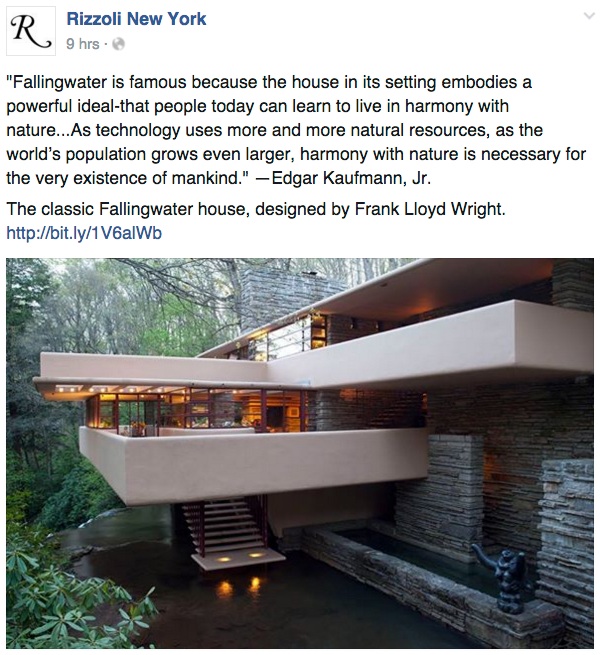
This blurb reminded me that I’ve been meaning to post a few photos of my brief visit to Frank Lloyd Wright’s “Child of the Sun” buildings at Florida Southern College in Lakeland, Florida.

Fallingwater

The city boasts that FSC is the world’s largest single-site collection of Wright architecture. Wright got the commission after the then-chancellor of FSC saw Fallingwater on the cover of Time magazine. As the first picture shows, Wright complied by giving FSC its own riff on the famous Kaufmann house.

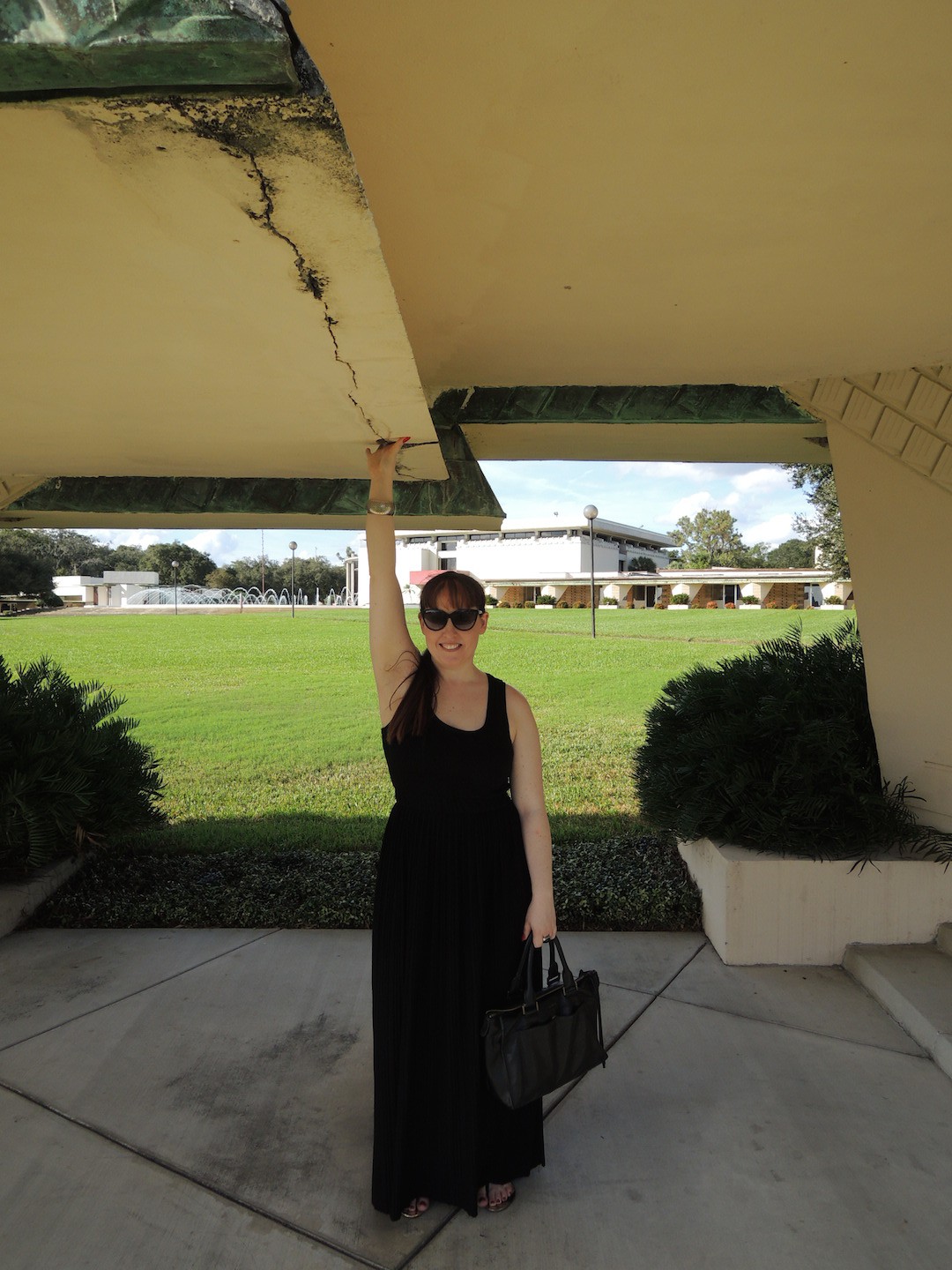
Let’s zoom in on that covered walkway.

flwfsc10

Back here, Michael Blowhard wrote:

As for the art and moral values his work is celebrated for — openness, naturalness, a casual, flowing informality — well, let’s see. His ceilings are often very low — uncomfortably low. Why? Because he was a vindictive short man who was resentful of taller people, and he liked ceiling heights that make tall people feel uneasy. …And those long horizontal lines which we’re told are such eloquent reflections of the American landscape and psyche? Well, they collect water and leak, and the water drips down into the walls, and ….

The lovely lady pictured above, who stands at 5’4″, can’t reach the top shelf of her kitchen cabinets but she had no problem touching that walkway ceiling. I’m 5’9″ and even I found the ceiling too low. It rains a lot in central Florida, so I’m guessing these walkways have a lot of unhappy users. And notice also how the moisture and humidity aren’t treating that flat concrete very well.

Critical explanations make much of how this project fulfills Wright’s vision of “organic architecture,” but the low flat lines, precast concrete blocks, and rigid geometric forms don’t look all that organic to me. Perhaps the Wright buildings are organic with respect to each other, but they’re not terribly organic in relation to the pre-existing campus buildings or the swampy Florida landscape. In contrast, this courtyard fountain a few hundred feet away felt more fertile and life-giving. Which reads “Florida” to you more?

fscfountain

Posted in Architecture | Tagged , , , , | 6 Comments