Naked Lady of the Week: Victoria Lynn Johnson

Fabrizio del Wrongo writes:

vj-cover

While making my way through the special features on Criterion’s fab new Blu-ray of Brian De Palma’s “Dressed to Kill,” I was tickled to find a conversation with Victoria Lynn Johnson, the woman who served as Angie Dickinson’s body double in the movie’s notorious shower scene. Despite my long standing as a fan of the film, I hadn’t previously realized that Johnson is the redhead who graced the cover of the August 1976 issue of “Penthouse.” My father had that issue. He kept it in his “secret” stash of old girly magazines up in the attic. And let’s just say that it helped me to pass many a frustrated afternoon during my teen years, by which period that tattered mag had acquired the charmingly musty smell of old and poorly stored paper. Ah, the sweet smell of illicit porn. Millennials will never know its power.

I found Ms. Johnson captivating, and I loved the artsy quality of the photographs by Stan Malinowski, especially the ones taken at magic hour, in which the raking light picked out the finer details of Victoria’s already quite fine bod. I don’t know if I ever considered redheads as an object of lust before discovering Victoria. But afterwards it seemed natural to covet their coppery creaminess — to savor it as a rare and delicate erotic dish.

If you’re like me, the things that first turned you on as a kid occupy a special place in your erotic imagination. Having first beheld naked women in magazines from the late ’70s and early ’80s, I have an attachment to the accouterments of that era. Feathered hair; oversized glasses; heavy eye makeup; unashamed, exuberant bushes. Phew! As silly as it probably sounds, all of it gives me a rush for which I can’t quite account. Below all the layers of adulthood, the greasy kid is still down there somewhere. And he’s still a horny little bastard.

Speaking of unashamed, exuberant bushes, Victoria’s strikes me as one of the great ones: it’s a big, downy corona of sunset-colored fluff that beckons you to take a closer look — provided, that is, you’re man enough. Sadly, De Palma had her dye it to match Dickinson’s bottle-blonde locks. But he knew a good thing when he saw one: he gives Victoria’s bush a few close-ups worthy of D.W. Griffith.

I know at least 50% of dudes disagree with me, but I think the world of erotica really lost something when it lost its female pubes.

Nudity below the line. Have a good weekend.

Continue reading

Posted in Personal reflections, Photography, Sex, The Good Life | Tagged , , , , , , , , , | 5 Comments

Linkage

Paleo Retiree writes:

halloween

Posted in Humor, Linkathons, Trends | 2 Comments

Architects and the “Vision” Thing

Blowhard, Esq. writes:

Via Wired, architects Vishaan Chakrabarti and Gregg Pasquarelli discuss how they would improve New York City:

I agree with a couple of their suggestions: more crosstown connections (particularly a crosstown subway) would be nice and fewer cars would be appreciated too. But I was talking with Paleo Retiree about this video and he noted how annoying it is that the underlying assumption is that “visionary,” top-down solutions are what is needed. For example, Mr. Pasquarelli offers that the city would’ve been better off had Central Park been split into two green belts and wants to ban all private cars from city streets. Neither of these solutions ever has the slightest hope of being implemented, so why bother mentioning them?

Some people, like the Wired editors who produced this piece, can’t get enough of wild, swing-for-the-fences visions no matter how implausible or unhelpful they might be. Their models are people Corbusier, Robert Moses, Steve Jobs, and Elon Musk. Nevermind that Corbu and Moses wanted to wipe out entire neighborhoods that are the very reasons NYC and Paris remain two of the most popular tourist destinations in the world. Doesn’t matter — Corbu and Moses had a bold vision. The idea that architecture is an organic, piecemeal process — how can we improve this particular street? what makes for a good building? what makes for a lively block? how can we improve the pedestrian experience in a blighted part of the city? — doesn’t seem occur to the technocrats and their admirers. To the extent they think about it at all, it’s bush league bullshit.

Paleo Retiree asked, Could you imagine if the other arts, say cooking, carried on this way? I remember a few years ago when patent troll Nathan Myhrvold released his 5-volume, 2,400-page, impeccably designed, and lavishly illustrated $625 summa on molecular gastronomy called Modernist Cooking. The reviews were rapturous. “The most astonishing cookbook of our time,” said the Wall Street Journal. Yet what does Myhrvold’s gargantuan treatise — filled with recipes and equipment that are beyond the resources of 99.99% of the public — have to do with food and cooking as they’re commonly experienced? Why do our cultural mandarins have such an aversion to practical pleasure?

Posted in Architecture | Tagged , , , , , , , , | 1 Comment

Naked Lady of the Week: Erene

Fabrizio del Wrongo writes:

e-cover

This minx-y little creature has posed for a number of popular nude sites, including Femjoy, Amour Angels, and Skokoff. A commenter at TheNudeEU calls her “an orgasm with feet.” I’m particularly fond of the freckles and the expressive little kitten face. She’s Russian, and looks it.

Nudity below the break. Hope you have a great weekend.

Continue reading

Posted in Photography, Sex, The Good Life | Tagged , , , | Leave a comment

Jiggle Du Jour

Blowhard, Esq. writes:

jiggle

Related

  • Back here Fabrizio shared an ode to the jiggle.
Posted in Sex, The Good Life | Tagged | 10 Comments

Quote Du Jour

Eddie Pensier writes:

There are those who see “ugly meanings in beautiful things.” Classical music and its institutions come under relentless criticism. The barometers by which music is often measured are extrinsic to the art form itself. Classical music’s presence in our society is worth defending. It is not the music’s problem if it is not popular, not economically viable, deemed irrelevant or not to everyone’s taste. It is our problem.

Those of us who believe in its value must be the defenders, not because it is in our personal interests to do so, but because the survival of the art form is vitally important for society. The conviction of the convinced is essential; the vacillation of the lukewarm, the apologetic and the self-serving is dangerous.

Despite our small demographic, if we are devoted, passionate and deeply attached, we can make a difference. We, a minority of sorts, have to live for art with a depth of conviction and devotion that others, whose lives and tastes place them squarely in the vast majority, need not.

James Conlon

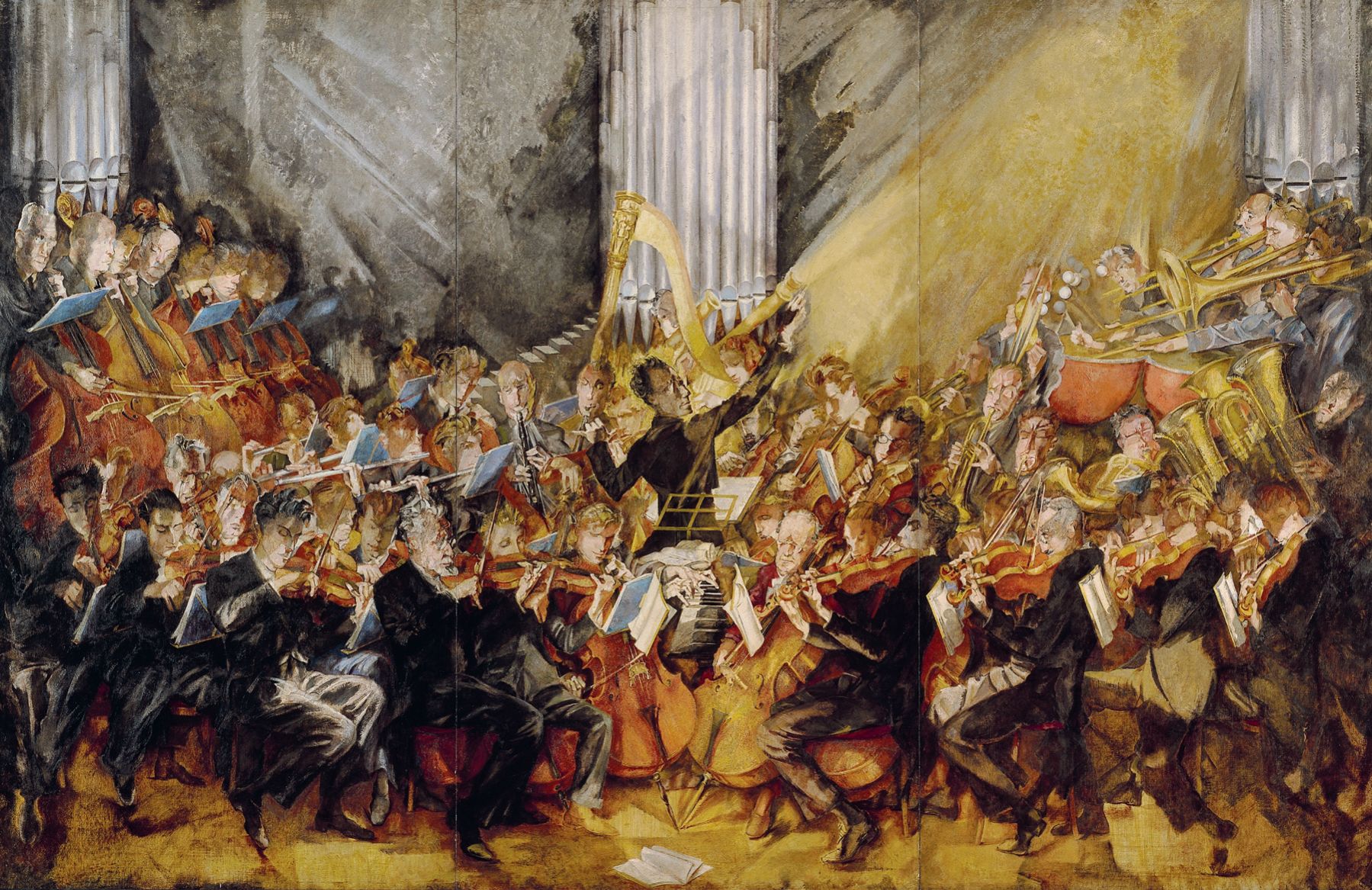
mahler

Max Oppenheimer, Gustav Mahler Conducting The Vienna Philharmonic (1935)

Posted in Music | Tagged , | 1 Comment

Super-Hero Fatigue is Real: My Thoughts on “Avengers: Age of Ultron”

Sax von Stroheim writes:

ultron

Back in 2008, A.O. Scott wrote a think piece about how, in the wake of movies like The Dark Knight, which, according to him, took the genre as far as it could go, audiences were going to tire of super-hero movies, and they would soon be on their way out. I thought, at the time, that Scott’s argument was really bonkers: an obvious case of wishful thinking on his part. He was bored with these movies and he (like a lot of other people who considered themselves sophisticated fim critics) resented that the popular success of super-hero movies meant that he had to at least pretend to take what he saw as goofy, childish morality plays seriously. Scott projected his own boredom and resentment on the moviegoing public at large.

Scott didn’t notice (maybe because as a film critic, trapped in a NYC film nerd bubble, he had lost touch with that larger moviegoing public) that people loved these movies. And these were real people, too: not just dudes who talk about movies on the internet all day, but just plain folks who had never heard of Ain’t It Cool News. Soccer Moms and NASCAR dads were as excited about the first Avengers movie as any stereotypical D&D-playing nerd.

7 years later, though, I think Scott, or anyone else so inclined, could make a better case for us having reached peak super-hero. Not because these things have stopped making money, but because unlike with the first Avengers movie or last year’s crowd-pleasing Guardians of the Galaxy, and despite it making a ton of money, I don’t think I’ve met anyone who really, honestly liked (let alone loved) the sequel to The Avengers, Age of Ultron. I don’t know anyone who was excited by it, let alone inspired by it. People who saw it seemed to see it out of a sense of obligation.

For me, this is the first real (albeit anecodtal) evidence I’ve seen of super-hero fatigue, precisely because Avengers: Age of Ultron is a movie that people should have gotten excited about. It’s easily the best of the Marvel movies, practically the only one that doesn’t primarily get by on loading the cast with charming, charismatic performers (which is not a bad strategy, by the way). The filmmaking is as good as anything Joss Whedon has done: unlike in his first Avengers movie there’s a real attempt here to give the action sequences a uniform look and feel. It doesn’t seem like each one was farmed out to a different effects house. Each action sequence is choreographed not just to show off some CGI effects, but for dramatic and thematic effect: like in a real movie.

And Whedon continues to be good at the cute stuff that he’s always been good at: using humor to undercut the more bombastic action adventure elements of the movie and bringing just the right amount of brooding, teenage angst to the proceedings. Elizabeth Olsen’s performance as a bad-but-maybe-not-that-bad guy is particularly soulful and it was a stroke of genius to cast James Spader as the voice of Ultron: his vocal work does a great job of suggesting a curdled, spoiled version of Robert Downey Jr.’s bad boy charm.

I’d argue that this is the first Marvel movie that really captures what’s great about the best Marvel comics: the sense of everyday humanity juxtaposed with incommensurate weirdness, which throws that humanity into greater relief. Anyway, it’s a really good movie, and I hope people can appreciate it for its own qualities and not just because it’s something they have to watch because it’s been forced down their throats by Marvel’s marketing machine.

Related

  • I really didn’t care too much for the first Avengers movie. You can read some of my observations here.
Posted in Movies | Tagged , , , | 6 Comments

Yes, But Will It Make Me Inspect My Vomit For the Meaning of Life?

Blowhard, Esq. writes:

Sheila_Callaghan_in_2007

From the introduction to an interview with a Brooklyn playwright:

This is what sets her apart from the great percentage of the theater’s current pack of trust-fund scribes and fake-hot-button playwrights — Callaghan speaks straight to the core of one’s being, skewering the comfortable conventions that have turned so much theater into a place where wealthy people digest their dinner. Callaghan wants to make you throw up, then search for the answers of your life in your own vomit.

The whole thing reads like a parody:

Tommy Smith (Rail): Why write a play?

Sheila Callaghan: Because it’s a terrible fucking idea and impossible to get right.

Rail: No, really.

Callaghan: I’m serious. I like to fail at impossible tasks. It’s like I’m striving for something superhuman, which feels kind of noble.

Rail: What does it say about your narrative trajectory that your new play begins with enthusiastic salad-eating and ends with a bittersweet cake feast?

Callaghan: I kind of feel like the answer here lies in the question.

Rail: “When I’m not writing plays, I’m….”

Callaghan: Feeding my gentle, curious, easily distracted son. Teaching Spin and yoga. Trying to sleep. Thinking about fucking. Trying not to think about fucking. Imbibing green drinks and cold coffee. Looking at my stomach in the mirror. Buying anti-aging serums from Sephora. Checking my email. Texting dangerously in my car. Training to become a mogul. Finding coping strategies for my diseased brain. Wondering if PTSD has a sell-by date.

I have to think half the fun of being a New York artist is carrying on like this in interviews.

Related

Posted in Art | Tagged , , | 2 Comments

Note to My Son in College

Fenster writes:

Evvabuddy’s writin’ to their sons nowadays.  There’s Ta-Nehisi from the left and a guy named David Desrosiers from the rightish City Journal.

My son is a Sanders supporter and here’s my note to him.

Democratic_Socialists_Occupy_Wall_Street_2011_Shankbone

It is kind of odd that Bernie continues to push socialism since it opens the door to the overdone conflation of socialism and communism, the kind of nasty but traditionally effective rhetoric that Trump just tried.  America has never warmed to socialism and so it is leading with one’s chin to make this the centerpiece.

And there some ironies as well.  For one, America already has a lot of socialist elements embedded in it, from innocuous things like public libraries to more consequential things like agricultural price supports and hydroelectric generation.  It just doesn’t like to think of things that way.  And if we are ideologically averse to calling something what it is, that is all the more reason to think that a call to socialism is on its face problematic in terms of voter support.

The other irony is that Sanders is not even talking about socialism properly understood.  That calls for even greater state ownership than we have.  He asks us to consider the Scandinavian model–but that is not “socialist” either in the sense of state ownership of enterprise and state direction of the economy.  Denmark is considered more business friendly than the United States and a fair amount of the classic Scandinavian welfare state has been rolled back.  So the “democratic socialism” Sanders calls for under a Scandinavian model is barely that.

OK, so Sanders may have made life more difficult than it had to be by trying to sell America on capital-S Socialism.  But he is saying something.  What?

As Paul Krugman has pointed out, even with the partial rollback of welfare state entitlements in Denmark, it remains a high-tax nation, and people like it.  That’s because most people seem satisfied that their high taxes, collectively paid, are contributing to a satisfactory quality of life, collectively experienced.  It can’t be emphasized enough that this kind of trade works well when there exists a high level of social cohesion and trust.  Scandinavians are that way in the US but they are even more that way at home in Scandinavia.  There, I am comfortable with a high level of social welfare because there are shared values as to the balance between social and individual responsibility.  If you are on welfare, it is probably because you are deserving, and our shared values act not only to reassure me but to prod you.

Here’s an article about that problem, from a British left-leaning magazine from 10 years ago.  I think this is one of the central problems of “democratic” (i.e., soft, not hard) socialism.  There has to be a cultural fit for it to work well.

Yet in the United States it is the left that continues to push for more and more diversity–as though there is no cost from the inevitable friction produced.  More immigration and less assimilation–for the majority has no right to turn people away at the border and even less moral standing–heavens!–to insist on others speaking a common language or adopting common norms.  And it’s not just the left: the corporate right wants cheap labor and the libertarian right says it’s all about the individual and any collective enterprise is suspect.

Me, I am a communitarian.  Like Sanders, probably.  I would prefer to live in a society that had higher taxes and more collective benefits, fairly spread around under a scheme of generally shared values, and not of such magnitude as to squelch individual initiative.  But is that possible in these united states?

It can be possible with monocultures.  It’s nice to live in a place where someone is there, as Steve Sailer writes, to “round down some of the sharp, competitive corners of modern life”.  Like Mormonism, which Sailer neatly describes as “a private welfare state, without most of the moral hazard that goes with government welfare states.”

The last time this was tried on a national scale in a mass, diverse place was Johnson’s Great Society and War on Poverty.  That resulted in Nixon’s Southern Strategy and, ultimately, in Ronald Reagan and the ascension of conservative politics for a generation.  I don’t like that.  I’d rather live in a place where those corners are rounded down.  But I am also a realist and not a utopian, and do not see how that is possible without a stronger central spine to American life.  I don’t know if that’s nationalism, or the unabashed promotion of middle-class values, or a religious revival or even whether I’d like it when I saw it.  I just don’t think democratic socialism works well in the present carnival we call the United States.

Posted in Personal reflections, Politics and Economics | Tagged | 1 Comment

Art Du Jour

Blowhard, Esq. writes:

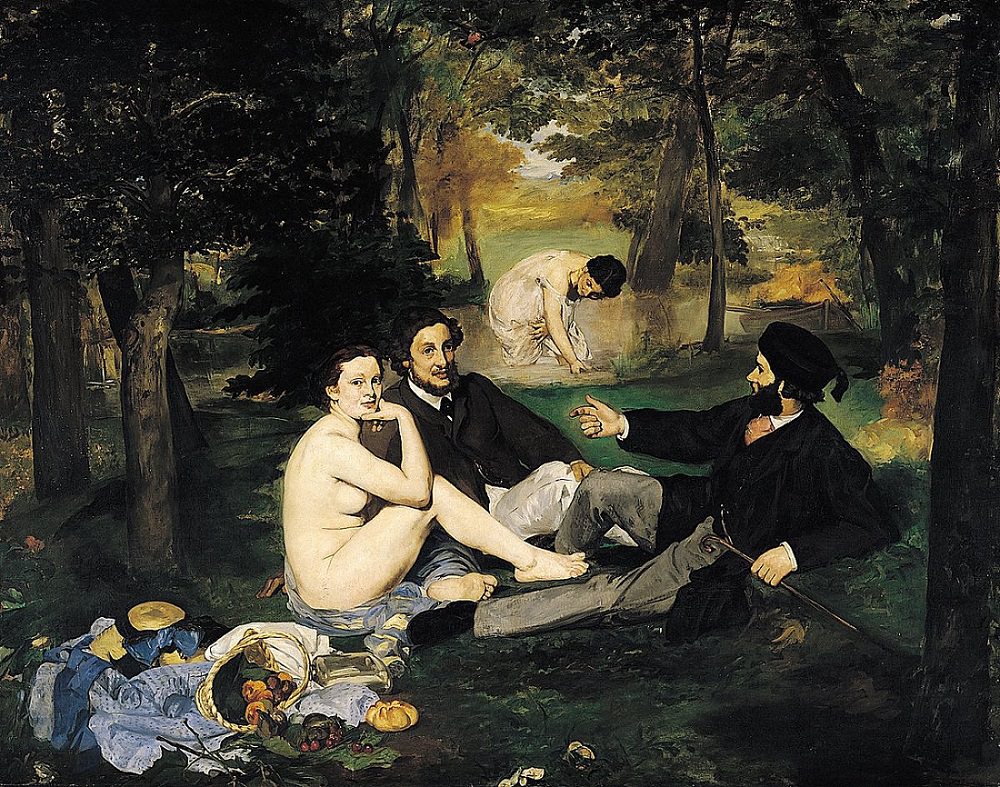
the-luncheon-on-the-grass

“The Judgment of Paris” by Marcantonio Raimondi, designed by Raphael, ca. 1510-1520, followed by “Luncheon on the Grass” by Édouard Manet, 18-62-1863.

Click on the images to enlarge.

Posted in Art | Tagged , , , | Leave a comment