Fenster and a Friend Go on a Mini-Pilgrimage

Fenster writes:

People with the means, the time and the religious zeal often head to northern Spain if they are interested in a pilgrimage.  Depending on the nature of one’s religion that can include either or both of these:

Santiago de Campostela

sant

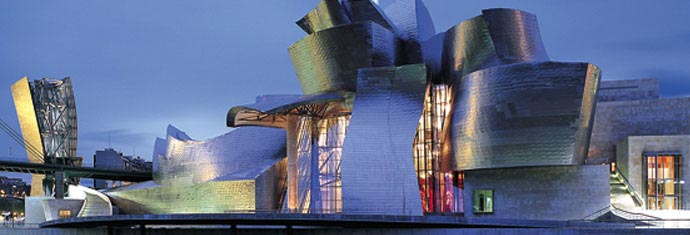
or the Guggenheim Bilbao.

bilbFenster likes to travel.  And as a green tree frog originally from the Pogo comic strip, he has the leisure time and the resources from his residuals from Pogo to make a journey.  It’s expensive though and the larger problem is that the religious zeal is lacking.  One could say the flesh is willing but the spirit is weak.

But a smaller commitment made sense.  So Fenster and a friend headed off to see another Gehry Building, the Stata Center at MIT.
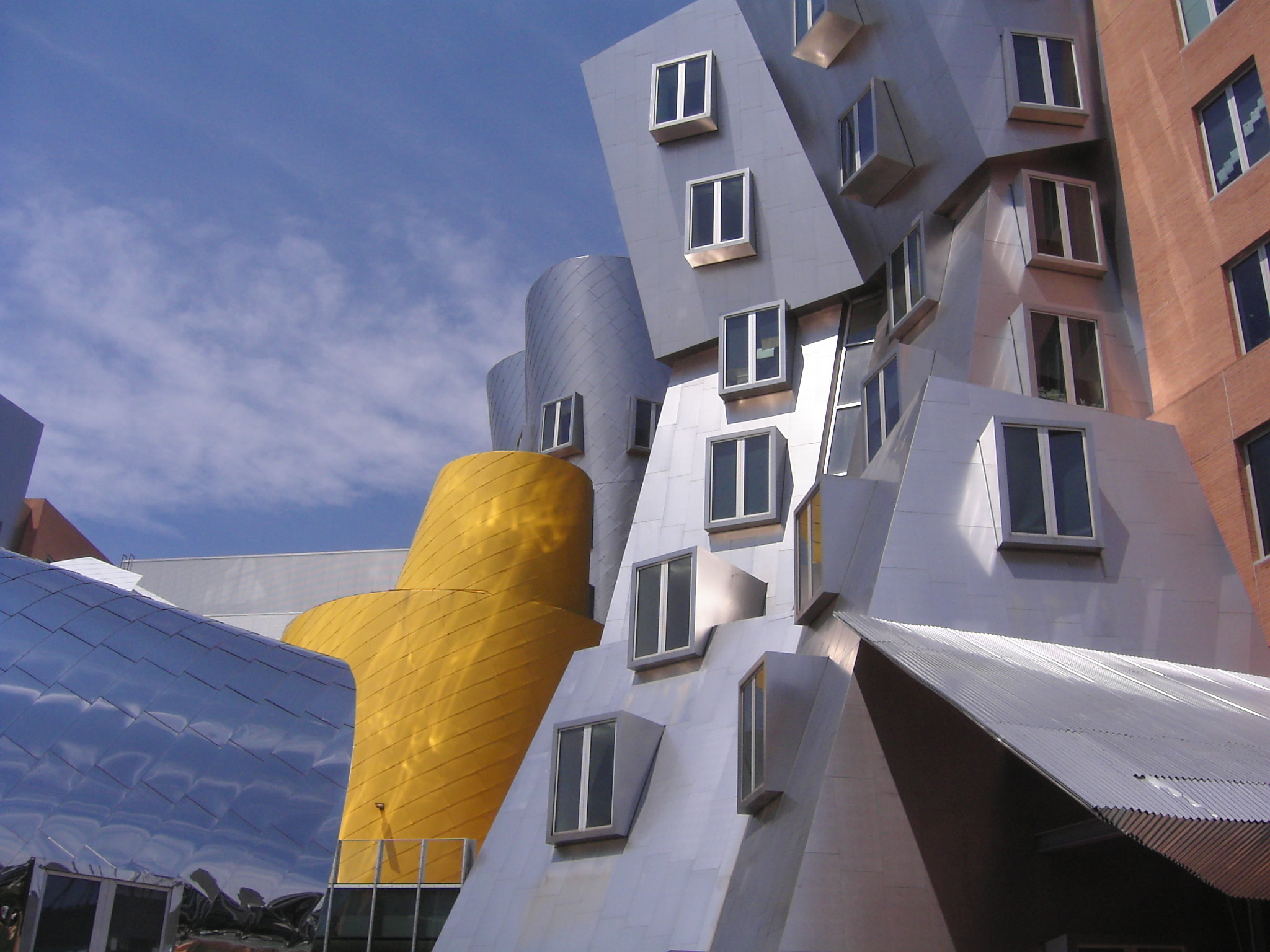
MIT_Strata_CenterInstead of a long, expensive journey, possibly undertaken at risk of life or limb, this was just a short, free bike ride from home.  And let me tell you it was worth every penny.

The vehry name Gehry is going to get people riled up in these parts I know.  Over on a related Facebook page someone posted a quote of his in which he is asserts that “denying the architect’s right to self-expression is like denying democracy.”  Well, the comments lit right up, lighting into Frank for wrapping his elitist sensibilities in the flag, as though he is entitled–by the commoners–to his commissions.

But let me give Stata one cheer.  And I give it a cheer for being–well, if not cheery, at least a little looser and more flippant than the generally dreary environment at MIT.  That campus until not so long ago resembled a set of army barracks, with overtones of an aging electronics assembly factory in 1965 China.  The campus has gotten way glossier in the past decades but it still feels like it is not much fun.  It’s now half white collar industrial park and half construction site.

You have to give the Stata Center this: it has a certain theme park hall of mirrors fun side to it, and that is not all bad.  Much architecture nowadays is hell bent on making you feel rotten since what is so great about normal human reactions anyways?  Take your postmodern medicine, asshole.

My wife and several of her friends found themselves there not so long ago and reported back, as regular human beings and frogs with pronounced non-elite tendencies, that they liked it.  It was fun.  It was pleasurable.  And if you want to hang around, you are free to do so in the amphitheater out back, a venue that is perhaps lacking in pure classical grace but which is intended to function in a classic fashion, as a place where recognizable human creatures can assemble either informally or formally, for a performance or event.
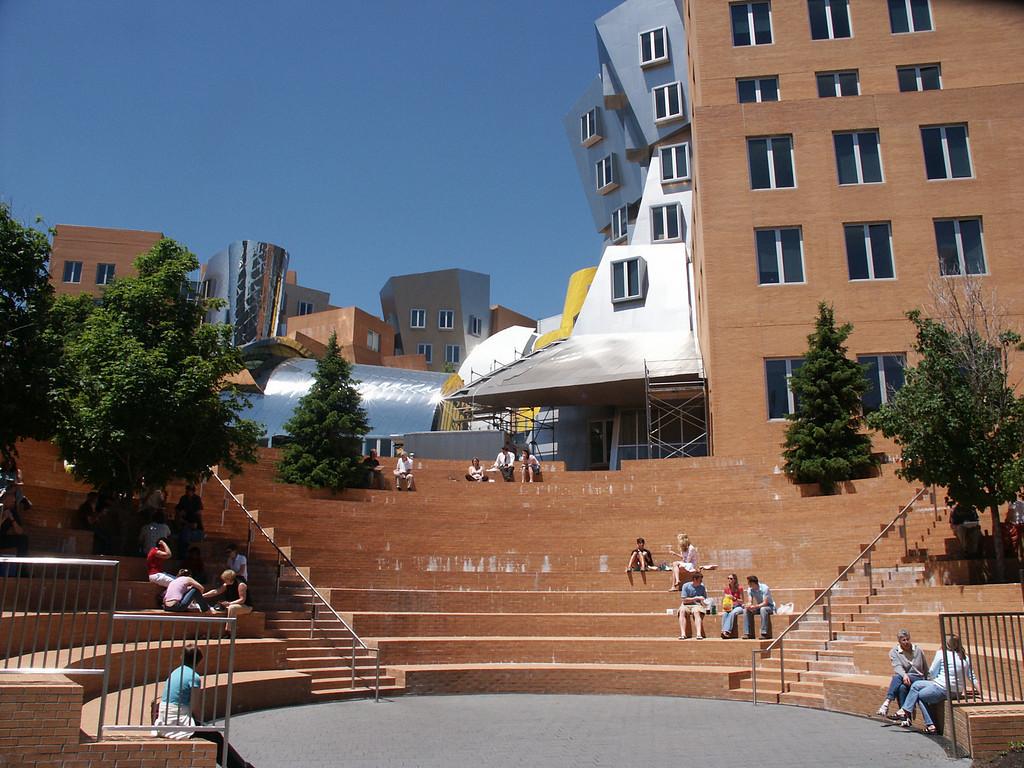
provided the Center itself does not fall on you.

provided the Center itself does not fall on you

Fenster’s friend also thought it OK.  Here we are out front . . .

fenstata1and around back.

fenstata3

I am looking to increase the volume of comments to my posts and I figure saying anything positive about Frank Gehry might get the juices flowing.  Bring it on!
Posted in Architecture | 8 Comments

Juxtaposin’: Speechifying

Fabrizio del Wrongo writes:

Posted in Movies, Performers, Politics and Economics | Tagged , , , , , , , | 1 Comment

Quote Du Jour: Revolution, Architecture, and the Law

Blowhard, Esq. writes:

revarchlaw

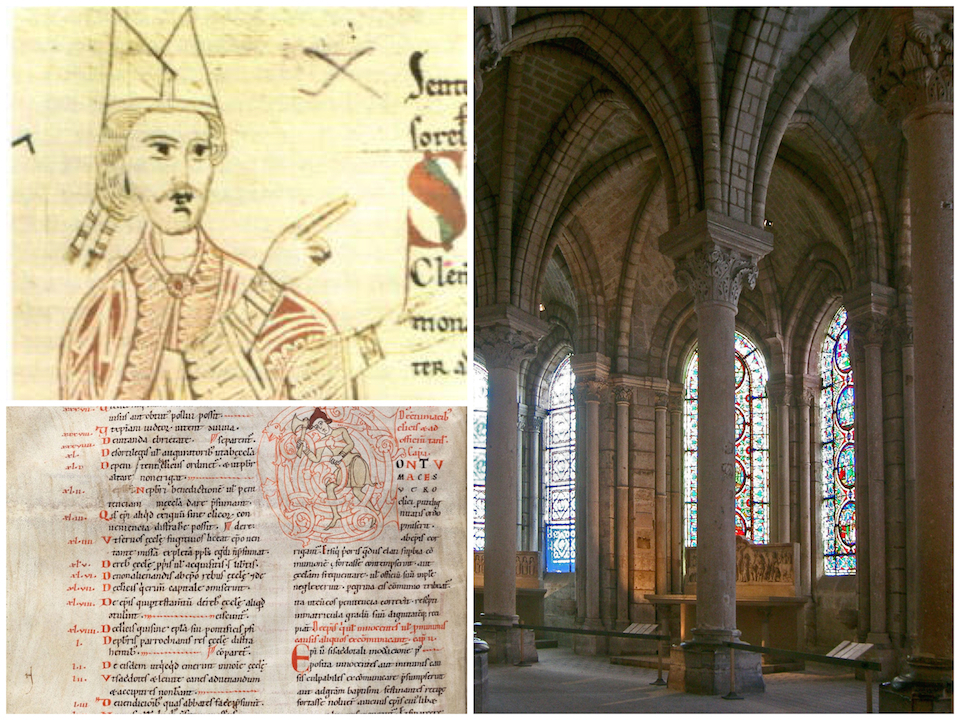
The most important consequence of the Papal Revolution was that it introduced into Western history the experience of revolution itself. In contrast to the older view of secular history as a process of decay, there was introduced a dynamic quality, a sense of progress in time, a belief in the reformation of the world. No longer was it assumed that “temporal life” must inevitably deteriorate until the Last Judgment. On the contrary, it was now assumed — for the first time — that progress could be made in this world toward achieving some of the preconditions for salvation in the next.

Perhaps the most dramatic illustration of the new sense of time, and of the future, was provided by the new Gothic architecture. The great cathedrals expressed, in their soaring spires and flying buttresses and elongated vaulted arches, a dynamic spirit of movement upward, a sense of achieving, of incarnation of ultimate values. It is also noteworthy that they were often planned to be built over generations and centuries.

Less dramatic but even more significant as a symbol of the new belief in progress toward salvation were the great legal monuments that were built in the same period. In contrast not only to the earlier Western folklaw but also to Roman law both before and after Justinian, law in the West in the late eleventh and twelfth centuries, and thereafter, was conceived to be an organically developing system, an ongoing, growing body of principles and procedures, constructed — like the cathedrals — over generations and centuries.

Harold Berman, Law and Revolution: The Formation of the Western Legal Tradition

Posted in Architecture, History, Law | Tagged , , , , | Leave a comment

“The Un-Civil War: BLACKS vs. NIGGERS: Confronting the Subculture Within African-American Communities” by Taleeb Starkes

Paleo Retiree writes:

taleeb

This book is like a companion piece to Chris Rock’s famous “I love black people but I hate niggers” standup routine, and despite its obvious shortcomings I enjoyed it a lot. Today’s “black people” matrix can be so dominated by offputting horrors — thugs, gangs, beatings at fast-food outlets, hiphoppers, race hustlers, gaudy styles, out-of-wedlockism, Big Man-style political corruption, etc. — that I sometimes find myself wondering what it’s like to be one of the many decent black people who are leading classy, generous lives. It’s got to be different than being a decent Asian person in the midst of today’s Asian-person matrix, or a decent white person who’s part of today’s white-person matrix, right? But how? Starkes is here to tell us.

His tone is more motivational expert than Chris Rock-style comedian, but he’s one super-lively (and often hilariously exasperated) speaker. He talks entertainingly and informatively about the ‘hood-rat thing itself: where it comes from, how to handle them, what their characters and thought-processes are like, how they rationalize the ways they act, and what might be done about black-underclass dysfunction. I also enjoyed learning about a new category of people that Starkes has noticed and named: “Blacks with Nigger tendences.”

Starkes writes that he was tempted as a young guy to steer his own life in a ‘hood-rat direction, so what the book represents is a sharing of mucho lived experience and prolonged reflection. His basic attitude is that denial and sentimentality get in the way of being honest, and that honesty is necessary before real progress can be made, so let’s cut the crap and be frank with each other. His main point is that it’s destructive for African-Americans (and their politicians, entertainers and non-black allies) to protect, admire and make excuses for the thug subculture. Over-protect something to the point where you’re, in effect, nurturing it, and you’re going to find yourself with more of it. Common sense, right? Well, it is to some.

Fair warning: Starkes belongs to the tough-love, content-of-your-character, no-excuse-making, boot-camp school of discussion. Fans of blaming-everything-on-white-racism are likely to blow a fuse on picking up the book, but if you’ve been able to make it through ten pages of Walter Williams, Thomas Sowell or Shelby Steele without having a stroke you should be able to handle it. Besides, Starkes seems to know the world he’s telling us about, so why not pay him some attention?

As an artifact, the book (which appears to have been self-published) is pretty amateurish. The writing is more informal than what you’ll find in most Facebook postings. There’s lots of pointless wordplay, repetition, punchiness for the sake of punchiness (the capital letters in the book’s title are typical) and zigzagging disorganization. It’s pretty street in its own way. That said, street energy can be a kick — and, besides, what’s the point of having a prissy reaction to a work like this one? It’d be like complaining that a blog that’s valuable for its frankness, honesty and openness doesn’t have the slickness of a glossy magazine feature. That isn’t why such blogs are valuable.

Final verdict: “The Un-Civil War” is short, lively, smart, and full of verve and personality.  I found it thought-provoking, as well as an interesting, enjoyable and helpful glimpse into people, lives, minds and communities I wouldn’t have had access to otherwise.

Related

Posted in Books Publishing and Writing, Politics and Economics | Tagged , , , , | 2 Comments

James and Me

Fenster writes:

Fenster, he has long had a love/hate relationship with James Kunstler’s work.  I expect most readers here will know of him.  If you don’t, here’s his Wikipedia page, which provides the basics but fails the capture some of the piquant qualities that are part and parcel of his persona.  And here is a link to his main web page, which has content of its own and is also a jumping off point to other venues such as Clusterfuck Nation (ongoing commentary), podcasts, autobiographical sketches and other such.

He has a distinctive and strongly expressed world view.  He is perhaps best known as a fierce critic of the American suburbs.  It was in that incarnation that I first met up with his work, and was immediately attracted to it.

Continue reading

Posted in Uncategorized | 8 Comments

Naked Lady of the Week: Jana Cova

Fabrizio del Wrongo writes:

jc-cover

Both diminutive (5’2″) and curvaceous, Jana hails from the Czech Republic, though she’s spent a good portion of her career in the States. She started as a model, then transitioned to girl-girl videos. Presumably, the latter job pays better.  Something about her reminds me of Amanda Seyfried, though the slightly fucked-up teeth are all her own — and, I think, pretty charming.

Here’s a nice video interview. She claims to like steaks, real boobs, and horror movies.

Nudity below the fold. Have a good weekend.

Continue reading

Posted in Photography, Sex, The Good Life | Tagged , , , | Leave a comment

Architecture du Jour: Wilderstein

Paleo Retiree writes:

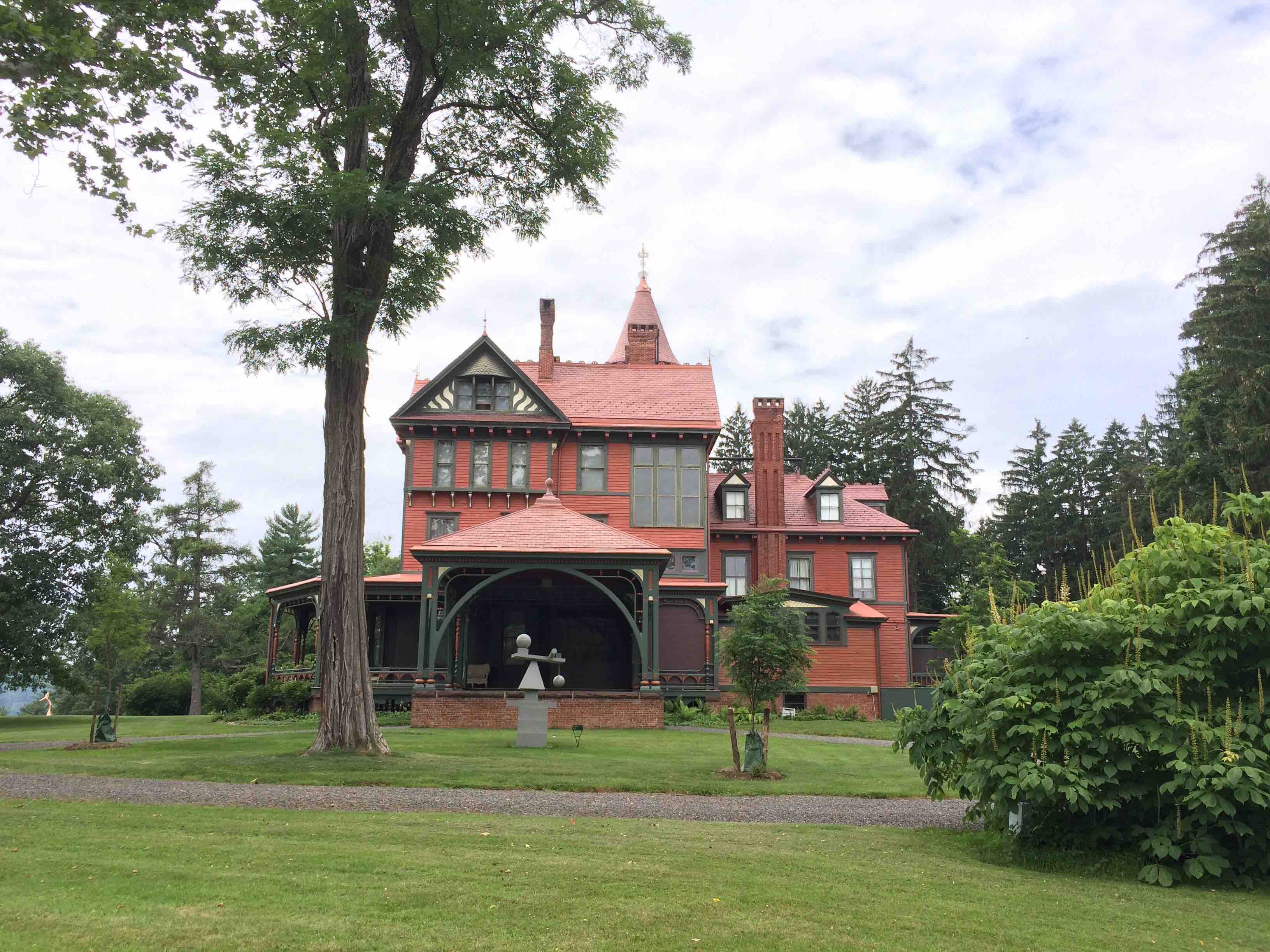
My wife and I recently visited Wilderstein, a magnificent 19th century mansion on the Hudson River, not far from the lovely small town of Rhinebeck. Wilderstein is sometimes said to be the Hudson River Valley’s best Victorian house.

It was initially designed and built in 1852 (by architect John Warren Ritch) in the Italianate style, then re-built in 1888 in the Queen Anne style by Arnout Cannon, a Poughkeepsie architect.

Here are some more views:

wilderstein

There’s no fear of color anywhere in evidence at Wilderstein, to put it mildly. The whole place is a pleasing hybrid of the flamboyant and the dignified-and-restrained, in fact.

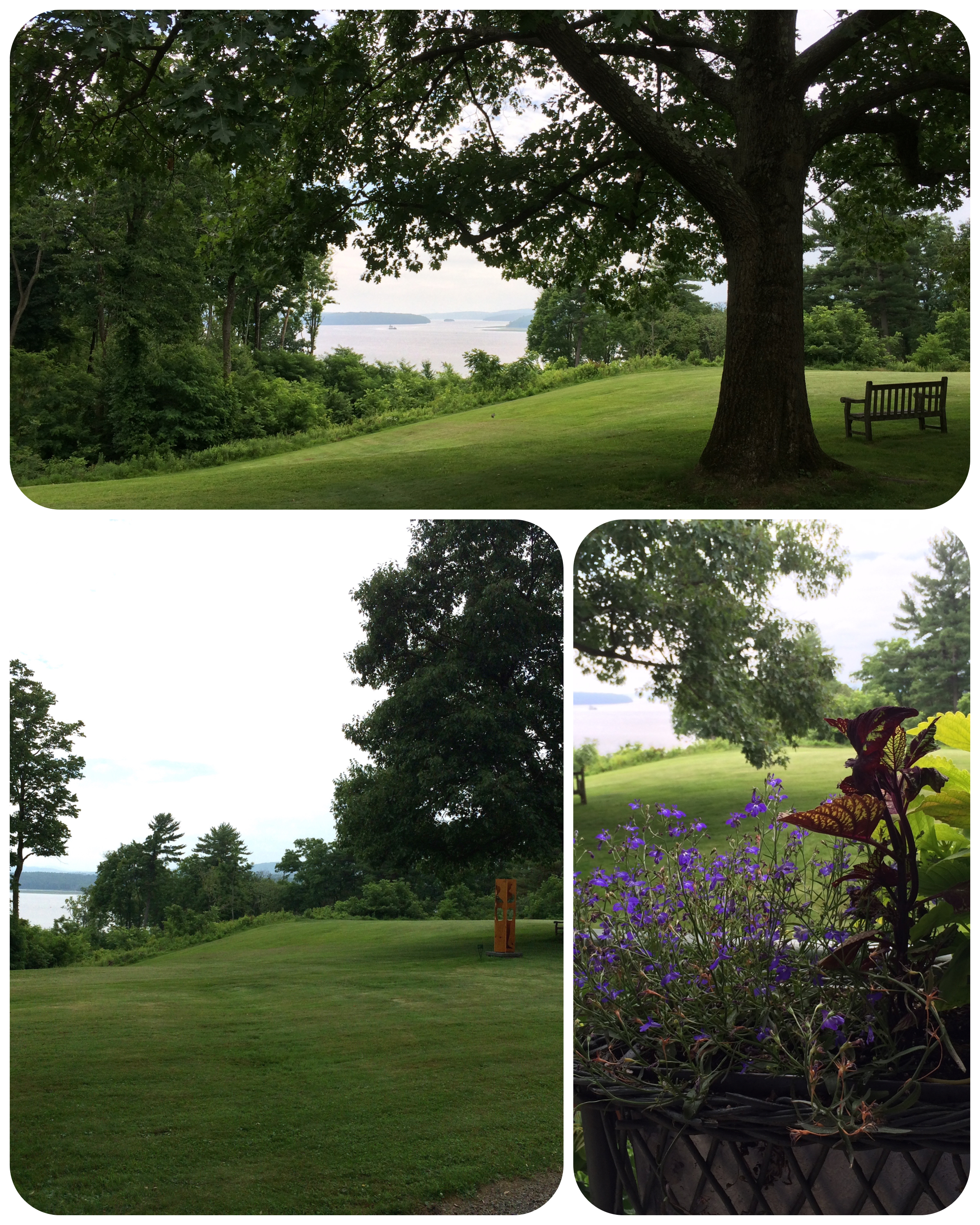
The grounds — romantic and sweeping — were the work of Calvert Vaux, the co-designer of NYC’s Central Park.

wilderstein_grounds

The outdoors seating definitely wasn’t in the immovable Minimalist-block style.

We weren’t allowed to snap photos inside the house. Words that came to mind as we toured Wilderstein’s interior include: dark and heavy; ornate-but-casual, with touches of the “rich people’s cottage” style; plenty of quiet, plenty of interest, and plenty of color. Tiffany (Joseph Burr Tiffany, not Louis Comfort) did the house’s stained glass, and his work provides a lot of jewel-like highlights for the eye to feast on.

For three generations Wilderstein belonged to the Suckley family, who made their fortune in shipping up and down the Hudson. It’s only five or so miles from Hyde Park, a small Hudson River area town famous for its connections to the Roosevelts. Suffice it to say that the Suckleys and the Roosevelts were not strangers to each other.

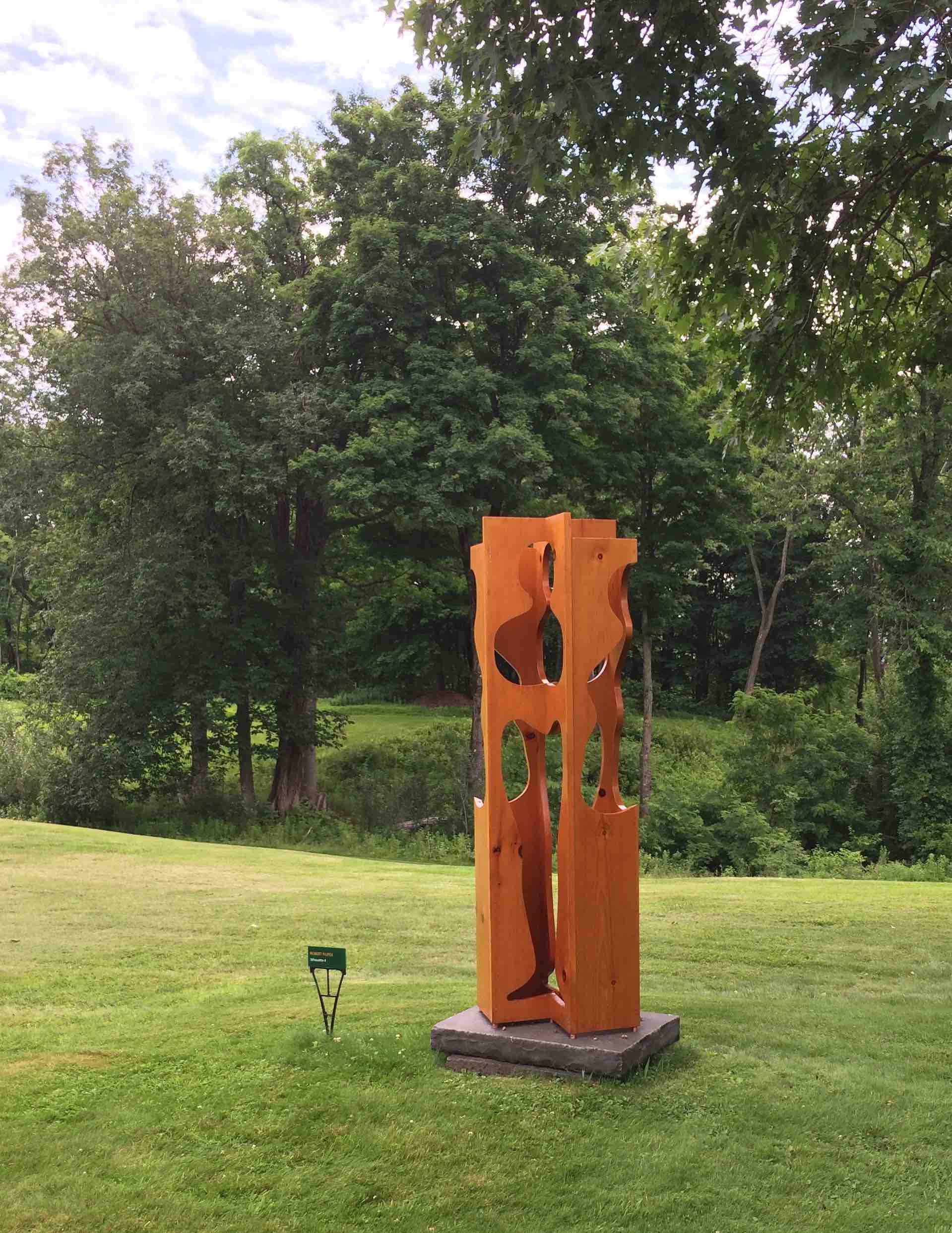
The house is owned and operated by a private local nonprofit, and they have done a wonderful job of maintaining it. Volunteers staff the desk and give the tours. Our guide was a lovably cranky local-history nut who took a minute to share his distaste for the dozen of so pieces of modernist sculpture that some curator had seen fit to scatter around the Wilderstein grounds.

Is there no place that your average art curator doesn’t think is improved by the addition of modernist sculpture? I’m fully capable of enjoying abstract and modernist art, but in this case it really did feel like the sculptures were defacing the otherwise pleasing and sedate — as well as carefully, lovingly preserved — 19th centuriness of the location. Everyone in our tour group clucked over the sculptures and wished they weren’t there.

Related

Posted in Architecture, The Good Life, Travel | Tagged , , | Leave a comment

Deep Dream Competition: Gropius v. Gaudi

Fenster writes:

Deep Dream is an engine somewhere out in the cloud–maybe cloud 9–that adds elements to images that are intended suggest a dream state.

llamaBecause the added elements have an organic quality it is better to start with an image that is somewhat organic, so that the added cooties have something to grab hold of.  Like with the llama above.  Or the images of structures and landscapes below.

dream_ad74917177dream_9bd646a12e

But what happens when you present the engine with an image that is so sheer that it is hard to find traction for the addition of the cooties?  Hey, maybe Walter Gropius or some other such modernist architect that we like to make fun of in these parts would illustrate that.

Here’s an untouched Gropius.

Gropius_Fagus_Shoe_Factory

and here it is post treatment.

grop2d

It’s kind of weird, what with that bird or whatever on top of the building.  But the building itself does a damn good job avoiding those dream cooties.  Why, it is positively resistant!

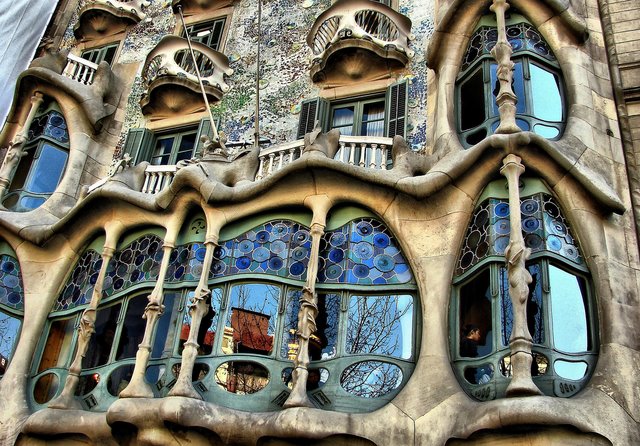
How about Gaudi?  Lots of nooks and crannies there.  But in a way you end up with a similar problem.  Here’s an untouched Gaudi.

CasaBatlló

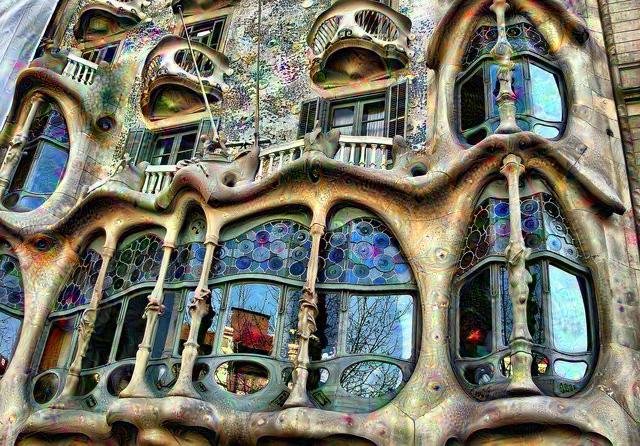
and here it is post Deep Dream.

gaudi dg

You can barely tell the difference.  Gaudi’s work is pre-dreamed.

Posted in Uncategorized | Leave a comment

Triggers Again

Fenster writes:

Thankfully, the trigger warning idea is getting some strong pushback.  The faculty at American University has strongly endorsed free speech on campus.  Other prestige colleges, like Purdue, are following the lead of the University of Chicago in taking a firm stand.  And, of course, President Obama has actually taken a side in the fight, and the correct one, too.

The game is far from over, of course.  It remains to be seen whether the aggressive push for speech restraint is a temporary thing involving a short-blooming species of hothouse flower or whether there is more going on relative to generational differences, with a more restrictive sense of public space and propriety taking root. More on that below.

Continue reading

Posted in Education | 1 Comment

The Queen Waits To Address Her Subjects

Blowhard, Esq. writes:

hrhhillary

Photo via Paleo Retiree.

Posted in Politics and Economics | Tagged , | 5 Comments