Saturday Photo Gallery: Superior, Arizona

Sir Barken Hyena writes:

superior8

To take some air before it got too hot in this desert summer, I rode the Green Monster out to Superior, Arizona early this morning. Not quite a ghost town, but surely not living, Superior has seen a few attempts at a boutique revival, and some are still going on. A few towns like Bisbee and Jerome have made this transition but how many art galleries can one state support? Meanwhile Superior lingers on from the scrapings of highway traffic, a few salaried officials and some desultory, mostly robotic mining. But, it’s not without it’s beauty.

Posted in Uncategorized | 7 Comments

Naked Lady of the Week: Brigitte Bardot

Fabrizio del Wrongo writes:
bb-cover

A small donkey had a role in the film. Brigitte, who named it Romeo, couldn’t bear the idea of returning it to its owner; she bought Romeo, but the hotel wouldn’t let it sleep in the garage. So Brigitte kept it in her room.

One morning she sent for me. I found her in bed, the donkey stretched out beside her on the covers.

“Vadim” she said to me, “I can’t take any more. I’m going back to Paris. I’m counting on you to look after Romeo.”

She left the next day.

— Roger Vadim

Bardot is the first modern movie sex goddess, and her emergence on the international film scene in 1957 heralded a new age of sexy movies. That age ended sometime in the early ’90s, but for a while there folks could go to the movies and expect to see nudity, wild relationship machinations, and simulated (sometimes even non-simulated) fornicating in packages that emphasized adult values and concerns. During much of this time the public’s conception of the “European film” overlapped considerably with its conception of Bardot. A European film, to some extent, was the kind of film in which Bardot might star — something a little sophisticated, winking, and decadent.

I’m not sure the adults of today even have a particular set of values and concerns. If they do, they aren’t particularly sexy, and they aren’t reflected much in movies.

Nudity below. Happy Friday.

Continue reading

Posted in Movies, Performers, Photography, Sex, The Good Life | Tagged , , , , , | 2 Comments

Quote Du Jour: Bullshit Dumps

Blowhard, Esq. writes:

billjamesbaseball

Baseball men often like to attribute the success or failure of a team to clutch performance. Those of us who study baseball systematically know that his is largely untrue, that the number of runs a team scores is a predictable outcomes of their hits, their walks, their home runs, and their other offensive accomplishments — and further, that the number of games the team wins is largely a predictable outcome of their runs scored and runs allowed. Clutch performance can increase or decrease a team’s wins, but clutch successes or failures generally even out over the course of a season, leaving most teams with about the won-lost record they deserve.

But, since this elusive “clutch ability” has no particular statistical dimension, it has become popular within the discussion as a bullshit dump. All discussions have bullshit dumps; we need them. Our logic, whatever it is that we are talking about, can never be completely worked out; all subjects worthy of discussion are too complicated to be fully encased in logic. Thus, in all discussion, the least precise areas become bullshit dumps, elements of the discussion which are used to reconcile our formal logic to our intuitive sense of right and wrong, justice or injustice, accuracy or inaccuracy, reason or madness, moderation or extremity. “Psychology” is a common bullshit dump. I am not saying that psychology is not real or that psychologists do not know what they are talking about. What I am saying is that since human psychology affects almost everything within our sight in undocumented ways which are never fully understood, psychology inevitably becomes a bullshit dump which can be used to justify or explain what is otherwise unjustified or inexplicable.

“Karma” is a popular bullshit dump. In politics, “sensitivity” is a bullshit dump; so is the “influence of the media.” Witchcraft used to be a major bullshit dump, but has lost its audience.

Bill James, The New Bill James Historical Baseball Abstract

Posted in Media, Politics and Economics, Sports | Tagged , , , , | 2 Comments

Without Half Trying

Fabrizio del Wrongo writes:

8a4f18e4d2e624abae902f9da82bacb6

Getting out of a cab is one of the things most women don’t do right. But most women aren’t Velda. Without half trying she made a production out of it. When you saw her do it you knew she wasn’t getting out of a cab so much as making an entrance onto the street. Nothing showed, but there was so much to show that you had to watch to see if it would happen or not and even when it didn’t you weren’t a bit disappointed.

— Mickey Spillane

Posted in Books Publishing and Writing | Tagged , , | 1 Comment

Right-thinking New Urbanism

Fenster quotes:

Coming from a mainstream conservative source, such writing (on New Urbanism) has been as scarce as hen’s teeth. For close to two decades, conservative pundits like Wendall Cox, Randal O’Toole, and Joel Kotkin have relentlessly bashed this trend. The Heritage Foundation, the Tea Party, and the American Dream Coalition are among the institutions of the right that have attacked new urban planning and development. Goaded by Glenn Beck, the Tea Party equates density and mixed-use with an anti-American, world-government agenda.

We will continue to hear from Kotkin, Cox, O’Toole, the Tea Party, and other critics from the conservative side. Now we also have a new generation of conservative intellectuals making cogent, well-informed arguments for human-scale design and development. Right field is no longer owned by the pro-sprawl folks.

That’s from Robert Steuteville, at Better Cities and Towns.

And here’s a blog devoted to New Urbanism at The American Conservative.

And an article in The Week.

Posted in Uncategorized | 18 Comments

Notes on “Stranger by the Lake”

Fabrizio del Wrongo writes:

stranger

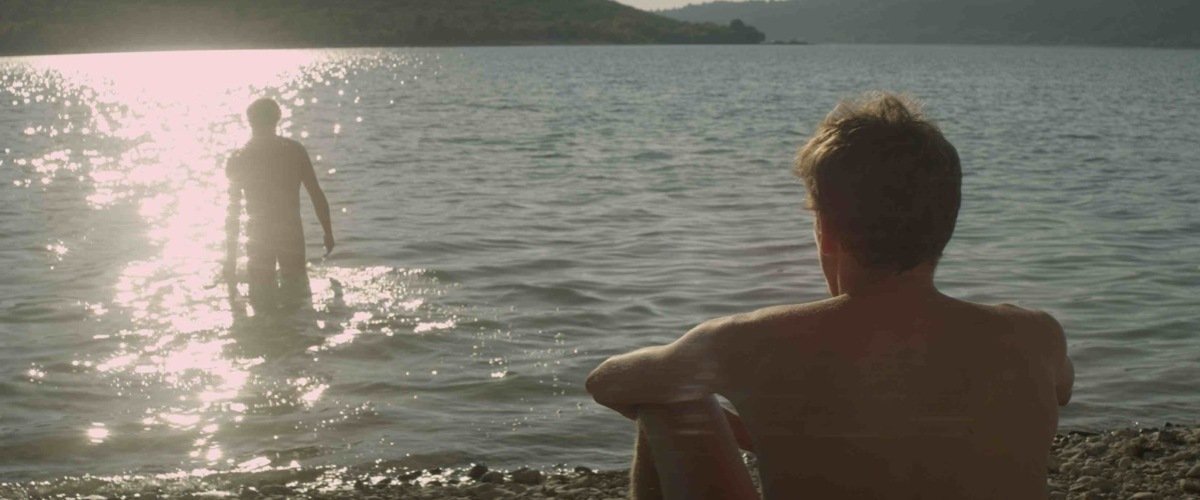
In “Stranger by the Lake,” writer-director Alain Guiraudie mines some of the thematic veins explored by William Friedkin in “Cruising”: it’s a picture about the danger and exhibitionism inherent in male-on-male courtship. The setting is a lake in the south of France where gay men gather to sunbathe in the nude. Slim, tanned, and toned like underwear models, they lie on the gravel-strewn shores, their cocks flopped between their legs in nonchalant advertisement. When an agreement is arrived at, they pair off, put on their sneakers, and stride into the surrounding woods for sex. Then they dress, get in their cars, and go home. We see nothing of their lives away from the lake. In fact, we never leave the locale. Guiraudie wants us to understand that the lake is an independent world with its own set of rules, a place where men gather not just for company but to test their physical limits — preferably in front of an audience. The lake itself is a sexual metaphor: mysteriously placid and rumored to be filled with giant catfish, it beckons the naked bodies with pleasures both tantalizing and menacing.

The stark setting helps to aestheticize the actors’ bodies. Emerging from the water or lounging on the shore, the men have the physical poise — the repose — of the athletes depicted on Greek pottery. It doesn’t hurt that Guiraudie has a painter’s eye for composition; it lends his and cinematographer Claire Mathon’s images a serene monumentality that banishes any hint of tawdriness or camp. (I can’t think of another movie that treats male nudity so classically.) When Guiraudie wants to shift moods, he modulates the lighting and the effects of the sun and weather. As in Rohmer’s films, the wind in the treetops seems keyed to the characters’ inner turmoil. The movie’s design ethos might be described as minimalist, and the urge to pare away extends to the diagrammatic plot, which has Pierre Deladonchamps’ Franck fall for Christophe Paou’s  Michel. The latter man may be a murderer, but Franck is too smitten to exercise caution. The resulting conflict plays out in ways that suggest an erotic thriller reduced to its most basic elements.

Not everything works. There’s something banal in the way the knife’s-edge sexiness of Michel is contrasted with the glumness of a lake regular named Henri, portrayed with Depardieu-like fleshiness by Patrick D’Assumçao. I fear we’re intended to understand Henri in straight terms, as the dowdy girl whom the good boy overlooks in favor of the sexy femme fatale. I think we’re also supposed to share in the guilt Franck experiences as a result of his rejecting Henri in favor of someone more exciting. But, then, Guiraudie is aiming for something elemental, and he needs to plumb the banal in order to get at the roots of his material. If he doesn’t quite stick the landing it may have more to do with the fact that his even-keeled, abstracted approach doesn’t grant us access to the madness of Franck’s desire. There’s a melodramatic premise here, but we’re kept outside of it. The tenor is closer to l’amour intellectuel than l’amour fou.

Posted in Movies, Sex | Tagged , , , , , , , | 6 Comments

Monologue o’ th’ Day

Fenster writes:

Another monologue, another film adapted from a play–Jules Feiffer’s Little Murders.

Like last week’s, another long-winded treatment of a father, though Lou Jacobi is decidedly less mannered than Christopher Walken.

Posted in Uncategorized | Leave a comment

Review: “Sagrada: The Mystery of Creation”

Sir Barken Hyena writes:

5931678-Inside_Sagrada_Familia-0

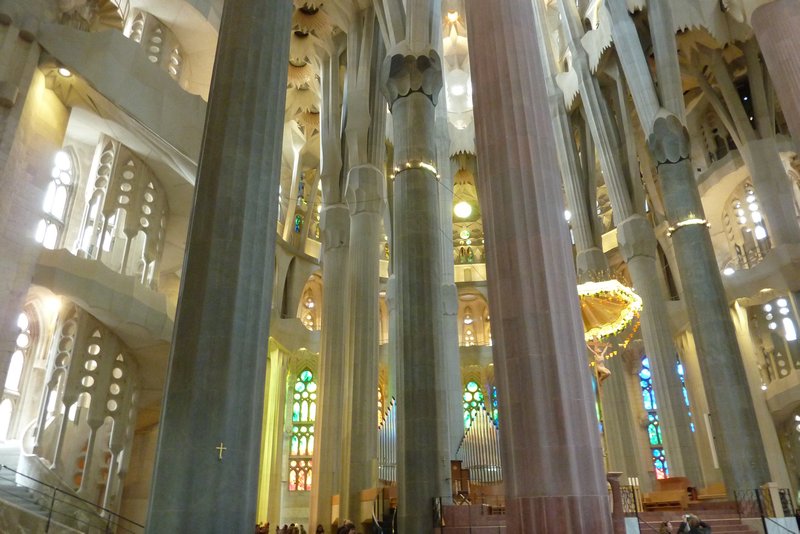
I really enjoyed this documentary on the construction of Gaudi’s Sagrada Familia in Barcelona. Solid background material is interspersed with meditative shots of the construction in action, and on site interviews with figures major and minor tie it all together.

This is a building that has been the center of controversy since it’s inception, and an even-handed and illuminating picture is drawn of the various conflicts and issues. For example, interviews with two of the main contemporary sculptors, Josep Subirachs and Etsuro Sotoo, illuminate the central issue of the building: how to finish it?

Gaudi’s designs and models, though ruined or destroyed by Anarchists in the 1930’s, give a complete enough view of the big picture. The problem lies with sculptural details and finishing – key to Gaudi’s work. These were left to the future, and deliberately so, as Gaudi himself anticipated centuries of construction after him.

So whose vision rules, Gaudi’s, or his successors? It’s a debate that can’t be settled for all time, but to me the building is so strongly stamped by it’s author that everything else must to some degree give way to it. But a balance can be struck, and though I’m not wild about Subirach’s Passion Facade, I think he got it right. The feeling is congruent with the theme, though the style is modernist. And it’s tucked under Gaudi’s bonelike pillars so there’s no question who’s boss.

Also interesting: the Sagrada has architects and designers on site, working directly with the builders to find the best way, rather than have designs issued forth from an architect on high. And the touching Catalan pride the workers take in the project is inspiring.

I watched Sagrada: The Mystery of Creation on Netflix streaming.

Previously by Sir Barken on the Sagrada and Gaudi:

Posted in Architecture, Art | Tagged , | 1 Comment

Naked Lady of the Week: Allison

Fabrizio del Wrongo writes:

a-cover

There’s something poetic about this British model from a few years back, known alternately as Allison and Geraldine. With her elongated frame and flowing, Belle Époque hair, she recalls a nymph or an elf, especially when she’s (charmingly) affecting a histrionic pose. But there’s a touching timorousness about her as well. Like an actress, she seems aware of her performance; maybe she’s even engaging in a little self-satire. All of this reminds me a bit of the young Shelley Duvall. And I do love the young Shelley Duvall.

Plus, gotta love that bush.

These images come from MetArt, Femjoy, and DOMAI.

Nudity ahead. Enjoy.

Continue reading

Posted in Photography, Sex, The Good Life | Tagged , , | 1 Comment

Ad Du Jour

Blowhard, Esq. writes:

deneuvewwdadIs this the closest Catherine Deneuve ever came to starring in a sci-fi opera? An ad from Women’s Wear Daily, February 9, 1971.

Click on the image to enlarge.


Posted in Movies, Performers, Women men and fashion | Tagged , , | Leave a comment