
Fabrizio del Wrongo writes:
U.S.

U.K.
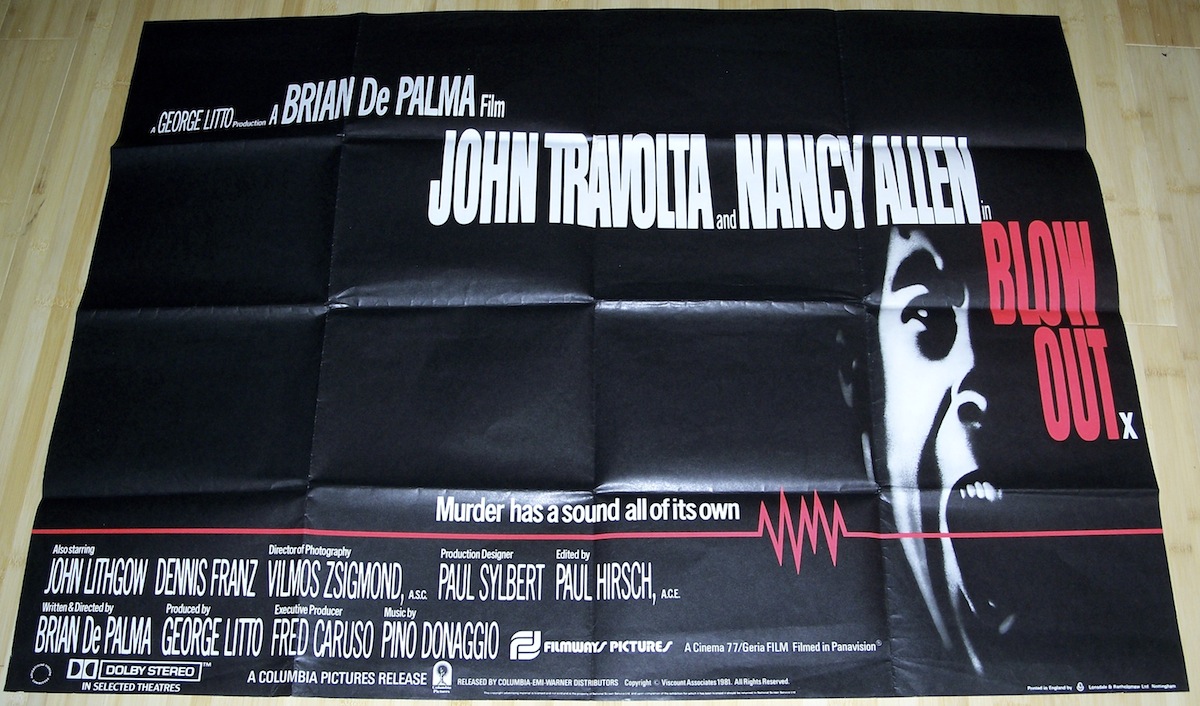
German

Italian
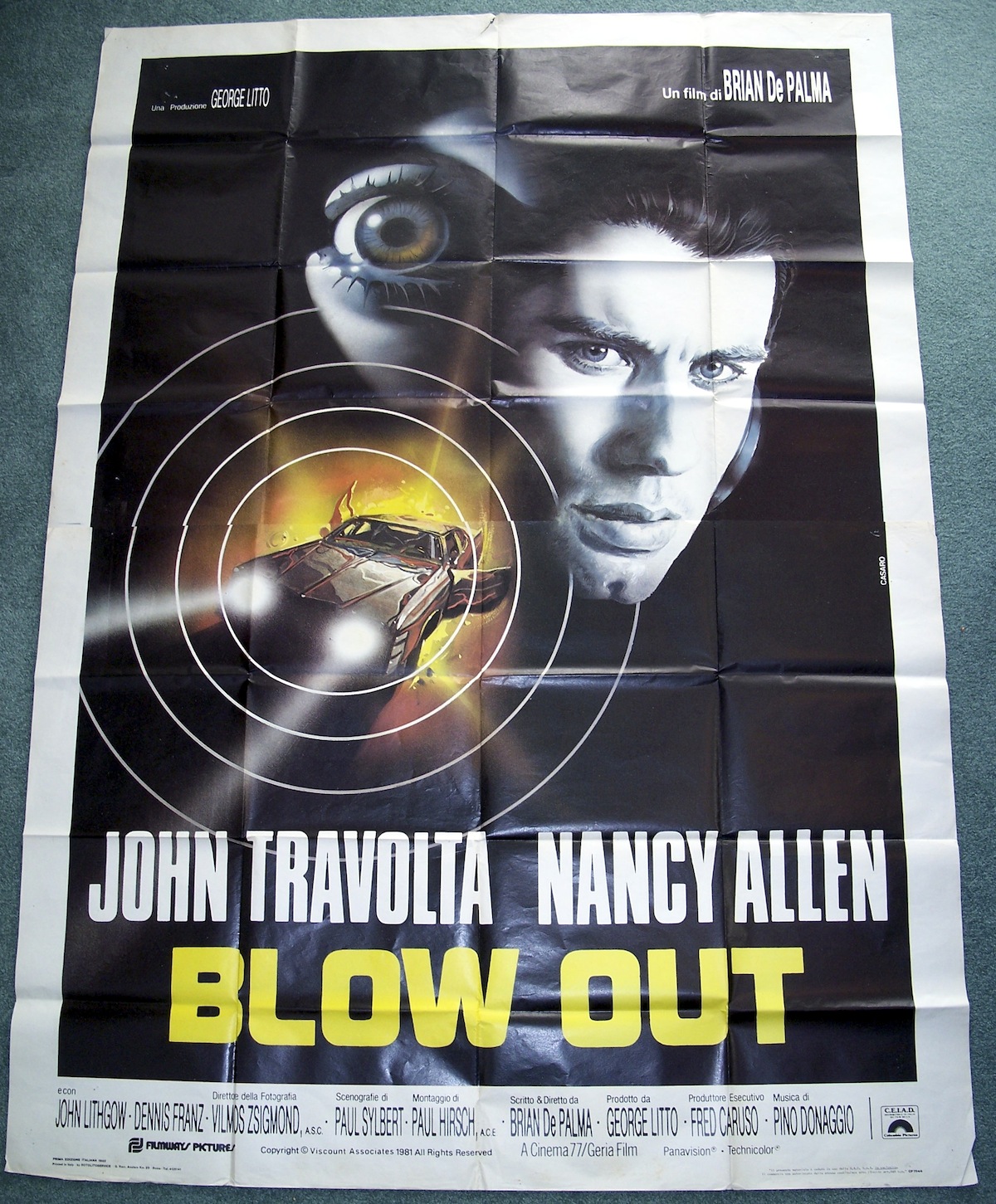
Clearly, the inky blacks of Vilmos Zsigmond’s cinematography made an impression on poster designers the world over.
Fabrizio del Wrongo writes:
U.S.
U.K.
German
Italian
Clearly, the inky blacks of Vilmos Zsigmond’s cinematography made an impression on poster designers the world over.
Blowhard, Esq. writes:

A few weeks back, we passed the million mark. We hope to continue to be your one-stop shop for erratic complaining, the odd movie review, and weekly Eastern European nudity. Thanks for dropping by.
Blowhard, Esq. writes:

I semi-enjoyed this biography of the ’30s film star Kay Francis, a once hugely popular and famous actress from the Hollywood Golden Age who is now remembered only by film buffs.
For the uninitiated, Francis was known as the Queen of Warner Brothers during the early 30s — the highest paid and most visible star at the studio until a string of disappointing movies forced her to cede that crown to an ambitious up-and-comer named Bette Davis. The book does a good job detailing Francis’s rise and fall. Born in 1905 in Oklahoma City to a ne’er-do-well father and actress mother, Francis had an itinerant childhood bouncing around the Midwest and West Coast until she ended up at an East Coast boarding school. From there she entered the New York theater world and eventually landed a contract at Paramount thanks to her friend and co-star Walter Huston. She spent about two decades in Hollywood (going from Paramount to Warners to RKO from roughly the late 20s until the late 40s) before moving back to New York to become a touring stage actress in various forgotten drawing room comedies. Married five times, none of which was happy for long, she had no children and spent the last years of her life as a recluse in New York. She died alone in 1968 at age 63.
Kear and Rossman’s book is based primarily on Francis’s diary and the media scrapbook her mother kept of Kay’s career exploits. To call it a “diary” may be a little misleading because Kay wasn’t writing deep introspective entries, it’s mainly a record of her comings and goings with the occasional musing, all written in a shorthand that she learned in secretarial school. But boy, what a salacious record it is. In his notes on MAN WANTED, Fabrizio observed that “[t]here’s always the gleam of sex in Francis” and what shows on screen is a reflection of her real life. Francis’s sexual appetite was prodigious. Even when married, the affairs, adulteries, and flings never stopped. Among her conquests were Delmar Daves, Maurice Chevalier, Herbert Marshall, Otto Preminger, Fritz Lang, and Kay Johnson (actor James Cromwell’s mother), along with a significant number of agents, producers, co-stars, European men of means, and pretty much anyone else who caught her eye. After a night with Chevalier, she wrote, “Swell evening — very exciting discussing about lesbians and a threesome. Not practical, I’m afraid.” I lost track of how many abortions she had, including four in one year alone. Poor Walter Huston, the dude who got her into the film biz, seems to be the only one who ever struck out.
Why has Francis largely been forgotten? Besides the fact that old Hollywood slips further down the memory hole every day, there are a few reasons why names like Katherine Hepburn and Bette Davis resonate more than hers. Francis was practical and unsentimental about Hollywood and acting in general — for her it was merely a means to a paycheck. Thus, a few tantrums aside, she didn’t really care what movies she was given. Years after retiring from Hollywood she had drinks with Bette Davis where they commiserated about life at Warners. Davis said she never cared about the money, only the roles, while Francis said it was the opposite for her. When star dimmed and Warners tried to get Francis to breach her contract by pushing her into crappy B-programmers Francis said she’d happily sweep the studio floors if that meant a steady income. Unsurprisingly, she also didn’t care about playing the movie star game. She hated taking publicity shots, doing interviews, and eschewed a studio limousine in favor of driving herself to and from work.
Francis was never interested in pushing herself as an actress either. Her metier was light comedy and melodrama which stuck to her whole life. During her post-Hollywood career as a summer stock actress (she went from being one of the most glamorous in Hollywood during the Depression to playing places like the Sombrero Theater in Phoenix), she balked at tackling plays by G.B. Shaw, Oscar Wilde, or Noel Coward. She was terrified of performing live on television, a fear that may have prevented any possible late-career renaissance. When she stopped making films in 1946, a few scattered TV appearances aside, she disappeared from the public consciousness.
The only reason I hesitate to recommend this book is that I don’t think non-Francis fans will get much out of it. The authors largely omit any historical context or discussion of her movies. I would’ve appreciated learning a little more about the NYC theater world of the 20s or more in-depth discussion of her movie performances. (Although unread by me, I’ve heard that Scott O’Brien’s biography talks more about her films.) On the other hand, it’s pretty easy to become a Francis fan. I highly recommend JEWEL ROBBERY, ONE WAY PASSAGE, and TROUBLE IN PARADISE — three films she made, one right after the other, in 1932 which are as good a legacy as any actress can ask for.


Related
Blowhard, Esq. writes:
An excellent summary. Notice how virtually all of the positive examples are traditional buildings.
Blowhard, Esq. writes:
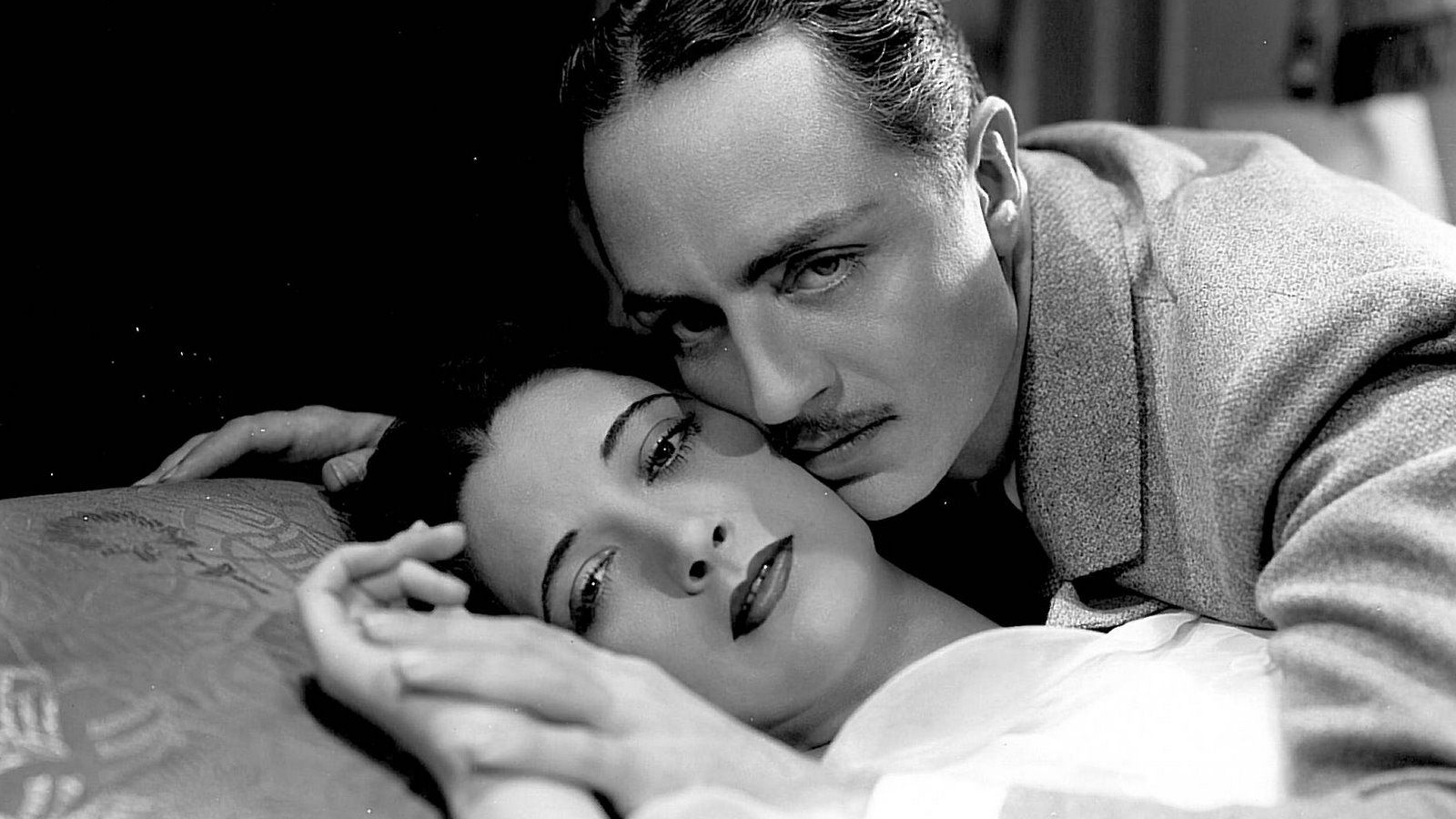
Kay Francis and William Powell in Tay Garnett’s ONE WAY PASSAGE (1932).
Not only was this Francis’s personal favorite of all her films, but Charles Willeford was a fan. Thirteen years old when he saw it, he later reflected, “ONE WAY PASSAGE is still my all-time favorite movie, but I have never risked seeing it again. I cried so hard when the movie ended the usher took me out of the lobby and gave me a glass of water.” It’s unfortunately unavailable for rental, but you can purchase the movie at Warner Archive.
Click on the image to enlarge.
Blowhard, Esq. writes:

The “Mouth of Hell” from a Book of Hours owned by Catherine of Cleves, c.1440. Via Europe’s History. More about the book here.
Fabrizio del Wrongo writes:
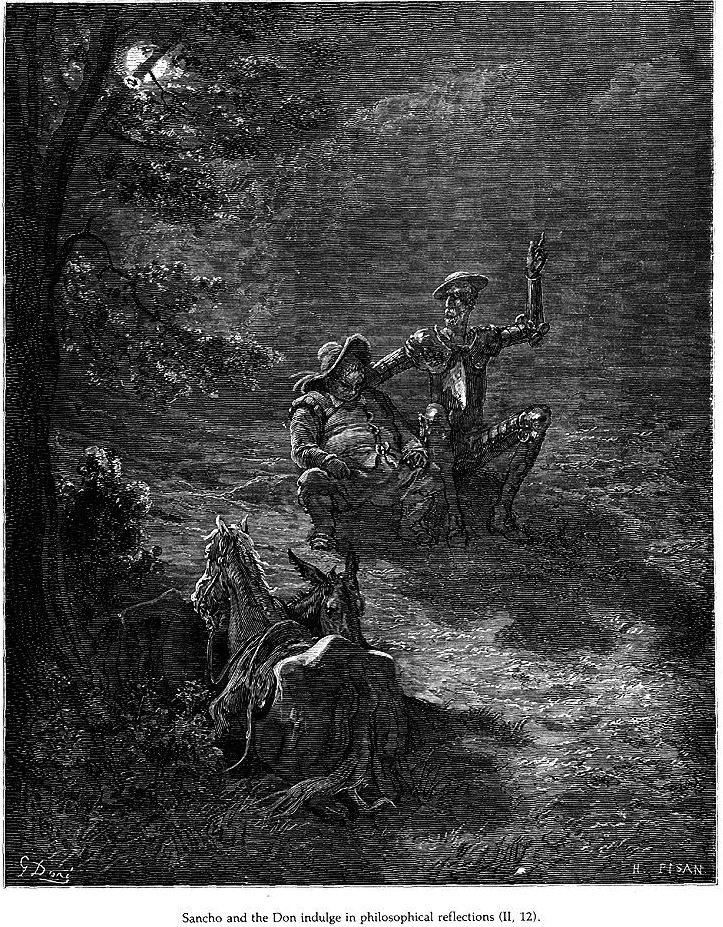
Just then, whether it was the cold of the morning that was now approaching, or that he had eaten something laxative at supper, or that it was only natural (as is most likely), Sancho felt a desire to do what no one could do for him; but so great was the fear that had penetrated his heart, he dared not separate himself from his master by as much as the black of his nail; to escape doing what he wanted was, however, also impossible; so what he did for peace’s sake was to remove his right hand, which held the back of the saddle, and with it to untie gently and silently the running string which alone held up his breeches, so that on loosening it they at once fell down round his feet like fetters; he then raised his shirt as well as he could and bared his hind quarters, no slim ones. But, this accomplished, which he fancied was all he had to do to get out of this terrible strait and embarrassment, another still greater difficulty presented itself, for it seemed to him impossible to relieve himself without making some noise, and he ground his teeth and squeezed his shoulders together, holding his breath as much as he could; but in spite of his precautions he was unlucky enough after all to make a little noise, very different from that which was causing him so much fear.
Don Quixote, hearing it, said, “What noise is that, Sancho?” “I don’t know, senor,” said he; “it must be something new, for adventures and misadventures never begin with a trifle.” Once more he tried his luck, and succeeded so well, that without any further noise or disturbance he found himself relieved of the burden that had given him so much discomfort. But as Don Quixote’s sense of smell was as acute as his hearing, and as Sancho was so closely linked with him that the fumes rose almost in a straight line, it could not be but that some should reach his nose, and as soon as they did he came to its relief by compressing it between his fingers, saying in a rather snuffing tone, “Sancho, it strikes me thou art in great fear.”
“I am,” answered Sancho; “but how does your worship perceive it now more than ever?”
“Because just now thou smellest stronger than ever, and not of ambergris,” answered Don Quixote.
“Very likely,” said Sancho, “but that’s not my fault, but your worship’s, for leading me about at unseasonable hours and at such unwonted paces.”
“Then go back three or four, my friend,” said Don Quixote, all the time with his fingers to his nose; “and for the future pay more attention to thy person and to what thou owest to mine; for it is my great familiarity with thee that has bred this contempt.”
“I’ll bet,” replied Sancho, “that your worship thinks I have done something I ought not with my person.”
“It makes it worse to stir it, friend Sancho,” returned Don Quixote.
– Miguel de Cervantes Saavedra, as translated by John Ormsby
Paleo Retiree writes:

Back here we celebrated the Irish Reddit star who calls herself Redhotsillyfecker, and today we’re back to underline and reiterate our enthusiasm. Not only is she a fave of ours for her good looks and her daring, we love her for her responsiveness, her sense of fun, and her delight in her audience.
But first, a few words in appreciation of those good looks. Redhotsillfecker strikes me as being about as close to a living embodiment of a cheescake painting as can be imagined. Everything about her seems to be the result of someone’s exaggerated — and decidedly pre-feminist — erotic dreamworld. She has a blowjob-inspiring mouth that’s out of adult comic books; an endearing knack with shy/bold lip-biting; a burlesque queen’s theater-filling curves; creamy-pink skin as appealing to the appetites as a decadent dessert; a softly glowing cascade of ginger-blonde hair out of a Breck shampoo ad; cleavage that might have been lovingly drawn by Dan DeCarlo; and the kind of assertive, bulls’-eye nipples that transfix teenage boys.
As for her spirit: As the months have passed, Redhotsillyfecker has grown more and more comfortable and outrageous as an online performer. Her sweetness and friendliness can’t be denied — in her photos and galleries there’s none of the punching-a-timeclock quality that the work of even the best pro erotic performers often has. And her just-about-to-burst-into-laughter awareness of her own cartoony lushness conveys a, to me, irresistible “Well, what naughty thing shall we do now?” erotic giddiness.
Because Uncouth Reflections is your best news source, we made the effort to get in touch with Redhotsillyfecker … and we were delighted to meet a young woman not just open to doing a little interview but who’s also a very sweet and fizzy email correspondent. Here’s how she responded to my initial proposal, for example: “I’d absolutely do a q&a for you! That’s a nice piece you wrote about me, and it’s an honour to be mentioned beside thediggitydank! Thank you!” We learned that Redhotsillyfecker is 25; that she grew up in Belfast; that she works as a Search Engine Optimizer; that she lives with a boyfriend; and that they share ownership of a German Shepherd puppy.
Below the jump: Our exclusive q&a with Redhotsillyfecker as well as loads of yummy NSFW visuals. Enjoy your weekend.
Blowhard, Esq. writes:
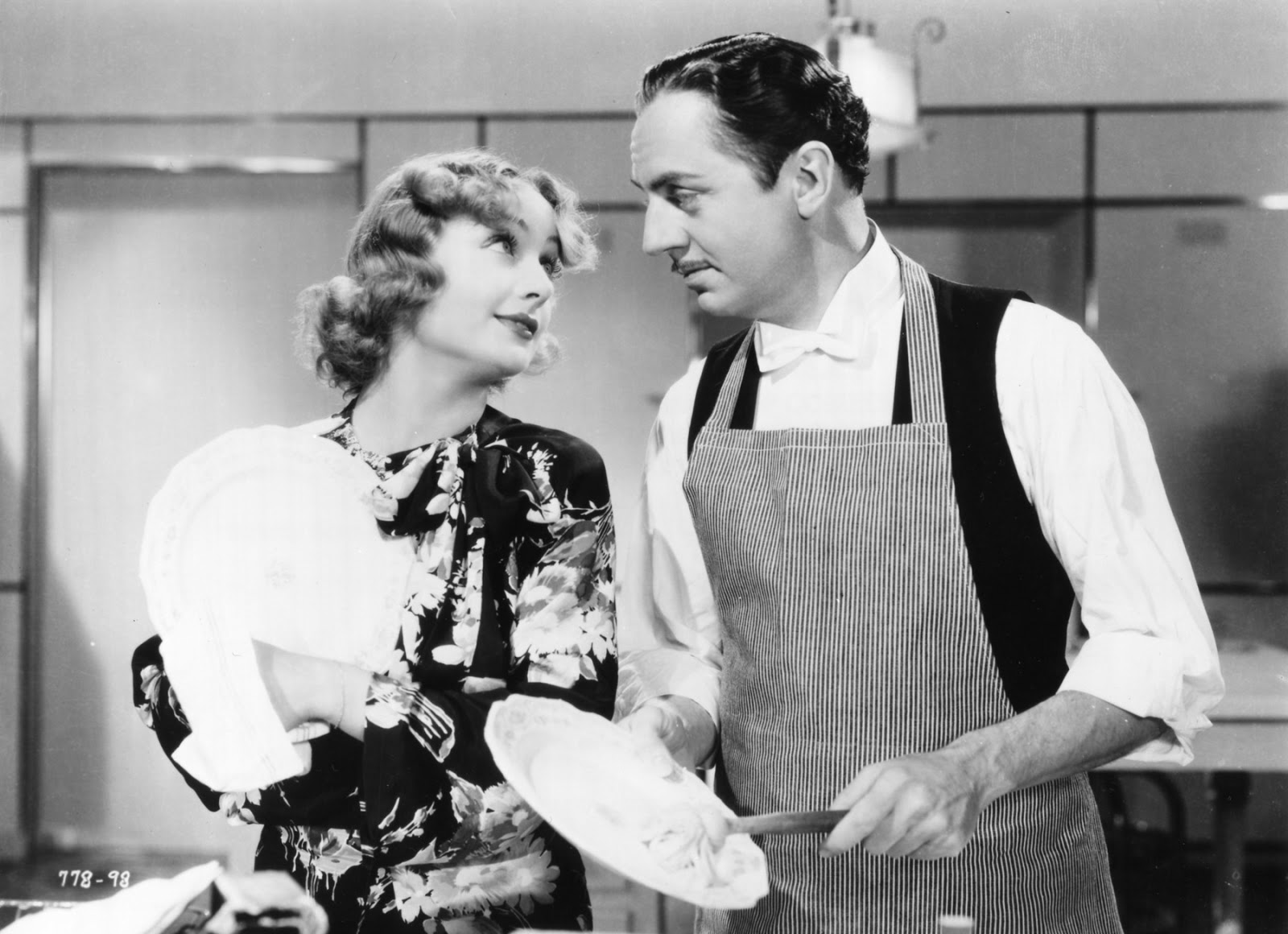
Carole Lombard and William Powell in Gregory La Cava’s MY MAN GODFREY.
Click on the image to enlarge.
You can watch the whole movie here:
Paleo Retiree writes:

Tim Burton’s “Big Eyes” hit me the way nearly all his post-“Batman” movies have hit me: as having a lot of kooky, fun visuals and as being about two inches deep in dramatic and character terms.
Burton, working from a script by Scott Alexander and Larry Karaszewski, tells the real-life story of Walter and Margaret Keane, who during the 1950s created and sold thousands of paintings and prints portraying melancholy waifs with huge eyes. The Keane images — which, oldguy that I am, I well remember hanging on the walls of friends’ houses — became beyond-popular, one of the defining, if hard-to-understand-in-retrospect visual elements of the American ’50s. (You can read more about the actual story here and here.) The catch is that, while Walter took the credit for the art, it was Margaret who did all the actual painting. Walter was, in fact, merely the couple’s P.T. Barnum-esque public face.
Burton adorns the film in Necco-Wafer colors and zoomy-swoopy ’50s-modernism shapes, aims for a tone that wobbles back and forth between semi-camp and pretty-realistic, and has some amusing fun with the San Francisco bohemia of the era. And thanks to the did-this-really-happen? (it did!) material and the offbeat visuals, the movie’s a painless sit.
But the film could have been so very much more. Despite his visual gifts and energy, Burton seems to have a very conventional mind when it comes to drama. In this case, it’s hard to imagine how his take on the material could have been any more banal than it is. In Burton’s telling, Margaret is a nice, gifted, pleasant, talented person who — because life in those days was so tough for women, and especially for women artists — had no choice but to accept the crazy, tyrannical Walter’s terms. It’s Feminism Lite: Jobs are near-impossible for women to land, and men are entitled and abusive. So when Margaret finally decides to stake her claim on her creations, the scenes have a dreary, rah-rah, almost “Norma Rae” quality.
I have zero idea what the reality of the Margaret/Walter relationship was, but the reason Burton’s take on it makes for tepidness is that his version of Margaret isn’t dramatically implicated in the movie’s central scheme. As we talked the movie over, and working with nothing but what the movie itself had shown us, the Question Lady and I quickly cooked up two different and (I think) more compelling takes on the material. 1) Margaret was an ambitious artist willing to put up with her husband in order to put her talents over. 2) Margaret liked the money and success just as much as Walter did, and turned on him only when things got personally impossible between the two of them. But what about the unlikely-seeming-to-us case that Margaret really was nothing but a passive victim of her husband’s nefariousness? In that case, why not tell the tale as a great, unlikely yarn — a kind of defiant-and-triumphant (in an ironic sense) “GoodFellas” of the art world? Instead, Burton gives us something that a unimaginative TV producer in the 1990s might have been willing to sign off on.
The Margaret character is so dramatically undernourished that poor Amy Adams — who has a nice responsiveness and an amusing Doris-Day’s-quieter-sister look — is left with little to play other than misgivings, hesitancy, a dim sense that what her husband is up to is Not Right, and a need to look out for her child. Meanwhile the Walter character drives ALL the action. Christoph Waltz goes to town with his performance, and good for him for being so relentlessly balls-out. But — and I don’t know whether this is Burton’s fault or Waltz’s — it was a serious problem for me that the Walter character comes across as a clown and a huckster right from the start. Over and over again it’s hard to believe no one, Margaret included, is seeing through his used-car-salesman-style lies and sleaziness.
And what’s dramatically at stake in the movie anyway? At least in his semi-similar (and more enjoyable) film about the legendarily talent-free filmmaker Ed Wood, Jr., Burton gave viewers something they could talk about after seeing the film. Wood may have been inept, but by god he had vision and drive — he really lived his art. And in the arts, aren’t vision and drive at least as important as talent? Watching “Big Eyes,” I couldn’t tell what Burton’s view of Margaret’s paintings is. Is the Keane art schlock? Populist genius? Spookily wonderful outsider art? The questions are raised and then run away from. Margaret herself has a weekend-painter-type knack, but otherwise doesn’t seem to have much art-making drive. In the end we’re just supposed to feel good that that nice Margaret Keane finally got credit for the pictures she painted.
 Blowhard, Esq.
 Callowman
 Sherbrooke
 Eddie Pensier
 Enzo Nakamura
 Epaminondas
 Fabrizio del Wrongo
 Fenster
 Brundle Guy
 Glynn Marshes
 Paleo Retiree
 Atypical Neurotic
 Question Lady
 Sax von Stroheim
 Sir Barken Hyena
 The Mistaken
