Fenster writes:

Not content to let the matter rest after one go at the subject of trigger warnings, The New Republic has now published/posted three articles on the subject in less than a week. The different approaches to the topic suggest something of how thorny subjects are especially thorny at the intersection of older style liberalism and newfangled cultural progressivism.
The sequence of the articles in particular shows how rapidly a topic like this can descend from tragedy to farce. In that respect, the descent embodies nicely TNR’s own descent from the serious to the inadvertently humorous, a journalistic version of ontogeny recapitulating phylogeny.
On May 14, TNR published Life Is “Triggering.” The Best Literature Should Be, Too, by Jerry A. Coyne, a professor at the University of Chicago. Coyne, like old TNR hand Jonathan Chait before him, goes right at the excesses of political correctness. It’s good that liberals can take this kind of thing to task. Of course, being an academic and writing in TNR Coyne needs to honor the large gods first and so begins his piece with a kind-of disavowal.
Sadly, the decline in free speech at American universities, and the proliferation of ludicrous “trigger warning” mandates for books and courses, are topics covered largely by the right-wing media, so often I must hold my nose as I examine their sources. But even a right-wing venue can get stuff right . . .
Having gotten that bit of ritual cleansing out of the way, Coyne goes on to pen a forceful and serviceable screed against the idea of trigger warnings. And by “serviceable” I mean no offense. It’s just that while you can look at an issue like this from an infinite number of perspectives (as we shall see) in the end the only thing worth dwelling on from the point of view of importance is the big picture lunacy of the idea in the first place, and it doesn’t take deep philosophy to get to the point. And so he does, at the end.
It’s time for students to learn that Life is Triggering. Once they leave college, they’ll be constantly exposed to views that challenge or offend them. There are a lot of jerks out there, and no matter what your politics are, a lot of people will have the opposite view. If you’re an atheist, you’ll live in a world of people whom you see as hostile and delusional believers. If you’re a believer, you’ll encounter vociferous heathens like me. If you’re a feminist, well, sexism is alive and well.
That’s why one of college’s most important functions is to learn how to hear and deal with challenging ideas. Cocooning oneself in a Big Safe Space for four years gets it exactly backwards. “Safety” has been transformed by colleges from “protection from physical harm” to “protection from disturbing ideas.”
That pretty much says it all, in my book. You can unpack and pomo-pummel this simple idea all you want but it will likely be off the main track.
But it wasn’t enough for TNR to leave it there. No. Who knows why but someone in the editorial office seems to have felt a need for some friendly amendments to the main point.
First up was May 17th’s My Students Need Trigger Warnings—and Professors Do, Too by another faculty member, Aaron R. Hanlon. That’s a provocative title and suggests a possible frontal assault on the Coyne argument. Now, even TNR would have a hard time endorsing trigger warnings in a full-throated way, so Hanlon opts for an interesting jab from the side. Hanlon does offer up trigger warnings of a sort in his own courses and defends them thus:
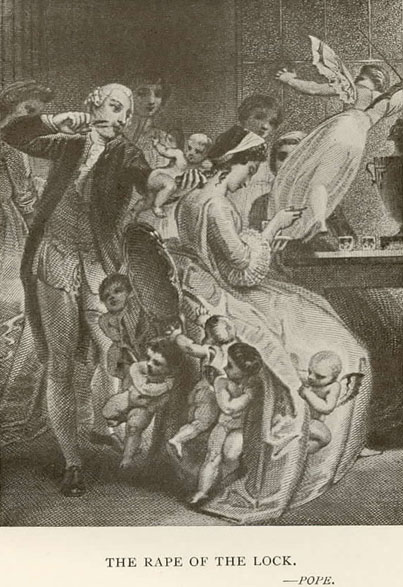
I give a trigger warning with full knowledge that the gender-based violence in “The Rape of the Lock” is—in my particular experience—mild in comparison with all the dark places that not just “Western,” but broader global literatures, can go. Trigger warnings are nevertheless important because no matter how knowledgeable and comfortable professors are with the intellectually and emotionally challenging material we teach, our students are real people with real histories and concerns. They do indeed want to be challenged—to be made uncomfortable by literature—but it’s our job as professors to do more than just expose them to difficult ideas. It’s our job to help see them through the exposure.
He goes on:
I don’t mean to say that we should become licensed therapists or trauma experts on top of our ordinary specializations, or worse, to pretend to have expertise we haven’t earned. But so long as we’re happy to evangelize about the truly disruptive and real life-changing possibilities of our subject matter, we also need to be prepared to teach that difficult and sometimes disorienting material responsibly and attentively, not just to cast out barbs of hardcore human expression while we watch our students puzzle and weep.
In other words, good professors are there precisely to remind students that art and history should not be airbrushed, and that images of rape, whether of locks

or people

are not just antiquarian things on a wall. They suggest disturbing things of a sort that most students have been shielded from.
So what is wrong with this argument? It sounds good. Brave professor takes young and innocent students into heart of darkness but must take stewardship responsibility for the journey. Could be true. Is it? I think not. I just don’t find credible the notion that college lectures on literature are by their nature the kind of thing that leaves one shell-shocked.
For the record, Hanlon seems to be one excellent professor. Rate My Professor, the notoriously uncompromising ratings website for faculty, gives him an almost unheard of 4.8 out of 5. He appears to be the real thing–a hard professor who assigns a lot of readings and is challenging but who is nonetheless adored. Indeed, three of the student reviews refer to him as “adorable”. Also, he appears to have an awkward and geeky charm and, being a professor who is awkward and geeky myself, I must say I like the guy’s style. But there are no scary moments recounted in the glowing student accounts of classes with Dr. Aaron.
No doubt the best class I took this semester. Prof Hanlon forces you to think critically about each of your readings and also gives you a lot of freedom on your essays to write about whatever you want. Although the focus was not on hip-hop as much as I would have liked, I still ended up loving the class. Definitely take it if you can get in.
Most of the positive comments do not suggest a voyage into the heart of darkness but a good time with an excellent professor. Nothing wrong with that but it does not seem to comport with his story.
So my conclusion in the end is that Hanlon’s essay is well-written (A) and charming (A-) but in the end not persuasive since he is making an argument in theory that does not actually conform to the real conditions at hand. B overall.
Finally we come to May 20th’s Stress Test by Jeet Heer. Heer is a senior editor at TNR. He comes at the issue in an ingenious way, by arguing that despite the fact that trigger warnings and safe spaces can be “flimsy” we must respect and acknowledge the legitimacy of the calls for such measures given the scary times we live in.
I wrote above that in my view you don’t have to say much more than trigger warnings are stupid. Heer disagrees. In his view, the flimsiness of measures is trumped by the seriousness and honesty of the pain that students feel living in the world, and we must confront that squarely before making fun of the sometimes odd behaviors that people manifest when they are in pain.
In short, we must view trigger warnings through the lens of PTSD.
It’s quite a claim. Heer valiantly tries to back it up, too, at times coming across as a too-smart sophomore penning a sophomoric paper. Or a too-clever editor writing something on a dare from a young and callow staffer: “hey, Jeet, how’s about you try to argue that PTSD is the key to understand this trigger warning thing?” In truth his argument is a ludicrous one.
He writes that it used to be the case that we ignored the effect of trauma in war–man up soldier!—and that PTSD, while a concession to therapeutic culture, opened up an entirely new and better way to deal with the after effects of combat. Once understood in terms of combat, the notion has morphed.
The explosion of trigger warnings and the growth of safe spaces is best understood as a consequence of the expanded social and cultural role that PTSD has assumed in our society.
Now one could use this insight to argue that PTSD, like all concepts, ideas and diagnoses, can be pushed and pushed and pushed until it becomes meaningless. But Heer will hear none of that.
The concept of PTSD rests on the importance of buried memories—memory traces—which can be reignited as flashbacks. PTSD is, in a crucial sense, a theory of memory: It posits that for certain people the memory of a trauma always exists, lying just below the surface of consciousness, ready to be triggered. A theory of this sort will naturally lead to a heightened vigilance. In his path-breaking research, Shatan said we have to confront “the unconsummated grief of soldiers—impacted grief, in which an encapsulated, never-ending past deprives the present of meaning.” As silly as trigger warnings and safe spaces may seem, they are rooted in genuine, widely accepted science.
So let ‘er rip!
It’s easy to caricature the vanguard of the so-called politically correct: to paint them as fanatics who are trying to destroy well-established norms of free speech. But they are not caricatures; they are products of history. Most current college students grew up in the shadow of September 11, with the specter of large-scale terrorism always looming and with a steady stream of soldiers returning home to grapple with their demons. It is no wonder that they feel that they, too, deserve security, even in the precarious and flimsy form of trigger warnings and safe spaces.
My goodness this chap needs a good shot of historical imagination. Indeed he seems like the kind of person who thinks of that painting
as a kind of lark. Did really bad things happen? Well maybe, but surely not like today, with all those terrible campus rapes and the epidemic of killer cops and with the threat of terrorism hanging over our heads. It’s just such a scary, scary time to be alive!
Once again we have a seemingly compelling story, but one that does not align with the real world. The rhetoric of the aggrieved laying down the law about Ovid at Columbia does not suggest they are shrinking violets. If anything, there is a distinct whiff of will-to-power emanating from their language.
As for Heer, he is not himself an academic, not yet anyway. He is pursuing his doctorate. Not for nothing that his research emphasis is comic books. Now he is just a senior editor at the once venerable TNR, where he is doing his part to impart a comic strip sensibility.

























 Blowhard, Esq.
 Callowman
 Sherbrooke
 Eddie Pensier
 Enzo Nakamura
 Epaminondas
 Fabrizio del Wrongo
 Fenster
 Brundle Guy
 Glynn Marshes
 Paleo Retiree
 Atypical Neurotic
 Question Lady
 Sax von Stroheim
 Sir Barken Hyena
 The Mistaken
 Uncouth Reflections