It’s impossible to write about Kyla Cole without dwelling on her eyes: calling them “blue” doesn’t do them justice; it’s a bit like calling the sun “hot” and then closing the book as though you’d exhausted the subject.
Born Martina Jacova in what is present-day Slovakia, her career as a model was kick-started when she was crowned Ms. Monticello Raceway while working as a summer camp counselor in 1999. The camp is located near my home. Had I known she was working there I might have packed up my knapsack and signed up for a session. I like s’mores as much as the next guy. Aside from appearing in lots of men’s magazines — she was offered the title of Penthouse Pet of the Year but had to turn it down when she couldn’t get a visa — Kyla has acted in some of Andrew Blake‘s erotic films and appeared regularly on Slovakian television; Wikipedia even claims she served as the basis for the design of a video game character.
Obviously, her bush is one of her great attributes; it’s as exuberant and as luxurious-looking as what you might find in a ’70s nudie mag. She seems pretty proud of it too, often going out of her way to highlight it in her shoots. I’d love to know what was behind her decision to keep it natural. A personal preference, or an epic reactionary stand against the onslaught of the Brazilian? Whatever the reason, I find her muff charming, alluring, captivating. Don’t ever shave it off, Kyla!
Looks like these low-res photos come from BabeFox (defunct?), Digital Dreamgirls, Just Teen Site, Dazglam (defunct?), and Claude Christian. Pay ’em a visit for the real deal. I particularly like Claude Christian’s work. His naturalistic fetish photos manage to communicate sophistication even as they evoke the seedy furtiveness of Irving Klaw‘s work with Bettie Page.
I didn’t know what to expect. I am a huge fan of DePalma’s Lurid Period of 1973-1984. DePalma made ten films over this eleven years, all but one having one thing in common: luridness. One is lurid/goofy (Phantom of the Paradise, early and nearer his Goofy Period) and one is lurid/conventional (Scarface, later and nearer his Conventional Period). The rest are lurid/lurid with each excellent in its own way. They almost all have one or more of his trademarked silent and/or slow-motion set pieces, always a highlight.
Since 1984 he has returned to lurid only intermittently: four films out of the fifteen he’s done in the past 30 years can be thought of as attempts to return to his lurid base. But truth be told, they haven’t done much for me. Most continued to have the kind of slow motion, ballet-like set-pieces that I found so riveting in The Fury. But they now too often seem obligatory.
So here’s the thing: Passion reminds me of a joke that made the rounds when I was a kid of maybe 10 or 12.
The joke concerned a worm named Motor who was good at boring through wood. He spent his day in the forest happily. He’d bore through this log and he’d bore through that log. In the hands of a good joke teller, usually older, this premise just set up a set of extended riffs about Motor’s time in the woods drilling and boring about in the logs. As such, the joke felt to us kids a bit more like a tall tale than a joke with a conventional punch line. The story-teller just took his good old time taking it here and there.
Eventually, the joke just went on too long. Far too long. OK, we would complain, we like the little feller well enough and we have had some good times following his doings, but where is this going? We were reassured it would all make sense at the end but just bear with the teller a bit more. And it went on and on some more. After a good long time, Motor disappeared into a giant log and seemed unable to find his way out. Was he lost? Did he die in there? Where did he go?
In time, there was a conclusion, but for the moment I can’t recall it and it doesn’t concern us. The story is relevant because it reminds me of how DePalma constructed Passion. The plot went on. And on. And on. There was no real life to the characters and no believability to the plot. Each character, each plot development felt like a device. Each a contrivance put in place by a plodding craftsman to one end and one end alone: his decision to end the movie with one of his trademarked set pieces done as a finale (they are often though not always in the middle).
Given that choice, there was no other choice but to see how many McGuffins he could get in the air at once (a scarf! a cell phone! a mask! a twin!) so that he could outdo himself with his grand new set piece. DePalma explicitly uses ballet as a backdrop theme for the movie, but the true animating spirit is juggling: how many balls and how will he keep them up there? And how will he end the act with a grand flourish?
And there it is: the last five minutes is a return to lurid excess, another set piece done without dialogue and ever so methodically.
(cue Pino Donaggio)
The gorgeous lesbian lovers; the discovery of by one (a murderess) of the other’s cell phone, a phone which contains evidence of murder and which has been readied to transmit the evidence to a policeman at the flick of the send button; the sexy/violent fight to control the phone; the graphic strangulation that slowly and painfully ensues; the policemen walking slowly upstairs to the apartment with a huge, colorful bouquet for the murderess who has fooled him into thinking she was innocent; the unanswered knock on the door as one of the lovers is quietly strangling the other inside; the slow departure of the policemen when there is no answer just as the next victim is breathing her last and kicking her foot in the vicinity of the phone on the floor, oh so close to the send button; his decision to walk downstairs, just missing the newly revealed twin sister of the earlier murder victim (or maybe not the twin?) emerging from an elevator heading toward the same apartment looking for revenge; the inadvertent pressing with big toe of the send button on the cell phone at the moment of what seems to be the strangled woman’s death; the sending of the incriminating evidence to the policeman’s phone as he is walking down the stairs; the policeman pausing on the stairwell looking at the evidence sent from the cell phone and realizing that the woman he thought was innocent is really guilty; his turning around to go back to the apartment . . . Now everything is in motion: the murder inside the apartment–is the victim actually dead for sure? The twin sister: which twin is she, and what will she do when she gets to the apartment? The detective: what we he find as he comes back up the stairs?
Hold on, I remember the punch line now. At the end of the joke, our little worm pushes his head out from a hole in the log and guess what?
OUT BORED MOTOR!!!!
Oh, and then there’s the actual conclusion to Passion–the silent set piece above is just the fake ending. The real one tagged on as a thirty second coda reminds me of the joke’s punch line, and it’s just as funny.
When it rains it pours. Just as UR gets its knickers in a knot–privately, of course!–over the issue of creepshots, it turns out that Brian De Palma, a sainted presence for many of us here, finds himself in hot water for alleged creepshotting.
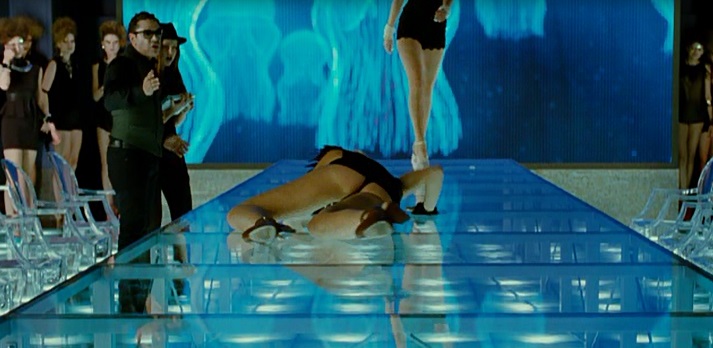
The incident occurred during the shooting in Berlin of a scene involving runway models for his most recent film Passion. DePalma asked one of the leggy German models–the lovely Nicht Tragenhöschen–to perform the scene without panties. Sadly for Fräulein Tragenhöschen, she tripped and fell on her walk, affording the cinematographer, Jose Luis Alcaine, a nice shot up . . . well, up the runway, let’s just say that.
Tragenhöschen contends that DePalma greased the runway to prompt her to fall. DePalma has disputed this, calling her an “oiled up show-off” and that the greasy residue found after the fact was a result of the fall itself. One thing is clear: DePalma saved the footage and used it in the film.
Fräulein Tragenhöschen, down but not out
German law operates under a longstanding doctrine of Keinehinterhältigenfotografienvongesäß, loosly translated as “no sneaky photographs of buttocks.” DePalma and Alcaine argue that the camera placement was public and fixed and that there could be no sneakiness involved. Tragenhöschen acknowledges that the camera placement was fixed. But she also contends that it was DePalma’s runway greasing that caused her body to be violently, intentionally and conveniently realigned in such fashion as to permit the shot. Her attorney referred to this as “hinterhältig nach oben Kleidung”, or “guileful upskirting.”
Lately at Casa Barken, where the rattlesnakes bask in the blinding sun, we’ve had the platters spinning like a veritable Martian invasion of frisbees. Here’s a sampling of some of the aural delights, with an 80’s theme this time.
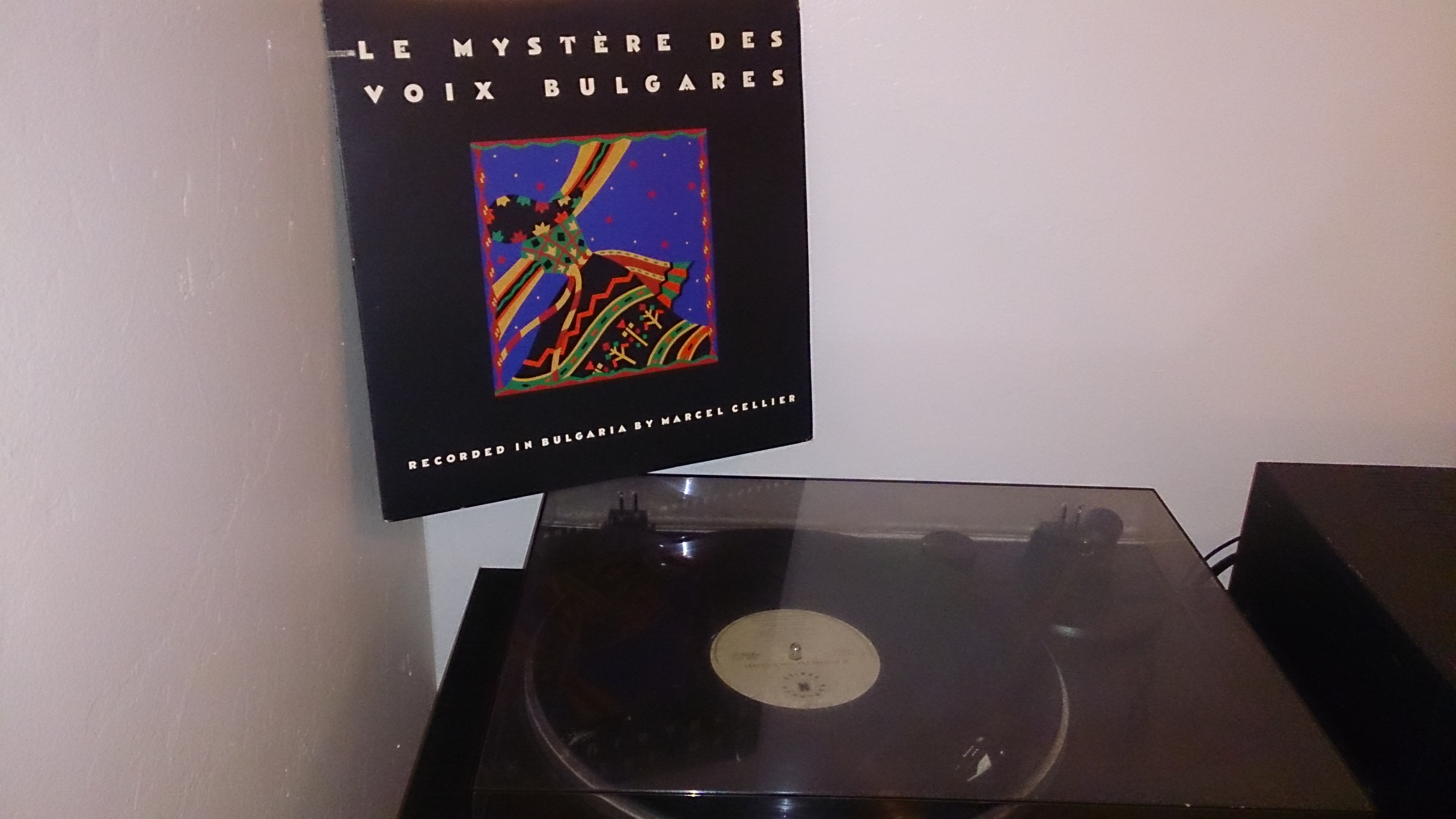
Le Mystere Des Voix Bulgares 1987
More than bleating babushkas
Behind the Iron Curtain a new style of music emerged in Bulgaria, a labor of composers working for state radio, mostly with women’s choirs. Hints of this music had leaked out to the West, and Glasnost brought the masters to 1980s impressario Ivo-Watts Russell. Released on his famed 4AD label, home of Cocteau Twins, Modern English, Pixies and others in that phalanx, it might have seemed a stretch. It’s basically classical music, but the aesthetic works.
I imagine these Bulgarian composers faced similar problems as Eisenstein, Shostakovich or Tarkovsky. What they produced was worth their struggle because the result was a unique fusion of the ancient Middle Eastern music that Ottoman conquest brought, and 20th Century tonal techniques from Bartok and Stravinsky.
Not that anybody needs to know that to enjoy this record. The tonalities that in the 1980s seemed so stringent are more familiar now, because of an army of samples marching through the culture. But not that much more, it’s not all softened with reverb, Lord of the Rings style in these original and raw recordings. It’s a richly emotional journey, with some of the pieces having a touch of gospel, almost, while others are like windows to the ancient. This record was pretty important to me, back in the day. This and Jon Hassell pointed me to explore world music, which was a mighty big and fruitful nut to crack.
Still is, but the promise of a world music fusion in the West has been deeply disappointed. It descended to little more than sitar and muezzin samples layered over jungle drums, meekly provided by emasculated drum machines. Bah!
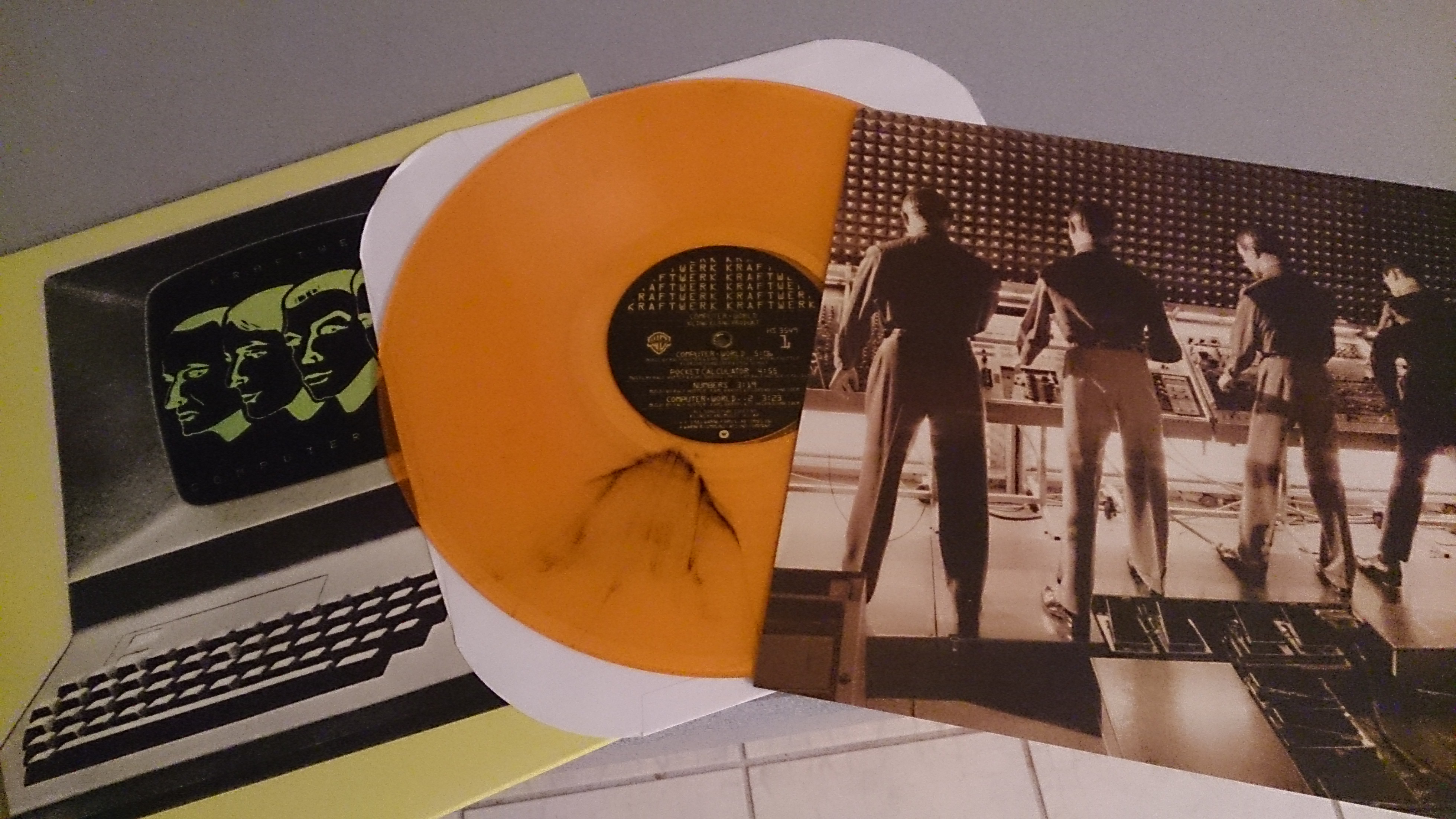
Kraftwerk / Computer World 1981
Kraftwerk is a miracle. How does a group of musicians pursue a vision over decades to it’s outer reaches without misstep or stylistic gearshift? And keep it interesting, and fresh. And downright tuneful. And, come on, “we are robots making music” is plain stupid as a premise. But they pull it off, and actually make a statement with it.
It’s pretty clear techno and it’s fecund spawn would not be here but for these krautbots, not in anything like its current form. It might have stunted at the Donna Summer/Giorgio Moroder stage, catchy, fun, cool, maybe, but flat. But from Kraftwerk techno got a generous shot of the conceptual, one of the forces that (occasionally) lifts that form above the mundane level of the dance club.
But, like with Mystere, you don’t need to know any of that to enjoy it because Kraftwerk is fun, and they write great tunes. That’s part of their secret. They balance intellectualism with heart, and no matter how robotic, that heart is always present. Part of their statement, and why Kraftwerk inspires such love.
You’ll hear more from me about Kraftwerk, I am set to see them in Los Angeles later this month, along with some Uncouthers. Expect a full report.
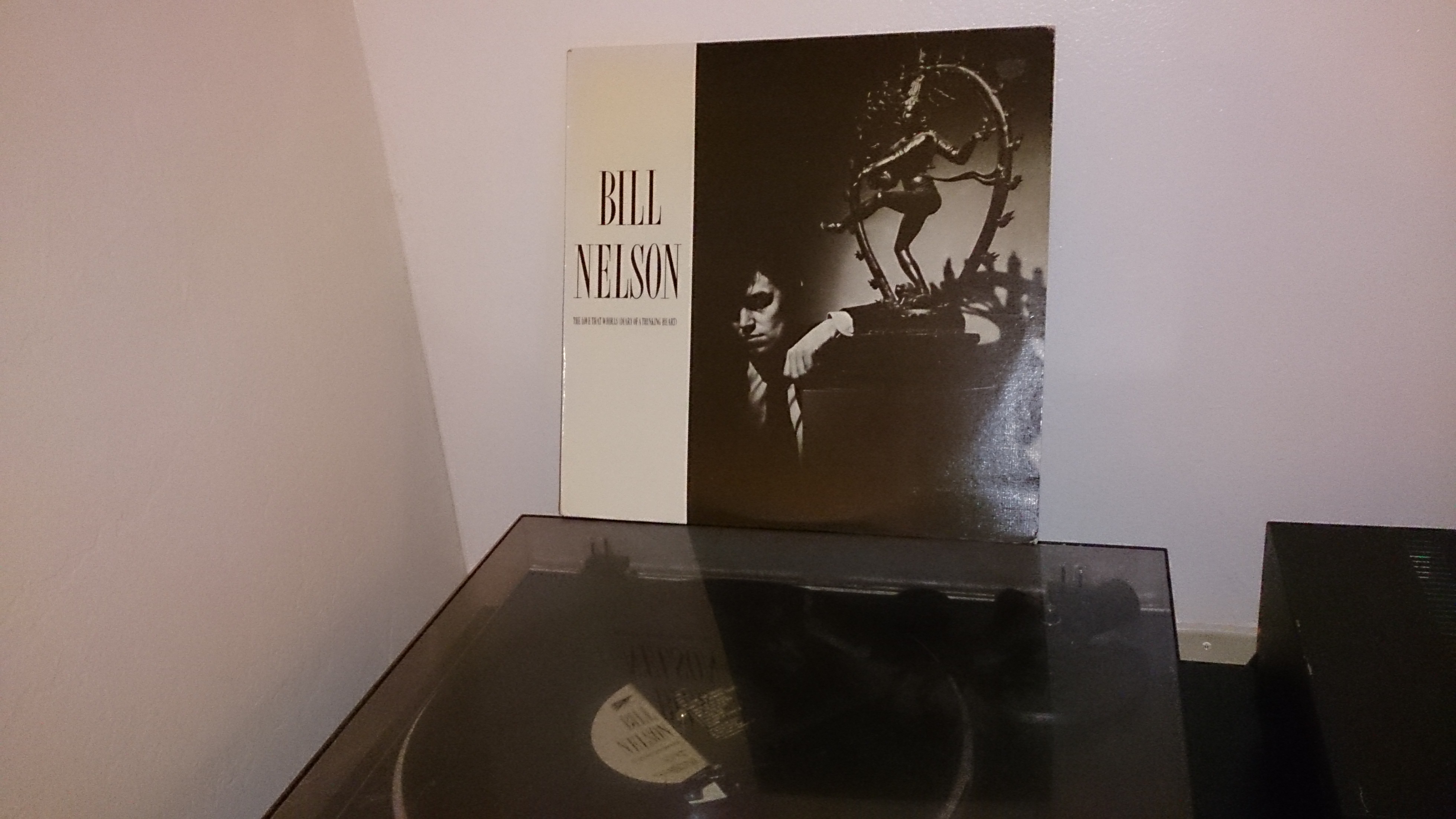
Bill Nelson / The Love That Whirls 1982
If nothing else, I hope a few people discover this incredible artist from my chicken scratchings. Nelson is known as leader and guitarist of semi-proggers Be Bop Deluxe, a gig he walked away from to start an abrasive pre-New Wave band called Red Noise. From there he proudly went underground, starting his own label to sell his records by mail order in the late 1970s. He’s been at the front, or even a bit before, of several important moments in music, one of them being ambient.
Another is technopop, of which this record is a pinnacle. The sound is a layered swirl of analog squiggles and blips and zips, yet oddly catchy and infectious. Nelson’s lyrics are intriguing and personal throughout, and show his unaffected enthusiasm for, well pretty much everything. But sex is high on that list:
Sea creature/sex creature, woman in love
A slip of the tongue or the hand in the glove
Kiss me and wound me again and again
Faster than beauty our beast is unchained
In addition to his pop confessionals, there are some lovely instrumental interludes, some quite ambient and all deeply, sensually evocative. Nelson’s music is never an intellectual exercise in spite of some of the farther reaches of the art he touches. It’s entirely an affair of his passions, and the simple daring he shows by always being so peculiarly himself. An essential artist.
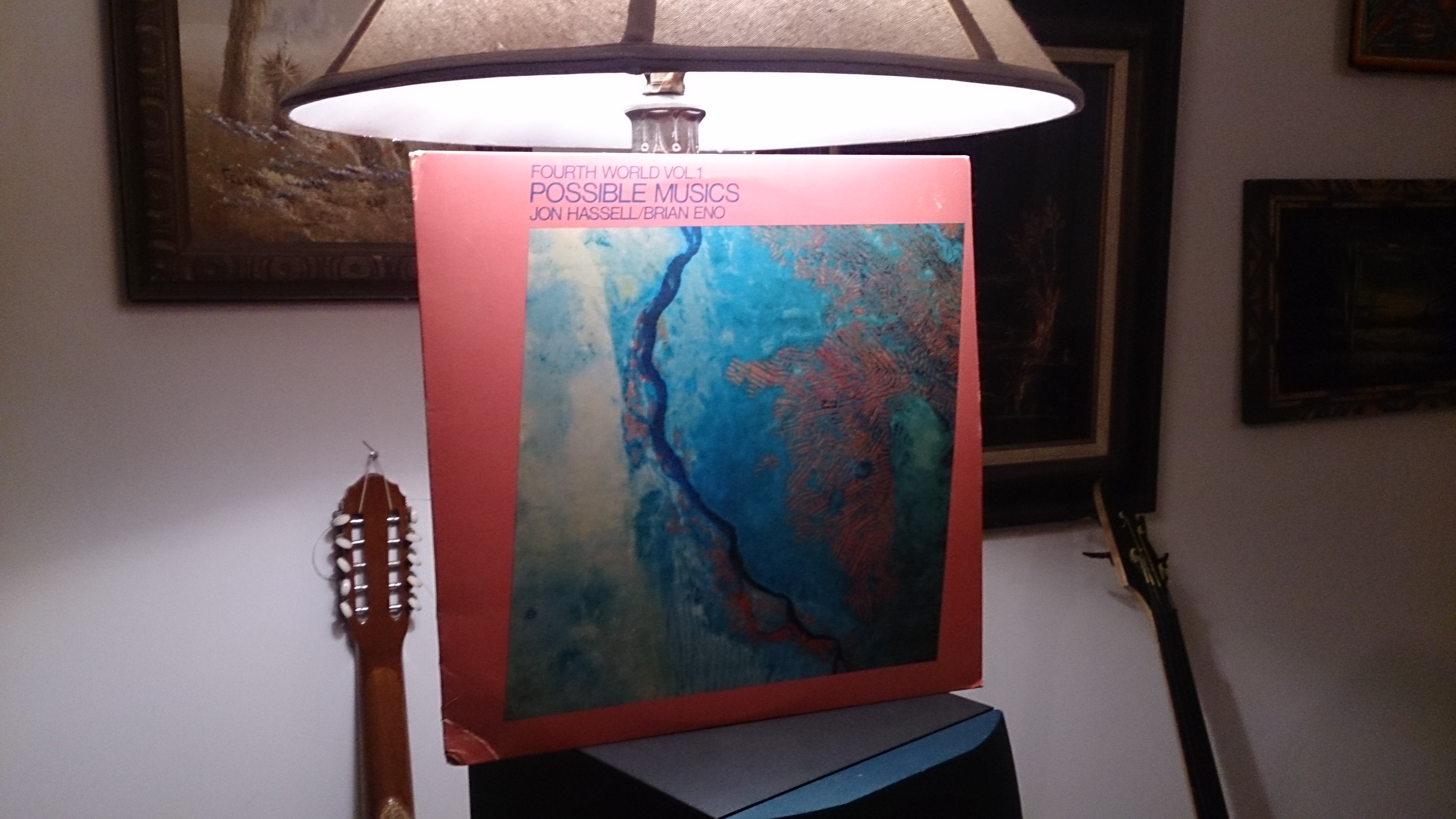
Jon Hassell / Brian Eno / Possible Musics 1980
The album that truly cemented trumpeter Hassell’s sound, and placed him on the map as another essential artist. Before this 1980 release, he had bounced around different avant garde scenes, graduating from Eastman and playing with minimalists Lamonte Young and Terry Riley. But he wasn’t finding what he really wanted, it was to all too dry, and lofty, lacking the dirt and sex of his native Memphis, and his real love, Miles in his electric period.
The early 70s introduced Hassell to Indian music via singer and sage Pandit Pran Nath. He reinvented the trumpet as an instrument capable of the tonal twists and smoke trails of Indian vocal music, virtually relearning his instrument. He discovered that by holding it like a conch shell he could elicit a breathy and vocal range of tones never heard from this instrument. Tape loops of African drummers and Hollywood soundtracks provided a bed of sound akin to the droning of the tamboura.
Then Eno provided the last, missing element: a halo of electronic voices derived from the trumpet and set to float in an intensely evocative echoland. A device called a Harmonizer, an early digital sound processor, made chords of the solo trumpet voice, bringing the strange parellel harmonies of Stravinsky to the mix.
Well, this is just about the most original thing I’ve ever heard, outside of Harry Partch maybe. But it’s intensely sensual music, a music that always has a fire burning deep and low in it’s dark heart. “Possible Musics” well preceeded the World music craze, which Hassell unwittingly helped bring on by getting Eno and Talking Head’s frontman David Byrne excited about it. Their 1979 collaboration My Life in the Bush of Ghosts was a direct antecedent of Hassell’s experiments in world fusion, only it sold probably a zillion times more. From there, see the above comments about “world music”. Bah!
Every album Hassell made after is a masterpiece. Check him out.
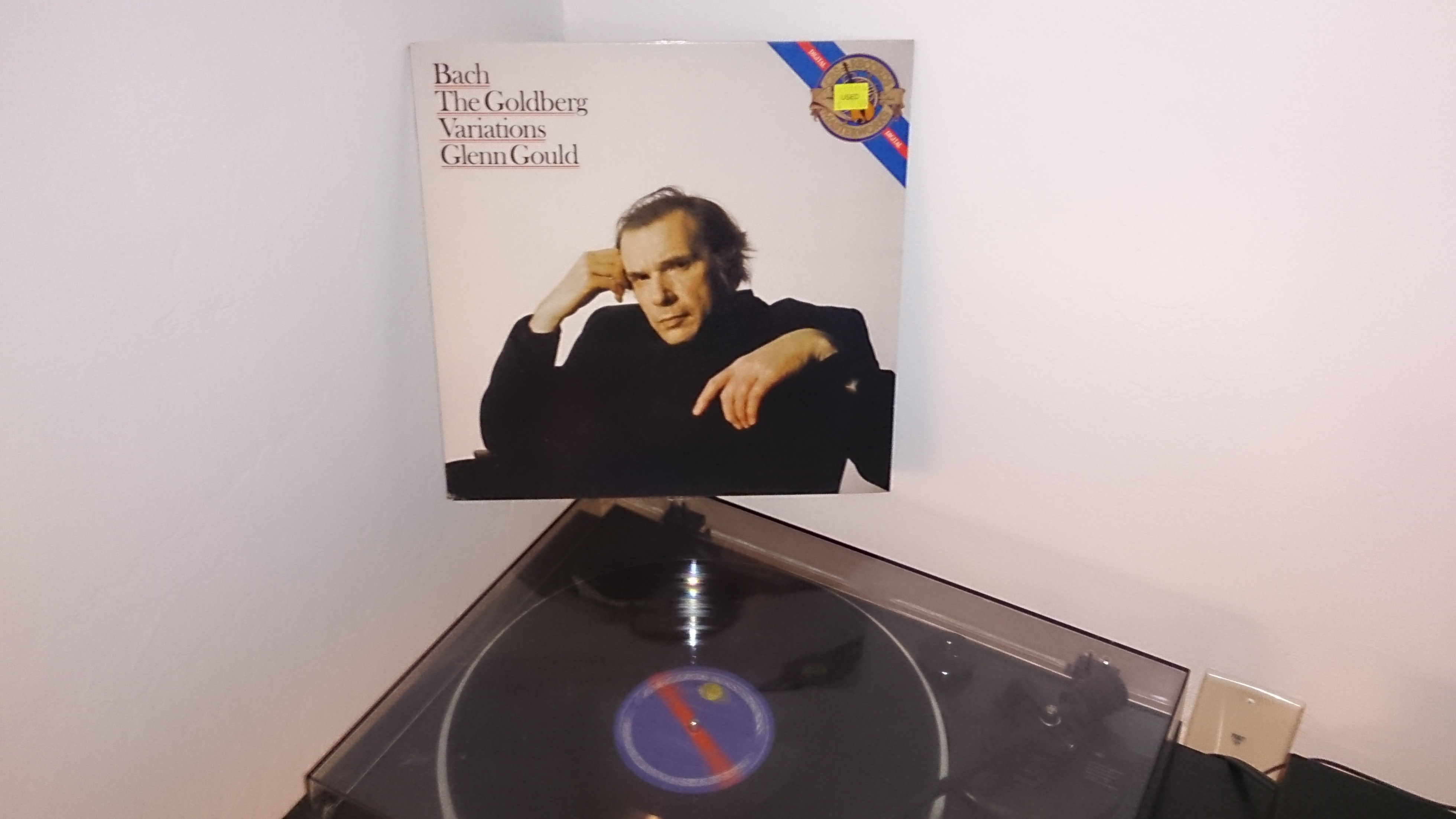
Glenn Gould / The Goldberg Variations 1981
Gould died just before his second release of the piece that started his meteoric career in 1955, 26 years earlier. People have their favorite, this later, slower and more spacious rendition being mine. I’m not going to say any more because the combination of Bach and Gould is just too sublime. Yeah, I know it’s a cop out. Go ahead, ask for a refund. Just get this record.
This young lady was walking along the sidewalk in front of me … Her sundress was hiking up … Does my snap of her qualify as a Creepshot?
Some arguments pro and con, or so it seems to me:
Yes, it’s a Creepshot. I did sneak my snapshot off, and I have posted the photo online. None of that needed to happen. Plus: cute butt.
No, it’s not a Creepshot. It genuinely wasn’t lust that motivated me to take the snap. Candid in-public photography has been considered legit for, like, forever. You can’t see the woman’s face, so what harm is done? And in a world where 250 million photos are uploaded to Facebook alone every day, how likely is it that she’s ever going to run across this photo anyway?
A visit with J.P. Donleavy, now 88 and still legendary for his rowdy comic novel “The Ginger Man.”
The Manolo thinks that an impoverished young woman just starting her first job should, despite her lack of means, invest in quality flat shoes.
“I was fully comfortable with the photo shoot and went with it,” says a young Muslim woman who posed topless for an American Apparel ad. Ever so slightly NSFW.
A look back at the career of Romy Schneider, a German actress who helped define Euro-sophisticated beauty and chic in the 1950s and 1960s.
“What the hell you are doing in the capital of ancient Russia, Victoria Nuland?” asks the interesting Russian nationalist Alexander Dugin. I don’t know what to make of what’s going on in Ukraine but I found his piece very interesting anyway.
Steve Sailer takes a look at an L.A. Times article about overcrowding in the L.A. area. Whatever could be causing it?
Lloyd Fonvielle considers the near-total absence of zooms in “The Godfather.” If you haven’t done so already, please enjoy our interview with Lloyd, a smart guy and a wonderful writer who’s had a very interesting career.








 Blowhard, Esq.
 Callowman
 Sherbrooke
 Eddie Pensier
 Enzo Nakamura
 Epaminondas
 Fabrizio del Wrongo
 Fenster
 Brundle Guy
 Glynn Marshes
 Paleo Retiree
 Atypical Neurotic
 Question Lady
 Sax von Stroheim
 Sir Barken Hyena
 The Mistaken
 Uncouth Reflections