Bully for you!

Brundle Guy writes:

Although a lot of animated children’s movies are by-the-book and rote, every now and then I feel like they can slip something through that’s exceptional. Every now and then the gatekeepers are looking the other way, and a storyteller gets to slip the kids a little bit of the harsh medicine of growing up along with the general buzz and hullabaloo of kids’ entertainment.

Recently Brundle Gal and I checked out “ParaNorman,” a claymation flick that I really dug. I thought the movie was pretty sweet top-to-bottom, but one of the things that really jumped out at me was the movie’s mature take on fear and bullying, which I thought worth bringing up.

The movie uses some fun, silly horror movie pastiche to show a lot of different angles on how fear often comes from ignorance and can make people become defensive, lash out and act unreasonably, hurting themselves and others. It doesn’t candy-coat the message by simply having big bad guys who act out of fear, and good guys who valiantly oppose them. It invests in showing how EVERYONE acts this way, and how hard it can be to try and get past those gut reactions.

Also, in this time where bullying has become such a hot-button topic, I had to tip my hat to a kids’ movie that doesn’t so much show people triumphing over bullying as realizing that it is an ever-present, unavoidable part of life and learning how to deal with it. Isn’t it occasionally refreshing to hear a little bit of the now sadly old-school “life is tough, get some gristle or get eaten” kind of talk?

This is not to say that the movie is a curmudgeonly, preachy message movie. I found it fun, exciting, unpredictable and fairly moving. AND it was legitimately creepy, which I very much support. It’s also visually pretty beautiful and imaginative.

I couldn’t find any pictures of the incredible final confrontation with the “antagonist,” I suppose the studio is keeping those under fairly tight wrap, but I thought it was some brilliant and effective movie-making.

But outside of all that, I wanted to take a moment to applaud a movie made for children that certainly has all the fun and frolic, but also delivers an unusually mature and tough message. I feel like the last time I saw something like that was in Pixar’s “The Incredibles,” which is pretty much the only children’s movie I can think of whose message is, “Guess what? You’re probably not special. That’s OK, most people aren’t, deal with it.”

Also to the credit of “ParaNorman,” when was the last time you saw an animated film that had an extended physical comedy sequence involving a recently deceased body?

What about you, fellow Uncouthers? Any particular favorite “tough love” kids movies/stories?
Posted in Movies | Tagged , , , , , | 1 Comment

“Chronicle”

Image

Fabrizio del Wrongo writes:

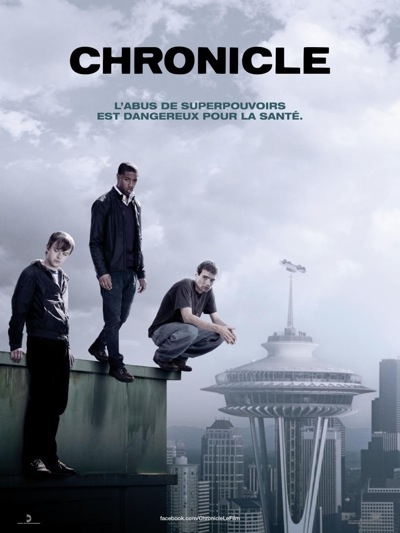
“Chronicle” is a superhero film that strips the genre down to its essence, namely the exhilaration and consequences associated with extra-human powers. In doing so it manages to feel truer to Stan Lee’s dictum, “with great power comes great responsibility,” than any of Marvel’s “Spider-Man” movies. Unfortunately, it ends up where so many superhero films do: in the morass of effects-laden spectacle, asking us to be wowed yet again by the devastation of a computer-generated metropolis — an event as sure to attend a superhero film as fireworks are the fourth of July. Prior to that it comes up with some pretty nifty stuff, including a scene which restores a smidge of wonder to the notion of human flight. (Remember when the big selling point of “Superman: The Movie” was the then-novel sight of Christopher Reeve soaring through the air?) The mood of high school angst is reminiscent of De Palma’s operatic teen screamers, “Carrie” and “The Fury,” but director Josh Trank lacks the chops (as well as the cruelly voluptuous sensibility) to give formal expression to the vertigo induced by hormonal rollercoastering. The best he manages is a handheld camera set free by telekinesis. The movie’s most subtle and surprising grace note, it expresses the principal character’s need for external validation while also making a meta-comment on the potentialities of the crane shot. Aside from that, the found footage conceit struck me as being a hindrance, especially once the narrative outgrows its core trio.

Posted in Movies | Tagged , , , , , , , | Leave a comment

Life After Retirement, An Ongoing Series …

Paleo Retiree writes:

A great retirement discovery for me: You no longer have to live in any one place. The government may insist that you have an address, but once you’re free of the damn job you’re also free to spend your time wherever you want. (Limited only by budget and such, of course.) This is mind-blowing and liberating in the most wonderful way.

Posted in Personal reflections, The Good Life, Travel | Tagged , | 2 Comments

Taste Question

Paleo Retiree writes:

Don’t get me wrong. I love flirtiness, and I’m more than capable of enjoying some well-placed outrageousness and vulgarity. And I’m not talking here about passing laws. Still: Is this the way we want our popular culture to be treating us?

Posted in Commercial art, Humor, Sex, The Good Life | Tagged , , , | 9 Comments

Question Lady Question

The Question Lady writes:

Are you ever nostalgic for some of the really terrible food you ate as a kid?

Posted in Uncategorized | 6 Comments

City Sights: the Seal Beach Administration Building

Blowhard, Esq. writes:

Designed by Gordon F. Powers in 1969. Unlike many of his contemporaries, he was thankfully not taken in by Brutalism.

ImageCompare to Boston City Hall at the Wikipedia link, also built in 1969. Which would you rather work in or look at every day?

Posted in Architecture, Photography | Tagged | 4 Comments

The Black Swan and the Expert Problem

Blowhard, Esq. writes:

Dear Sir Barken Hyena,

For me, The Black Swan was a primer on skeptical empiricism. It gives the reader the intellectual tools to question and doubt experts. As you said, technocratic solutions have wreaked incredible havoc over the years from the economy, to nutrition and health, to my profession, the law. One very helpful way of looking at the world is that those in power are primarily concerned with amassing and maintaining power irrespective of any supposed good intentions, and one of their primary methods for doing so (at least in the West) is donning the mantle of The Expert. “I’ve studied this problem, I have many advanced degrees, all my friends over here have advanced degrees, and you would do best to listen to us.” I mean, fuck those guys, right?

So any book that reveals these charlatans for what they are gets my ringing endorsement. That is, the limits of our knowledge, the ways in which human beings fool themselves into a false confidence, cannot be emphasized enough. Here are a few of the philosophical/psychological concepts I found the most interesting and helpful:

  1. Problem of Induction: the problem of predicting the future from the past, of drawing general conclusions from specific information. Taleb asks you to imagine your a turkey. You are fed every day for 1,000 days. If were to ask you to predict what happens on Day 1,001, you would have 1,000 datapoints telling us there is nothing to worry about, you’ll be fed. But, oh wait, tomorrow is the Wednesday before Thanksgiving. Thus, an excess of data can give one a false sense of security and confidence. We must constantly remind ourselves that the future is fundamentally unknowable.
  2. Confirmation Bias: We all have a psychological tendency to seek out and remember evidence that confirms out theories and beliefs, while ignoring any contrary evidence. We are not the rational, objective, dispassionate analysts we imagine ourselves to be. Virtually all political talk shows are a gold mines of confirmation bias in action.
  3. Narrative Fallacy: We have a strong tendency to reduce the complexity of the world into simple stories. Our minds abhor chaos and must fashion causes for everything. Tyler Cowen, who was critical of The Black Swan and has feuded with Taleb, nonetheless has a great TED lecture on this concept. (The logical extension of this idea is that the entire field of history is thrown into doubt.)
  4. The Problem of Silent Evidence: Best illustrated by Bastiat’s essay, “What is Seen and What is Not Seen.”
  5. Ludic Fallacy: Life does not conform to mathematical models. There may be known unknowns for which we can compute probabilities, but there are also unknown unknowns that by their very nature cannot be accounted for and thus have disproportionate impact. The Ludic Fallacy is at the root of Taleb’s constant and hilarious mocking of economists throughout the book.

All of these concepts, as well as a few others, add up to a worldview that is highly suspicious of top-down, technocratic, trust-me-I’m-an-expert thinking. I completely agree with you that the danger of this type of thinking cannot be overestimated. I’m familiar with the technocratic perspective in finance and health, but I’m curious to hear you talk about it with respect to the arts. Also, what do you think about Taleb’s style? I’m sure many find his arrogance off-putting, but I think it’s a hoot. I laughed out loud more than a few times while reading. And should I be embarrassed to admit I skimmed a few sections? Once he started going on about the Great Intellectual Fraud of the Bell Curve, I kinda tuned out…

Anyway, looking forward to hearing more about your reaction. In my next response, I’ll also pick out a few choice quotes.

Posted in Philosophy and Religion | Tagged , , | 4 Comments

Mark Knopfler’s “Golden Heart”

Paleo Retiree writes:

Can’t resist passing along this Mark Knopfler song that I just ran across. You’ll have to click through the embed to watch and listen to it on YouTube. It’s worth the effort:

Such an evocative murky/clear, tender/sad, droning/melodic performance: a little “Local Hero” and a little “McCabe & Mrs. Miller” … and all of it over in less than five minutes. Amazing the spell that popular music can cast.

Bonus track: another of my Knopfler favorites.

Posted in Music, Performers | Tagged , | Leave a comment

A Policy-Tinged Appreciation of The Wire

Fenster writes:

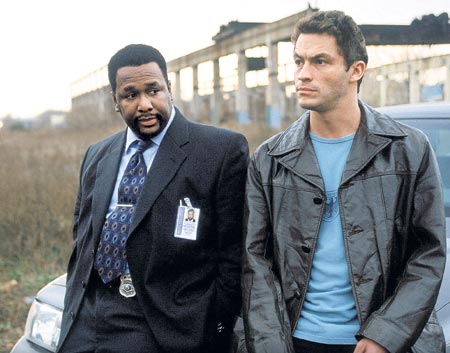
The Wire is, by a wide margin, my favorite television show ever.

Or, to put it in the currently fashionable way: my favorite. television. show. ever.

Over at The National Interest, Francis Fukuyama writes a very nice appreciation of the show.  Over the course of his career, Fukuyama has been up, down and all around but I think you have to say this: he is a very serious thinker who does his best to be intellectually honest about his subjects.  That makes him a little slippery and hard to categorize–which in my book is fine.  We have altogether too many people with answers and not enough people poking around trying to find the right way of thinking about the questions.

In any event, during the current silly season, one in which Ayn Rand has been brought back almost to the point of respectability, it is wise to step back and look at what is right in front of your face, as Fukuyama does with the lessons of The Wire.  I won’t summarize–read it if interested and comment here.

Posted in Television | Tagged | 1 Comment

Question Lady Question

The Question Lady writes:

Where do you go for your news?

Posted in Personal reflections | 3 Comments