Double Feature: Kureishi Then and Now

Fenster writes:

I had to strain in my last double feature finding a connection between a one-off Rohmer and an indie Lynch wannabe.  This time it should not be as difficult: two movies written by Hanif Kureishi, one an early screenplay written when he was in his early 30s (Sammy and Rosie Get Laid) and the other his most recent, just out on DVD (Le Week-End) written as he approached 60.

Similar theme–what makes a couple?  Written at different ages, though.  Vive la difference.

Continue reading

Posted in Movies | Tagged , , , | 5 Comments

Virtual Art Gallery Du Jour: Dan DeCarlo

Blowhard, Esq. writes:

dsdatwork

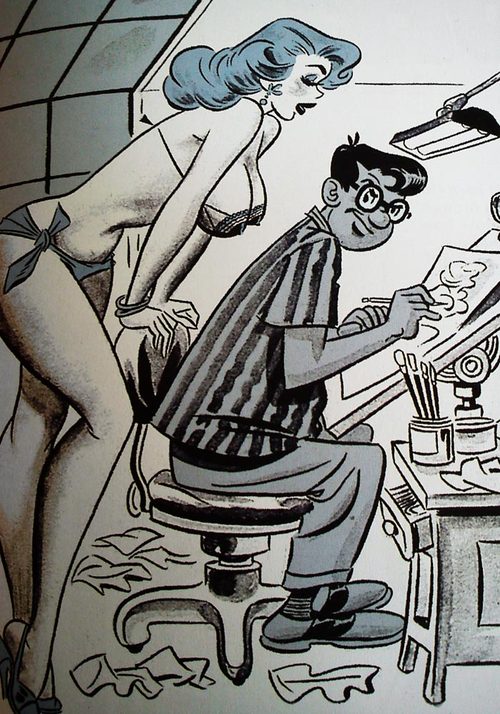
A self-portrait of the artist wrestling with his muse.

Artist Dan DeCarlo is most known for modernizing the look and developing the house style of Archie comics, as well being the creator of Josie and Pussycats and Sabrina the Teenage Witch. During his freelance years in the mid 50s to early 60s, DeCarlo also drew hundreds of pin-up cartoons for men’s humor magazines.

I’ve collected a number of examples but since they’re NSFWish, you’ll find them below the jump.

Continue reading

Posted in Art, Books Publishing and Writing, Commercial art, Sex | Tagged , , , , , , , | 3 Comments

Eyesore Du Jour: National Museum of Australia

Eddie Pensier writes:

Last weekend, frequent UR commenter Tex and I decided to hit two iconic Canberra museums: The National Museum of Australia and the National Gallery of Australia. The latter is a traditional museum, with paintings and sculptures and objets d’art and such. The former is, not to put too fine a point on it, a national embarrassment.

The first noticeable feature of the museum site, is claimed by the museum’s website to have something to do with Uluru, but which probably should be called “Rollercoaster Track Desperately In Need Of Safety Inspection”.

Continue reading

Posted in Architecture, Art, History, Personal reflections, Travel | Tagged , , , , | 7 Comments

“Finding Vivian Maier” (2014)

Blowhard, Esq. writes:

finding_vivian_maier

Out on DVD this week is this documentary (which I was lucky enough to catch with Paleo Retiree at the IFC Center) about the photographer and Internet phenom that I thought was enjoyable if unsatisfying. For those who don’t know, Maier worked for decades as a nanny in the Chicago area. A prickly recluse in life, after she died a massive trove of tens of thousands of photographs, many of them candid street shots, was discovered. Maier took these photos throughout her lifetime but made virtually no attempts to share them with anyone else. Who was Maier and where did she come from? Where did her artistic drive come from? Why did she never try to publish them? These are the main questions posed by writer-directors John Maloof, one of three persons who discovered the Maier lode, and Charlie Siskel.

Maloof, who appears on-camera as guide and narrator, does a good job of following leads and telling Maier’s story — I was consistently engaged throughout — but he makes an odd assumption and leaves some threads dangling. First, as PR pointed out when we chatted after the movie, Maloof assumes from the outset that Maier’s work is of high aesthetic and historic quality. Gosh golly, he just can’t imagine why MoMA or other museums aren’t clamoring for her work. Dude, her pictures were discovered five years ago. Reputations aren’t built overnight and MoMA already has enough on its plate. I guess Maloof’s boosterism is unsurprising, though, given his financial interest as owner of much of Maier’s work. Second, the filmmakers skirt around the fact that, um, it’s fairly clear she was a man-hating lesbian. Maybe the NPR crowd (Maloof could be a This American Life correspondent) wants their artzgayz cute and cuddly like Bill Cunningham and doesn’t really know what to make of those who don’t fit that mold. Finally, the filmmakers detail Maier’s paranoia and hoarding — she kept tons of newspapers and other ephemera — but never connect that her obsessive photography was likely a manifestation of her compulsion to collect and save. At least when it comes to Maier, the movie makes a case for a link between art and madness without quite realizing it.

Related

atthemovies

Posted in Art, Movies, Photography | Tagged , , , , | 11 Comments

Picture of the Day – July 28, 2014

Architecture Du Jour, Part Deux

Natalia Maks's avatarNatalia Maks

The Haga in Gothenburg, Sweden. The entire district was built out of wood for the fast growing working class in 19th century. Now it is a charming neighborhood with a bunch of cafes, bakeries and restaurant and  residential houses.

OLYMPUS DIGITAL CAMERA

View original post

Posted in Architecture | Tagged | 7 Comments

Wimmin Singin Wednesday

Fenster writes:

I am enamoured of Rosemary Clooney’s interpretation of Cole Porter’s Ev’ry Time We Say Goodbye.  How strange the change from major to minor. . . .

rosemary-clooney-1-d12-c12

As McCartney sang in another context entirely, she’s a woman, and she sings it that way.

Posted in Music, Performers | Tagged , , | 1 Comment

Architecture Du Jour

Blowhard, Esq. writes:

wilternsign

wilternceiling

The Wiltern Theatre in Los Angeles.

Click on the images to enlarge.

Related

  • Back here I toured some other L.A. art deco landmarks.
Posted in Architecture | Tagged , | 1 Comment

What’s in a Name?

Fenster writes:

Boston Globe sports columnist Christopher L. Gasper weighs in on the public debate in the media over the Washington Redskins’ name.

Well, that’s not completely accurate.  There is little to no public debate in the media about the issue.  From the mainstream media’s point of view it is game set match.  Over.  Matter of time.  This will not stand.  Snyder can’t hold out.  Period.  End of story.  Scoot!

OK, the name change hasn’t happened yet but it’s only a matter of time because . . . because . . . because, I suppose, history shows that once the media descends on a bone like this it usually does not back off until its objective has been achieved.  And after all, the best predictor of future activity is past activity.  So it is ever so tempting for one after another columnist or reporter to pile on in connection with a story like this, since the conclusion seems pre-ordained from the get-go.  Go with the winner, sports fans.  You can just feel it, Dave can’t you?

According to Gasper,

there is a groundswell of support to eliminate the name. . . .

so that’s that and so there.

Yet the last few times these canned stories have appeared in the press, I have taken a look at the comments section, and the comments do not at all support the narrative.  An anti-Snyder story in the (liberal) Washington Post was met mostly with scorn in the comments, though I didn’t make a count of it.  So I decided to categorize the comments following today’s Globe story.  In bluer than blue Massachusetts, the comments are now running almost 4 to 1 against the name change.

OK, comments sections do not make for random samples.  Sports guys might be more tough minded about such issues than your usual Massachusetts liberal.  But there is undoubtedly on this issue a pretty bad disconnect between mainstream media dogma and vox populi, as polls continue to show.  As a result we probably have a nationwide pattern of news stories saying it is only a matter of time and comments sections that find the articles laughable.  That disconnect between the articles and the comments is laughable in itself, and ought to be cause for reflection, and even reportage beyond the odd blog post.

Posted in Media, Sports | Tagged , | 8 Comments

“Born to Kill” (1947)

Blowhard, Esq. writes:

born_to_kill

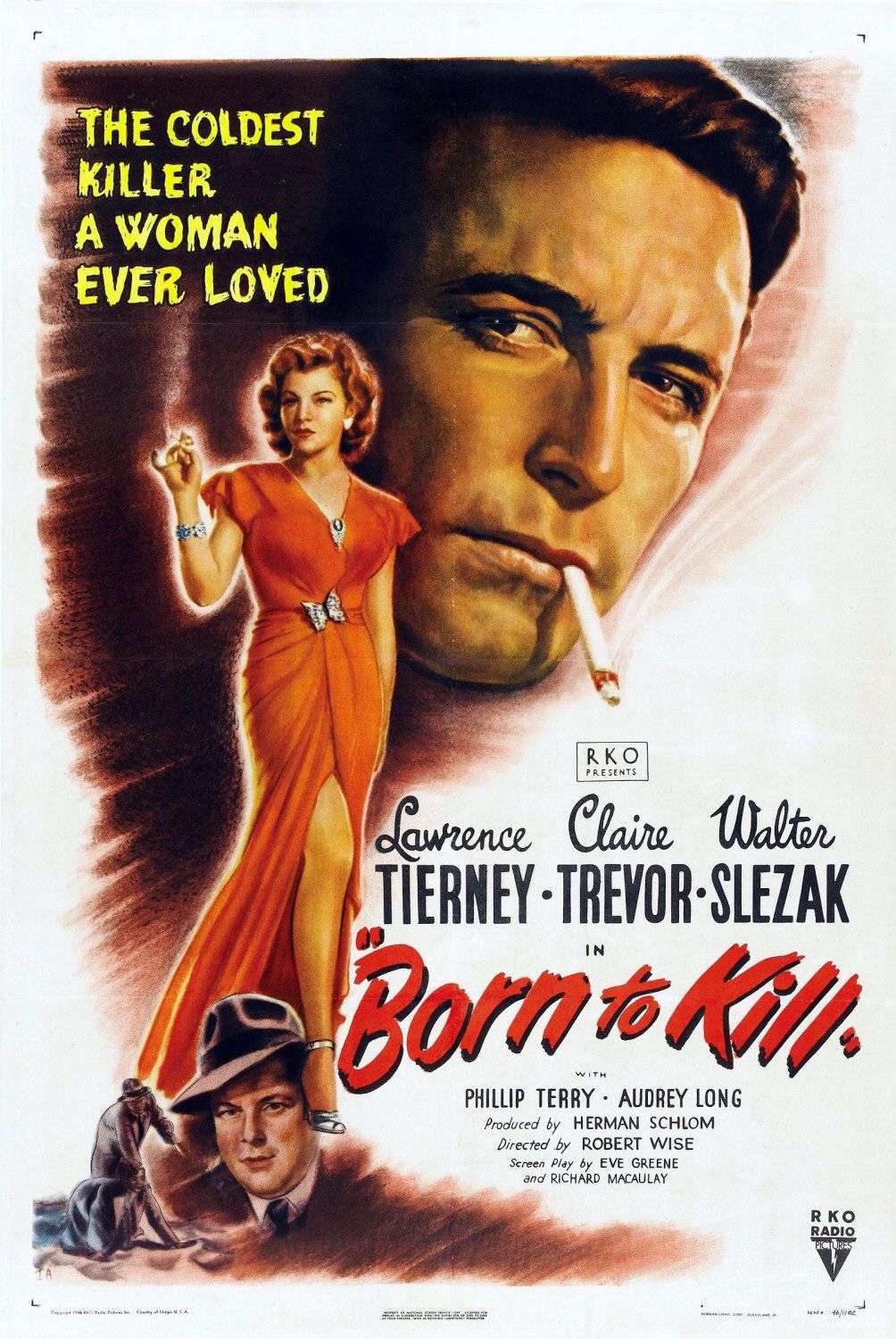
I loved this wicked noir, one of Robert Wise‘s early directorial efforts. I won’t bother trying to summarize the plot other than to say amorality, rage, and murder abound as Claire Trevor‘s scheming San Francisco socialite and Lawrence Tierney‘s menacing thug are caught in the throes of sexual obsession. While the film lacks the Expressionist visuals that Europeans directors brought to this kind of material, there’s so much story packed into the screenplay that you hardly notice. Also unlike most noirs (but like the one I previously wrote about here), this one centers on a female protagonist. As the early poster art below shows, it was based on a book called Deadlier Than the Male. Trevor sinks her teeth into the role’s depravity and she’s equally matched by Tierney, who virtually gives a master class in Game. Was Tierney’s lunkheaded bully one of the models for Sin City’s Marv?

lawrence-tierney-and-claire-trevor-in-born-to-kill-(1947)

The film is currently available from Netflix on DVD and I also highly recommended the accompanying commentary track by noir historian Eddie Muller, who fleshes out the movie’s context as well as providing some wonderful insights. It was from him I learned that, at the time noirs were either called murder dramas or crime thrillers — “murder dramas” when the protagonists were amateurs (e.g. wife trying to kill husband) and “crime thrillers” when they were professionals (cops and gangsters). The film has a connection with Orange County, CA history too. Muller notes that Trevor married Milton Bren, a Sunset Strip developer who became rich when he bought significant real estate holdings in Irvine and Newport Beach. UC Irvine’s arts school is named after Trevor.

Sax is the one who tipped me off to the film, so I asked him to share his thoughts.

Sax von Stroheim writes:

deadlierthanmale

I like what Bosley Crowther has to say about this: “Surely, discriminating people are not likely to be attracted to this film. But it is precisely because it is designed to pander to the lower levels of taste that it is reprehensible.” That, of course, makes it sound really great, though I think I like it a little less than some of the other noirs from the period that aren’t quite as consistently nasty. At times, it seems a bit like an early Coen Bros. film: the characters are either completely amoral, out-for-themselves scoundrels or naive fools. Just about every character is a grotesque. Tierney is a soulless version of a Bob Mitchum character; Trevor’s take on the femme fatale is pretty unsettling, partly because she seems to be operating from instinct rather than any kind of long term calculations. The heart of the movie, though, seems to be in the (symbolic) conflict between two supporting characters: Esther Howard’s silly but vital and vulgar and generous old woman, who, despite showing courage at first, is ultimately defeated by a growing sense of helplessness, and Walter Slezak’s grubby little private eye — a more sinister version of J. Wellington Wimpy: he has few expectations, sets his sights lower than any of the other characters, but he’s the only one who comes out (at all) ahead.

Posted in Movies | Tagged , , , , , | 6 Comments

Double Feature: “The Lady and the Duke” and “Escape from Tomorrow”

Fenster writes:

I wrote here about a double feature screened at home.  I picked up Cool Hand Luke and The Paperboy just because they were both available at the library and found that they had a lot in common, including a blowsy wench in a blue dress arousing prison folks with her antics and men in old-fashioned white underwear.  So when I do the occasional at-home double feature now I like to ask myself if there are connections to be made.

On screen at Cinema Fenster recently: Eric Rohmer’s The Lady and the Duke and Randy Moore’s Escape from Tomorrow, both selected without any particular plan.

They didn’t have a lot in common on the face of it.  One is a fairly literal adaptation of the memoirs of an aristocratic Scotswoman who lived in Paris at the time of the French Revolution.  The other is a story of a suburban dad coming unglued, and then some, when visiting Disneyland with his family.

What they do have in common is a certain odd aspect.  They are both peculiar films.

Continue reading

Posted in Movies, Photography | Tagged , , , | 9 Comments