Weekend Linkage

Paleo Retiree writes:

Posted in Linkathons | Leave a comment

Front Porch Republic on the Yellow Vests

Fenster writes:

It is hard enough getting the big picture right in your own life, your own family, your own community.  When asked to consider what is happening on very large tapestries we face serious problems.  Kahneman’s System 2 reasoning is often a necessary corrective for the biases inherent in System 1 intuition but the bigger the picture the less traction reason has and the more we are captive of narrative, which is to say bias.

In the very strange year 1968 we were faced with rhyming reverberations all over the world–counterculture and radical politics in the United States, revolt in Mexico, the Events of May in Paris, Prague Spring.  How were all these things connected, or were they connected much at all?

2018 is the year more like 1968 than any other I have encountered in the past half century, and once again I feel I am faced with odd synchronicities that tax the brain.

Take the Yellow Vest phenomenon.  Perhaps Steve Bannon is right that this kind of thing is deeply connected to Trumpism, rejection of the EU and other international trends and forces.  And it is certainly the case that we live in a more intensely globalized world today than we did in 1968 so I suppose it could be the case that beneath all of the disruption there is an underlying thread attempting to emerge as a movement.

But it is usually best to distrust the satisfying jump to connect all the dots, and to resist the rush that comes when one feels that one has discovered the key to some secret narrative structure.  As Kahneman  observed:

The world makes much less sense than you think.  The coherence comes mostly from the way your mind works.

Of course this does not mean patterns are not there.  Just that one’s method always ought to leave ample room for skepticism about order, and to approach any events suspecting that more disorder exists than we like to think.

So consider the Yellow Vest in this spirit.  Are they what Bannonites think or is there more going on that is a function of the singularity of the French?

Here is an interesting article about the Yellow Vests from the publication Front Porch Republic.  You may know the joint; acquaint yourself with it if you do not.

FPR is the voice of . . . what?  It stands for an odd melange of ideas on its own.  It is for localism and limits and so broadly speaking you can say it is on the “small is beautiful” side of things but it is often unclear what this means when the rubber hits the road.  Left-wing?  Right wing?  Ideologically driven?  Pragmatic?

The FPR article about the Yellow Vests is written by one Stephen Heiner.

Stephen lives in Paris, where he writes and manages small businesses. He writes on culture, the permanent things, and all things French.

Judging from his choice to live in Paris, and from the article itself, Heiner is an admirer of the French way of doing things.

A French writer was quoted a couple weeks ago as saying that France is a paradise full of people who think they live in hell. It is a relative paradise for many.. . .The reason that many of us who aren’t French choose to make our lives here is because the French really know how to live, and live well.

One might think that someone predisposed to the French way of life, someone writing for Front Porch Republic, would come at the issue of the Yellow Vests in a sympathetic way.  After all, despite all the focus on the Parisian rioting a great deal of the energy of the movement originated locally, from the bottom up.  FPR might be expected to give three cheers to that as against the dead hand of the EU that is causing so much local pain.

But at best Heiner seems to summon up one cheer for the Yellow Vests.

(F)or these protesting, whose comrades voted in Trump in America, Salvini in Italy, and nosed Britain out of the EU, the pain is genuine. They feel a squeeze, with no jobs and no future.

On the other hand . . .

the problem is that no one wants to tell the French you can’t have your brioche and eat it too. . . . The French have been demanding more and more benefits with slower and slower economic growth for decades now. The numbers simply don’t add up.

Looked at this way the French have long been attempting to live a life more or less in keeping with FPR values–but it does not work all that well, at least if you are looking for the good things that a neoliberal economic order can bring as a supplement to living well in the French manner.

Given how poorly Macron is doing at the moment you have to think hard to recall what propelled him to power just a short time ago: the notion that the French had to get real about “more benefits with slower and slower economic growth”.

This is not to say that the Yellow Vests are hypocritical or that Macron’s politics represent an honest realism against a fanciful Frenchness that is unsustainable  It does suggest that the world makes less sense than you think.

Posted in Politics and Economics, Uncategorized | Tagged , | 1 Comment

Weekend Linkage

Paleo Retiree writes:

Apologies for being a bit late with this week’s installment. There was holiday shopping to be done and there were holiday crowds to be fought — and, hey, technically we’re still in the middle of a long weekend anyway, right? Phew. Now, on with the show, and best wishes to everyone, a few baddies and psychopaths excepted.

Posted in Linkathons | 1 Comment

Sailer and Taleb

Fenster writes:

Steve Sailer is not being mainstreamed but seems no longer to be taboo. Charles Murray–suspect in some quarters but respected nonetheless–refers to him regularly and fairly on Twitter.

Murray:

Referencing Sailer:

Murray following Sailer doesn’t go down well in all quarters.  An illustrative tweet from no one of particular note:

The main reason I unfollowed Charles Murray, who is no Nazi, is b/c he follows Sailer and RTs him. Bad company to keep.

Still it is of interest that Sailer is no longer anathema.

And now Sailer and Nassim Nicholas Taleb are in conversation on Twitter.  In fact they seem to be in some kind of Twitter spat.

Taleb does not suffer fools gladly but he is also the proverbial hammer to whom everything seems to be a nail. Fools everywhere. Is Sailer the fool Taleb suggests?

The dust up is over race and difference, natch. Taleb criticizes Sailer’s use of sports to highlight racial differences, pointing out that such analyses highlights extremes.

It has no impact when someone is crossing the street. Noise dominates outside of extremes.

Check out the back and forth on Twitter if you like.

In the meantime two questions for Taleb:

  1. Even if you consider high level competitive sports to be a trivial matter relative to differences at the extreme (and Sailer disagrees with this) are there not many other areas where differences at the extremes might present non-trivial issues worth noting?
  1. Relative to the noise in the middle: sure, walking down the street who is to say? And if we lived in a world where each regarded the other as an individual noise would tamp down the importance of difference between individuals. But we do not live in that world. We live in a world in which group identity is a fact that must be dealt with. This has consequences “in the middle” on things like who gets to be a firefighter and how to consider disparate treatment of school misbehavior.

Taleb seems to be saying Sailer is fetishizing the extremes but it appears he may be fetishizing the noise.

Posted in Politics and Economics, Uncategorized | Tagged , , | 2 Comments

Weekend Linkage

Paleo Retiree writes:

Posted in Linkathons | 2 Comments

Notes on “First Reformed”

Fabrizio del Wrongo writes:

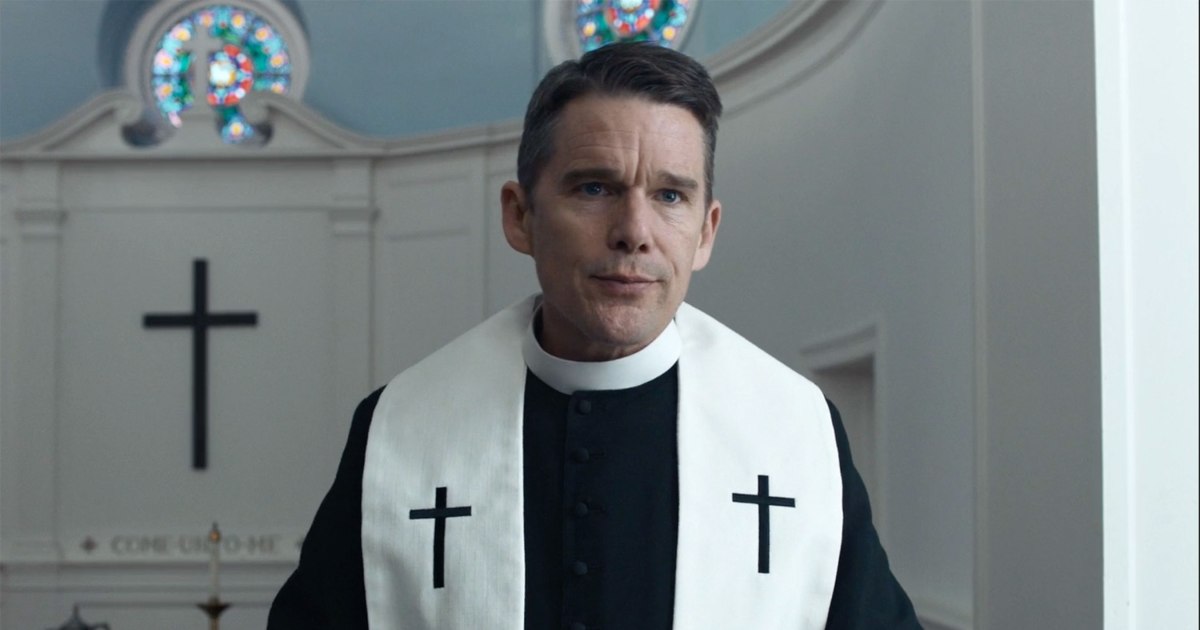
“First Reformed” has cozied up to elite movie reviewers (to the extent that such still exist) through its surface resemblance to the films of Bresson and Bergman. In it they imagine they see an expression of tortured existence and an examination of contemporary values. After all, it’s about a demoralized minister (catnip for the anti-religion set), and it was written and directed by Paul Schrader, who as a young man authored a book on Bresson and Bergman. (Confession: I own the book, but I’ve never read more than a few pages.) Credentials aside, Schrader has none of Bresson’s Ingres-like knack for presenting tamped-down sensuality, and little of Bergman’s ability (sometimes overbearing) to give dramatic form to metaphysical inquiry. He’s rarely managed to suggest a life below the surface of his constructs. More than one critic has called his work schematic. As in the Schrader-scripted “Raging Bull,” the thesis of “First Reformed” is restated with autistic monotony: Ethan Hawke’s depressive Reverend Toller doubts the existence of God, because the world is a bad place. Once this rather tired idea is forwarded, and you’ve acknowledged the nods to “Diary of a Country Priest” and “Winter Light,” there’s nothing to discover or intuit. In order to offer something in the way of surprise, Schrader resorts to grotesquerie: He inflates the suggestion of climactic violence, reminiscent of “Taxi Driver,” until it’s ludicrous; you get the sense that he’s flagellating himself along with the material to prove that he really means it.

Contrary to what you’ve read in reviews, “First Reformed” offers little sense that something spiritual is at stake, perhaps because its director doesn’t recognize that a man might find meaning in religion beyond the base motivation of self-loathing. We’re told that Toller took up the religious life after his son died in one of the Bush Wars. He feels guilt for encouraging the boy’s military career. Thus his service to God is penitential rather than devotional; he’s only in it for the browbeatings. As an alternative to traditional religion Schrader offers the stridency of contemporary political sloganeering. Regardless of your stance on global warming, you may snort when Toller solemnly informs a non-believer that “there is scientific consensus” and that “ninety-seven percent of scientists agree.” Where Trump calls CNN fake news, Schrader takes its talking points as holy writ. In the picture’s final third Toller experiences a mystical epiphany that combines environmental anxiety with an understandable desire to get it on with Amanda Seyfried. The less said of that the better.

Hawke, who is finally being recognized as one of our most sensitive actors, does a fine job of suggesting a man whose inner light has been reduced to a weak flicker. He subtly bows his posture, dulls his reactions, and somehow manages to suggest that his face is on the verge of cratering into his inner nothingness. But the character gives him little to portray beyond that nothingness and a smidge of anger, and the anger is never quite real. Like Schrader’s unfortunate call to violence in the wake of the 2016 presidential election, it’s cosplay anger — a vain declaration of right-side-of-history-ness. According to reports, that outburst was the result of too little sleep and too much wine and Ambien. I fear that Toller, who self-medicates with fervor, is a self-portrait of an artist who has stayed up a little too late, hit the prescription bottle a little too hard, and given indiscriminate vent to his Trump-related anxiety. Maybe “First Reformed” is best appreciated as a figment of Trump derangement.

Posted in Movies, Philosophy and Religion | Tagged , , , , | 3 Comments

Notes on “The Magnificent Ambersons”

Fabrizio del Wrongo writes:

ambersons

By turns lyrical and grotesque, and sometimes, unaccountably, both at the same time, “The Magnificent Ambersons,” despite its mutilated form, may be the great movie about the putrefaction of America. Its mutilated state plays into its meaning: it’s a wreck about a wreck. Like director Orson Welles’ later “Chimes At Midnight,” which concerns the passing of Merry England, “Ambersons” is a eulogy for a place that should have existed even if it didn’t quite, that place of collective imagination that we dream of inhabiting even as we help to discredit it. Like Prince Hal in “Chimes,” George Amberson Minafer has the awful responsibility of shouldering this inheritance. Unlike Hal, who at least understands his predicament, he isn’t able to hack it. He has nothing of the king in him; he was born to get his comeuppance. If “Ambersons” has a Falstaff figure, a character who embodies the ideals of the old world, it is Isabel Amberson Minafer, the onetime debutante, later feeble widow, who watches the world slowly rot around her, until she dies, seemingly from the disease of anachronism. To play her Welles cast Dolores Costello, the former sweetheart of the silents. Like the Gibson Girl on whom she seems modeled, her charm is stately but paradoxical. You’d adore her, if you could only get close to her. The movie is bookended by two montages, both narrated by Welles, and both ranking among the high points of American movies. In the first we see the dream, in the second its burnt-out husk. It’s appropriate that the second section is set around the time of the First World War. The truncated “Ambersons” premiered seven months after America entered the Second. Famously, it failed. Audiences wanted something more evasive.

Posted in Movies | Tagged , , , , | Leave a comment

Weekend Linkage

Paleo Retiree writes:

  • I had no time for Tucker Carlson V.1 (bowtie-wearing, neocon) but in the last few years I think he’s become amazingly good. In this recent talk with Dave Rubin, Tucker V. 2 gets a chance to let go of the headlines of the day and share his larger thoughts and hunches, and they’re very worth a wrestle, IMHO.
  • Thumbs up to Paul Johnson’s short, masterful and very engaging biography of George Washington. (The current political craziness, er, climate has got my wife and me doing a lot of reading about the American founding.) Is there a funner-to-read or more worldly living biographer than Paul Johnson?
  • Thumbs ‘way up to Kenneth Harl’s Great Courses lecture series “The Era of the Crusades.” As the title hints, this isn’t just an account of the various crusades themselves but also a look at the three worlds that were involved — Western Christendom, Byzantium and Islam — and how they were affected. Harl is vigorous, vivid, and full of history-geek humor. The series is 36 lectures long but Harl keeps the information and the stories moving along at a very brisk clip. As usual with the Great Courses: unless money is burning a hole in your pocket, put off the purchase until the course goes on sale.
  • I see that a few Great Courses series that I’ve enjoyed are currently on sale for wonderfully low prices. Recommended. Also recommended. This one too.
  • Perfect pairing.
  • We need more women in these jobs!
  • Despite massive amounts of encouragement, a smaller percentage of female undergrads are choosing to major in computer science now than did in the mid-’90s. Why?
  • Meanwhile boys are lagging at school. Why aren’t they being given a little encouragement?
  • These days, are too many people projecting their religious yearnings and imaginings onto politics?
  • Why exactly was Harvey Milk murdered?
  • It may be a few days out of date but M.G.’s look at the reasons behind France’s “gilets jaunes” uprising is one of the most informative things I’ve read on the topic.
  • What would a Chinese-dominated world look like?
  • Here’s a thought that has often occurred to me too.
  • Steve Sailer has some fun with the beyond-dreadful Max Boot.
  • Let’s all send Steve some support and gratitude.
  • I’ve joined Gab, have you?
Posted in Linkathons | Leave a comment

Notes on “About Elly”

Fabrizio del Wrongo writes:

about-elly-md-web

“About Elly” uses the disappearing-woman device from “L’Avventura” but to a much different end. Where Antonioni uses it to comment on the modern condition, taking a quintessentially macro POV, Iranian director Asghar Farhadi uses it to examine the particulars of human interaction. The high-status social group on excursion in the country is reminiscent of the group in Satyajit Ray’s “Days and Nights in the Forest.” Farhadi is a more malicious artist than Ray (like most filmmakers who truck in suspense, he’s a bit of a sadist), but he has a similar observational delicacy. Character insights are surprising yet in hindsight seem inevitable. When the plot takes a turn towards the sinister, the picture’s tenor changes in a way that’s perceptible but not measurable. Suddenly, it’s as though the wind has shifted (wind is a constant presence in the movie). Separating the two phases of the story is a wonderful (and very Ray-like) sequence of the enigmatic Elly cavorting on the beach. It has a self-contained beauty. Farhadi is beloved by progressives, who take the movie as an examination of the mores of an honor culture, but I think it’s hard to deny that his concept of Woman is at least somewhat traditional. The movie’s disappearing women, Elly and the German ex-wife of Elly’s suitor Ahmad, are presented as troublesome figures whose independence has brought discord to this group of friends. And the young Sepideh (who, interestingly, is featured prominently on the movie’s poster) has all the mischievousness of Pandora or Eve. It’s to Farhadi’s credit that he never criticizes or condemns these women; rather, he presents their behavior as part of the panoply of human existence. Still, it’s hard to squeeze the picture into the box of progressive dogma, and I do wonder if Farhadi won’t eventually make a movie that pisses off the college professors who claim to love his work. The other Farhadi I’ve seen, “A Separation,” also deals with a broken marriage.

Posted in Movies | Tagged , , , , | Leave a comment

Notes on “The Minds of Men”

Fabrizio del Wrongo writes:

MV5BZGJkYmFlYjctOTQyMS00ODM1LWI4YmMtN2JmNzZkZmI4MjVkXkEyXkFqcGdeQXVyNjk0NTMyMTA@._V1_SY1000_SX675_AL_

Aaron and Melissa Dykes, who operate under the name Truthstream Media, are Alex Jones expats (they seem to regret the affiliation) who make videos about government cover-ups, conspiracy lore, and the like; they’re like Mulder and Scully without the FBI expense accounts. Their new documentary, “The Minds of Men,” is more impressive than the (already pretty impressive) videos on their YouTube channel. They claim the movie took them three years to put together, and I don’t doubt them; they not only live up to their rep as research mavens, they vault over it. The information presented is so tightly woven, and so seemingly well-sourced, that it is at times overwhelming. The Dykeses cannily twist this overwhelmingness towards an aesthetic end: The movie zaps your neurons, leaving you in a fugue state suitable for a documentary about mind control, hypnosis, and the subjective nature of perception. The editing is equally impressive. It may be the most densely cut picture I’ve seen this year, its lapping, almost-stream-of-consciousness rhythms recalling — no joke — Chris Marker. The big drawback: at nearly four hours, it’s a long sit, especially given the level of attention it demands. But I learned a lot while watching it, and I’m still a little freaked out by the footage of monkeys running around with little electrode pillboxes poking out of their skulls.

Related

Posted in Movies, Politics and Economics, Science | Tagged , , , , , | Leave a comment