
Paleo Retiree writes:
Greatest stunt shot in the history of professional tennis?
Paleo Retiree writes:
Greatest stunt shot in the history of professional tennis?
Sherbrooke writes:
Peter O’Toole and Audrey Hepburn, posing for “How to Steal a Million” (1966). On the face of it, it seems like strange casting, but to me, they are magic in this film. Ethereal male and ethereal female, both up to no good.

Blowhard, Esq. writes:
Click on the image to enlarge.
 Colonial architecture in Antigua, Guatemala. I was going to recommend the rest of this guy’s set from Antigua, but you’ll probably want to also check out his entire Flickr page.
Blowhard, Esq. writes:
 “Exposition internationale des art et techniques à Paris” (1937) by François Kollar.
Thanks for reading and dropping by.
Fenster writes:
The Uncanny Valley is a neat cognitive trick, occurring when “human features look and move almost, but not exactly, like natural human beings.” In that valley, what results is a “response of revulsion among human observers.”
So on the one side of the valley: lovable real humans.

On the other, lovable unreal cartoons

or robots.

and, in the valley, Beowulf.
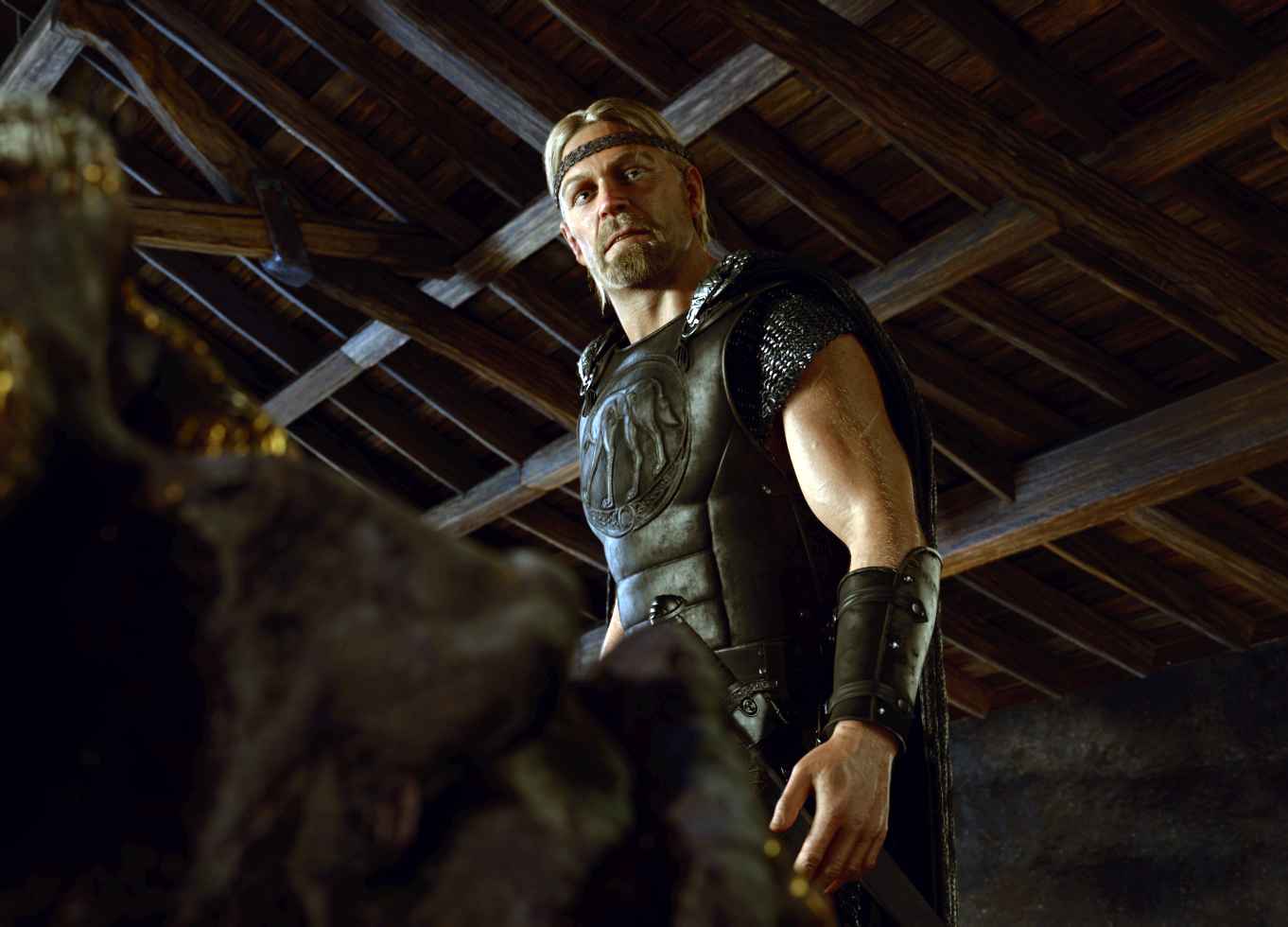
OK, that’s the process when building up from non-human to human. What of the process of stripping away human features from real humans?
Well, for sure it is the case that if you strip away enough human features from real humans, you arrive at a different kind of abstract lovability. Take the Blue Man Group. Kids love ’em. They are obviously not cartoons or robots, but the overall idea is to strip away certain human cues. The all-blue color. Lack of ears. And the odd affect.
It is almost as though they are miming a reptilian way of moving and looking.
So we know that there is another side to the Uncanny Valley when removing human features from real humans. But is there a Valley there, too? A place where the removal of a slighter number of human cues produces a “response of revulsion”? Why, yes indeed.
Fenster writes:
It is awfully easy to make light of dust-ups like the one over Phil Robertson. Does it matter what a reality show celeb says and whether he stays on the air? Narrowly speaking, no. I didn’t know Robertson except for seeing him a while back on the cover of a People Magazine knock-off in a check out line, and I don’t give a rat’s ass about duck hunting. I’m urban.
But these kinds of escapades do present interesting morality tales for the people to chew on, me included. In a way, it is how the populi find their vox on important cultural questions. Some bread, some circus, some philosophizing about things that matter. And while I don’t care about Robertson, there are some interesting issues that underlie the fight he is in.
Paleo Retiree writes:
During a cross-country trip the other day I found myself killing time at the Dallas airport. I looked up from my book and found that I was sitting by the side of a kind of central courtyard that … Well, here’s a collage impression of what the area looked like:
 I was mainly reminded of two things by this courtyard. One was the kiddie-play areas featured by some McDonald’s restaurants; the other was co-blogger Eddie Pensier’s recent posting about some awful contempo buildings in Melbourne. Corporate/governmental postmodernism … Zaniness and playfulness every which way you look … The blight of public art-style creativity … The “We’re being treated like children!” angle of it all really knocked me on the head.
Questions Du Jour: Is it a great thing that our elites supply distractions and amenities a-plenty to us to provide us with pep, calories and cheeriness? Or is it an outrage that our betters are as determined as they are to treat us like cranky babies? Is transforming our environment into a giant playpen making us happier by reinforcing our connection with the child within? Or is it an infantilizing force that needs to be resisted?
Related
Fenster writes:
Consider those six glasses at the top of the UR page.
One part The Odyssey
One part Memento
One part Twilight Zone (A Stop at Willoughby preferred)
One part Waiting for Godot
One part Groundhog Day (extra dry)
One part Dark Victory
Add to shaker. No ice.

Shake.
The result:
Memory, by Donald Westlake.
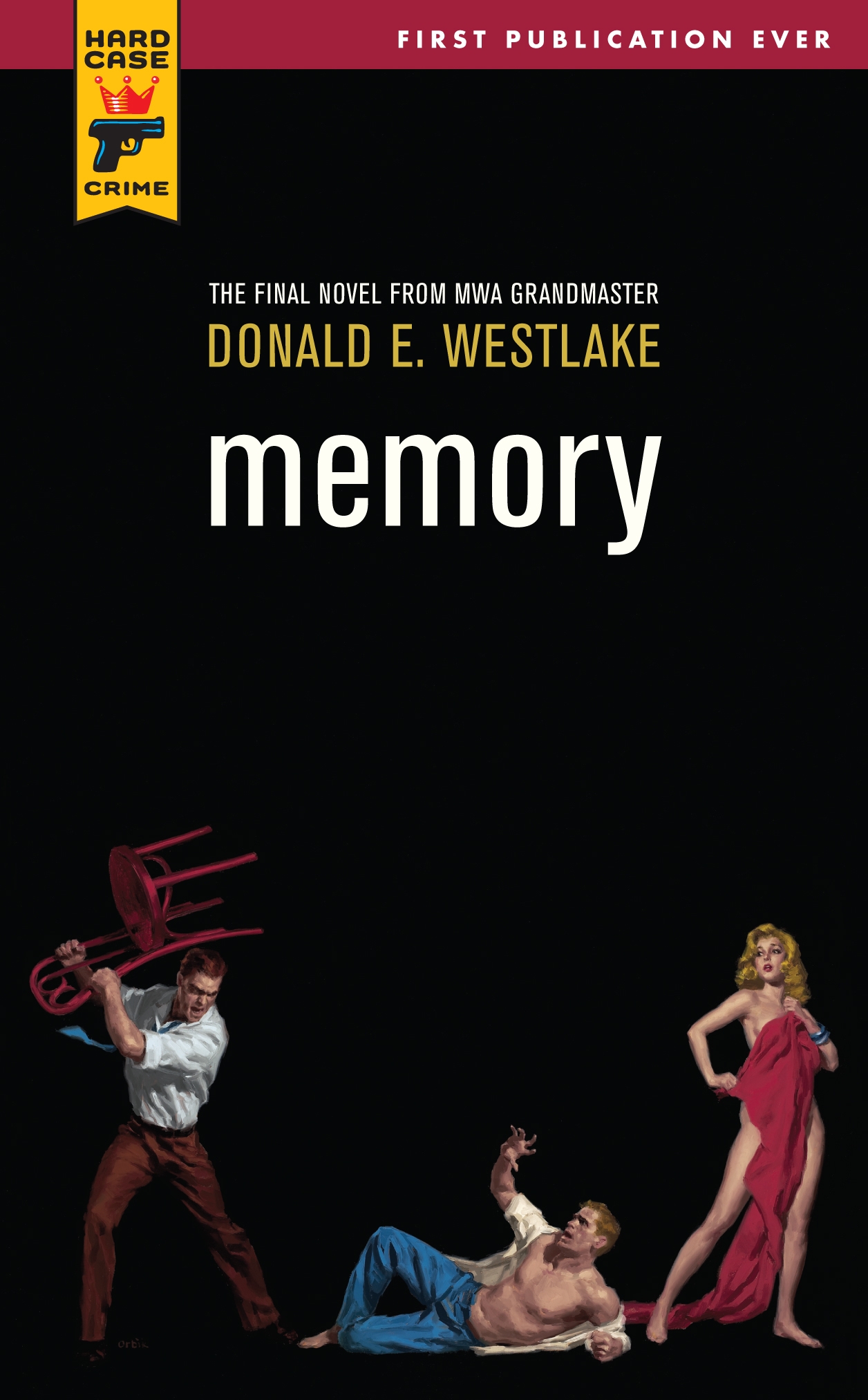
Written in the sixties and published just recently, posthumously. It is a different kind of Westlake. It’s got a little of the potboiler in it, as the cover image suggests. But it is a potboiler that slips in and out of profundity with ease. And it is pretty damn disquieting, too. What does it mean to go home? What is your identity, anyway?
No plot revealers here. I will say the book puts me in the mind of the tragic aspects of Spielberg (& Kubrick’s) A.I.
(W)e start by feeling the tragedy of David–that he feels from the inside out that his love is authentically his when it is “merely” a function of his program. But we then move on to the tragedy of us–that we are not much different.
And also a little of Andre Gregory’s last words in My Dinner With Andre:
(P)eople hold on to these images: father, mother, husband, wife, again for the same reason: ’cause they seem to provide some firm ground. But there’s no wife there. What does that mean, a wife? A husband? A son? A baby holds your hands and then suddenly there’s this huge man lifting you off the ground, and then he’s gone. Where’s that son?
 Blowhard, Esq.
 Callowman
 Sherbrooke
 Eddie Pensier
 Enzo Nakamura
 Epaminondas
 Fabrizio del Wrongo
 Fenster
 Brundle Guy
 Glynn Marshes
 Paleo Retiree
 Atypical Neurotic
 Question Lady
 Sax von Stroheim
 Sir Barken Hyena
 The Mistaken
 Uncouth Reflections