
Blowhard, Esq. writes:

Kate Upton doesn’t want to be left out:
Blowhard, Esq. writes:
Kate Upton doesn’t want to be left out:
Blowhard, Esq. writes:

Another NLOTW, another busty Czech girl. I’m sure one day I’ll get tired of girls like Ms. Hartlova and her Eastern European cousins in the Ukraine.
But that day is not today.
Nudity below and hardcore at the tube sites. Happy Good Friday to you.
Fabrizio del Wrongo writes:
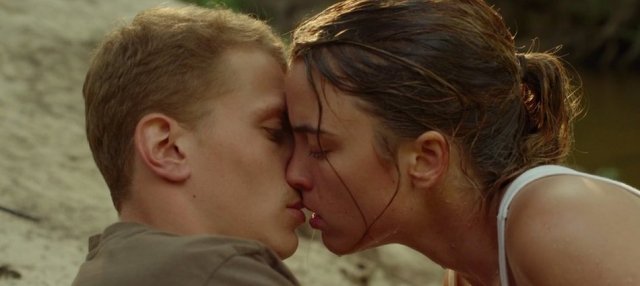
Adele Haenel and Kevin Azais in “Love at First Fight”
If you’re like me, you don’t get around to seeing “the year’s best movies” until several months into the subsequent year. In case you’re wondering (and I doubt you are), of the 2015 releases that I’ve seen so far, my favorites are Michael Almereyda’s “Experimenter,” a searching, unsettled portrayal of the life of psychologist Stanley Milgram, and John Magary’s “The Mend,” a dense, unnerving, and funny take on urban anxiety and alienation.
But since I’m perverse, I’m going to not write about those films, and instead present you with notes I made while watching some other recent movies. Some I liked, some I didn’t like, some I should have fast-forwarded through.
“Love at First Fight”
How to categorize Thomas Cailley’s sweetly stormy “Love at First Fight”? It’s a sort of non-com rom-com, and it has an almost reactionary edge. Female lead Adele Haenel is magnetic: Raw and coarsely pretty, she seems to have a hungry animal inside of her. (I’d love to see her in a Jean-Claude Brisseau movie.) The two kids at the story’s center reject both the drained-of-meaning safe space offered by Western society and the individual-denying collectivism of military bootcamp, but they find solace in a self-imposed exile in the French wilderness. The scenes showing the unlikely couple fishing and fucking in the woods are uncannily clarified, sensual, idyllic, like something out of one of the better Apichatpong Weerasethakul movies. But it can’t last: the world is literally burning around them. I find it weird that something about the movie made me think of Morrissey, and the featured IMDb commenter references Morrissey. Why does the movie evoke the English singer? I suspect it has something to do with its mix of the pugnacious and the tender.
“Crimson Peak”
This extravagant horror film has a terrific production design, impressive moods and tones, some nice performances, and a narrative that seems to diminish as it progresses. Director and co-writer Guillermo del Toro has the aesthetic predilections necessary for Gothic romance, and it’s clear that he loves 19th-century novels, but his story sense isn’t refined enough to generate the expanding feeling of involvement that you expect from a tale in the mode of the Bronte sisters. The background of protagonist Edith Cushing (Mia Wasikowska) is painstakingly drawn, yet nothing in it connects to her eventual predicament, and the mystery in which she’s involved turns out to have a mundane foundation — an inheritance scam. Ghosts pop up willy-nilly; all impart warnings, none of them more specific than “watch out!” Clues are either meaningless or over-emphasized relative to their significance within the plot. And a couple of big reveals — the brother-sister relationship, the meaning of “crimson peak” — are obvious and banal. Still, I enjoyed watching it for about an hour, at which point my hunch that it was going nowhere became too overwhelming to ignore. The movie contains some amazing evocations of Victorian America and England, and there’s a shocking murder scene that is worthy of Argento or Fulci.
“Witching & Bitching”
Spainiard Alex de la Iglesia is one of my favorite movie wild men. His work tends to be messy and unfocused, but he has a nose for social dynamics and wicked satire, and he’s an ace at investing his movies with raunch, heat, and flavor. “Witching & Bitching” is in the mode of his 2010 “The Last Circus.” That is, it’s an effects-heavy genre mash-up, which Iglesia uses as a launching pad for his wild ideas and observations. As a narrative thing it’s something of a botch: I don’t think it works as horror or suspense. Yet if you’re on Iglesia’s wavelength there’s plenty to enjoy. But be forewarned: this may be the most cheerily misogynistic movie ever made. Carmen Maura, as a dryly malevolent sorceress out to bring an end to the reign of men, is very amusing, as is Iglesia’s wife, the terrifically named (and terrific-looking) Carolina Bang.
“In the Name of My Daughter”
A very layered, controlled thriller arranged around the topics of class and family, which doesn’t reveal its melodramatic core until its final 15 minutes. (Is the end-of-film flash-forward prudent or necessary? I’m not sure.) I really liked Guillaume Canet as the chilly, ambiguous schemer. He provides the movie with its sense of mystery: Is he or is he not a Gallic Tom Ripley? And Adele Haenel (the girl from “Love at First Fight”) taps into something elemental in the psyche of the modern Western female: She’s so sure of her independence that she negates herself. (Catherine Deneuve is playing Catherine Deneuve. If you were Catherine Deneuve, wouldn’t you?) I took it as a tragedy of mother-daughter relations, with Haenel’s rebel against class, tradition, and ancestry representing a sort of inverse Antigone. Director and co-writer Andre Techine is only intermittently acknowledged by the folks who are wont to praise arthouse movies. I take him to be a master.
“Macbeth”
Well-paced, immersive, and rich in the sort of heat and anguish the material requires, this is a “Macbeth” that’s consciously atraditional — that feels like something Zack Snyder might enjoy. The human element is probably not strong enough (maintaining the human element is, I think, one of the difficulties of doing “Macbeth”), but newish director Justin Kurzel succeeds in bringing you into the characters’ frenzied psychologies. It’s expressionistic in a way that perhaps no other Shakespeare movie is — it seems to take place in your head. The early scenes are given to a battle sequence that employs a technique I don’t recall seeing in another movie. Shot in super slo-mo, with vignettes of violence called out so that they resemble the images on Greek pottery, it’s almost like an effects-movie variant of the battle in Welles’ “Chimes at Midnight” — a pile-up of images that suggests something bigger, of moving parts, that’s slowly atomizing and breaking down. Perplexingly, Michael Fassbender makes almost no impression. You’d think he’d make a great Macbeth, but he seems lost, puny. This may be Kurzel’s fault: He undermines the actor at serveral key moments, shooting him from a distance, and employing what sounds like dubbing. But Marion Cotillard’s Lady M is consistently involving — she’s soulful, surprising, and always in the moment. (Is there a greater actress than Cotillard working in movies?) This “Macbeth” is likely to annoy anyone who goes into it expecting traditional dramaturgy. Kurzel and his writers don’t seem particularly interested in that: They’re doing a big splashy mural on the topic of “Macbeth,” and they know that you know the story. I wonder: How many movie versions of “Macbeth” succeed as drama? The most renowned, Kurosawa’s “Throne of Blood,” strikes me as dramatically inert. It’s remembered for its mood, violence, and imagery, but few are moved to anything but excitement by the spectacle of Toshiro Mifune being turned into a human pin-cushion. If we can accept “Throne of Blood” for its style and intensity, why not this version? That said, I had trouble buying into some of the decisions made by Kurzel and his team. For example, in this adaptation, Birnam Wood doesn’t move, it burns, and its embers waft to Dunsinane. I can appreciate novelty, but this is novelty for its own sake, or perhaps for the sake of misguided realism. It deprives the play of its great image, and it left me feeling cheated.
“Chi-Raq”
This messy, zesty piece of agitprop from director Spike Lee is a riff on “Lysistrata,” but its scattershot approach owes more to wild political satires of the ’60s, like “Wild In the Streets” and “The President’s Analyst,” than to Greek drama. Ideologically, I often wasn’t sure how to take it. Lee doesn’t seem sure either — he’s directing by the seat of his pants, and he’s slinging indictments like a kid engaged in an uproarious food fight slings potato salad. But then Lee has never been much of a narrative filmmaker: He’s best in spurts and chunks, where his gifts for texture, tone, and rhythm, and his love of exclamations, can be loosed from the restrictions imposed by themes and stories. (“Do the Right Thing” is full of bracing and memorable moments, but as a high-minded call for understanding, it’s hard to take seriously.) I laughed a lot while watching “Chi-Raq” — sometimes right after scoffing derisively. The movie is a turn-on, too: I haven’t seen a sexier picture this year, or a gutsier, earthier depiction of male-female relationships. In particular, Teyonah Parris is an erotic delight — a luscious, fiercely sculptured doll with teeth like gleaming monuments. It’s a shame the screenplay eventually pushes her aside to make room for…jeez, what doesn’t it make room for? I love the musical bits (I still think Lee should do a musical) and the use of the Chi-Lites’ “Oh Girl,” one of my favorite songs. And for once Samuel L. Jackson’s over-familiar schtick is given a context that raises rather than lowers it. He’s playing a jive-talking one-man chorus, and he delivers some of the movie’s best lines, such as: “How can those females give up the long D and the downstroke? This must be some bulllllllshit!”
“Carol”
Like watching hermit crabs plan a tea party.
“The Big Short”
Director Adam McKay may be incapable of maintaining a tone the doesn’t mimic over-caffeinated, nudgy discomfort, he’s too pleased with his own cleverness (which is really a kind of exaggerated sarcasm), and I’m not convinced he has a sense for how movies work visually. But his sensibility and talents are so amenable to the jittery crassness of Wall Street that his “The Big Short” nearly comes off as an exercise in style. Unlike Scorsese’s Wall Street movie, it has ideas and a bit of idealism. These contribute to your investment in the material, and help the story build momentum, until — perversely — you’re rooting for the inevitable catastrophe. (Like “Margin Call,” it borrows liberally from the disaster genre.) I thought it was about 20 minutes too long, and I didn’t care for the interludes in which celebrities elucidate financial gobbledygook, but I really enjoyed Carrell, Bale, and Gosling, who are aces at embroidering on the gnomic, retardo-frathouse rhythms that McKay has perfected in his films with Will Ferrell. (Brad Pitt, on the other hand, is a drag.) The screenplay is canny in the way it keeps you right on the edge of understanding the housing mess of the 2000s. The semi-confusion this generates is heady, stimulating, compulsive. I went from being somewhat annoyed by the movie to having a pretty good time. The moralistic voiceover at the end, solemnly condemning us for blaming the financial collapse on poor people, is the movie’s most clanking note. Not only is it untrue (bankers and politicians were blamed, though they weren’t punished), it’s contrary to the us-against-them dynamic the movie has nurtured up to that point, and it diminishes the picture’s most scandalous suggestion — that those in the string-puller class thrive by preying on American taxpayers.
“The Assassin”
A few months ago I made a joke on Facebook about the overblown reaction by critics to Hou Hsiao-Hsien’s “The Assassin.” Something like: “I’ve always pretended to like Hou Hsiao-Hsien, but now I really like him, because his latest movie has ninjas and shit.” As a moviegoer with a high tolerance for slow Asian movies, and for Hou Hsiao-Hsien in particular, I didn’t expect my joke to strike so close to the mark. “The Assassin” strikes me as a dud: negligible as an action movie, impenetrable as a story, and weirdly devoid of Hou’s warmth and sensitivity towards his characters. In fact, the central character, played by Shu Qi, is a virtual non-entity. Her presence is so slight, and Shu’s performance so neutered, that Hou ends up depriving himself of the prerogative of venerating her — a weird thing indeed given that his earlier films, “Three Times” and “Millennium Mambo,” were records of his infatuation with the actress. The basic narrative contains some fertile ideas: It’s about an apparatchick of the ruling class who betrays and walks away from her masters. But the melodrama inherent in that premise (derivative of Besson’s “Nikita”) is rejected by Hou in favor of a series of scenes in which imperious personages solemnly talk at each other about court intrigue and political maneuvering, none of which is fully explained in the text. (Is this material more aptly likened to the ponderous trade-and-treaties talk of the first “Star Wars” prequel, or to the discombobulating opacity of David Lynch’s “Dune”?) The cultural eunuchs who comprise the bicoastal movie commentariat have lauded “The Assassin” as an arty wuxia movie. They’re kidding themselves: Hou has zippo interest in wuxia, martial arts, or fantasy, and he doesn’t even try to direct an action sequence. Perhaps he can’t direct an action sequence. In order to mask his ineptness in this area, he jump-cuts within closely staged skirmishes. The technique is interesting the first time you see it, but it quickly comes to feel like a cheat — the art-film director’s version of shaky-cam. I’m not a fan of Ang Lee, but his “Crouching Tiger, Hidden Dragon” was a much more successful arting up the martial-arts film. Lee at least has an affection for the genre, and he was able to bend its basic elements into a form that suited his sensibility and style. Hou, either lacking a taste for the material or realizing partway through that he’d made a mistake, uses the genre to…do a series of pretty landscapes. It’s a sad commentary on the commentary that this is exactly what critics have praised in the picture. “It’s a landscape movie,” they exclaim, “Hou is a poet of the wind in the trees!” Let’s call this what it is: A steaming pile of bullshit. Hou is a great filmmaker who has given us terrific images for over 30 years. But he’s focusing on landscapes here because he doesn’t know what else to do. You know what also has great landscapes? My screensaver.
Fenster writes:
As Fenster wrote at 2Blowhards over 11 years ago now:
Words mean different things in different cultural contexts. Christianity means something different to an elderly Anglican than it does to a recently converted tribesman.
The same is true, I think, of another vaguely religious doctrine: multiculturalism. Because a lot of the controversies surrounding multicult are similar, I suppose I reflexively concluded that the term must mean the same thing at Duke as it does in Denmark, that the world was small enough for a common and uniform meaning. But I don’t think that’s true. There is a difference.
But first things first: multiculturalism is on its face a slippery term, and therefore quite easy to interpret in different ways. Is it a way of bringing people together, or a way of rationalizing keeping them apart? Even in this country, both impulses are evident in multicult doctrine. But there seems little doubt that, owing to the USA’s assimilationist history, the bringing together side of the doctrine (historically) played the dominant role, once some of the celebration-of-difference trappings are cut away.
Not so in Europe. . . . There, the dominant theme is: how shall we rationalize the Pakistanis keeping to themselves in Bradford, or the Turks in Hamburg, or the Moroccans in Rotterdam? The answers: let’s let them celebrate their own ways. Let’s not obligate ourselves to be influenced overly by their ways. And let’s not expect them to adopt our ways. Now we can all feel good about each other, happy that we can all live together, free of any pesky flies in ointment.
If only.
We see now the rotten fruit of that approach.
I did, however, give one cheer for multiculturalism in the United States.
The one cheer awarded to multiculturalism in this country is due to, and due only to, that idea’s adaptive value in managing the problem of difference. And note the term: problem.
And by problem I do not mean “universally bad”. I just mean problem.
When you introduce a little difference, the problem of difference is minimal and can be ignored. When you introduce more, you need to enact measures (either formal by means of law and policy or informal by means of the spreading of values and ideas) that soften the growing impact. When you introduce too much difference the system becomes unstable and eventually tips into something else entirely.
So if and when you opt to ramp up differences, the development of an accompanying ideology can be helpful, necessary even. But context, please.
First, the yin of embracing difference must somehow meet the yang of minimizing it. Hence the historic emphasis on assimilation in the United States–an emphasis that we’ve pretty much ignored for decades now, with the result that we’ve emphasized the yin and have eaten through a lot of the social seedcorn built up during eras of greater balance.
Second the questions must be asked: what warrants the introduction of difference in the first place, and what warrants escalating the levels to the point at which ideological or legal changes/contortions become necessary? Perhaps an invasion that cannot be resisted and must be managed. Perhaps humanitarian or other related concerns. Most likely a growing economy that calls for more workers, pitting the demands of economic growth against the demands of social solidarity. Those questions must always be asked, and answers not assumed.
This means that, just as a balance must be struck between the yin of difference and the yang of integration, a balance must be struck between the various costs and benefits of introducing large number of people with different talents, skills, backgrounds . . . and cultural values.
When people take multiculturalism to be a creed they are putting the cart of ideology in front of the horse of pragmatic usefulness. But, as Steve Sailer has pointed out, people resist the concept of diminishing marginal utility since it is just not as intuitive as thinking in terms of black and white/good and bad. That’s too bad.
Fenster writes:

Several examples of talking about the weather but really talking about something else, too.
1 On the academic freedom front, a glimmer of reason and from a somewhat unexpected source. The American Association of University Professors (AAUP) has issued a lengthy report critical of the uses and misuses of Title IX. Here’s the long report and a short article.
The report argues that in the haste to see gender justice done on campuses there has been something of a rush to judgment, with academic freedom and due process suffering as a result.
I expect this line of argument from, say, the lefty-rightie-free speechie FIRE, or the conservative leaning National Association of Scholars. That it comes from the AAUP–the broad-based voice of the faculty–is, as Martha Stewart would say, a good thing.
But is there any Widean misdirection here? Hmmm . . . . Note that the report seems to aim its charge against the feds and college administrators–especially those administrators who, as part of the “corporatization” of the university the faculty decry, are petrified of lawsuits and their consequences, and who solve academic questions as though there were merely management ones.
True all that. But as one skeptic in the attached article notes–is that all there is? Might it not also be the case that the culture of the institution–a culture in which many faculty are deeply complicit–is also part of the problem?
Since the AAUP is an association of, by and for the faculty it is perhaps not surprising that it directs its aim outward. A little disingenuous perhaps. But verily: there is no progress without hypocrisy.
2 On a different matter altogether, here’s Eli Lake, who I think it is fair to describe as a journalist of neoconservative persuasion, on France as a police state. On the top level, Lake has a high road argument: France is now suspending civil liberties in its zeal to stop Muslim terrorism. We should resist that, and should resist calls from folks like Trump and Cruz for heightened Muslim surveillance. After all, our experience with Muslim immigration is different. We do not have the Muslim neighborhood problem of Europe and should leverage our privileged position in that regard to ensure civil liberties at home.
I am fine with that, more than fine with that. Also with his sad truth that “(w)hen advanced democracies are terrorized, our freedoms are often the first casualty”. And I also can’t quibble with the surface of his conclusion: “it’s better to fight terrorists over there than over here.” But is that all Lake is up to?
The point is to avoid the need for putting our freedoms at risk at all. Europe is now having to grapple with an unfortunate state of affairs that is the product of, among other things, inattention to immigration policy and the excesses of neoconservatism in foreign policy. Better perhaps not arrive at this pass in the first place?
Lake seems to suggest at the end of his article that “invade the world” still works, and is not disconnected from other things. He does not mention the “invite the world” corollary that Steve Sailer is fond of pointing out. Lake is critical of Trump but it is Trump, not Lake, who is questioning “invite the world”. And if you do too much of “invade the world, invite the world” you inevitably end up with “investigate the citizenry.” Lake should sort out his causes and effects, and maybe his agenda.
3 On a different matter altogether, here’s the eminent graybearded historian of Repubicanism, Karl Rove, on why Trump should not be coddled in the convention. Darn it, it took Rutherford B. Hayes seven ballots to finish off James Blaine in 1876 so Trump should man up and expect a fair convention fight. Tradition!

I agree that a fair fight can be a good thing. And that politics ain’t beanbag, with the consequence that the term “fair” can be highly elastic.
But that’s just it. Rove is no graybearded historian, really, but a partisan himself engaged in spin to accomplish political ends. Spin is bad enough but spin posing as a history lesson at the feet of a wise old sage tends to grate. If the circumstances were different I expect Rove’s argument would be different. And if Trump looks like he will assemble the delegates I would not be surprised if Rove favored tactics that bent or broke the rules–history be damned!
Also, while we are free to create any new history we want, entirely lacking in Rove’s article is any reference at all to the shift from a convention-based method for presidential selection to one based much more clearly on voter preference through a primary system. That does not mean the convention is irrelevant, as we have heard over and over. But one would think an eminent historian might reference that historic shift in any analysis, in that it tends to have some bearing on the question of legitimacy on which the whole enterprise depends.
Fabrizio del Wrongo writes:
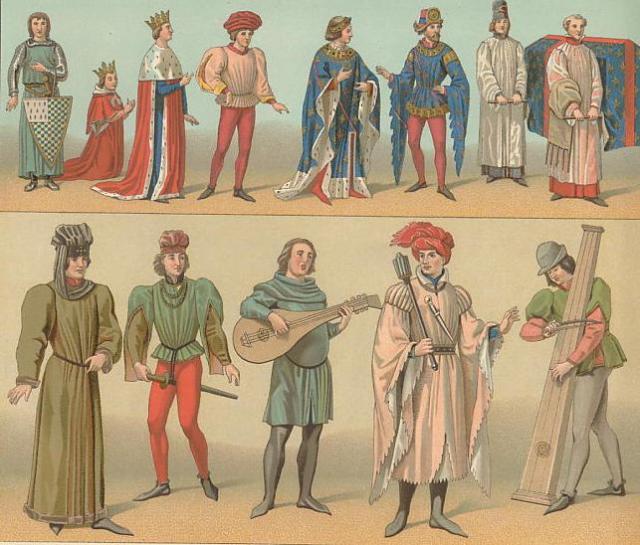
I. Germany (says the Greek Chalcondyles) is of ample latitude from Vienna to the ocean; and it stretches (a strange geography) from Prague in Bohemia to the River Tartessus, and the Pyrenæan Mountains. The soil, except in figs and olives, is sufficiently fruitful; the air is salubrious; the bodies of the natives are robust and healthy; and these cold regions are seldom visited with the calamities of pestilence, or earthquakes. After the Scythians or Tartars, the Germans are the most numerous of nations: they are brave and patient; and were they united under a single head, their force would be irresistible. By the gift of the pope, they have acquired the privilege of choosing the Roman emperor; nor is any people more devoutly attached to the faith and obedience of the Latin patriarch. The greatest part of the country is divided among the princes and prelates; but Strasburg, Cologne, Hamburgh, and more than two hundred free cities, are governed by sage and equal laws, according to the will, and for the advantage, of the whole community. The use of duels, or single combats on foot, prevails among them in peace and war: their industry excels in all the mechanic arts; and the Germans may boast of the invention of gunpowder and cannon, which is now diffused over the greatest part of the world. II. The kingdom of France is spread above fifteen or twenty days’ journey from Germany to Spain, and from the Alps to the British Ocean; containing many flourishing cities, and among these Paris, the seat of the king, which surpasses the rest in riches and luxury. Many princes and lords alternately wait in his palace, and acknowledge him as their sovereign: the most powerful are the dukes of Bretagne and Burgundy; of whom the latter possesses the wealthy province of Flanders, whose harbors are frequented by the ships and merchants of our own, and the more remote, seas. The French are an ancient and opulent people; and their language and manners, though somewhat different, are not dissimilar from those of the Italians. Vain of the Imperial dignity of Charlemagne, of their victories over the Saracens, and of the exploits of their heroes, Oliver and Rowland, they esteem themselves the first of the western nations; but this foolish arrogance has been recently humbled by the unfortunate events of their wars against the English, the inhabitants of the British island. III. Britain, in the ocean, and opposite to the shores of Flanders, may be considered either as one, or as three islands; but the whole is united by a common interest, by the same manners, and by a similar government. The measure of its circumference is five thousand stadia: the land is overspread with towns and villages: though destitute of wine, and not abounding in fruit-trees, it is fertile in wheat and barley; in honey and wool; and much cloth is manufactured by the inhabitants. In populousness and power, in richness and luxury, London, the metropolis of the isle, may claim a preeminence over all the cities of the West. It is situate on the Thames, a broad and rapid river, which at the distance of thirty miles falls into the Gallic Sea; and the daily flow and ebb of the tide affords a safe entrance and departure to the vessels of commerce. The king is head of a powerful and turbulent aristocracy: his principal vassals hold their estates by a free and unalterable tenure; and the laws define the limits of his authority and their obedience. The kingdom has been often afflicted by foreign conquest and domestic sedition: but the natives are bold and hardy, renowned in arms and victorious in war. The form of their shields or targets is derived from the Italians, that of their swords from the Greeks; the use of the long bow is the peculiar and decisive advantage of the English. Their language bears no affinity to the idioms of the Continent: in the habits of domestic life, they are not easily distinguished from their neighbors of France: but the most singular circumstance of their manners is their disregard of conjugal honor and of female chastity. In their mutual visits, as the first act of hospitality, the guest is welcomed in the embraces of their wives and daughters: among friends they are lent and borrowed without shame; nor are the islanders offended at this strange commerce, and its inevitable consequences.
— Laonikos Chalkokondyles, as translated by Edward Gibbon
Fenster writes:
Returned from the trip to Belgium, flying in an out of Amsterdam rather than Brussels . . .
Spent a little time among the Dutch in Amsterdam visiting one of the host families from my semester in college. Then went on to Ghent, which is in the part of Belgium that considers itself Dutch.
There were a few times–watching the moms and kids in a tearoom in Uithoorn in Holland–

–where my brain flicked on and off as it alternated between reading a situation as “foreign” and reading it as “down the street in Newton.” There are just so many similarities in mannerisms, manners and dress. No wooden shoes. The kids were running around in jeans and t-shirts that could have come from The Gap, and maybe did.
One thing I noted was what seemed to be a strong English connection. Usually when you travel if you look like an American people ask you if you are an American. Or, in Vietnam, maybe an Australian. But not English. In the Low Countries when people realized (from my language not my appearance) that I was not a local they would universally ask “are you English?”
In a conversation with a member of the Amsterdam host family I mentioned John Cleese. I asked the daughter, Hanneke, if she knew Monty Python. Of course, she replied, they’re English! As if she would be the one more likely to know them! And there is a strong British connection going back to the Great War (the first one) with British cemeteries dotting the Flanders landscape.

I checked the travel stats and sure enough Brits visit Belgium in three times the numbers of Americans. In Germany that ratio is more like 1:1 and Americans outnumber Brits in most other tourist destinations, too.
All of this is a lead in to a blog post I read online today (courtesy of hbd chick) which I include here only for those intrepid and interested enough to work through a bunch of issues on European history, genetics and culture. It has to do with the so-called Hajnal Line, which separates Western Europe from the East relative to matters of family formation, culture, politics, and host of other related issues. Basically: “The West”.
About two thirds of the way through this (long) post you’ll see that the author draws a circle around the Low Countries and southeastern England, dubbing the area “core Europe”, and describing it as the place that gave rise to most of the political, cultural and economic habits that we associate now with the West. Western ideas radiated out from that, pushing back against the default family formations and inheritance patterns that had prevailed pretty much everywhere else forever. It pushed as far as the Hajnal Line, which still separates two basic patterns.
I am wondering if Trump will call for a wall at the Hajnal Line, paid for by the East . . .
Blowhard, Esq. writes:
I’ve never been much of a reggae fan, but I’m trying to correct that blind spot. One website described “The Harder They Come” soundtrack as an ideal introduction to the genre, and hey, I’ve been pleased to discover that I’m enjoying it a lot. This Jimmy Cliff track, recorded at Muscle Shoals, is one of my favorites on the album.
You can sample the full album here or buy the MP3 version on Amazon for only $5.
Paleo Retiree writes:
Fenster writes:
As I wrote here, I am in Ghent for a week, with a stop first in Amsterdam and with a side trip across the border to Germany.
Nothing against the homeland but when I travel I prefer the company of the locals, not so much because they are preferable to Americans but because for me one of the joys of travel is that slightly heady, unbalanced feeling you get when, to paraphrase the old sage Noah Cross, you may think you know what is going on but you don’t.
And in that regard this trip has not disappointed. I have my six students to coach and attend to but other than that it is Europeans all the way: students and faculty from several universities across the continent–Belgium, Sweden, Germany, Austria and Poland.
 Blowhard, Esq.
 Callowman
 Sherbrooke
 Eddie Pensier
 Enzo Nakamura
 Epaminondas
 Fabrizio del Wrongo
 Fenster
 Brundle Guy
 Glynn Marshes
 Paleo Retiree
 Atypical Neurotic
 Question Lady
 Sax von Stroheim
 Sir Barken Hyena
 The Mistaken
 Uncouth Reflections