Cocktails Du Jour

Eddie Pensier writes:

mad hatter

“Tweedle Rum” (Gosling’s rum, pineapple juice lime, ginger beer, spiced vanilla-pomegranate syrup, and Angostura bitters, with fresh pineapple garnish and freeze-dried pineapple on the side) and “Mad Hatter” (Appleton 12 Year rum, Bulleit bourbon, Hennessey VS cognac, honey water, Demerara sugar syrup, cream, nutmeg, and whole egg, with brandied cherries on the side). Both served at the White Rabbit, an Alice in Wonderland-themed lounge whose whimsy remains firmly on the menu and does not, thankfully, extend to the décor. Expensive but expertly crafted works of drinkable art.

Posted in Food and health, The Good Life | Tagged , , | 1 Comment

Rant Du Jour

Blowhard, Esq. writes:

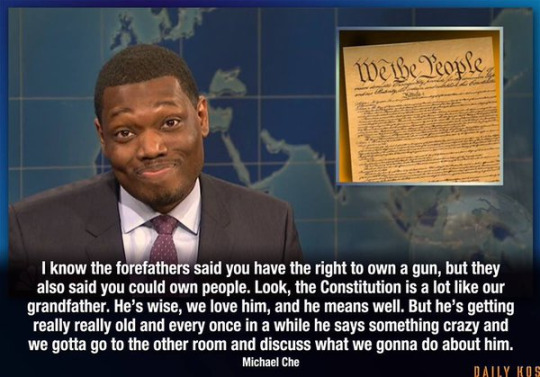
michaelchefoundingfathers

I don’t know what’s more annoying: Michael Che’s triumphantly smug face or this stupid anti-intellectual argument that I hear constantly. Oh, I know, it’s the dumb argument, hence this post.

Whether the Constitution needs to be amended is a discussion that reasonable people can have. Perhaps it’s true that conditions have changed so much since the late 18th century that it’s prudent to scale back or revise some of its provisions. The Founding Fathers would be the first to agree that a political order sometimes needs to be changed. They included an amendment process, after all.

But whether the Founders were old, white, and racist is entirely irrelevant. Mr. Che and the wise sages at Daily Kos would be on the side of confiscating guns even if the Founders were all abolitionists who broke with England to establish the United States of Oppression-Free Diversity. Furthermore, if we’re supposed to think that the 2nd Amendment is discredited because Washington, Jefferson, and Madison owned slaves, then by that logic the entire Bill of Rights is suspect. So which other Amendments should we dispense with, Mr. Che?

  • “I know the forefathers said you have a right to a government that doesn’t establish an official religion, but they also said you could own people.”
  • “I know the forefathers said you have a right to demand a warrant founded upon probable cause, but they also said you could own people.”
  • “I know the forefathers said you have a right to be free of double jeopardy, but they also said you could own people.”
  • “I know the forefathers said you have a right to due process, but they also said you could own people.”
  • “I know the forefathers said you have a right to a jury trial, but they also said you could own people.”
  • “I know the forefathers said you have a right to confront your accusers, but they also said you could own people.”
  • “I know the forefathers said you have a right to punishment that isn’t cruel or unusual, but they also said you could own people.”

C’mon, the Founders were a bunch of racist shitlords! Surely we can do better.

Posted in Politics and Economics | Tagged , , , | 18 Comments

Shariah in a Crowded Theater

Fenster writes:

Is it OK to shout “Shariah” in a crowded theater?

Pushing that a bit on the speech side, how about “Allahu Akbar” in a crowded theater?

Or pushing it a bit in terms of delivery and venue, how about just conversing, using the term “Shariah” in a crowded store?  Such speech recently prompted an actual move to the exits in a store rather than a theater, though no one was trampled.

It is worth reading Ken White’s review of the crowded theater issue over at Popehat.  In it, he takes us through the constitutional history, in which Holmes plays a key role.  The gist of it is that Holmes changed his mind and his reasoning as regards free speech.

Holmes initially allowed for a more restrictive approach.  The cases that people fall back on to defend speech limitations (most notably three cases dealing with wartime dissent from 1919 and most notably among them Shenck v. United States) have been trumped by other cases that now form what he calls the “modern standard”. This modern standard was articulated later, in 1969, in Brandenbug v. Ohio:

These later decisions have fashioned the principle that the constitutional guarantees of free speech and free press do not permit a State to forbid or proscribe advocacy of the use of force or of law violation except where such advocacy is directed to inciting or producing imminent lawless action and is likely to incite or produce such action. . . . A statute which fails to draw this distinction impermissibly intrudes upon the freedoms guaranteed by the First and Fourteenth Amendments. It sweeps within its condemnation speech which our Constitution has immunized from governmental control.

White lauds Holmes for what he argues is a change of heart and mind.  It is good that jurists can have second thoughts.  But it does raise the gnarly issue of precedent.

White argues that Holmes had to dissemble quite a bit in attempting to square his new thinking with his old.  Jurists have to do that.  White says Holmes does not do so credibly.  Holmes came out quite clearly in favor of the “modern standard” in his dissent, along with Brandeis, in Shafer v. United States.

The jury which found men guilty for publishing news items or editorials like those here in question must have supposed it to be within their province to condemn men, not merely for disloyal acts, but for a disloyal heart: provided only that the disloyal heart was evidenced by some utterance. To prosecute men for such publications reminds of the days when men were hanged for constructive treason. And, indeed, the jury may well have believed from the charge that the Espionage Act had in effect restored the crime of constructive treason. 2 To hold that such harmless additions [251 U.S. 466, 494] to or omissions from news items, and such impotent expressions of editorial opinion, as were shown here, can afford the basis even of a prosecution, will doubtless discourage criticism of the policies of the government. To hold that such publications can be suppressed as false reports, subjects to new perils the constitutional liberty of the press, already seriously curtailed in practice under powers assumed to have been conferred upon the postal authorities. Nor will this grave danger end with the passing [251 U.S. 466, 495] of the war. The constitutional right of free speech has been declared to be the same in peace and in war. In peace, too, men may differ widely as to what loyalty to our country demands; and an intolerant majority, swayed by passion or by fear, may be prone in the future, as it has often been in the past to stamp as disloyal opinions with which it disagrees. Convictions such as these, besides abridging freedom of speech, threaten freedom of thought and of belief.

To this, White remarks wryly that:

Anyone who can reconcile that with the Schenck cases is a better lawyer than I.

So we have good news and bad news here.  The good news is that the modern standard is workable and has proven durable.  The bad news is that jurists, like the general public, can be of many minds on free speech and the idea of changing one’s mind in the face of precedent is itself not without precedent.

Posted in Law, Politics and Economics | Tagged , , , | 4 Comments

Notes on “Sabotage”, and Triggers

Fenster writes:

I have paid essentially zero attention to Arnold Schwarzenegger the actor after his political career ended.  I knew faintly of a film, or maybe several, that included Arnold with a gaggle of his aging action figure buddies.  I figured I would get around to that sooner or later since I like action films and enjoyed him back in the day.

I saw a DVD at the library that showed him standing in the front of a bunch of armed and suited-up individuals and thought it must be the movie I was thinking of.

But no, as I have since discovered, the movie series I had in mind, The Expendables, has Stallone standing in front with Arnold on the side.

The-Expendables-31

whereas the DVD I saw had Arnold in the center.  It was Sabotage, and I could not place it at all.

sabotage

A similar pose but a different group of characters.  And an odder one, too.  Here, Arnold is surrounded by a gaggle that includes Mirielle Enos, the depressed detective from the downbeat and perennially overcast TV series The Killing

killinglinden_1939758c

and Olivia Williams, the ultra-depressed wife from the excruciatingly downbeat Maps to the Stars.

olov

I took it out to see if it was up to its billing as “A NON-STOP ADRENALINE RUSH!

I thought Prozac, maybe.

Well, I am no fan of trigger warnings but if there is ever a movie that should come with one, it is Sabotage.  And I mean that mostly in a good way.

Film has portrayed gore, mayhem and blood in ever explicit ways but very often employing techniques that allow for some distance on the part of the viewer.  Evil Dead 2 was funny in the manner of the Three Stooges.  Fargo had deadpan humor.  The Wild Bunch had slow-motion ballet.  De Palma uses a seductive luxuriousness.  The clock ticks down on the bomb.  The good guy makes the difficult shot.  It’s usually the bad guy’s blood in the end.  Trope trope tripe.

By contrast the treatment of violence as sudden and brutal and completely unsentimental is less common.

As always Friedkin did it well.  As I wrote here, with him it could be “cut-cut-boom, and that’s the way it goes.”

(Note: extra shots added unnecessarily by someone posting to YouTube.  The original is one shot to Petersen and it’s done.)

Sabotage has some of that energy going for it.

There’s plenty of formula in the movie, don’t get me wrong.  But it plays with the formulas in interesting ways.  Schwarzenegger and his manic band of DEA agents are wild and macho in the conventional way–or are they?  The plot gets you on their side as the lovable good guys with some bad tendencies and then oscillates the bad and good in destabilizing ways.

And Arnold–well, he still can’t act in the Method sense, but he does take on a somewhat more complicated character.

The extra documentary on the filming process on the DVD makes much of the director’s military background.  And for sure, there is a documentary quality to a good deal of the action that forces you to strip away your expectations.  It may be random violence or not around that corner, and not just another dramatic trope, or pop-up shooter in the style of a video game.  And there are a couple of moments–no spoilers here–where I felt like the director fairly earned the fact that I jumped out of my seat.

Do you think students who complain about trigger warnings with Homer give the question much thought when they see violence in movies?

I think not.

I find the trigger warning stuff on campuses laughable but who knows?  Maybe the constant exposure to fake violence, typically portrayed with one of more of the distancing effects above, has the ultimate effect of telling viewers that they are safe.  Maybe when kids are reminded that civilization contains disturbing elements in its core it gets upsetting.

Posted in Movies | Tagged , , , | 4 Comments

Architecture and Color

Paleo Retiree writes:

Posted in Architecture | Tagged , | Leave a comment

I was Surprised at a Scythian Speaking Greek

Fabrizio del Wrongo writes:

Invasion of the Barbarians or The Huns approaching Rome

When Attila entered the village he was met by girls advancing in rows, under thin white canopies of linen, which were held up by the outside women who stood under them, and were so large that seven or more girls walked beneath each. There were many lines of damsels thus canopied, and they sang Scythian songs. When he came near the house of Onegesius, which lay on his way, the wife of Onegesius issued from the door, with a number of servants, bearing meat and wine, and saluted him and begged him to partake of her hospitality. This is the highest honour that can be shown among the Scythians. To gratify the wife of his friend, he ate, just as he sat on his horse, his attendants raising the tray to his saddlebow; and having tasted the wine, he went on to the palace, which was higher than the other houses and built on an elevated site. But we remained in the house of Onegesius, at his invitation, for he had returned from his expedition with Attila’s son. His wife and kinsfolk entertained us to dinner, for he had no leisure himself, as he had to relate to Attila the result of his expedition, and explain the accident which had happened to the young prince, who had slipped and broken his right arm. After dinner we left the house of Onegesius, and took up our quarters nearer the palace, so that Maximin might be at a convenient distance for visiting Attila or holding intercourse with his court. The next morning, at dawn of day, Maximin sent me to Onegesius, with presents offered by himself as well as those which the Emperor had sent, and I was to find out whether he would have an interview with Maximin and at what time. When I arrived at the house, along with the attendants who carried the gifts, I found the doors closed, and had to wait until some one should come out and announce our arrival.

As I waited and walked up and down in front of the enclosure which surrounded the house, a man, whom from his Scythian dress I took for a barbarian, came up and addressed me in Greek, with the word Xaire, “Hail!” I was surprised at a Scythian speaking Greek. For the subjects of the Huns, swept together from various lands, speak, besides their own barbarous tongues, either Hunnic or Gothic, or — as many as have commercial dealings with the western Romans — Latin; but none of them easily speak Greek, except captives from the Thracian or Illyrian sea-coast; and these last are easily known to any stranger by their torn garments and the squalor of their heads, as men who have met with a reverse. This man, on the contrary, resembled a well-to-do Scythian, being well dressed, and having his hair cut in a circle after Scythian fashion. Having returned his salutation, I asked him who he was and whence he had come into a foreign land and adopted Scythian life. When he asked me why I wanted to know, I told him that his Hellenic speech had prompted my curiosity. Then he smiled and said that he was born a Greek and had gone as a merchant to Viminacium, on the Danube, where he had stayed a long time, and married a very rich wife. But the city fell a prey to the barbarians, and he was stript of his prosperity, and on account of his riches was allotted to Onegesius in the division of the spoil, as it was the custom among the Scythians for the chiefs to reserve for themselves the rich prisoners. Having fought bravely against the Romans and the Acatiri, he had paid the spoils he won to his master, and so obtained freedom. He then married a barbarian wife and had children, and had the privilege of eating at the table of Onegesius.

He considered his new life among the Scythians better than his old life among the Romans, and the reasons he gave were as follows: “After war the Scythians live in inactivity, enjoying what they have got, and not at all, or very little, harassed. The Romans, on the other hand, are in the first place very liable to perish in war, as they have to rest their hopes of safety on others, and are not allowed, on account of their tyrants to use arms. And those who use them are injured by the cowardice of their generals, who cannot support the conduct of war. But the condition of the subjects in time of peace is far more grievous than the evils of war, for the exaction of the taxes is very severe, and unprincipled men inflict injuries on others, because the laws are practically not valid against all classes. A transgressor who belongs to the wealthy classes is not punished for his injustice, while a poor man, who does not understand business, undergoes the legal penalty, that is if he does not depart this life before the trial, so long is the course of lawsuits protracted, and so much money is expended on them. The climax of the misery is to have to pay in order to obtain justice. For no one will give a court to the injured man unless he pay a sum of money to the judge and the judge’s clerks.”

In reply to this attack on the Empire, I asked him to be good enough to listen with patience to the other side of the question. “The creators of the Roman republic,” I said, “who were wise and good men, in order to prevent things from being done at haphazard made one class of men guardians of the laws, and appointed another class to the profession of arms, who were to have no other object than to be always ready for battle, and to go forth to war without dread, as though to their ordinary exercise having by practice exhausted all their fear beforehand. Others again were assigned to attend to the cultivation of the ground, to support both themselves and those who fight in their defence, by contributing the military corn-supply…. To those who protect the interests of the litigants a sum of money is paid by the latter, just as a payment is made by the farmers to the soldiers. Is it not fair to support him who assists and requite him for his kindness? The support of the horse benefits the horseman…. Those who spend money on a suit and lose it in the end cannot fairly put it down to anything but the injustice of their case. And as to the long time spent on lawsuits, that is due to concern for justice, that judges may not fail in passing correct judgments, by having to give sentence offhand; it is better that they should reflect, and conclude the case more tardily, than that by judging in a hurry they should both injure man and transgress against the Deity, the institutor of justice…. The Romans treat their servants better than the king of the Scythians treats his subjects. They deal with them as fathers or teachers, admonishing them to abstain from evil and follow the lines of conduct whey they have esteemed honourable; they reprove them for their errors like their own children. They are not allowed, like the Scythians, to inflict death on them. They have numerous ways of conferring freedom; they can manumit not only during life, but also by their wills, and the testamentary wishes of a Roman in regard to his property are law.”

My interlocutor shed tears, and confessed that the laws and constitution of the Romans were fair, but deplored that the governors, not possessing the spirit of former generations, were ruining the State.

— Priscus of Panium, as translated by J.B. Bury

Posted in Books Publishing and Writing, History | Tagged , , , | 3 Comments

Scholarly Writing and “The Fall of Rome”

Fenster writes:

Though I have a doctorate I am not a scholar.  That’s partly because I got a doctorate late in life, well past the time I might have developed good, or at least acceptable, scholarly habits.  It is also a matter of character.  I just can’t rouse myself to care about, much less to write in, high scholarly style.

When I was defending my dissertation my dissertation chair (who was, in good academic fashion, my champion) went on the offense in committee on my behalf, remarking that my dissertation was not written in scholarly style but in clear and plain English, and that he found that a good thing.  That was enough to ward off another committee member or two, who liked the work but were probably privately concerned I was not writing in the opaque manner that had guaranteed their own success in the academy.

Continue reading

Posted in Books Publishing and Writing, History | Tagged , | 7 Comments

Fenster Stands and Delivers

Fenster writes:

This is a follow on to a post I wrote earlier today on gun control, which should be read first.

That post dealt with the Second Amendment issues and pretty clearly suggested Fenster was persuaded that the Amendment sets a pretty high hurdle where significant gun restrictions are concerned.  By emanation and penumbra, it might also suggest that Fenster is anti-gun control down the line.

But is that so?  After all, the law review article that formed the basis for most of the discussion in favor of a fulsome reading of the Second Amendment was penned by someone in favor of restrictions, so where one stands on the matter of  Constitutional interpretation does not necessarily have any bearing on where one stands in terms of preferred policy.

Continue reading

Posted in Politics and Economics | Tagged , | 10 Comments

Another Kind of Trigger Warning

Fenster writes:

I awoke an hour or so ago with guns on my mind.  Maybe it was a hangover from a dream or, more likely, the residue of the many gunshots going off of late, and of the dust-ups resulting.  I am no lawyer but I had Second Amendment questions stuck in my mind, too, especially that pesky and disputed language:

A well regulated Militia, being necessary to the security of a free State, the right of the people to keep and bear Arms shall not be infringed.

I reflected uncouthly on the apparent awkwardness of the construction of the sentence.  Was the intention to limit the amendment’s scope to militias?  Or did the second half of the sentence stand on its own, irrespective of how one parsed the meaning of the first half? That suggested a textual analysis.

It also suggested a historical analysis: if the amendment revolved around militias what kind of militias?  Were militias official bodies of the states, the other level of government under the federal system?  Or were militias viewed more broadly as a function of the citizenry?

And that suggested in turn an analysis relative to the rest of the Constitution.  On the one hand the Constitution vests government sovereignty in both the federal and state governments.  But under the Tenth Amendment, any powers not specifically designated for either level of government are considered reserved for the people.  Was that relevant?

I stumbled out of bed and turned on the computer to look for some sort of readable legal explication of the mess.  I checked Facebook first and there found a posting–by someone well known in these parts, as it turns out–on just this point.  The residue of those gunshots does seem to be everywhere.

Continue reading

Posted in Politics and Economics | Tagged , , , , | 6 Comments

Naked Lady of the Week: Emma Evins

Fabrizio del Wrongo writes:

ee-cover

My infrequent (but still beloved) co-blogger Enzo Nakamura suggested Emma here as a Naked Lady of the Week candidate. An eminently good suggestion. I don’t know much about Emma, but she looks a bit like Emma Stone (hence the name?), and a bit like Lindsay Lohan before she turned orange. As you’ve no doubt already noticed, she’s into body hair. On her nicely designed blog she claims that “my hair symbolizes my empowerment, and desire to stay true to myself while I’m doing porn, and throughout every aspect of my life.” While I’m sometimes charmed by the ability of women to relate every damn thing to their empowerment, my sense is that an erotic model’s cultivation of  a hairy crotch and pits has more to do with marketing and brand recognition than power. But what the heck, if it makes her feel like Genghis Khan,  or even Ricardo Montalban from “The Wrath of Khan,” who am I to complain? She also claims to value naturalness, and I’m fully in support of the promotion of that particular quality.

Nudity below. Have a great weekend.

Continue reading

Posted in Photography, Sex, The Good Life | Tagged , , , , | 1 Comment