Charlemagne Sleeps at Salzburg

Fabrizio del Wrongo writes:

ma_1059_engravingSuch a changed France have we; and a changed Louis. Changed, truly; and further than thou yet seest!—To the eye of History many things, in that sick-room of Louis, are now visible, which to the Courtiers there present were invisible. For indeed it is well said, ‘in every object there is inexhaustible meaning; the eye sees in it what the eye brings means of seeing.’ To Newton and to Newton’s Dog Diamond, what a different pair of Universes; while the painting on the optical retina of both was, most likely, the same! Let the Reader here, in this sick-room of Louis, endeavour to look with the mind too.

Time was when men could (so to speak) of a given man, by nourishing and decorating him with fit appliances, to the due pitch, make themselves a King, almost as the Bees do; and what was still more to the purpose, loyally obey him when made. The man so nourished and decorated, thenceforth named royal, does verily bear rule; and is said, and even thought, to be, for example, ‘prosecuting conquests in Flanders,’ when he lets himself like luggage be carried thither: and no light luggage; covering miles of road. For he has his unblushing Chateauroux, with her band-boxes and rouge-pots, at his side; so that, at every new station, a wooden gallery must be run up between their lodgings. He has not only his Maison-Bouche, and Valetaille without end, but his very Troop of Players, with their pasteboard coulisses, thunder-barrels, their kettles, fiddles, stage-wardrobes, portable larders (and chaffering and quarrelling enough); all mounted in wagons, tumbrils, second-hand chaises,—sufficient not to conquer Flanders, but the patience of the world. With such a flood of loud jingling appurtenances does he lumber along, prosecuting his conquests in Flanders; wonderful to behold. So nevertheless it was and had been: to some solitary thinker it might seem strange; but even to him inevitable, not unnatural.

For ours is a most fictile world; and man is the most fingent plastic of creatures. A world not fixable; not fathomable! An unfathomable Somewhat, which is Not we; which we can work with, and live amidst,—and model, miraculously in our miraculous Being, and name World.—But if the very Rocks and Rivers (as Metaphysic teaches) are, in strict language, made by those outward Senses of ours, how much more, by the Inward Sense, are all Phenomena of the spiritual kind: Dignities, Authorities, Holies, Unholies! Which inward sense, moreover is not permanent like the outward ones, but forever growing and changing. Does not the Black African take of Sticks and Old Clothes (say, exported Monmouth-Street cast-clothes) what will suffice, and of these, cunningly combining them, fabricate for himself an Eidolon (Idol, or Thing Seen), and name it Mumbo-Jumbo; which he can thenceforth pray to, with upturned awestruck eye, not without hope? The white European mocks; but ought rather to consider; and see whether he, at home, could not do the like a little more wisely.

So it was, we say, in those conquests of Flanders, thirty years ago: but so it no longer is. Alas, much more lies sick than poor Louis: not the French King only, but the French Kingship; this too, after long rough tear and wear, is breaking down. The world is all so changed; so much that seemed vigorous has sunk decrepit, so much that was not is beginning to be!—Borne over the Atlantic, to the closing ear of Louis, King by the Grace of God, what sounds are these; muffled ominous, new in our centuries? Boston Harbour is black with unexpected Tea: behold a Pennsylvanian Congress gather; and ere long, on Bunker Hill, DEMOCRACY announcing, in rifle-volleys death-winged, under her Star Banner, to the tune of Yankee-doodle-doo, that she is born, and, whirlwind-like, will envelope the whole world!

Sovereigns die and Sovereignties: how all dies, and is for a Time only; is a ‘Time-phantasm, yet reckons itself real!’ The Merovingian Kings, slowly wending on their bullock-carts through the streets of Paris, with their long hair flowing, have all wended slowly on,—into Eternity. Charlemagne sleeps at Salzburg, with truncheon grounded; only Fable expecting that he will awaken. Charles the Hammer, Pepin Bow-legged, where now is their eye of menace, their voice of command? Rollo and his shaggy Northmen cover not the Seine with ships; but have sailed off on a longer voyage. The hair of Towhead (Tete d’etoupes) now needs no combing; Iron-cutter (Taillefer) cannot cut a cobweb; shrill Fredegonda, shrill Brunhilda have had out their hot life-scold, and lie silent, their hot life-frenzy cooled. Neither from that black Tower de Nesle descends now darkling the doomed gallant, in his sack, to the Seine waters; plunging into Night: for Dame de Nesle now cares not for this world’s gallantry, heeds not this world’s scandal; Dame de Nesle is herself gone into Night. They are all gone; sunk,—down, down, with the tumult they made; and the rolling and the trampling of ever new generations passes over them, and they hear it not any more forever.

And yet withal has there not been realised somewhat? Consider (to go no further) these strong Stone-edifices, and what they hold! Mud-Town of the Borderers (Lutetia Parisiorum or Barisiorum) has paved itself, has spread over all the Seine Islands, and far and wide on each bank, and become City of Paris, sometimes boasting to be ‘Athens of Europe,’ and even ‘Capital of the Universe.’ Stone towers frown aloft; long-lasting, grim with a thousand years. Cathedrals are there, and a Creed (or memory of a Creed) in them; Palaces, and a State and Law. Thou seest the Smoke-vapour; unextinguished Breath as of a thing living. Labour’s thousand hammers ring on her anvils: also a more miraculous Labour works noiselessly, not with the Hand but with the Thought. How have cunning workmen in all crafts, with their cunning head and right-hand, tamed the Four Elements to be their ministers; yoking the winds to their Sea-chariot, making the very Stars their Nautical Timepiece;—and written and collected a Bibliotheque du Roi; among whose Books is the Hebrew Book! A wondrous race of creatures: these have been realised, and what of Skill is in these: call not the Past Time, with all its confused wretchednesses, a lost one.

Observe, however, that of man’s whole terrestrial possessions and attainments, unspeakably the noblest are his Symbols, divine or divine-seeming; under which he marches and fights, with victorious assurance, in this life-battle: what we can call his Realised Ideals. Of which realised ideals, omitting the rest, consider only these two: his Church, or spiritual Guidance; his Kingship, or temporal one. The Church: what a word was there; richer than Golconda and the treasures of the world! In the heart of the remotest mountains rises the little Kirk; the Dead all slumbering round it, under their white memorial-stones, ‘in hope of a happy resurrection:’—dull wert thou, O Reader, if never in any hour (say of moaning midnight, when such Kirk hung spectral in the sky, and Being was as if swallowed up of Darkness) it spoke to thee—things unspeakable, that went into thy soul’s soul. Strong was he that had a Church, what we can call a Church: he stood thereby, though ‘in the centre of Immensities, in the conflux of Eternities,’ yet manlike towards God and man; the vague shoreless Universe had become for him a firm city, and dwelling which he knew. Such virtue was in Belief; in these words, well spoken: I believe. Well might men prize their Credo, and raise stateliest Temples for it, and reverend Hierarchies, and give it the tithe of their substance; it was worth living for and dying for.

Neither was that an inconsiderable moment when wild armed men first raised their Strongest aloft on the buckler-throne, and with clanging armour and hearts, said solemnly: Be thou our Acknowledged Strongest! In such Acknowledged Strongest (well named King, Kon-ning, Can-ning, or Man that was Able) what a Symbol shone now for them,—significant with the destinies of the world! A Symbol of true Guidance in return for loving Obedience; properly, if he knew it, the prime want of man. A Symbol which might be called sacred; for is there not, in reverence for what is better than we, an indestructible sacredness? On which ground, too, it was well said there lay in the Acknowledged Strongest a divine right; as surely there might in the Strongest, whether Acknowledged or not,—considering who made him strong. And so, in the midst of confusions and unutterable incongruities (as all growth is confused), did this of Royalty, with Loyalty environing it, spring up; and grow mysteriously, subduing and assimilating (for a principle of Life was in it); till it also had grown world-great, and was among the main Facts of our modern existence. Such a Fact, that Louis XIV., for example, could answer the expostulatory Magistrate with his “L’Etat c’est moi (The State? I am the State);” and be replied to by silence and abashed looks. So far had accident and forethought; had your Louis Elevenths, with the leaden Virgin in their hatband, and torture-wheels and conical oubliettes (man-eating!) under their feet; your Henri Fourths, with their prophesied social millennium, ‘when every peasant should have his fowl in the pot;’ and on the whole, the fertility of this most fertile Existence (named of Good and Evil),—brought it, in the matter of the Kingship. Wondrous! Concerning which may we not again say, that in the huge mass of Evil, as it rolls and swells, there is ever some Good working imprisoned; working towards deliverance and triumph?

How such Ideals do realise themselves; and grow, wondrously, from amid the incongruous ever-fluctuating chaos of the Actual: this is what World-History, if it teach any thing, has to teach us, How they grow; and, after long stormy growth, bloom out mature, supreme; then quickly (for the blossom is brief) fall into decay; sorrowfully dwindle; and crumble down, or rush down, noisily or noiselessly disappearing. The blossom is so brief; as of some centennial Cactus-flower, which after a century of waiting shines out for hours!

— Thomas Carlyle


Posted in Books Publishing and Writing, Philosophy and Religion, Politics and Economics | Tagged , , , , , | Leave a comment

The Joys and Miseries of Kitchen Renovation

Fenster writes:

Mostly miseries.  Six weeks of displacement.  The old kitchen was crammed full of food and gadgets, now taking up space in the living room.  Dining room is a staging area and we are spending most of the time on the front porch, doing whatever small food prep we are capable of in the hall.

Here is a huge box of upstate New York tomatoes ($10 for the box last week at the farmers’ market in Lyons) converted into a long-term batch of roasted tomatoes in oil.  If we decide to cook pasta in the microwave I can start to use.  More likely they will get use over the winter.

20150829_105619-001 - Copy (2)

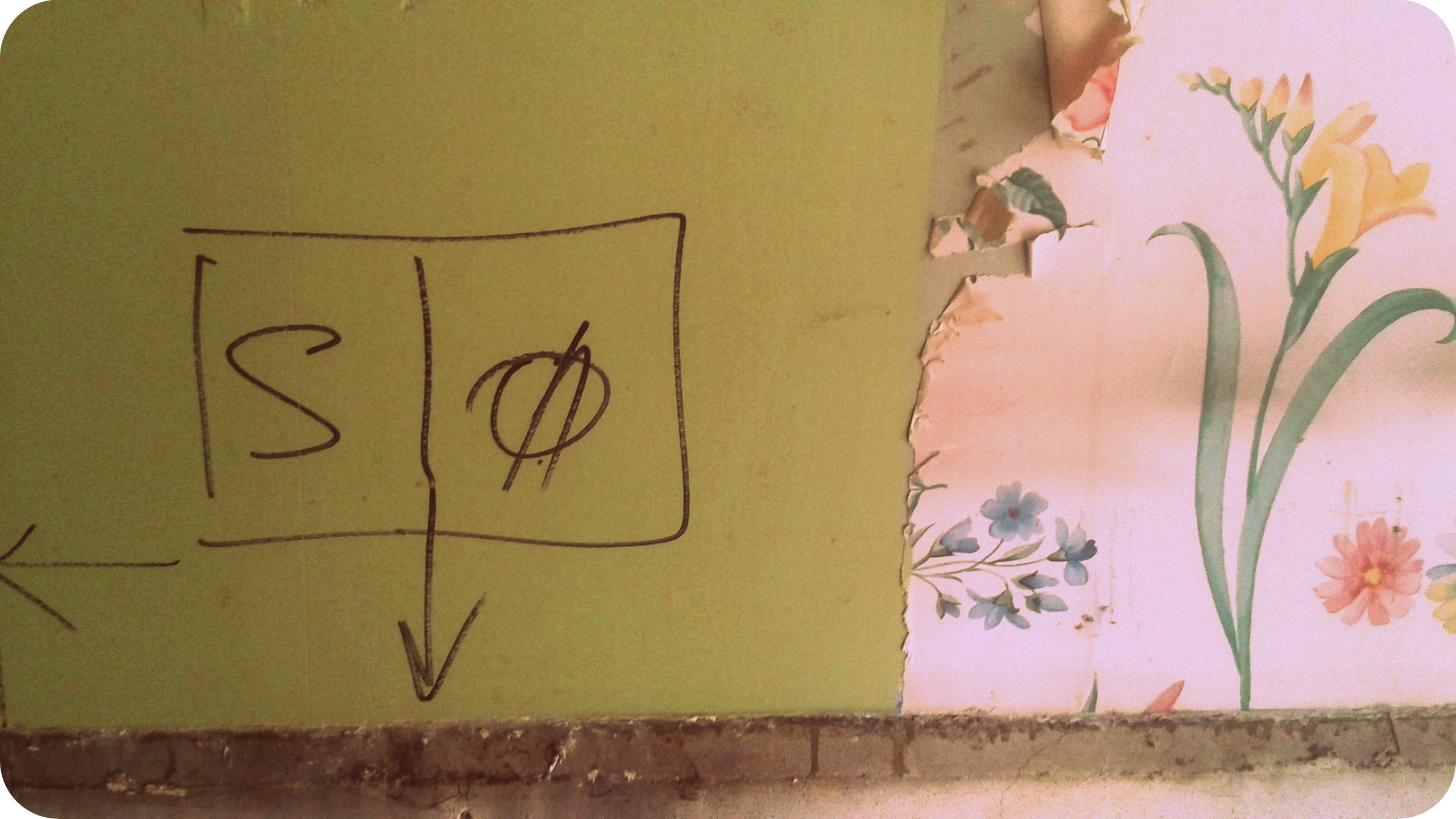
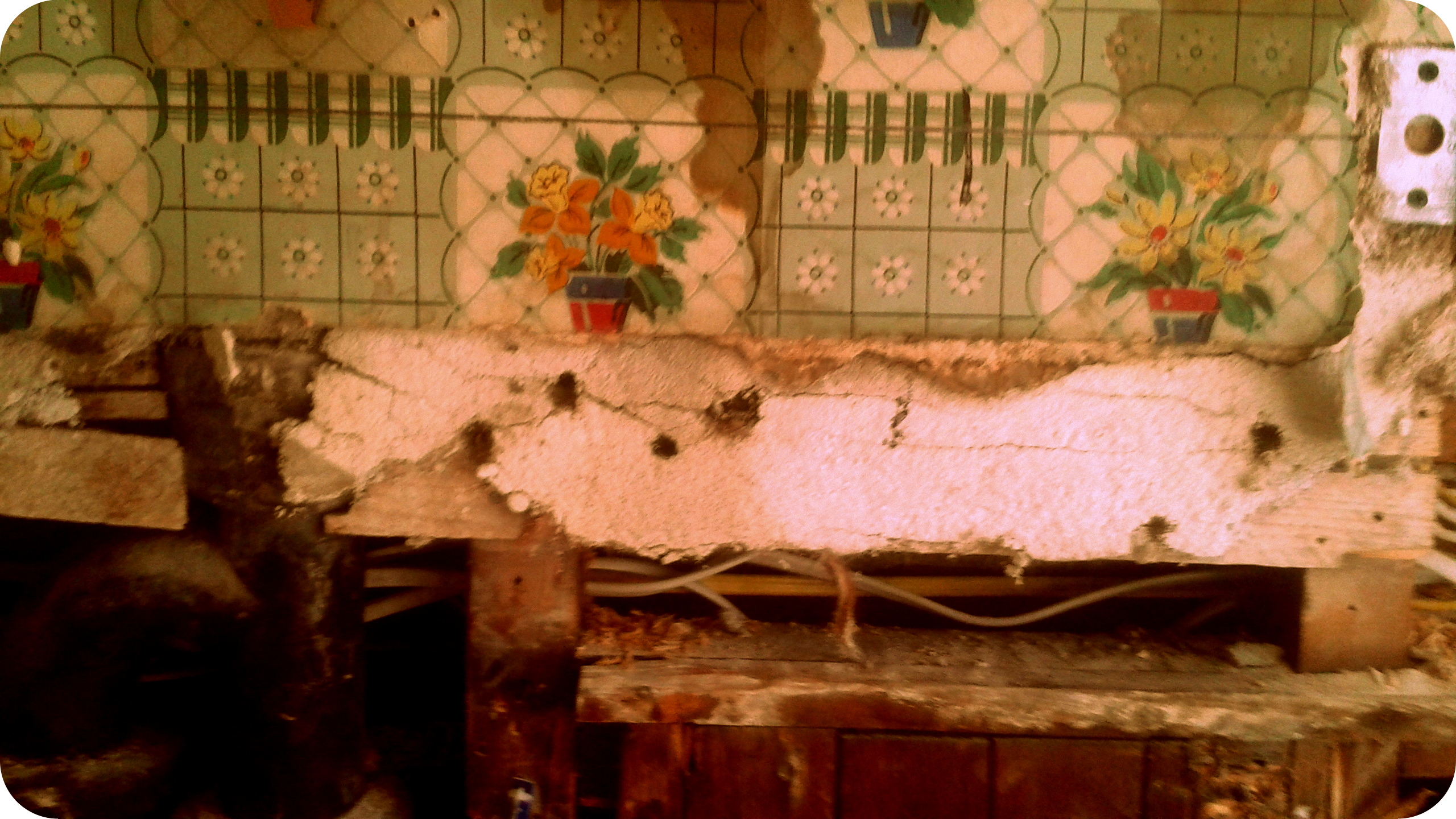
But some pleasures can be derived from the process, especially the visual pleasures of apprehending the various layers of the past visible in the post demolition phase.  Here are some snaps of the stripped down “kitchen”.

20150829_105915-001 20150829_105944 20150829_105850-001 20150829_110117 20150829_110035 20150829_110013-001 20150829_105743 - Copy - Copy 20150829_105751-002 20150829_105810-001 20150829_105717 - Copy - Copy 20150829_105659 - Copy - Copy (2)

Posted in Uncategorized | 2 Comments

Notes on “Tusk”

Fabrizio del Wrongo writes:

tusk-movie-posterIn “Tusk,” writer-director Kevin Smith burrows deep into a hole of self-loathing and misanthropy. He’s beating up on the digital age, on young people, on hip callowness: the movie plays like the howl of a onetime wunderkind who’s become resigned to his place on the pile of mass-cultural indifference. This kind of biliousness has nested in Smith’s work throughout his career, and it’s certainly made itself felt in his private life (all those public explosions), and there’s something refreshing — almost relieving — about watching it geyser up in a noxious plume. It’s the kind of biliousness that springs from one’s soul.

The plot, partially borrowed from “The Human Centipede,” concerns a Hollywood wannabe who’s kidnapped and surgically mutilated until he resembles a walrus. (The fuming moralism, as well as the ironical metamorphosis, suggest “Freaks.”) It’s unexpected territory for Smith, but he finds a way to impose his talents on the premise: the movie is filled with stories delivered in voluminous dialog. At times it’s like a riff on “My Dinner with Andre,” though (somewhat disappointingly?) Smith declines to commit to his incipient narratives. He clips them off just as they begin to suggest themselves.

There’s perverse pleasure to be found in watching Justin Long (perfectly cast) being carved into the shape of a marine mammal. In a couple of beats he’s transformed from a glib Fraggle into a bloated something that looks like a cross between Tim Burton’s Penguin and, well, Kevin Smith. Without a tongue, Long can’t tell you he’s a Mac, can’t even tell you he’s a walrus. He just squeals like a confused pig. It’s Smith’s revenge on superficiality, on talkers, on himself.

The movie is about a half-hour too long (at heart it’s a “Twilight Zone” episode), and it runs into tonal trouble near its end: in trying to be both funny and disturbing, it succeeds in being neither. But perhaps its biggest problem is Johnny Depp, who turns up in the final third as an idiotically grotesque Canadian detective. Smith wastes an inordinate amount of time on Depp: his camera languishes on him, waiting for some effusion of starlight that never comes. When did Depp decide he was Peter Sellers? Someone tell him he isn’t, or turn him into a walrus before he tries it again.

Posted in Movies | Tagged , , , , , , | 1 Comment

Naked Lady of the Week: Gianna Michaels

Blowhard, Esq. writes:

gmcover

One of the most popular of the major mainstream porn stars of the last decade, Seattle native Gianna Michaels is known for her curvy figure, enthusiastic performances, boisterous laugh, and the naughty gleam in her eye. Isn’t it nice when you meet someone who genuinely loves her job? Isn’t it doubly nice when that job involves all manner of nudity and salacious acts? Like many porn stars, she seems to have semi-retired, producing content only for her website and performing as a cam girl.

Nudity below the fold and lots of videos at the tube sites. Have a good weekend.

Continue reading

Posted in Sex, The Good Life | Tagged , , | Leave a comment

The Gezornenplat House

Fenster writes:

German architect Reinhold Weichlbauer practices freestyle planning, which is based on the idea that, in the words of an HGTV segment profiling one of his houses, “windows and doors are only placed at certain places in the house because humans are creatures of habit.”

Now, it is not necessarily silly to say silly things if such statements, say, promote one’s professional career.  So one cheer for Reinhold for his chutzpah, and if he got some commissions from this. But of course it is silly to truly assert that what we do is “only” a matter of habit.  If one accepts that then a randomized solution is, if you will, the only way out.  And that is indeed Weichlbauer’s solution.

So Weichlbauer places design elements into a randomizing program and–voila–a house with a random assortment of design elements, doors leading nowhere, stairways as gangplanks.  We need, of course, to be challenged.

The most that can be said for this is that if an infinite number of monkeys on an infinite number of typerwriters will eventually produce all the Great Books that sooner or later Weichlbauer and his infinite clone army of architects will produce a masterpiece.  As it is he has fashioned a gezornenplat house.

Posted in Architecture | 2 Comments

The Shock of the Old, when New

Fenster writes:

I am second generation German and third generation Swedish but I grew up in New England in the Fifties and Sixties so it was inevitable that I would have a third identity, just below the level of the conscious, as English.  The German and Swedish sides had no problem co-existing–Nana’s sauerbraten on Sunday but potato sausage and herring on Christmas.  The English side fit in well too, even if at the level of the conscious I knew the genes weren’t there.

Of course I hadn’t yet read Albion’s Seed and I was unaware of the many ways long dead Yankees had a hold on my values, habits and tastes.  All that stuff does run well below the surface.  But even above the surface there was a strong collective tilt towards Albion.  Boston was long gone as the Athens of America by mid-century but you couldn’t tell that to my ancient English teachers, all in their 70s or 80s.  For them, John Greenleaf Whittier might still be living down the street.

I liked this cultural framework well enough most of the time.  It did, however, give off an antiquarian odor that, while interesting enough in 1962 was beginning to show real signs of wear by the late Sixties.  This was the Age of Aquarius, of course, and to be young was very heaven on weekends.  When we said goodbye to the old it all too often meant goodbye to our Yankee past.

In 1967, though, I came across an album of Charles Ives’ choral music and that got me thinking.

61J07oYQ16L._SS500_

Ives (1874-1954) was the quintessential quirky Yankee: by day a mild-mannered insurance agent in Danbury, Connecticut but freed of those professional shackles a pioneer in the composition of music with challenging harmonies and time signatures.  I came across his work in music appreciation and found it oddly compelling.

I was always a sucker for the ripest of the late Romantic composers, like Richard Strauss, and could never stomach the rapid shift to atonalism that so quickly followed.  Yet there was something curiously old fashioned and new fashioned at the same time with Ives, with his madcap blending of upright Yankee hymnals, summer bandstand music and patriotic tunes, all stirred together in several keys and time signatures simultaneously.

The Ives choral music got to me right away.  For one, the recording was ambitous.  The Columbia Chamber Orchestra plus the Gregg Smith Singers plus the Texas Boys Choir plus the Ithaca College Concert Choir.  Enough instruments and voices to shake the rafters, and the rafters they shake.  The music can go from ppp to fff in a heartbeat and it is wise, if your system can handle it, to crank up the sound to get the most from the ppp and to have the fff blow things up.

As a diehard, narrow-minded and callow Aquarian I pretty much thought my generation had a monopoly on cultural criticism, especially of the modern world.  Imagine my surprise when I came across Ives’ The New River.

Down the river comes a noise!

It is not the voice of rolling waters.

It’s only the sound of man,

phonographs and gasoline,

dancing halls and tambourine,

human beings gone machine;

Killed is the blare of the hunting horn.

The River Gods are gone.

Here is one of the album’s highlights: Three Harvest Home Chorales.

I spent more hours than I liked singing hymns in a white Congregational Church in the center of the town where I grew up and generally found hymnals uninteresting.  These three can make my hair stand on end–bits of Lygeti and Sweeney Todd waft in and out, and you are left with a clear impression of a God who not only inspires awe but is also kinda scary.

As far as I know this is still only on vinyl and has not been digitized and sent to YouTube until the versions I just posted, which are included here.  It’s a UR exclusive!

Posted in Music | 1 Comment

Art Du Jour

Blowhard, Esq. writes:

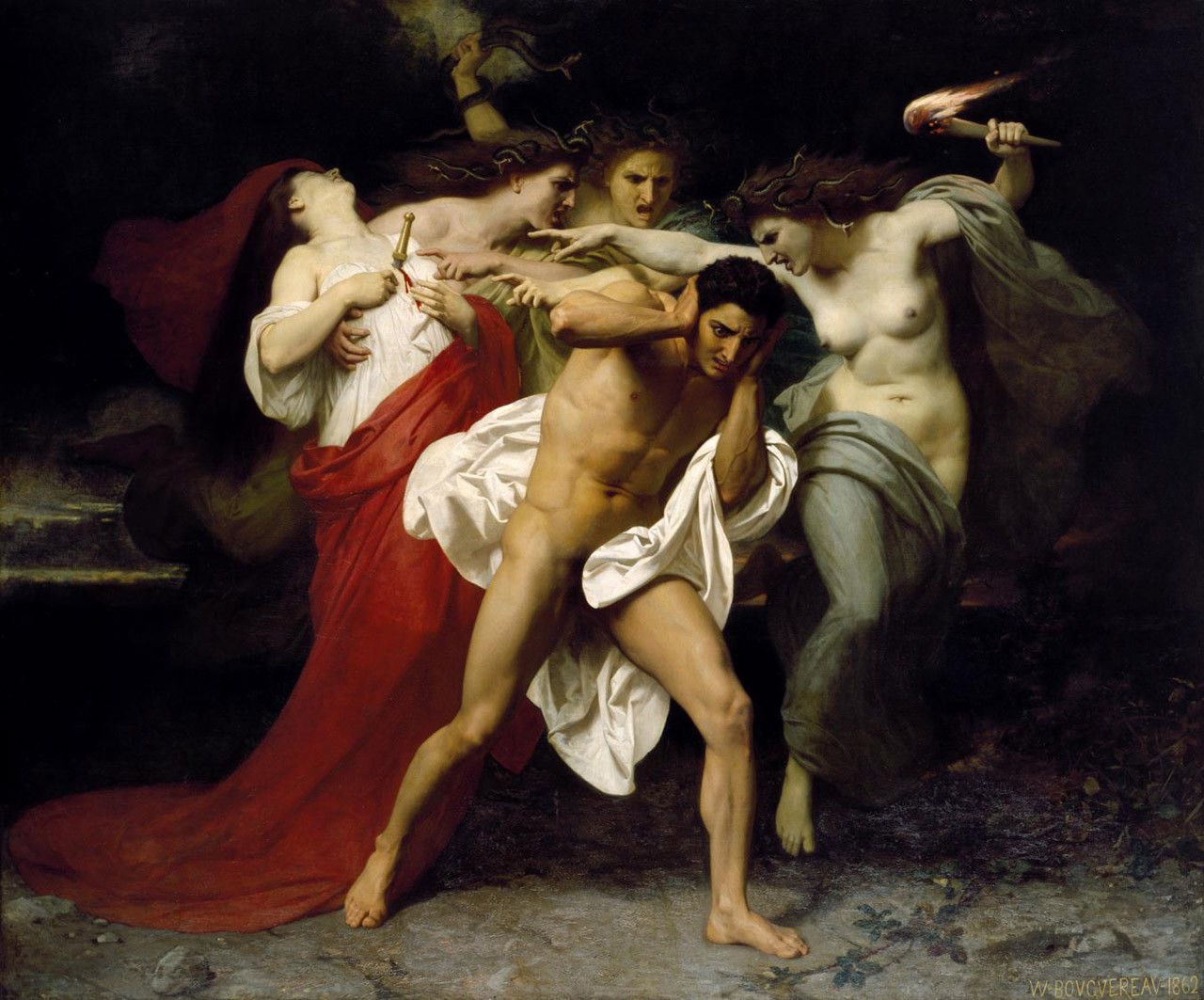
bouguereau-orestes-furies

Adolphe William Bouguereau, “Orestes Pursued by the Furies,” 1862.

An interesting quote:

Bouguereau was the grand master of the French art establishment and set the bar for those painters who aspired to commercial success in the second half of the 19th century. Critics, however, dismissed this painting for its heavy, melodramatic tone. “I soon found that the horrible, the frenzied, the heroic does not pay,” Bouguereau lamented after showing the work at the 1863 Paris Salon.

Click on the image to enlarge.

Posted in Art | Tagged , , , , , | 7 Comments

Naked Lady of the Week: Mia Khalifa

Blowhard, Esq. writes:

mkcover

Like all right-thinking people, we here at UR are big believers in Diversity™. Models featured in past installments have hailed from all over the world including Russia, eastern Ukraine, western Ukraine, northern Ukraine, and southern Ukraine. Therefore, it is with immense pride that we bestow this week’s honor on our first Arab model, Mia Khalifa. (At least I think she’s our first Arab, I’m not about to check the archives. And even though she was raised Catholic, being born in Lebanon is enough to make you Arab, right?)

Ms. Khalifa vaulted to the top of the porn world this year when she traded on her Middle Eastern looks by starring in a hardcore video wearing a hijab. Apparently, some folk out there don’t take too kindly to a young lass performing various amorous arts while clothed in a traditional Muslim headdress meant to preserve one’s modesty. The prudes. Speaking of dogmatism, I’m usually not a fan of enhanced tits, but I’ve been sufficiently indoctrinated in Diversity™ to know that exceptions must be made to every rule. Khalifa seems to have taken to wearing glasses to soften those fierce eyebrows, but I say own ’em, girl.

Nudity below the jump and lots of hardcore action at the tube sites. Happy Friday.

Continue reading

Posted in Sex | Tagged , , , | Leave a comment

Architecture Du Jour

Blowhard, Esq. writes:

barnard1 barnard2

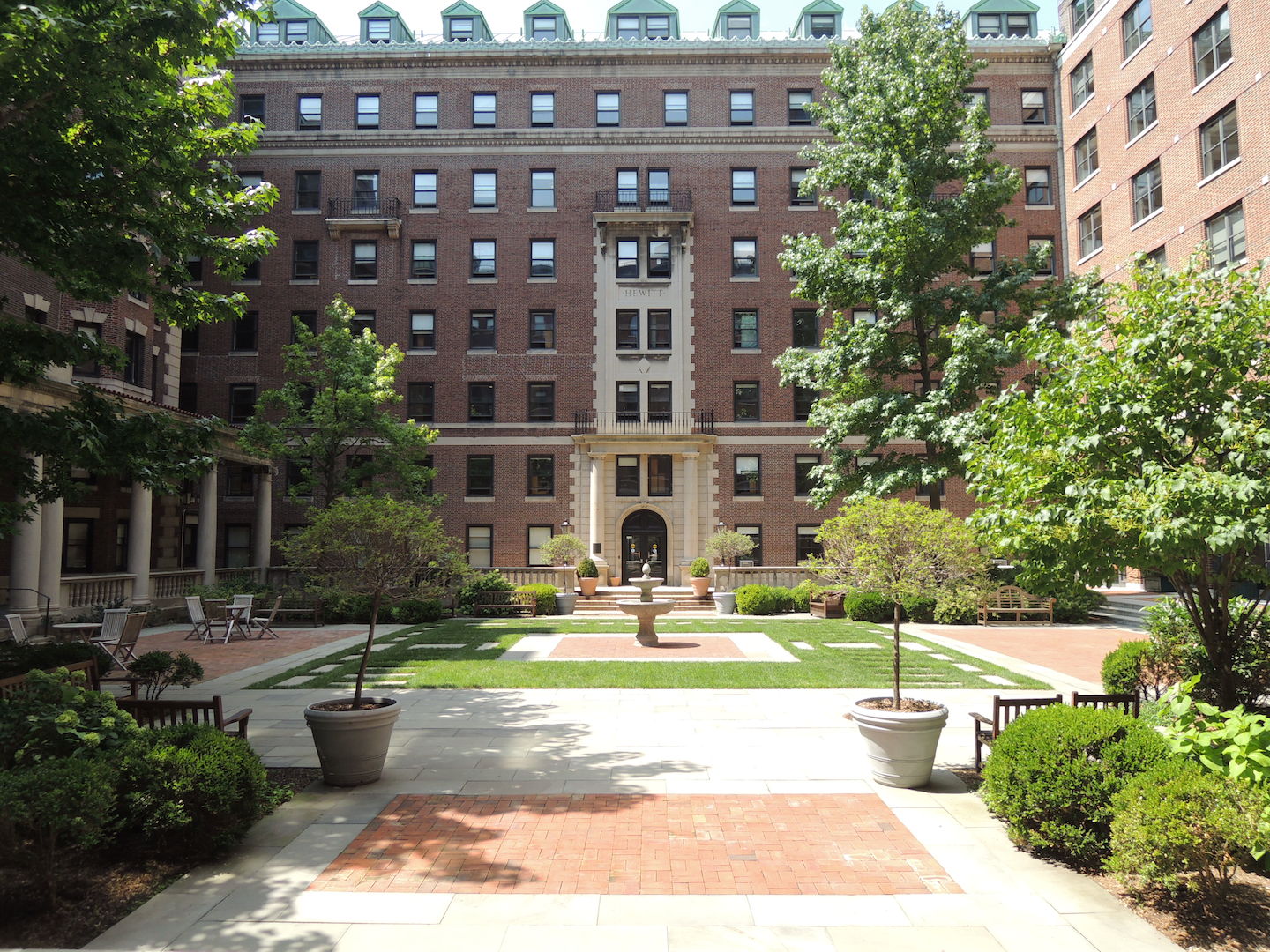
A courtyard I stumbled across at Barnard College, on Broadway across the street from Columbia University.

Click on the images to enlarge.

Posted in Architecture | Tagged , , , | 2 Comments

Ideas So Stupid Only An Intellectual Would Believe Them, A Continuing Series

Blowhard, Esq. writes:

Via this essay, time to add another entry to my Enemies List — David Shields:

These books made David Shields’s “Reality Hunger” (2010) seem prescient. An earnest “manifesto” against the traditional novel (which Shields finds “unbelievably predictable, tired, contrived, and essentially purposeless”), “Reality Hunger” galvanized many critics and novelists alike. Shields argued that novels are often flashes of “narrative legerdemain”; he calls for “serious writing,” in which “the armature of overt drama is dispensed with, and we’re left with a deeper drama, the real drama: an active human consciousness trying to figure out how he or she has solved or not solved being alive.” He particularly prizes the lyric essay, which forsakes plot and character entirely.

If aspects of “Reality Hunger” were familiar, refrains on old arguments (in fact much of the book consists of direct quotations from other books), Shields’s points are worth considering again, both because he is laudably serious about what literature ought to aim for and because his ideas about the novel are so firmly entrenched in contemporary literary culture. Shields’s belief that the traditional novel is dated and that the way forward—aesthetically, if not commercially—lies in non-novels or at least non-traditional novels now represents the fashionable position in the literary world.

“[A]n active human consciousness trying to figure out how he or she has solved or not solved being alive” — what the hell does that even mean? Like representation in painting, ornamentation and comfort in architecture, plot and character in novels, or melody in music, for at least 100 years intellectuals have been at war with the basic pleasures people look for in art.

Posted in Art, Books Publishing and Writing | Tagged , , , , | 13 Comments