A Hypothetical Case Study

Fenster writes:

An interesting hypothetical case study.

Direct democracy does not scale up well and tyranny is unacceptable so country X has been established as a republic.  As a republic, it relies on elites to run things, with the elites maintaining legitimacy by not straying too far from public sentiments and by giving the enough of the people what they want enough of the time.

But human nature being what it is, elites are tempted to use their privileged positions to enhance their self-interest.  And since there is no bright line test for the factors that maintain legitimacy no one knows where the boundary is, and there is constant movement away from the public good toward the private good of the favored.

In time, the country begins to resemble an oligarchy.  But it is only halfway there.  In fact, at a certain point you could say it is exactly halfway there: poised, if you will, on the knife’s edge.  While large swaths of the country feel they have not been taken care of, the genius of the system, at least to date, has been in taking care of enough—just enough.

But a knife’s edge is an unstable place and the movement in the elite’s direction continues.  Soon the elites have lost their ability to claim they have satisfied enough.  Perhaps now, in our hypothetical case, only 48% of the public feels well-served and perhaps 52% do not.

This is the critical inflection point at which the mettle of a proper republic is tested.

A republic by its nature is a compromise between democracy on the one side and a lack of it on the other.  Once elites allow a country to get to this point, the public now sees the stark choice, previously fudged, in a blindingly white light.  Do we attend to the demands of democracy, and follow the 52% Or do we continue with the default path of deference to the leaders, meaning we follow the 48%?

Shame on the elites for allowing the country to come to such a pass.  It’s not nice to have to make these choices.

Political leadership in a republic calls for some serious prestidigitation.  It is not a good idea to push things to the point at which the demands of democracy and oligarchy come into sharp relief.  Better to keep that trade-off muted.  In turn, as always, elites are expected to operate with high levels of prudence, wisdom and restraint.  When they do not, and risk destruction of the whole enterprise, it is time for new elites.

Posted in Politics and Economics | 5 Comments

Naked Lady of the Week: Demi Moore

Fabrizio del Wrongo writes:

dm-cover

Is Demi Moore the biggest actress to pose for full-on beaver shots in the years before she became famous? Bardot seems to have posed for some (though I suspect they were not intended for publication). I suppose she outranks Demi. Can you think of others?

But the fame of the subject is surely secondary to her grooming habits. Looking at these photos your average twenty-year-old likely asks two questions: 1) Who is Demi Moore? and 2) At what point following the publication of these photos were razors invented?

Look, there are hairy pussies and then there are habitats supportive of indigenous wildlife. That thing is so wild looking I suspect it has ecosystems. Yes, plural. I imagine David Attenborough embarking on the filming of a documentary series about it, manfully trudging in, and then phoning the BBC to tell them that he needs more cameras. And a pith helmet.

And yet I like it.

Nudity below. Enjoy the weekend.

Continue reading

Posted in Photography, Sex, The Good Life, Uncategorized | Tagged , , , | 3 Comments

The Album Covers of Les Baxter and Martin Denny

Blowhard, Esq. writes:

Sophisticated women with primitive passions. Or primitive women with sophisticated passions. Either way, what more do you need?

Posted in Art, Music | Tagged , , , , , | 9 Comments

Naked Lady of the Week: Liz Vicious

Fabrizio del Wrongo writes:

lv-cover

Former erotica entrepreneur Liz Vicious always sort of reminded me of Ann Dvorak, one of the few actresses to choose a stage name easily pronounceable by no one. “My fake name is properly pronounced vor’shack,” she once said, “I have had quite a time with the name, having been called practically everything from Balzac to Bickelsrock.”

Liz’s stage name was a lot easier to say. It was also easy to remember, being an extension of her obvious predilection for punk-inspired ‘tude and styling. Her photos communicate an affection for novelty, a teasing spirit, and a willingness to use those big sea foam-colored eyes to suggest a vulnerability begging to be exploited. Apparently she appeared in some hardcore videos, but, believe it or not (probably not), I haven’t seen any of them.

Here’s her bio from IMDB:

Hot, wild, and slender Goth girl Liz Vicious was born on Octopber 31, 1987 in Dayton, Ohio. Liz made a bold and impressive film debut as the sexy, but evil and deadly Lilith in the racy erotic horror thriller “Succubus XXX.” Known for her fiery auburn hair, petite 5’4″ build, brash and uninhibited persona, and dry sense of sarcastic humor, Vicious enjoys drawing and has two tattoos. Moreover, Liz runs her own explicit official website with graphic adult photo shoots and video shorts. Her favorite band is Type O Negative and her favorite movie is “The Fifth Element.” She released the instrumental album “Vicious Succubus” in 2011. Vicious lives in Springboro, Ohio.

Googling her name reveals that she disappeared from view rather suddenly. There’s a discussion of the topic on Reddit. And another on IGN. The latter yields the following wisdom: “If the booty ain’t fat or the titties ain’t huge I ain’t neva watched none of her vids anyway.”

Nudity, albeit none of the fat-booty variety, below. Have a great weekend.

Continue reading

Posted in Photography, Sex | Tagged , , , | 1 Comment

The UR Syllabus of Shitlordery

Blowhard, Esq. writes:

Browsing my Facebook feed the past few days, I’ve been astonished at the amount of hysterical, sloppy thinking I’ve seen from many of my otherwise smart friends. How you can see a (likely gay) Muslim man shoot up a room full of gay people and come away thinking that Trump-supporting Christian Republicans are to blame, as the NY Times does, is beyond me. To paraphrase a friend, the ability to progressives to eat anything and always produce the same shit is incredible.

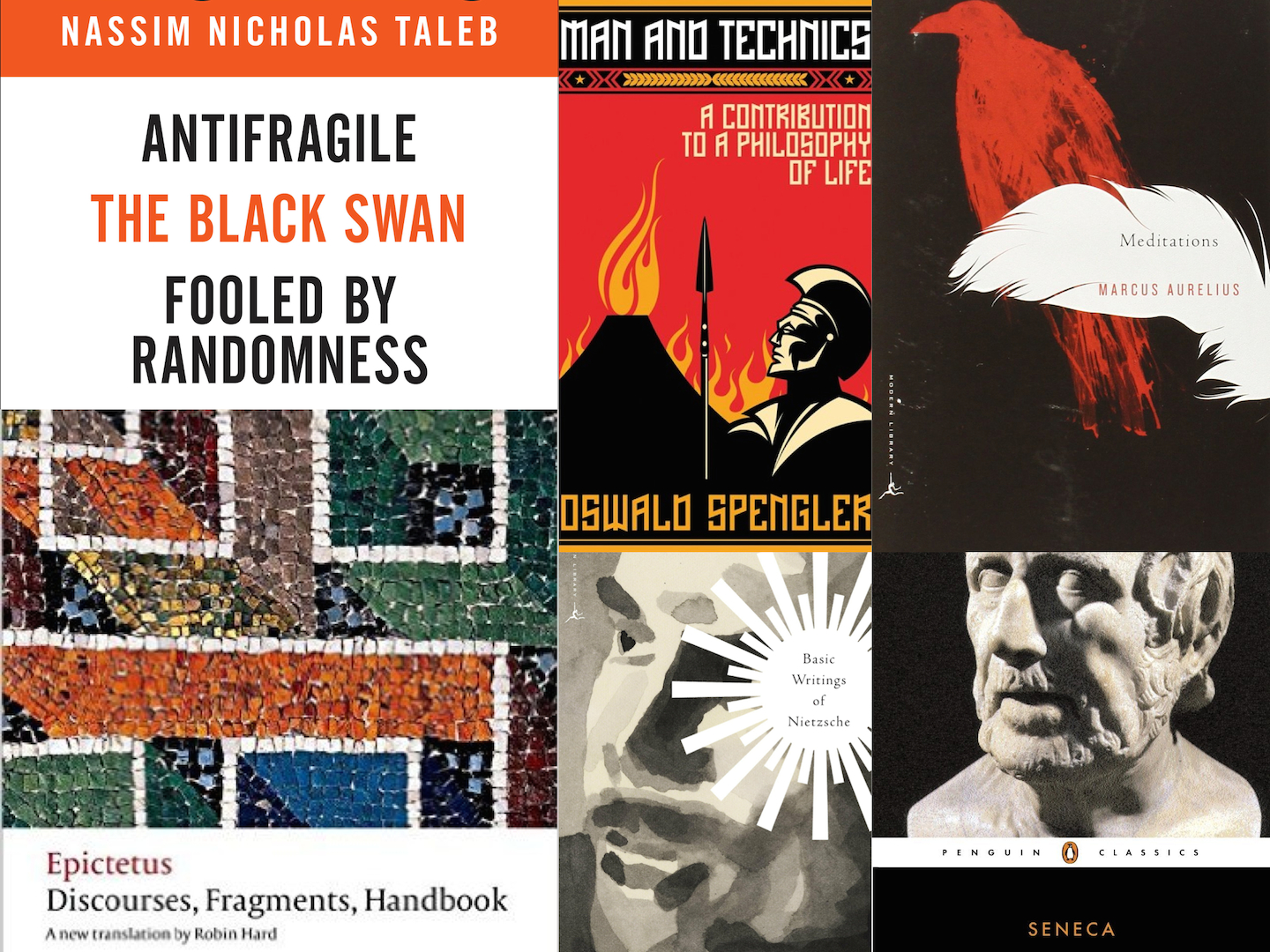
The mainstream media becomes much easier to understand when you realize it’s the Cathedral’s propaganda arm. This got me thinking about books and other things that gave us a different POV and helped break the hold of the conventional narrative. Which works turned us into the cranky shitlords that we are? List time, people!

orwell

An important disclaimer: some of these books contain crimethink, hatethink, and other nasty things. The kind of outré stuff that may require safe spaces and trigger warnings. None of us here at UR approve of every word or conclusion. We endorse no political party, school of philosophy, or any other club that would have us as a member. Besides, it’s not as if, taken as a whole, this list comprises a coherent ideology. (Consistency is for the dogmatic and doctrinaire — fuck that.) Read and accept or reject as thou wilt.

Alright, enough throat clearing. Take a look and let us know what your favorite redpills are in the comments.

Politics & History

redpillhistpol

Sex & Women

redpillsexwomen

Biology & Psychology

redpillbiopsych

Philosophy

redpillphil

Art & Culture

redpillarts

Related

Posted in Art, Education, Philosophy and Religion, Politics and Economics, Sex | Tagged , , , , , , , , , , , , , , , , , , , , , , , , , , , , , , , , , , , , , , , , , , , | 7 Comments

Quote Du Jour: On the White Cultural Theft of “Bye, Felicia!”

Blowhard, Esq. writes:

Carvell Wallace, commenting on white friend’s use of the phrase “Bye, Felicia!” in a text message, writes perhaps the stupidest thing I’ve read so far this year:

Not knowing where something comes from is not a crime. But before responding, I spent some time thinking about how moments like this come to be. A person who never saw Friday, whose relationship to black culture is tangential at best, uses an app that furnishes lots of cute sayings. Maybe she’s seen #byefelicia in a comment on Facebook or Instagram, typed by a black woman she knows from college under a particularly ridiculous Trump quote. It seems fun and harmless, so she starts using it herself and never thinks about it again. “Bye, Felicia” is no longer a pointed moment from a meditation on hood life. It is no longer from anywhere. By the time it reaches her, it’s just something from the internet.

This is what happens when bits of a culture are snatched up, repackaged, and separated from their context. It’s as though people are buying stolen goods from a reputable store. The initial crime of theft is scrubbed away, hidden behind whimsical fonts and bright colors. It is, in essence, the fencing of pilfered intellectual property. …

Leave aside for a moment the chutzpah of a hip-hop fan condemning someone else for snatching up, repackaging, and separating bits of culture from its context. What’s hilarious to me is that Friday, a dopey comedy about black flight to the white ‘burbs that also gave us Chris Tucker’s pithy commentary on black-on-black crime and John Witherspoon confessing the size of his bowel movements, is treated with a solemnity and reverence that black intellectuals used to reserve for the writings of DuBois, or that Augustine reserved for contemplating the mystery of transubstantiation. “A pointed moment from a meditation on hood life,” he says. This is like calling the diarrhea scene in Dumb & Dumber “a pointed meditation on the corporeal nature of existence.”

By chance I recently saw Straight Outta Compton, the N.W.A. biopic (like Friday, directed by F. Gary Gray), in which we learn the origin of the “Bye, Felicia!” catchphrase. After a concert, the guys are having an out-of-control orgy in their hotel room. There’s loud music, a thick cloud of weed smoke, guns everywhere, dudes gleefully banging groups. In the midst of this, an angry boyfriend comes looking for his girlfriend. He keeps saying her name over and over. Thing is, Felicia currently has someone else’s dick inside her. The boyfriend busts in, scuffling ensues, guns are drawn. The boyfriend finds his delicate paramour and chases her out of the hotel room. “Bye, Felicia!” the guys cackle, and a holy moment of black culture is born that can now take its rightful place alongside “The Letter from Birmingham Jail.”

Funny how Mr. Wallace doesn’t mention any of that.

Posted in Movies, Music | Tagged , , , , | 5 Comments

A Generation on a Ledge

Fenster writes:

I wrote here about how the pro-faculty American Association of University Professors issued a report critical of the misuses of Title IX.  And how Fester found that take to be refreshing and welcome.  But also that it was revealing that in describing the culture that gives rise to Title IX overreach, the AAUP singles out cowardly administrators and ignores the role of many faculty in the underlying campus culture.

Something similar is afoot in this Atlantic article on the scourge of microagressions on campus.  The author, Columbia University professor Jonathan R. Cole, takes aim at a student culture that appears unwilling to engage in the robust exchange of ideas that characterizes, or should characterize, a university.  And he is correct to point out that administrators are complicit in this.  Way too many administrators are afraid to, if you will, speak up on behalf of free speech.  In some case that is because they are True Believers themselves but for sure it is the case that many in academia honestly hold free speech values but are afraid to voice them.

So one star for Professor Cole. But, as with the AAUP situation, is there anything missing in the picture?

Well, yes.  Once again, it is those dreaded administrators that are at fault.  The faculty, and its contribution?  No mention.

click


Let’s also take a closer look at Dr. Cole’s analysis of why today’s students are in such a snit.

He starts by acknowledging the most common explanation/criticism:

Multiple possible explanations exist, of course, including the hypothesis that parents have coddled a generation of youngsters to the point where students feel that they should not be exposed to anything harmful to their psyches or beliefs.

But he goes on to question this.

Whether or not these psychological narratives are valid, there are, I believe, additional cultural, institutional, and societal explanations for what is going on. And the overarching theme is that today’s youngsters, beginning in preschool, are responding to living in a contrived culture of fear and distrust.

Neat hypothesis!  Here, Cole is agreeing that today’s students have overreacted, and need to be talked down from the ledge.  But that something something something has gotten under their skin.  Something contrived but nonetheless felt as real, creating a climate of fear.

How can this be?  We are not at war in any conventional sense.  No Cold War causing teachers to instruct students on how to scooch under their desks if the bomb comes.  No Cuban Missle Crisis.  No draft in an unpopular war.  9/11 is not even in the memory banks–the images of falling bodies have been scrubbed.

Born in the mid-1990s, seniors in my Columbia University undergraduate seminars today likely have not experienced major national threats, except for their vague memories of the 9/11 terrorist attacks. Yet these “millennials” might better be labeled “children of war and fear.” During their politically conscious lifetime, they have known only a United States immersed in protracted wars against real and so-called terrorists, a place where fear itself influences their attitudes toward other civil liberties. Students are asked to pit freedom of expression or privacy against personal security.

Ah, that’s the ticket then!   Pervasive fear of terrorism creates a generation of “children of war and fear”.  Yet if that is the case, what accounts for the, shall we say, highly distinctive nature of today’s complaints?  Do we see any evidence in the call for safe spaces, in the throttling of free speech, in the cancellations of speakers, in the calls for intersectionality, in the bathroom wars, in the demands over white privilege, in the incessant complaints about microagressions that there is any relationship of things to a concern over terrorism?

I might have more sympathy for Cole’s argument if there was evidence that students in the vanguard were actually shell-shocked shrinking violets, or that the nature of their activism could reasonably be related to Cole’s diagnosis.  But I just don’t find that argument credible.  And I do not even trust the sincerity of the calls for safety: much activism projects, and seeks, power.  And it seeks power in a host of domains that are awfully far-flung from the contrived fear of terror that is alleged to be at the base of things.

At least that’s the impression one gets.  But why not actually listen to the students themselves?  Might that not give some sense of whether Cole is right that students have been unfairly driven to a ledge?

Here’s an interesting video.   It is from the NewBostonPost, an online conservative-leaning news website, intended as a kind of counterpoint to the Globe.  The NewBostonPost is crowdsourcing to raise money for a higher education reporter who would cover the academia beat in Boston–an area rich in institutions and material.  Check out the video.  It includes brief snippets of Harvard students–from freshmen to grad students–remarking in a general way about the issues raised in the Atlantic article.

What do we find?  As one might expect given the Harvard angle, we find a group of exceedingly articulate individuals.  Calm, intelligent, reasonable, all speaking with confidence and–can I say it?–equanimity.  This does not seem to me to be the voice of a generation on a ledge.

There’s a growing recognition and sensitivity to other people’s perspectives that we didn’t see maybe two generations ago.

Sounds reasonable.

If someone pushes back on an idea of yours it doesn’t mean that they are silencing you.  It means they are asking you to critically engage.

And hypocrisy is the tribute vice pays to virtue.

Safe spaces is an important concept not as a thing for college students to be like hippies aboout but for humans to exist with.

Well, they are not all equally articulate.

Overall, these are not the voices of a generation that has been driven to bad places because they have grown up in a “contrived culture of fear and distrust.”  These are the confident voices of a generation that will shortly be in charge of our institutions.

Posted in Education, Politics and Economics, Uncategorized | Tagged , , , , , , | 3 Comments

Faces and Noses, con’t.

Fenster writes:

I wrote here about Neil Postman’s influential early 90s view that broadcast news was morphing to entertainment.  And how that argument–insightful as it was–missed the notion of actual media bias, replete with intention about actual content, that came down hot and heavy soon after, and which has been a dominant meme ever since.

In some ways you can turn Postman’s view on its head.  Postman, following Huxley, argued that news was turning into entertainment.  But in the current era, the reverse can be true: entertainment is becoming the news.

Exhibit A: Take today’s Boston Globe SundayArts section–please!

Let’s take a look at today’s articles and see if we might find a pattern having to do with politicization.

There are three articles on the front page of the arts section.  The most prominent, on the Tonys, is entitled “Rise Up”, with the sub-head “the struggles and victories of women made powerful statements on Broadway this year.”  The article starts with a story about the Broadway production of “The Color Purple” as a lead in to the article.

The second article is by film critic Ty Burr.  It is in SundayArts, it seems, because Burr is the Globe‘s film critic.  But the article is not about film.  Rather it is a story about Stanford rapist Brock Turner and what Burr calls the Bro Culture Bubble.  Arguably, this is in the arts section since it deals with social media but it does not really qualify as criticism–or as media criticism at any rate.

The gist of the article is that social media bubbles are a problem because of the echo chamber effect.  But not all echo chambers are the same.  Burr starts with the appearance of fairmindedess, pointing out that women’s and men’s sites on the web often just yell at each other.  But note how he handles the contrast:

But in 2016, (women and men) feed into separate bubbles of online social discourse, one parsing issues of consent and gender inequities and the other reflecting a neurotic, angry maleness that sees women as the enemy. Jezebel Nation vs. Bro Culture. The two yell at each other and their most extreme adherents aren’t very interested in listening, but what has happened this past week is instructive. The two statements, one agonized and the other tone-deaf, burst their respective bubbles and went viral. Everyone heard them. And just about everyone listened harder, and with more care, to the victim.

Women “parse issues of consent and gender inequities” while men show a “neurotic, angry maleness.”  Yes, the two sides yell at each other but in the end, in the case of the Stanford rape “everyone listened harder, and with more care, to the victim.”

The third front page article is more measured but still has an edge.  It is a profile of Ang Lee, who is this year’s honoree as “Filmmaker on the Edge” at the Provincetown Film Festival.  While the article is indeed a profile of the director, complete with interview, what is interesting is how the enterprise is framed.  The Provincetown Film Festival is self-consciously edgy.  Past honorees have included edgy types like Gus Van Sant and Jim Jarmusch.  Is Ang Lee edgy enough to make the cut?  The verdict: yes he is.  The article does not overly dwell on Brokeback Mountain or the gay-themed The Wedding Banquet but it certainly uses his socially conscious films to justify his being edge enough for Provincetown.

So let’s take a look at the articles inside.

A review of the films at the Provincetown Film Festival, gay-themed.

An article about two documentaries on Ali as a man who fought for racial justice.

Another article on documenataries focusing on gender equality and incarceration.

A review of Annie Proulx’s new book, a “magnificent saga of capitalist greed and the rapacious ravaging of our natural inheritance across four centuries.”

A review of a new “brutally feminist” novel that upends the conventional telling of the Manson murders and makes the his female followers their own agents in the goings-on.

A review of Susan Faludi’s new book in which “a gender expert faces a trans-parent dilemma.”

Will Hamilton Rout at this year’s Tonys?  Christopher Wallenberg says it should win and will win–a juggernaut for a reason.

That’s mostly it.  There are three other articles.

In one, critic Ed Symkus discusses the DePalma  boomlet, mostly lauding his work while conceding many have found it “garish and voyeuristic”.  Amazingly, he does not use the word “misogynistic.”

In another, Matthew Gilbert praises the work of the young Kiernan Shipka and Holly Taylor for their excellent work in Mad Men and The Americans.  Amazingly, he refers to them as actresses and not actors.

In the last article, violinist Daniel Stepner reflects on 30 years of musical life in Boston.  Amazingly, the article sticks to string quartets.

Basically: 10 articles with some significant measure of extra-artistic considerations in the direction of various social justice causes.  3 dealing with the art.  In fairness, the “politicized” articles are not all equal.  Only one–the mini-editorial about bro bubbles–is didactic by its nature.  Others (such as the Ang Lee article) frame an issue in such a way as to foreground social themes.  Others (the documentary reviews) take on a fairly clear social viewpoint in the process of criticism.  Others (the book reviews) are interesting relative to the selection of material: all have a political or social edge with a certain alignment.

DISCLAIMER: I am not making fun of the causes and political issues that dominate discourse in the Globe.  Some of the causes mentioned I am sympathetic with; others not so much.

I do feel to the need to note a certain lack of proportionality as well as a certain alignment.

Perhaps this is not even true . . . perhaps that is what arts readers expect and want in the Globe.  If so, go for it.  But it is hard to escape the impression that, contra Postman, it is less the case that news has become entertainment than it is that entertainment has become caught up in our peculiar political and cultural struggles.




Posted in Media, Politics and Economics, Uncategorized | Tagged , , | 5 Comments

The Nose in Front of One’s Face

Fenster writes:

Neil Postman was an author, academic and media critic, best known for his book Amusing Ourselves to Death (1985).  According to Wikipedia:

The book’s origins lay in a talk Postman gave to the Frankfurt Book Fair in 1984. He was participating in a panel on George Orwell‘s Nineteen Eighty-Four and the contemporary world. In the introduction to his book, Postman said that the contemporary world was better reflected by Aldous Huxley‘s Brave New World, whose public was oppressed by their addiction to amusement, than by Orwell’s work, where they were oppressed by state control. . . .

Postman distinguishes the Orwellian vision of the future, in which totalitarian governments seize individual rights, from that offered by Aldous Huxley in Brave New World, where people medicate themselves into bliss, thereby voluntarily sacrificing their rights. Drawing an analogy with the latter scenario, Postman sees television’s entertainment value as a present-day “soma“, by means of which the citizens’ rights are exchanged for consumers’ entertainment.

The essential premise of the book, which Postman extends to the rest of his argument(s), is that “form excludes the content,” that is, a particular medium can only sustain a particular level of ideas. Thus rational argument, integral to print typography, is militated against by the medium of television for the aforesaid reason. Owing to this shortcoming, politics and religion are diluted, and “news of the day” becomes a packaged commodity. Television de-emphasises the quality of information in favour of satisfying the far-reaching needs of entertainment, by which information is encumbered and to which it is subordinate.

Postman’s thinking draws not only on Orwell and Huxley but McLuhan, too.  McLuhan in particular was fixated on how the nature of the medium drives, or is, the message.

Postman died in 2003.  As this NGram suggests, his influence was highest toward the end of his life, and references to him start to drop off quite a bit after the mid-1990s.

postman

In some ways the loss of interest is odd.  After all, Postman’s argument is skeptical of the beneficial effects of new media and that notion is timely today.  Indeed, Postman’s focus was largely on TV and now our attention spans have been further shortened by all of the new media made possible by the internet since his death.

Perhaps one of the reasons Postman is viewed as less relevant today is that his focus, per the above, is too much on the soma qualities of the press.  Huxley suggested that entertainment was all that it would take to effect social control.  By contrast, Orwell’s view was that totalitarian regimes were cognizant of actual political issues and the need to communicate about them–that’s why they lied, and forced the population to accept the lies.  While Postman is no doubt correct that we live in a more pleasing world than 1984, does his emphasis on media’s simple narcotizing role miss something important?

Take How to Watch TV News, a book Postman and Steve Powers wrote in 1992.

how to watch

It is filled with interesting insights about the prestidigitation of network news enterprises.  In line with his Huxley orientation, though, Postman’s view is that the sin of the networks is that they take shaggy reality and force it into interesting narratives, just to keep the masses narcotized.  Wake up!
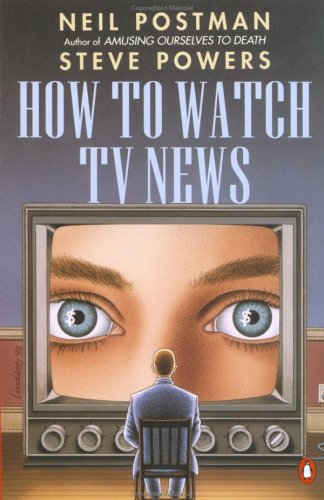
But wake up to what?  There is essentially no mention in the book of the notion of media bias–that is, that the media are actually delivering narrative content about real issues, aimed to persuade.

Note the tripling of the use of the term “media bias” since Postman’s era.

media bias

Fast forward four years from the book.  It is 1996 and Fox News makes its first appearance. Billed as “fair and balanced” is proves to be anything but.  It is as partial and biased as . . . what?  Well, the network news, that’s what.

To use a phrase popular with a group as diverse as Orwell, Paul Krugman, Steve Sailer and Andrew Sullivan, it was as though Postman could not see the nose in front of his face.  Is the press looking to entertain?  Surely.  Is the aim of its narratives only to entertain?  Surely not.  Sometimes it takes the figure to see the background.

Posted in Media, Politics and Economics | Tagged , | 3 Comments

Notes on “Capricorn One”

Fabrizio del Wrongo writes:

capricorn-one-01-g

There is one great moment in the 1978 “Capricorn One”: a slow track away from a group of astronauts who are acting out a Mars landing for the benefit of a credulous public. As the head astronaut delivers a goopy speech, invoking peace, equality, and the unity of the world’s nations, the tidy, staged-for-TV image is gradually undermined. The elements of a sound stage — lights, rigging, wires — become visible on the perimeter of the set. And as this happens we’re alerted to the propagandistic nature, not just of the movie’s fictional hoax, but of all the elements of mass media — its canned images, predigested ideals, uplifting sentiments, etc. This bit, revealing the rift separating the message from the raw stuff of its making, has the tragic-satiric bite one associates with Marker, Godard, or De Palma; it’s brilliant because it distills the movie’s theme to a single shot, and because it extends its implications. As the noble words ring in our ears, and the sham heroism of the landing is underscored, “Capricorn One” ceases for a moment to be a narrative entertainment, and becomes an essayistic interrogation of our values.

Unfortunately, when it is settling for narrative “Capricorn One” often founders.  Writer-director Peter Hyams may not have the formal instincts necessary to deliver a satisfying thriller. The various elements of the movie are disconnected, and the resulting messiness fogs the timeline — it’s often unclear how much time is intended to separate key events. Also, it’s problematic that the film’s sci-fi angle is abandoned, at which point it develops into a paranoid suspense piece in the very terrestrial mode of “The Parallax View.” (This is surely intentional, but would you blame a genre fan for griping?) As the rebellious astronauts, lost in a forbidding desert, attempt to evade the claws of a vengeful NASA, your interest in the plot might wane as you begin to forget what motivated it. It wasn’t until the movie ended that it occurred to me that the desert is intended as a ironic echo of the Mars that was never landed on. Hyams’ knack for coming up with unusual images (he’s deft at exploiting contrasts in depth and scale) and his surprisingly sophomoric wit are what hold your attention during this section. In particular, the hijinks involving a pair of government helicopters, sent to hunt the fugitives, are cunningly anthropomorphized in the manner of Steven Spielberg. The creepily deadpan machines nod to one another, execute double takes, nearly touch foreheads in sympathy; they’re the world’s most sinister comedy duo.

It’s odd that the screenplay, which protests the astronauts’ dehumanization, treats them so perfunctorily. Not only do the attempts to define them as individuals seem halfhearted, they’re overshadowed by peripheral characters, several of them portrayed by big-name stars. What’s more, the performances of the actors occupying the astronaut roles — James Brolin, Sam Waterston, and O.J. Simpson — fail to overcome the essentially functional role that Hyams assigns to them. (This isn’t entirely their fault: Simpson in particular is given almost nothing to do.) The result is a void at the center of the picture’s dramatic structure that grows larger as the story progresses. The plum role goes to Elliott Gould as a reporter who gradually uncovers the NASA trick. He has some dryly titillating scenes with Karen Black; these have the counter-culture spark that characterized the Hyams-Gould project “Busting,” made four years earlier. But Gould’s hip aloofness doesn’t map well to the crusading idealism of his character. Whereas in “The Long Goodbye” Altman used the incongruity of Gould’s Marlowe to great effect, the actor’s out-of-placeness here is damaging. You sense he’d rather be throwing back a highball with Black than battling the scourge of government corruption.

Posted in Movies | Tagged , , , , , , | Leave a comment