Notes on “Chinatown Nights”

Fabrizio del Wrongo writes:
chinatown-nights-movie-poster-1929-1020553446

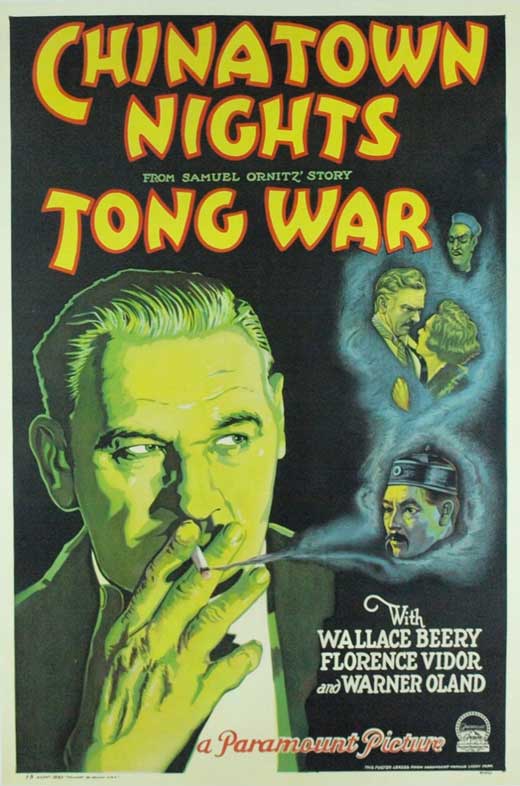
Intriguing Wellman-directed picture in the doomy Oriental vein of “Broken Blossoms” and “The Bitter Tea of General Yen.” Wallace Beery is Chuck, a bellowing Irish mug who’s installed himself as a warlord in Chinatown. Florence Vidor, in her last film role, plays Joan, an uptown socialite who tours Chinatown with her friends, then becomes reliant on Chuck’s care when she gets mixed up in Tong intrigue. For Joan, Chinatown is a fantasy that has become perilously real. She’s in danger of ending up like Chuck — a white castaway in an Eastern world of treachery and illusion.

Wellman’s taste for the jaunty and the satirical moderates the portentousness of the material and makes for a nice contrast with Paramount’s ornate house style, which at this time was still firmly rooted in the silents. (The picture’s cinematographer, Henry Gerrard, had worked with von Sternberg.) Unsurprisingly, “Chinatown Nights” was shot as a silent, then retrofitted for sound, a fact which lends the picture a verbal awkwardness some might find jarring. Here, too, Wellman’s sensibility is beneficial: More often than not, his ad hoc approach succeeds in milking thrills from disjunctiveness. In addition to the gangland stuff, “Chinatown Nights” features bits of melodrama, satire, and expressionism. Even the cynical newspaper comedy, which would become so popular in the ’30s, is present in embryonic form: Jack Oakie plays a soused reporter who instigates a Tong conflict so he can swoop in as it happens and get the scoop. The movie’s conception of fantasy taking a frightening turn into reality, then turning back into fantasy has, in Wellman’s hands, a farcical air; yet it anticipates the more somber work of Rivette and Lynch, and it offers a clever gloss on the alchemical capacity of movies.

Not everything in “Chinatown Nights” adds up. The specifics of the conflict between Chuck and a competing heavy (Warner Oland) remain frustratingly vague, and their gangs’ machinations lack suspense and narrative drive. (A plot point concerning immigration papers falls flat.) None of this sinks the movie. On the contrary, the peripheral blurriness helps maintain focus on the tender masochism of the Beery-Vidor relationship; it also contributes to the movie’s patchy, dreamlike vibe. And the gang war does yield a few nice bits: I admired a scene showing an urchin gunned down in the street, his legs convulsing wildly as the life drains out of him.

Today, Wellman is primarily remembered as the director of “Wings” and “The Public Enemy.” Few realize that he was among the most adventurous and consistently interesting American directors of the early sound period, one who regularly turned out genre pictures of startling vitality, ingenuity, and freshness. “Chinatown Nights” captures the emergence of his ’30s style. You can feel him pulling at the reins, eager to break into a new era.

Related

  • Wellman had a hand in directing “Female,” which I wrote about back here.
Posted in Movies | Tagged , , , , , | Leave a comment

Robert and Nanook

Fabrizio del Wrongo writes:

Robert Flaherty’s “Nanook of the North” is usually discussed as a documentary, but I wonder if the movie isn’t ill-served by that conversation, which is simply too limiting to address the subtleties of Flaherty’s art. In focusing on issues of “actuality” and “representation,” we get mired in the dreariness of the academy, and tend to overlook Flaherty’s knack for condensing experience into images of lyrical and narrative power. I think it’s more appropriate to treat “Nanook” as an early example of movie humanism — as a foundational work in a tradition that includes Renoir, De Sica, and Satyajit Ray. For whatever the “reality” of the actions engaged in by Nanook and his companions, there’s genuine sympathy, even a kind of compassion, in how Flaherty shows them to us: as people distinguished as much by their familiarity as by their exoticism. In this scene — one of the film’s best — Nanook demonstrates the building of an igloo while his kids goof off. The sequence has the cool proficiency, as well as the free-floating air of surprise, of a crack Buster Keaton routine. You can feel Flaherty’s pleasure in getting this all on film. And Nanook — real name: Allakariallak — seems to be enjoying his performance. Film provided these men with a means of relating to one another.

Posted in Movies | Tagged , , , , , , | 6 Comments

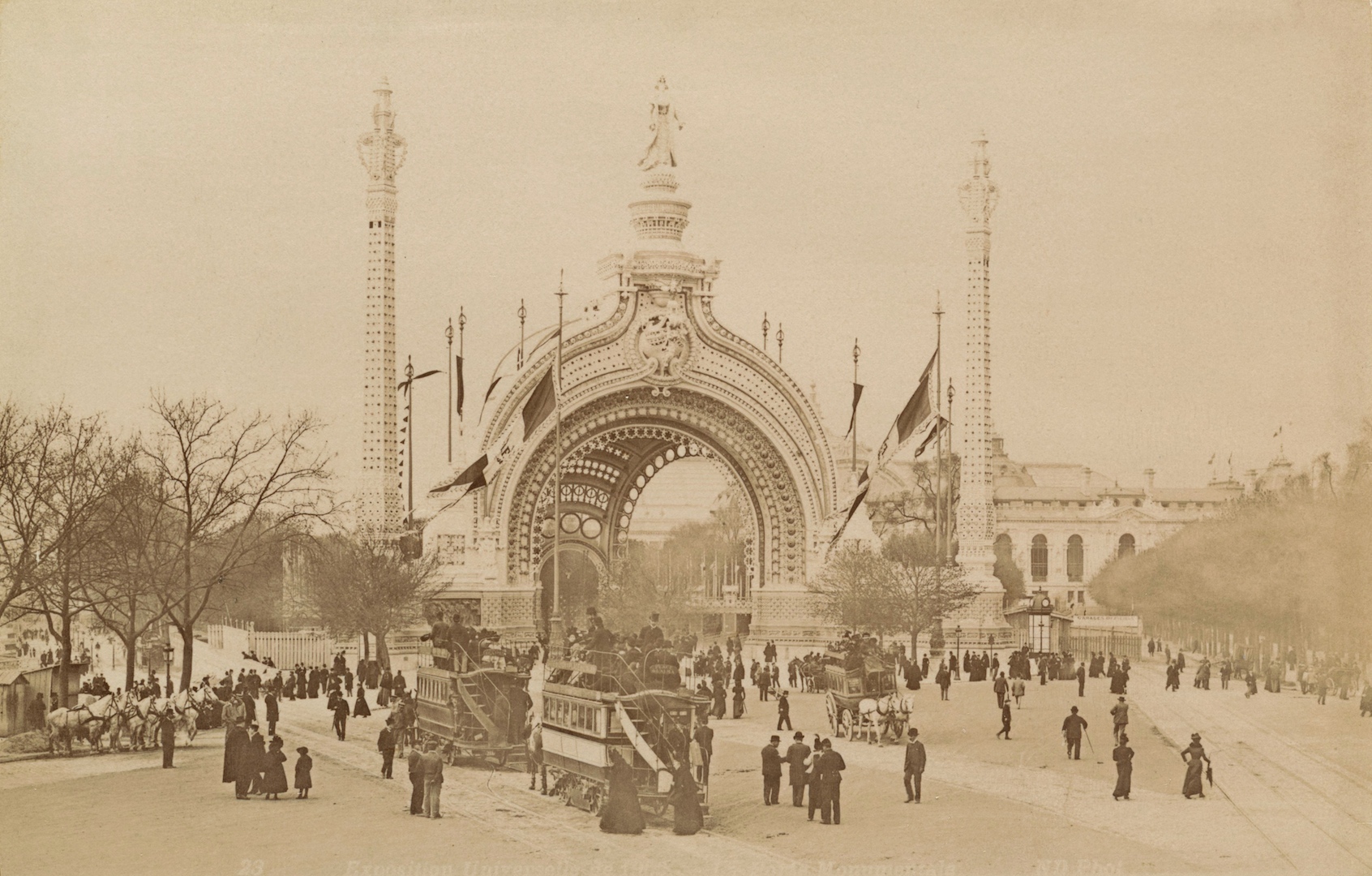
Architecture Du Jour

Blowhard, Esq. writes:

la_porte_monumentale_Exposition_Universelle_1900The main gate to the World’s Exposition in Paris, 1900. More here.

Click on the image to enlarge.

Posted in Architecture | Tagged , , , | 2 Comments

Showtune Saturday: “Thank Heaven For Little Girls”

Eddie Pensier writes:

The irreplaceable Maurice Chevalier in Vincente Minnelli’s Gigi (1958), a most astonishingly lighthearted and charming Lerner and Loewe musical (based on Colette’s novella of the same name) about a Parisian courtesan.

Do yourself a favor, and ignore the even-sillier-than-usual YouTube commenters blathering on about pedophilia and sex trafficking and prostitution. As usual, the historical and cultural context is totally ignored in favor of a prefabricated SJW narrative which basically amounts to PERVERT! RAPIST! DIRTY OLD MAN!

You know better than that, dear reader. Don’t you?

Blowhard, Esq. writes:

I watched the film a few months back and enjoyed GIGI, which is basically a candy-colored French MY FAIR LADY. The songs are good and Minnelli stages them in a low-key way — a surprising number with the singers seated. Unlike AN AMERICAN IN PARIS I was disappointed that there wasn’t any Caron dancing, but hey, I can’t complain too much given the movie also features pluses like production design and costumes by Cecil Beaton. From a story by Colette, it’s not often you get a mainstream Hollywood musical about a prostitute, even if only hinted at in an oblique way. Of the opening number Pauline Kael said, “The elderly Maurice Chevalier sining ‘Thank Heaven for Little Girls’ may give one pause.” LOL

Posted in Movies, Music | Tagged , , , , , , | Leave a comment

Movie Poster Du Jour: “Charade”

Fabrizio del Wrongo writes:

100_9042

This is a large poster: about five feet in height. They stopped making them in this size in the ’80s.

Posted in Commercial art, Movies | Tagged , , , , , , | Leave a comment

Naked Lady of the Week: Ekaterina Monastirskaya

Fabrizio del Wrongo writes:

em-cover

A Russian with an aquiline nose, a bee-stung lower lip, and beguiling indigo eyes, Ekaterina has an intriguingly Eastern quality: Her face wouldn’t be out of place on a Byzantine mosaic. She’s known as Paula B. on MetArt, as Katelin on Femjoy, and as Sasha or Kira at other venues, but I’m going with Ekaterina Monastirskaya because, well, it’s too ornate not to.

According to her probably too-bland-to-be-made-up published bio:

I am an independent girl. I am very good at sports.
I was a professional gymnast a while back. It helps to keep your body flexible. Right now I study at the university. I like pets. I have a thoroughbred cat which is 3 years old.

They all claim to be independent . . .

I enjoyed this ode, posted at TheNudeEU by an ardent admirer:

If Sasha’s bright enough to “study at the university”, I’d even share the same apartment with her, something I promised never to do again, just to see and touch her as much as possible.

What’s her course of studies? I wanna do the same!

This woman is SO beautiful, she makes me forget ev’ry other ideal like heavy breasts, large eyes or a round backside. This face of a movie star. I bet in times of Sofia Loren or Ingrid Bergmann she’d been…

Physique and flexibility of a gymnast, one really, really fine body part, I’m not allowed to mention here, and finally this light body hair.

A Lady like this might convert even Mr. Hefner to monogamy.

I want to make my career and pamper this woman 10, 15 years , as long as she’d allow me too. (btw: What’s her age?)

I’m a weakling!

Dude has sworn off living with women, but he’s ready to make an exception for Ekaterina. Hope he’s all right with thoroughbred cats . . .

I don’t think Ekaterina is still posing. A pity. One thing I noticed while looking at her photos: they’re all from what I would consider the golden age of European internet art-porn, before all the photographers became obsessed with super-smooth surfaces and digital tweaking. Lots of natural-seeming textures and lighting effects in evidence in the below gallery

I believe these shrunk-down photos come from MetArt, Femjoy, Just Nude, and MPL Studios. Better quality and much more at those sites.

Nudity below the jump. Have a great weekend.

Continue reading

Posted in Photography, Sex, The Good Life | Tagged , , , , | 1 Comment

The Treasure of Treasures

Fabrizio del Wrongo writes:

intolerance

Lately I’ve been enjoying, bit by bit, the Cohen Film Collection’s restoration of D.W. Griffith’s  “Intolerance,” which is available to stream via Hulu Plus. (It’s also available on Blu-Ray.) I’ve seen the movie many times, but never in high-definition. Those extra bits and pixels reveal new levels of beauty in Griffith’s and cameraman Billy Bitzer’s deep-focus compositions. Of course, the movie is famous — justifiably — for its cutting and spectacle. But watching it again I found myself fixated on what I tend to be most impressed by in Griffith’s early two-reelers: his knack for expressive staging. In fact, I’d go so far as to claim Griffith’s facility for staging — the placing of actors and objects within the frame — as his most conspicuous talent. Sometimes he gets deeply poetic effects out of shots that last no more than one or two seconds. A ballroom glimpsed early in the picture, its farthest corners bathed in crystalline light, and all of it animated by dancing figures, seems, like a Brueghel landscape, to speak for an entire culture.

Pauline Kael’s appreciation of “Intolerance,” published in 1968 on the occasion of the death of Mae Marsh, is among my favorite pieces of movie writing. Perhaps its most memorable bit:

No simple framework could contain the richness of what Griffith tried to do in this movie. He tried to force his stories together, and pushed them into ridiculous patterns to illustrate his theme. But his excitement — his madness — binds together what his arbitrarily imposed theme does not. “Intolerance” is like an enormous, extravagantly printed collection of fairy tales. The book is too thick to handle, too richly imaginative to take in, yet a child who loves stories will know that this is the treasure of treasures. The movie is the greatest extravaganza and the greatest folly in movie history, an epic celebration of the potentialities of the new medium — lyrical, passionate, and grandiose. No one will ever again be able to make last-minute rescues so suspenseful, so beautiful, or so absurd. In movies, a masterpiece is of course a folly. “Intolerance” is charged with visionary excitement about the power of movies to combine music, dance, narrative, drama, painting, and photography — to do alone what all the other arts together had done. And to do what they had failed to.

Can’t put it any better than that.

Posted in Books Publishing and Writing, Movies | Tagged , , , , , , | 5 Comments

Art Du Jour: The Velveteria

Blowhard, Esq. writes:

velvetheader

When Sir Barken was recently in L.A. on a cultural tour for his daughter, we met up for a day so I could show them around downtown. Sure, LACMA and the Getty are fine, but the city has a relatively new landmark that is also essential — the Velveteria or, to go by its even more wonderful official name, the Velveteria Epicenter of Art Fighting Cultural Deprivation. Previously located in Portland, Oregon, this museum dedicated to black velvet paintings that’s now in a Chinatown storefront is one of the city’s great oddball attractions.

Co-owner and co-curator Caren Anderson chatted with us for a few minutes about the collection.

velvetcaren

A SoCal native and former psych nurse, Anderson lived with her partner-in-crime Carl Baldwin for thirty years in Portland but they were so sick of the dreary weather they decided to move back to L.A. She said they own up to 3,000 paintings of which about 600 are on display at any given time. She gleefully noted that the fine art world doesn’t think much of their velvet utopia. “They hate us,” she spat.

Which raises the inevitable question — “But, but…is it art?” Yeah, sure, why the heck not? Certainly not high art, but as folk/outsider art it’s hard to beat. It’s appreciable as pure kitsch but there’s also something sweetly direct about it, the black fuzziness providing a stark yet inviting background for people to gaze at their heroes and icons. You’d think that people who frequent the nearby Museum of Contemporary Art would appreciate playful work that challenges established norms, but I guess they like their daring, marginal art only after it’s been officially sanctioned. It’s one thing when elites spit in the eye of bourgeois propriety, but an entirely different case when grassroots art flies in the face of our cultural overlords.

velvetfooter

Related

Posted in Art | Tagged , , , , , , , , | 7 Comments

“I’m Sorry You Feel That Way”

Fabrizio del Wrongo writes:

burr

Bill Burr’s new Netflix special is often dazzling. It’s 80 minutes long, and there’s not a down spot in it. No one can rant like Burr; his routine is a quicksilver stream of beligerence. It’d be grating if it weren’t so dizzyingly organized around his pinprick observations. (Somehow his bits feel scattershot and precise in about equal measure.) Burr thrives on pushing topical boundaries. He’s never better than when he’s taking the audience right up to the brink of impropriety, and then leaving them there, dangling in a keyed-up state that’s somewhere between discomfort and the giddy liberation of shared knowingness. At these moments all of his energy seems to go into his stomach, his shoulders rise and move forward slightly, and his mouth blooms into a shit-eating grin. He looks like a kid who’s daring you to stop him from getting away with something.

Related

Posted in Humor, Performers | Tagged , , | 2 Comments

Two Movie Posters for “. . . And God Created Woman”

Fabrizio del Wrongo writes:

100_8946

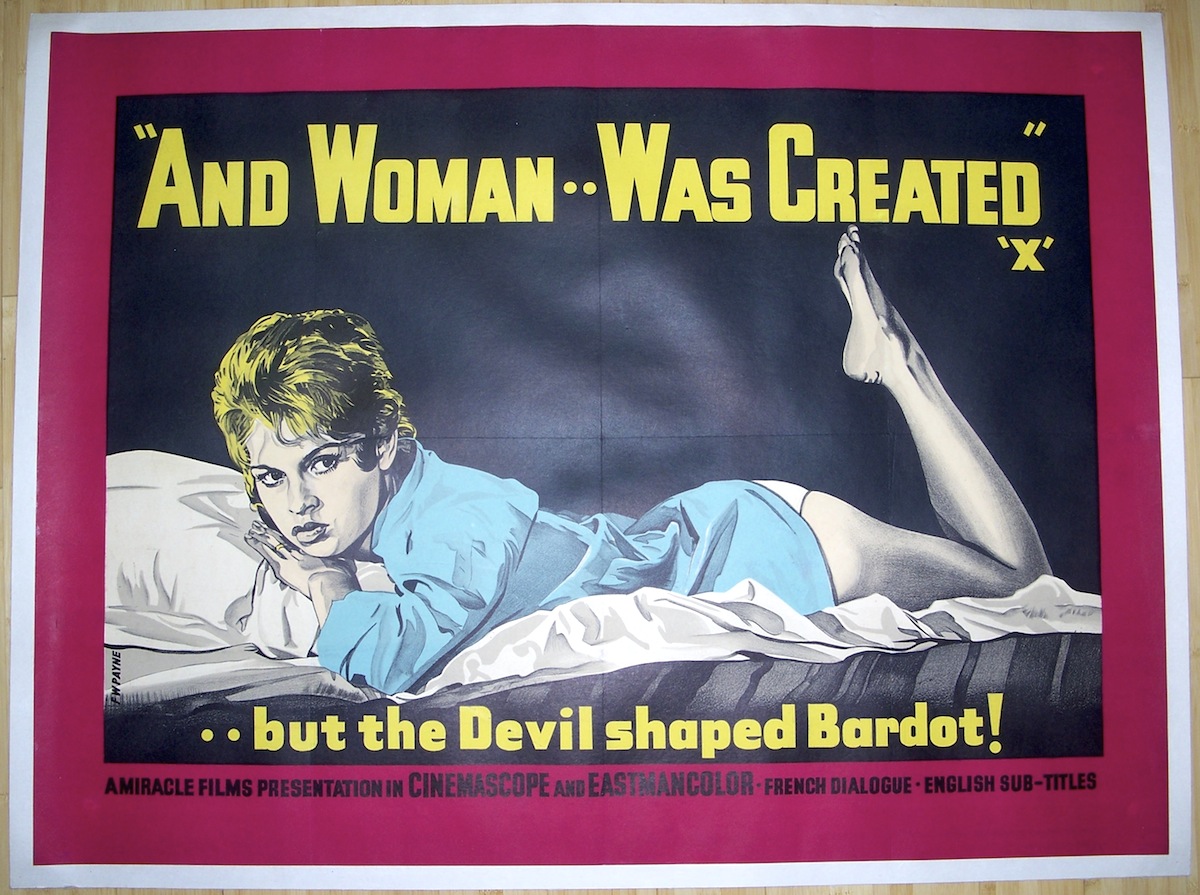
The UK poster, with art by F.W. Payne and a title without “God.” The adjusted title deprives the ” . . . but the Devil shaped Bardot!” tagline of most of its bite.

100_9039

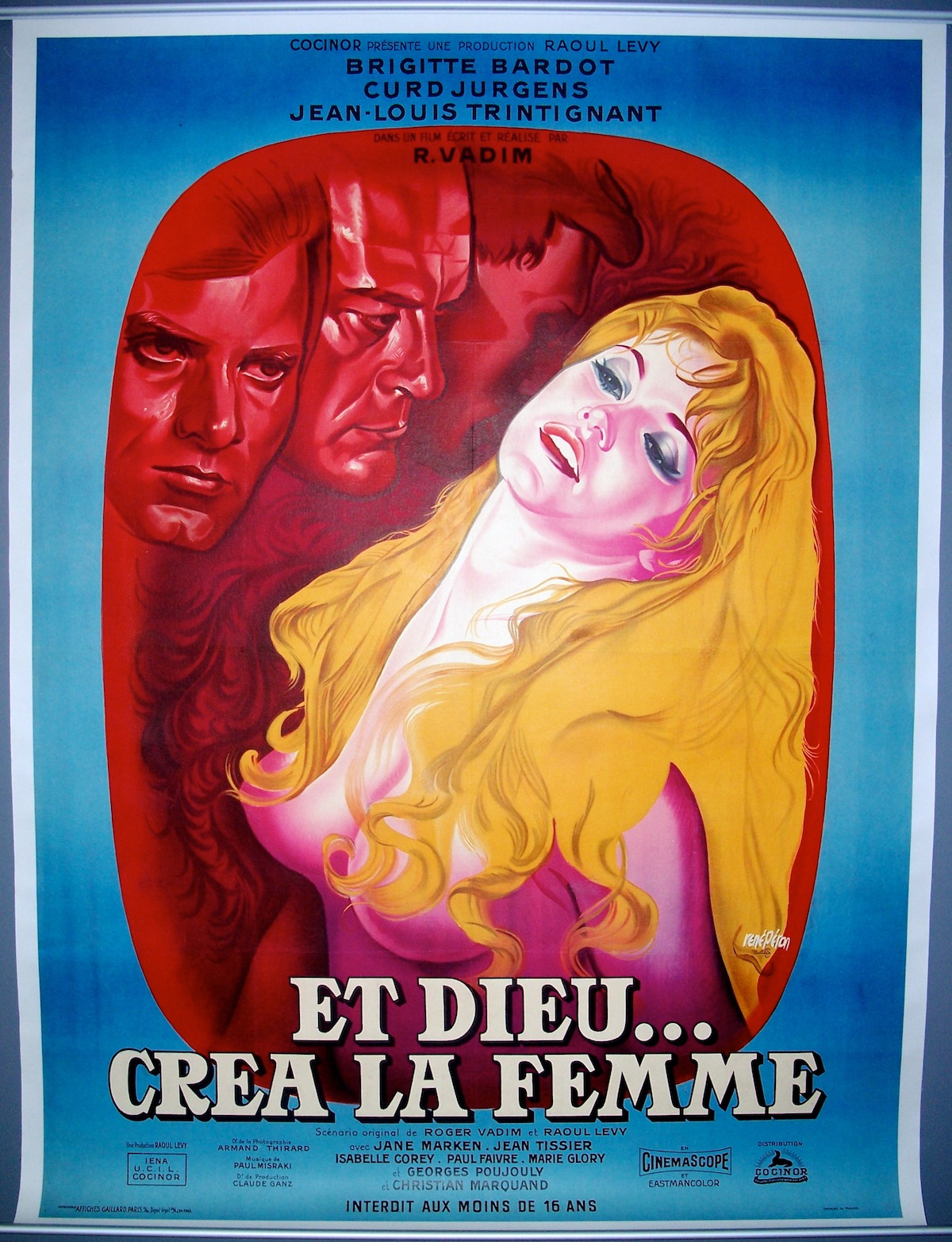
The iconic French poster features a design by Rene Peron that, for me, recalls both Bernini’s St. Theresa and Jean Fouquet’s Madonna in the likeness of Agnes Sorel.

Related

Posted in Commercial art, Movies | Tagged , , , , , , , , , | 3 Comments