Blowhard, Esq. writes:

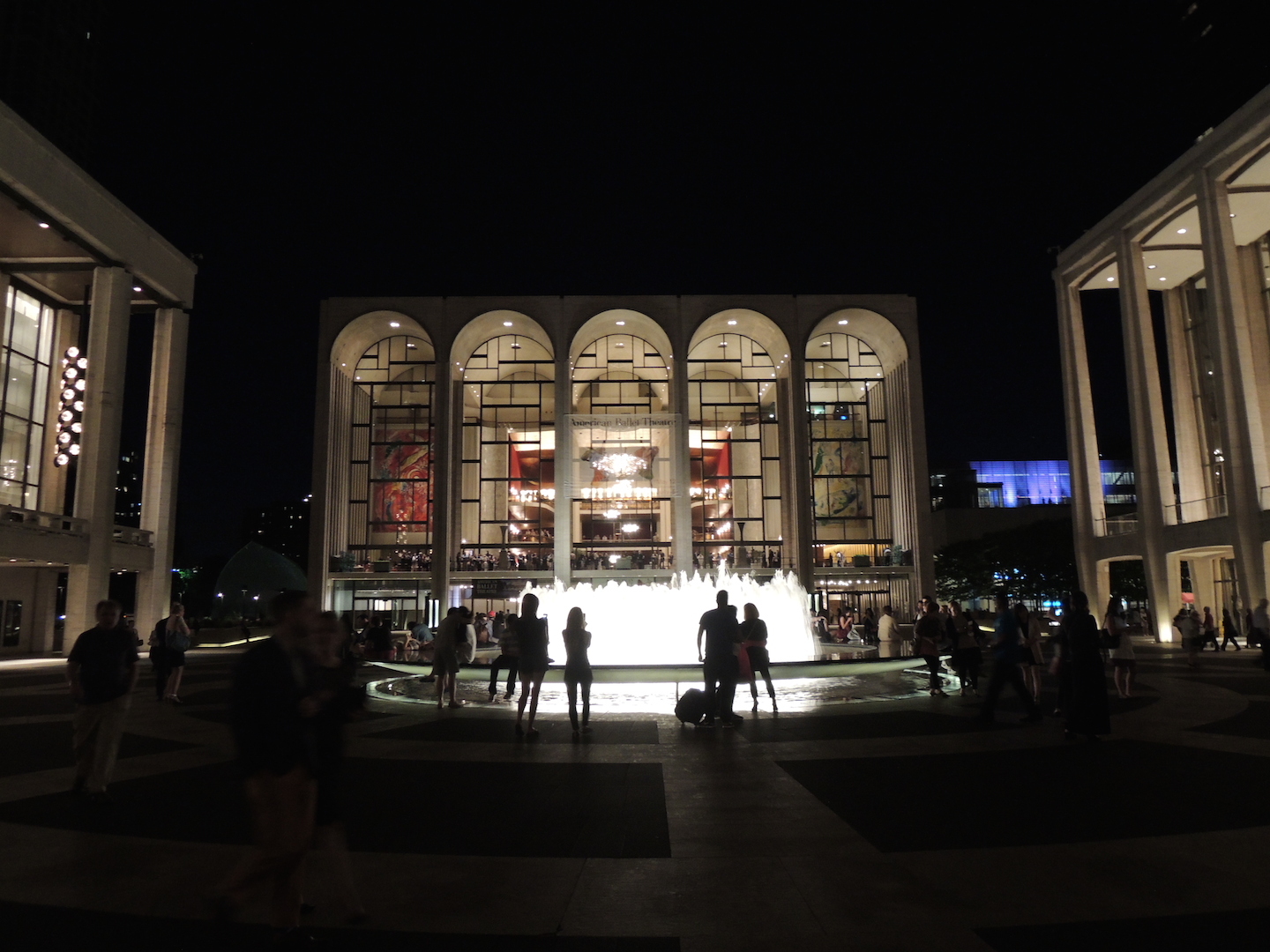
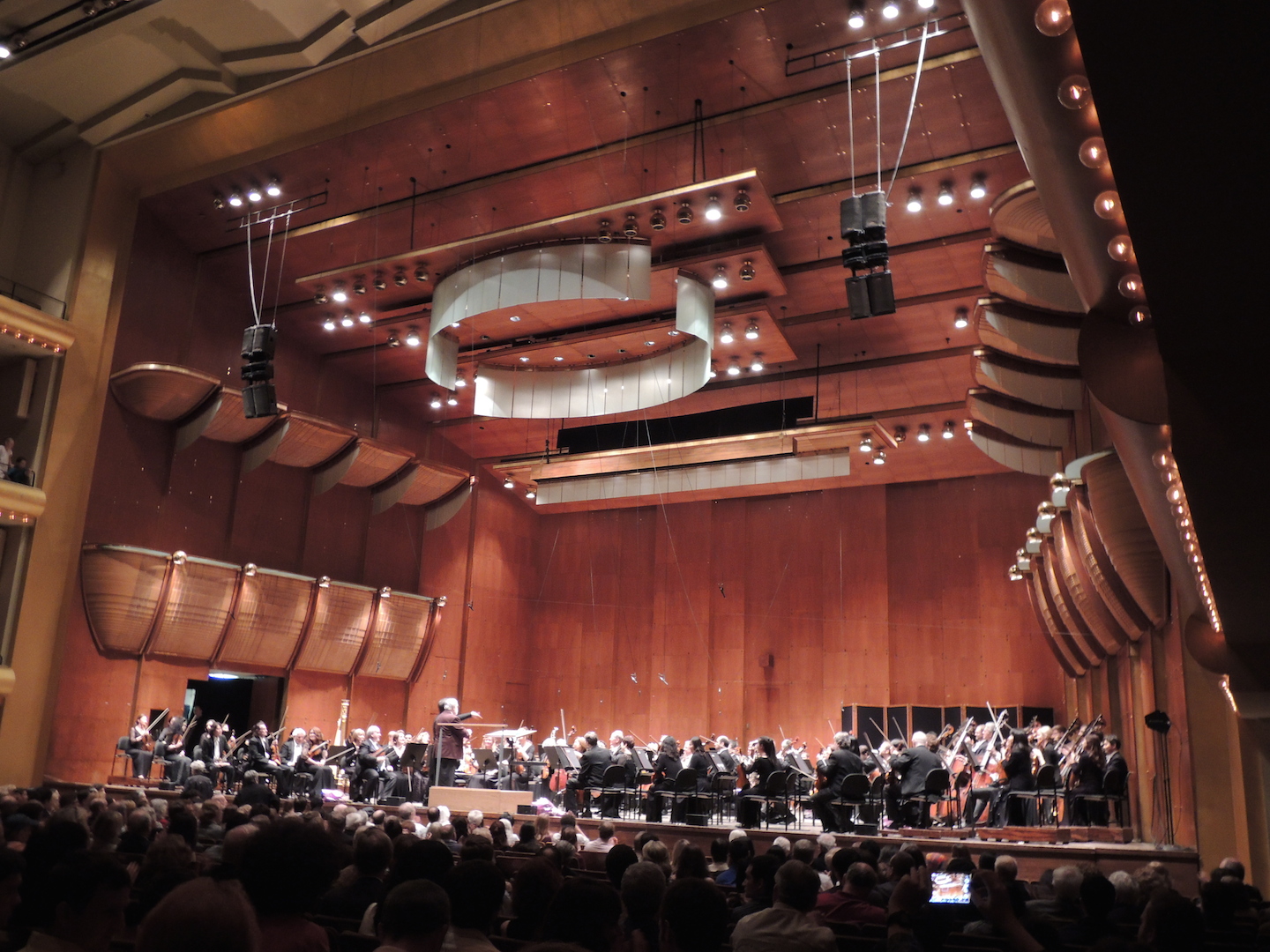
While in NYC last month I was lucky enough to attend one night of the New York Philharmonic’s inaugural biennial. Hosted and conducted by Alan Gilbert, the program was about 90 minutes long and consisted of three separate works.
The first piece was the world premiere of a short piano concerto by Julia Adolphe called “Dark Sand, Sifting Light” which began colorful and poetic but turns dark and tense. It felt like a piece of a film score for a thriller or horror movie. I wouldn’t be the first to point out that the joys of traditional classical music can be found more in Hollywood film scores than in contemporary concert performances.
The second piece was a violin concerto by Peter Eötvös written specifically for soloist Midori called (punning on her name) “DoReMi”. It was atonal piece that I found difficult to enjoy — anxious, jerky, insistent, punctuated by arbitrary percussive slaps. A soundtrack for your consciousness fracturing or the sound of dishes crashing to the floor while cats screech in the living room. My attention started flagging after about 10 minutes, so I surveyed the crowed and noticed a number of people nodding off (old and young), while others stared into their phones. Ms. Midori certainly enjoyed the piece as her enthusiastic playing caused her to break a bow string. Apparently she has a penchant for that sort of thing.
While all this is going on, I’m scribbling notes on a small pad. During an intermission, the gentleman sitting next to me said, “Excuse me, are you a music critic?” LOLOL, only in my fevered imagination, dude. He and his wife were in from Phoenix to visit the grandchildren.
The final work was the world premiere of Christopher Rouse‘s Fourth Symphony, specifically commissioned for this event. After Eötvös’s petulant work, the first movement of Rouse’s symphony perked up the audience with its ascending strings and horns. There were no memorable melodies during this section, nothing to send you whistling into the night, but the cheeriness was appreciated. The second movement, though, took a somber turn with mournful woodwinds, until the piece slowly and pitifully winds down into silence. Of this work Rouse said, “there’s got to be some kind of expressive message in a piece of music. My caveat is that the message may not necessarily be a happy one, and you have to be open to that.”

The most affecting part of the program, though, wasn’t any of the performances, it was when Gilbert announced that a number of musicians — some of them who had played with the NY Phil for decades — were retiring at the end of the season. A few gave warm speeches of appreciation to the institution and their gratitude was reciprocated by the audience.
Have you been to a classical concert lately? How was it?
Related






 Blowhard, Esq.
 Callowman
 Sherbrooke
 Eddie Pensier
 Enzo Nakamura
 Epaminondas
 Fabrizio del Wrongo
 Fenster
 Brundle Guy
 Glynn Marshes
 Paleo Retiree
 Atypical Neurotic
 Question Lady
 Sax von Stroheim
 Sir Barken Hyena
 The Mistaken
 Uncouth Reflections