Linkage

Paleo Retiree writes:

Posted in Books Publishing and Writing, Linkathons, Politics and Economics, Sex, Women men and fashion | Tagged , , , , , , , , | 38 Comments

More Upstate Charms

Fenster writes:

Some folks associated with this blog are fans of upstate New York.  Here are some snaps of its charms.

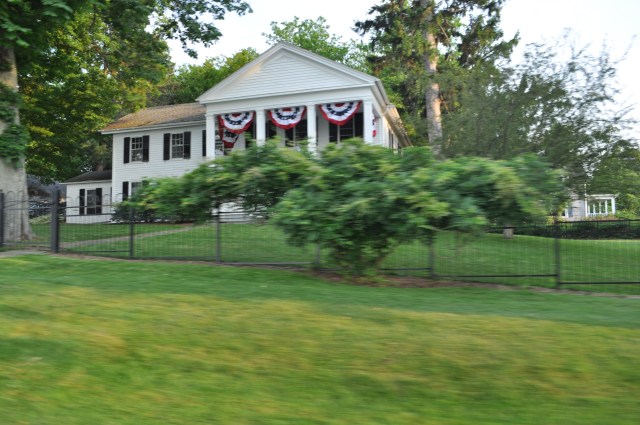
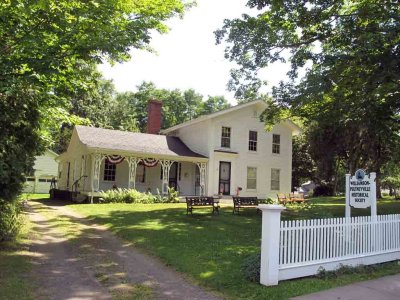
First, the quite atmospheric village of Pultneyville, on the shore of Lake Ontario some 25 miles west of Rochester.  Pultneyville, like so many other attractive places, had a heyday and went into decline.  It was a fairly significant port by the early 1800s, a site of some fighting in the War of 1812 and a last stop on the Underground Railroad a little later.

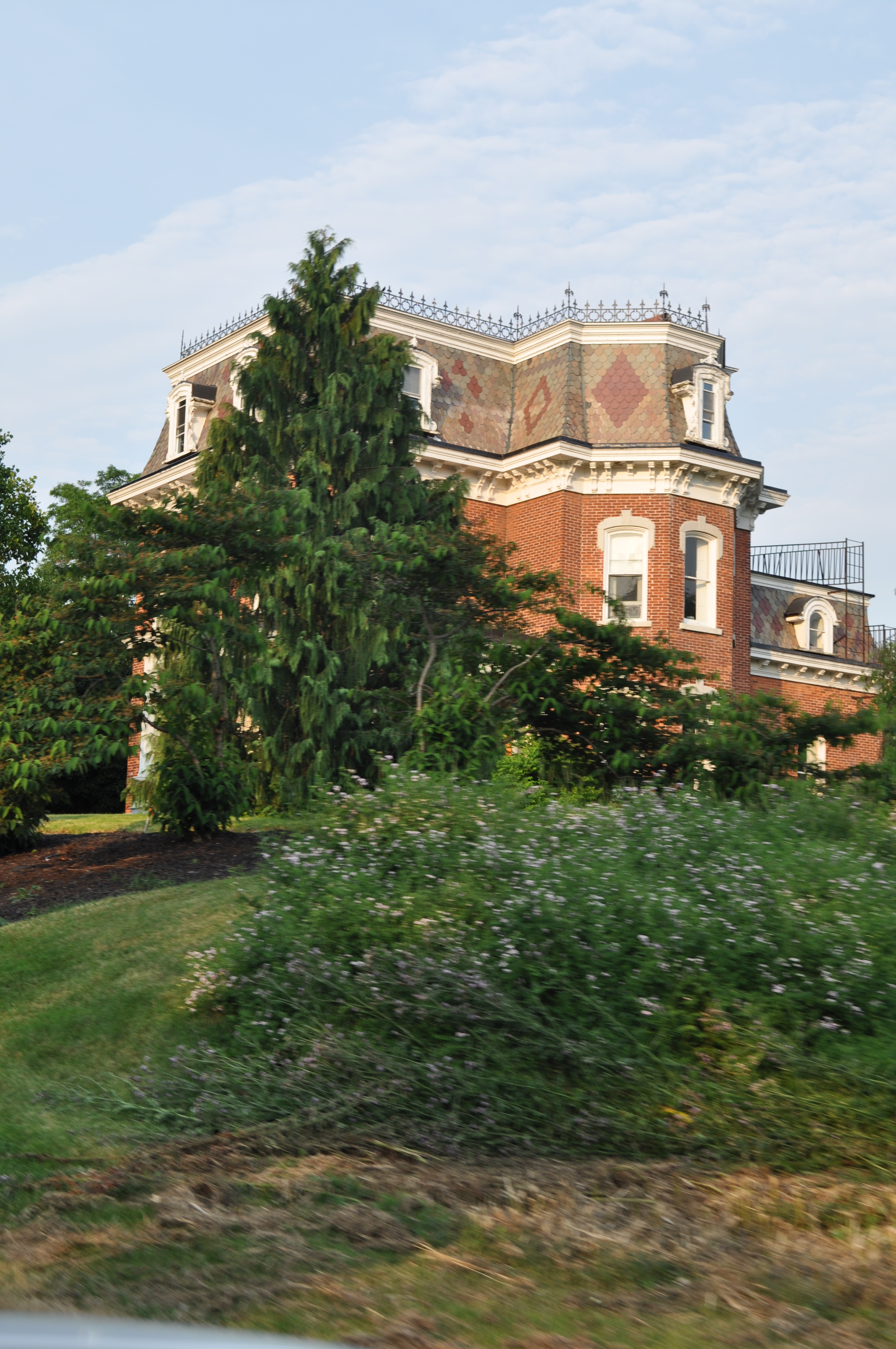
Pultneyville was home to a good number of Great Lakes sea captains, some of whom were involved with international trade via the St. Lawrence River, but the coming of the railroad some miles south began the process of putting it into an extended sleep.  Today it is one of those rare places that is both well-kept and essentially free of significant development from the recent past.  There aren’t that many homes in the village, but what is there is quite nice, a fine grouping of Federals, Second Empire and Greek Revivals.
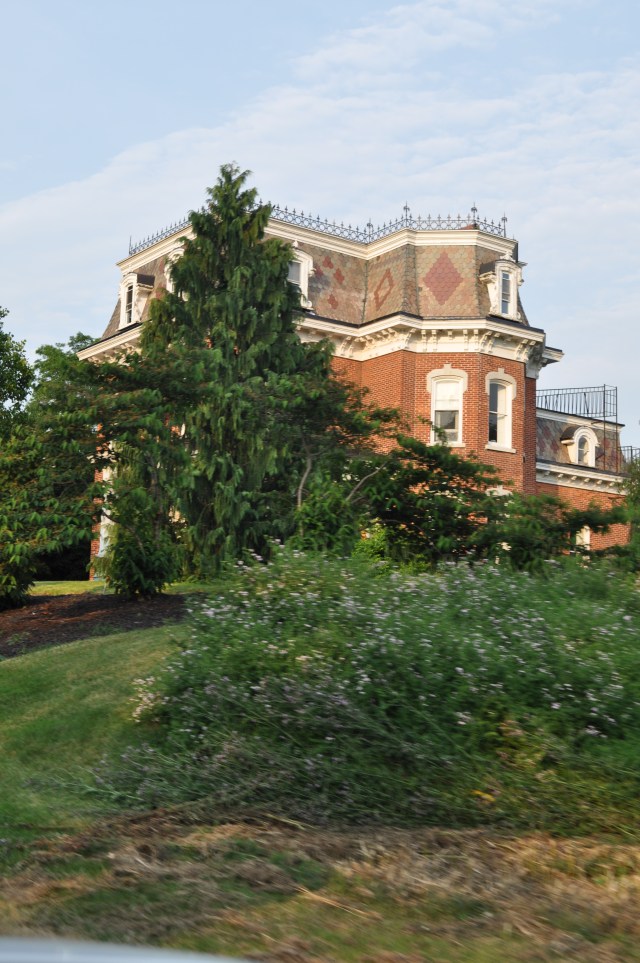
DSC_0239 DSC_0241 DSC_0242 DSC_0243 DSC_0244 pult2

And a park on the water, too–though you have to watch for the goose poop.

pult3That’s not all in the charm department.  Sodus, the next town over, has also gone into a deep sleep but it is shall we say still a bit run down, so its charms are not as apparent.  The best you can say for downtown is that it won’t support a chain restaurant, though there is a CVS and also a couple of dollar stores.  Rents are low and a couple of places are boarded up.

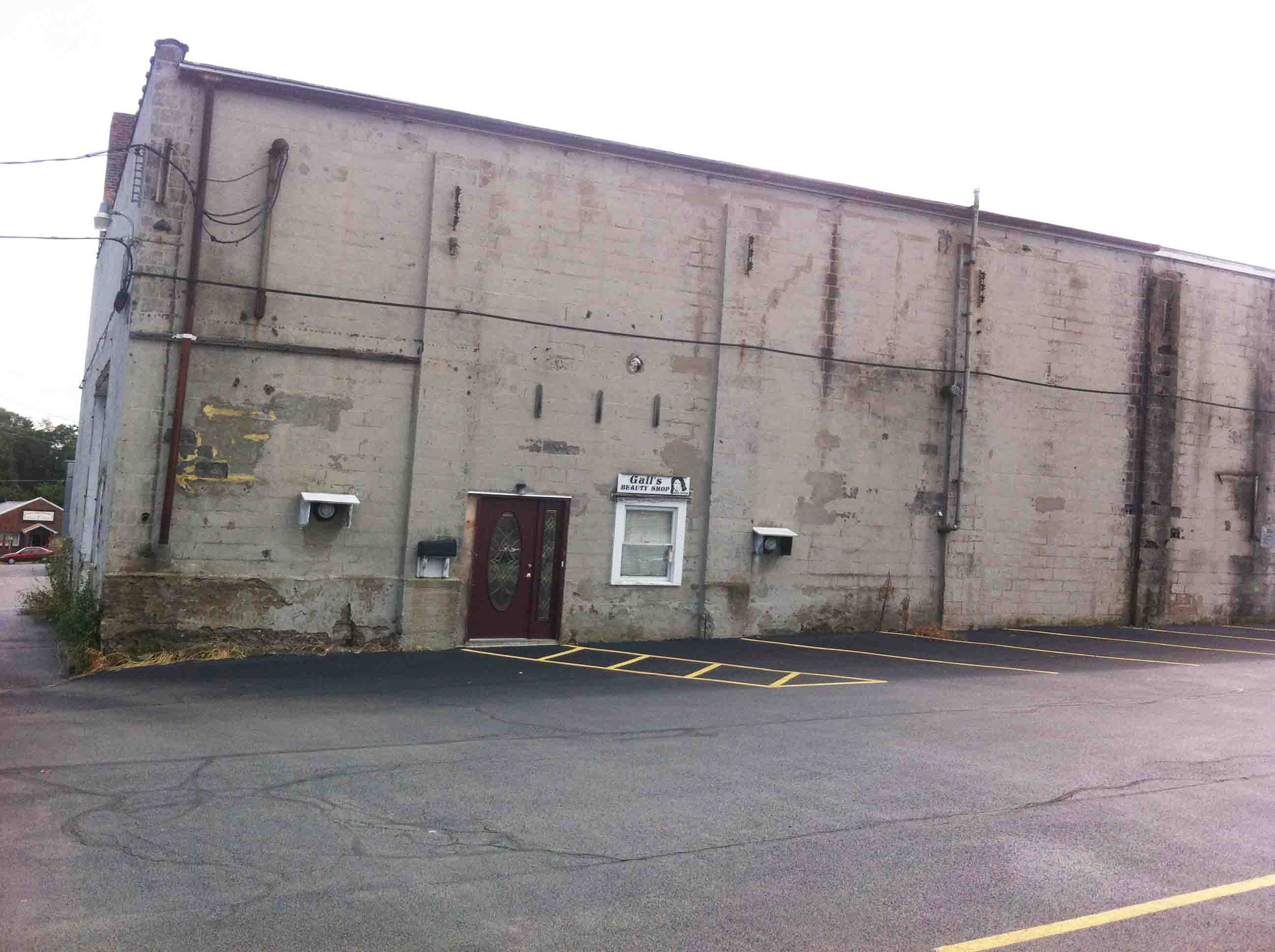
That didn’t stop one enterprising soul from avoiding the hustle, bustle and high rents of Main Street altogether, opening a beauty salon in the far back of a nondescript building, along a blank concrete wall well off the main street.  You can’t even tell the place is there except if you happen to be in the CVS parking lot.  From there you espy an odd little door, burnished to a high sheen, across the far end of the lot.  From up close it looks OK, in an almost French countryside rustic fashion.
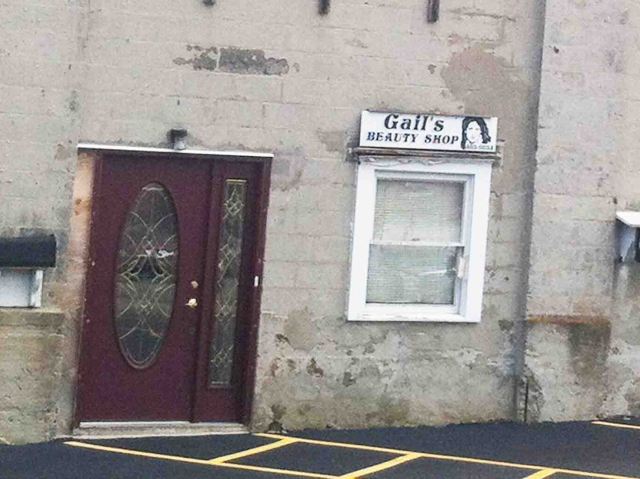
gails

Dolly back, however, and you get the full upstate NY treatment.

IMG_0139

Charm comes in many flavors.  Which reminds me to add that maybe the crowning glory of upstate, especially at this time of year, is ice cream.

Here is a medium size cone, partly eaten already, from the Happy Days Drive-In in Meridian, on the way to Syracuse.  About $2.

cone

And the view from out back.  Happy Days.

IMG_0148

Posted in Architecture, The Good Life, Travel | 7 Comments

After After Hours

Fenster writes:

Griffin Dunne stuck downtown, once again, in After Hours, The Remake (2013).

afterhours

Posted in Movies | 3 Comments

Nevada City and Architectural Theory

Paleo Retiree writes:

One of the biggest cons in the world of aesthetics is the central notion that the architecture establishment peddles: the idea that architecture-and-urbanism is, and should be, a complicated, intellectual, theory-driven, abstraction-and-cogitation-heavy field. (Also that architects are, and need to be, deep and original thinkers akin to philosophers and physicists.) Any surprise that the buildings and neighborhoods resulting from that kind of approach tend to be soul-crushing, bewildering, and alienating absurdities? After all, isn’t this what a top-down, ideas-über-alles approach usually results in?

Here are a few subversive (in a common-sense sort of way) thoughts. What if architecture-and-urbanism shouldn’t be conceived of as a field for intellectuals, and for theory-driven experimentalism? What if a better way to think of architecture-and-urbanism is to picture it as a practice and a craft, as something akin to cooking or sewing? Also: what if architecture appreciation and architecture criticism should be more akin to comparing notes about restaurants on Yelp than to “doing theory”?

Continue reading

Posted in Architecture, The Good Life | Tagged , , , , , , | 21 Comments

“A Perfect Getaway”

Paleo Retiree writes:

a-perfect-getaway-1024

High-spirited honeymoon-in-paradise-gone-bad thriller from 2009, directed by David Twohy and shot mostly in spectacular Kaui. The plot involves some friends — attractive young couples — hiking to a remote beach while killers are on the loose. There’s a wannabe-dazzling narrative switcheroo in the middle of the film that I couldn’t come close to buying, but the movie’s overall vibe is pleasingly playful — we’re here to mess with (and spoof) expectations and conventions … but we’re also going to deliver some real scares. The acting has wit and gumption — Milla Jovovich, Steve Zahn, Timothy Olyphant and Kiele Sanchez show a lot of confidence and inject bits of satire into their portrayals, yet they also manage to come up with some rough-and-genuine emotions when the moment calls for it. And the coast-and-jungle setting is as wondrous as can be. A fun junk movie.

Related

Posted in Movies | Tagged , , , , | 1 Comment

Mark Knopfler of the Day

Paleo Retiree writes:

The studio track of this song is on Knopfler’s perfectly magnificent collection “The Ragpicker’s Dream.”

Posted in Music, Performers | Tagged | 1 Comment

Quote of the Day

Blowhard, Esq. writes:

lao-tzu-bird

The ordinary man is luminously clear,
I alone seem confused.
The ordinary man is searchingly exact,
I alone am vague and uncertain.

How nebulous!
as the ocean;
How blurred!
as though without boundary.

The masses all have a purpose,
I alone am stubborn and uncouth.

Lao Tzu, Tao Te Ching, trans. by Victor H. Mair

Posted in Philosophy and Religion | Tagged , , , | 1 Comment

Carolingian Minuscule and Modern Writing

Blowhard, Esq. writes:

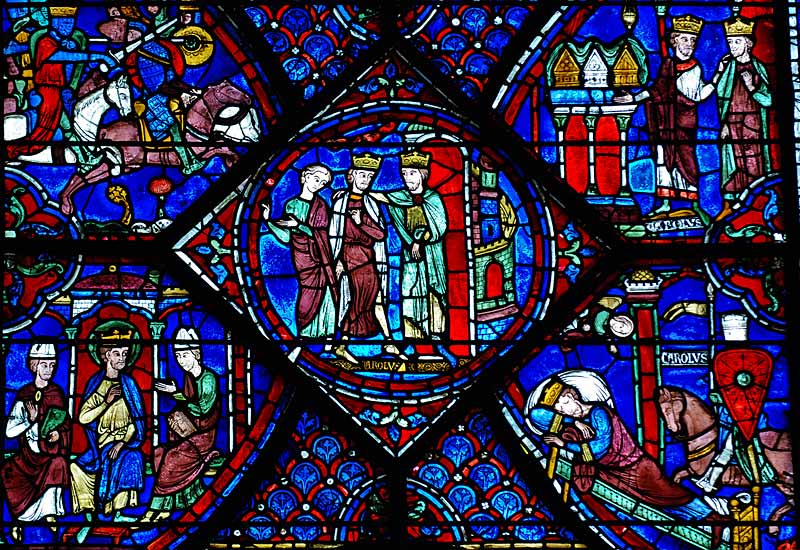
Detail from the Charlemagne window at Chartres.

Detail from the Charlemagne window at Chartres.

In the 8th century, Charlemagne, the ruler of the Carolingian empire, had a problem on his hands. Over the centuries, scribes had made so many mistakes when copying the Bible and other texts of the Church fathers that dozens of different versions existed. This created theological difficulties. Charlemagne wasn’t sold on the whole idea of an omniscient God so he worried that if priests and other clerics weren’t praying in sufficiently good Latin, then God wouldn’t understand their prayers. For example, a priest who converted people had such garbled Latin that, to the extent anyone could understand him, he was blessing people “In the name of the Fatherland, and the daughter” as opposed to “In the name of the Father, and the Son.” Were these people going to hell because they weren’t baptized correctly? Some scholars argued they were.

eginhard

In an effort to alleviate copying errors and improve everyone’s Latin, a new way of writing, a new script, developed. Previously, scribes copied the Roman method of writing which was basically just a long string of letters — no spaces between words, pretty much all capital letters, and no punctuation. As you can imagine, this was very difficult to read.

A page from the Vergilius Vaticanus, a pagan work written in Roman Rustic script

A page from the Vergilius Vaticanus, a pagan work written in Roman Rustic script.

The Carolingians introduced spaces between words, the use of capital letters to mark the beginnings of sentences, and primitive punctuation to denote pauses and the ends of sentences. They also created a rounded and more readable handwriting called Carolingian minuscule.

An example of Carolingian minuscule.

An example of Carolingian minuscule.

Although Gothic script took over in the High Middle Ages, the Renaissance Humanists reintroduced Carolingian minuscule in the 13th and 14th centuries under the mistaken impression that it was a Roman innovation. The Humanists, whose strong dislike for all things medieval was counterbalanced by a deep veneration for all things ancient, thought something as beautiful as Carolingian minuscule couldn’t possibly have been produced during the grubby Middle Ages, it must have come from the ancients. Thus did this Carolingian innovation come to form the basis of our modern writing.

Related

Posted in Art, Books Publishing and Writing | Tagged , , , , | 5 Comments

Documentary Recommendations

Fabrizio del Wrongo writes:

Nature: My Life as a Turkey

I haven’t had much time to blog lately. Real life has kind of taken a dump on my internet profile. But I have managed to catch a few nice documentaries on Netflix Instant. Thought I’d pass the recommendations onto y’all before I go back to hiding in my closet.

“Homo Sapiens 1900”

This fascinating look at the history of eugenics, covering the beginnings of the movement with Darwin, through the work of his cousin Francis Galton, and into the era of the Nazis and Soviets, is invested with the sort of bomb-shelter quietude that marked Chris Marker’s great “La Jetee” — watching it is a bit like tuning into a transmission from some hidden nocturnal realm. The tone is incredibly dispassionate, and the pacing is so deliberate it’s almost hypnotic, like the verbal outpouring of an especially monotonic therapist. Happily, the content is free of inane talking heads, relying instead on primary sources. I learned a few things while watching it. For instance, I had no idea that Art Nouveau was an outgrowth of eugenics. Nor did I realize how neatly Sweden’s early twentieth-century interest in racial purity presaged Nazism. How is it that Sweden, the poster nation for hippy-dippy liberalism, has such a deep connection to Nazi Germany? And why did no one tell me about it in school? The reviews featured on Netflix are worth taking a look at. They reveal the instinctive revulsion that contemporary folks feel when encountering ideas that are natural outgrowths of Darwin’s writing. Their objections make me wonder: Was the Nazis’ killing of millions in the name of racial purity any worse than the Soviets’ killing of millions in the name of ideological purity? How did one end up being considered more awful than the other? Written and directed by Peter Cohen.

Continue reading

Posted in Animals, Art, Movies, Politics and Economics, Science | Tagged , , , , , , , , , , , , , , , , , | 11 Comments

Cocktail of the Day

Paleo Retiree writes:

ca_carpinteria_2013_08_slys_john_collins

A refreshing and elegant John Collins, enjoyed at this terrific retro-style steakhouse on the California coast. A John Collins is a Tom Collins, basically, only made with bourbon in place of the usual gin.

Our meal was much enhanced by a side of this:

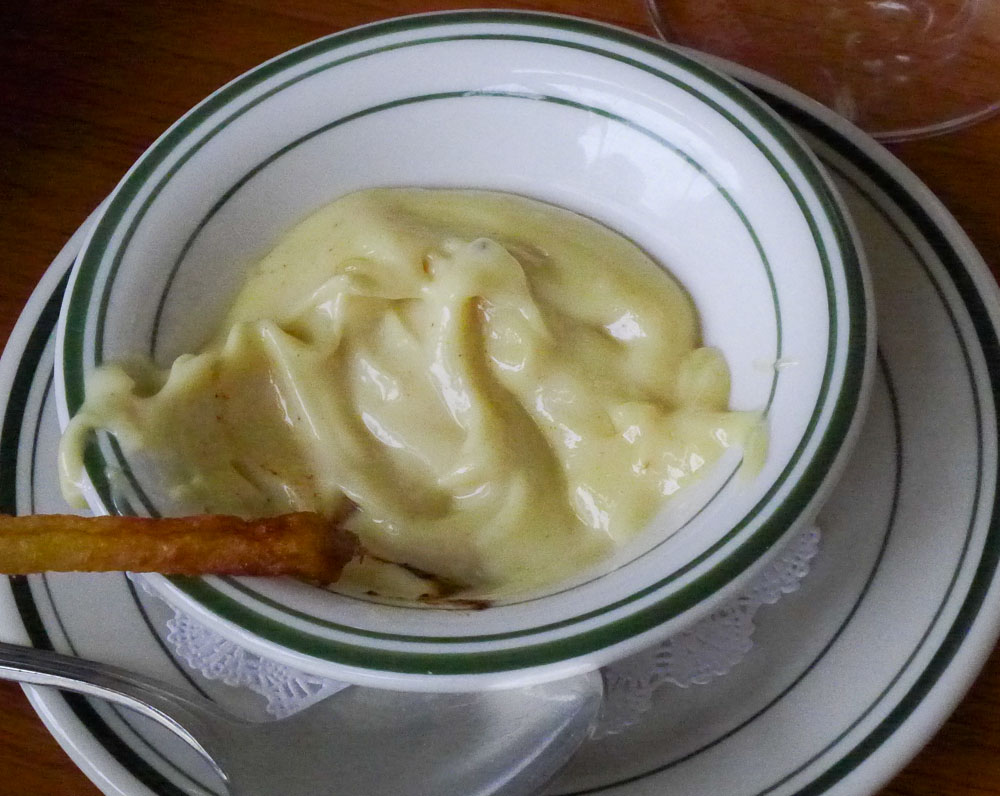
ca_carpinteria_2013_08_slys_mayo_homemade

— homemade mayonnaise. Amazing how much richer and silkier the real thing is than the industrial stuff.

Posted in Food and health, The Good Life | Tagged , , , | 8 Comments