Ads Everywhere 6

Paleo Retiree writes:

20140316-165112.jpg

That’s an ad on the plastic credit-card style room key we’re using at a Tucson hotel. In addition to being a little insulting, the visuals make the key hard to read where its main function goes: I routinely waste a few seconds fiddling with the key, feeling mildly miffed by unnecessary inconvenience, as I try to figure out which end goes in the doorslot. Why is my brain being forced to wade through commercial clutter (and the irritation generated by it) in order to accomplish something so everyday and trivial?

Is the money made (presumably by the ad agency and the hotel renting out space on its keys) worth it? Does the restaurant doing the advertising really get many customers for its money? There’s evidently some kind of business there. Take a look at the top of the other side of the key.

20140316-172014.jpg

Is there no place Americans won’t put an ad? And how do we feel about living in a culture ever on the lookout for fresh places to deface with advertising?

Related

Posted in Commercial art, Media, Shopping, The Good Life, Travel | Tagged , , | 4 Comments

Linkage

epiminondas writes:

Posted in Linkathons | 2 Comments

Daily Life in Ancient Egypt

Blowhard, Esq. writes:

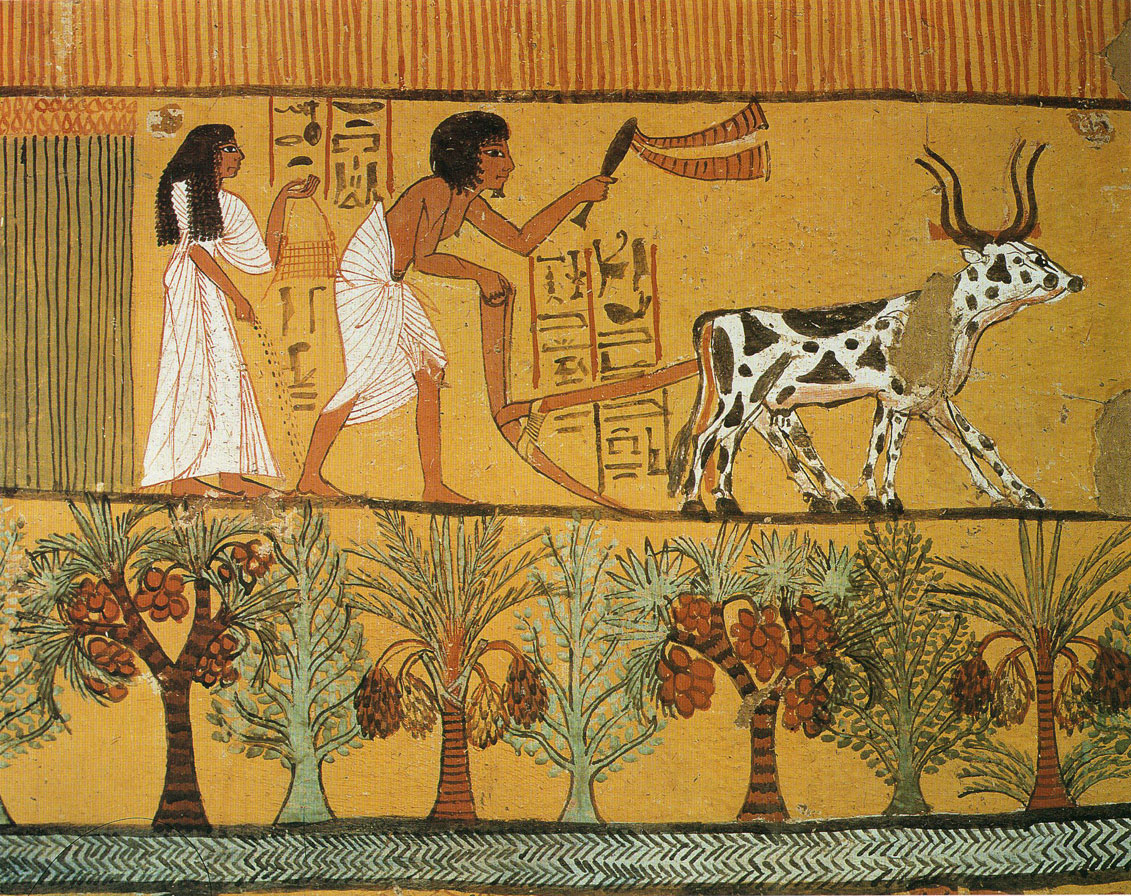
Sowing-and-Ploughing-in-the-Fields-wall-painting.-Tomb-of-Sennedjem-13th-century-B.C.I’m currently working my way through the Teaching Company course called The Other Side of History: Daily Life in the Ancient World by Prof. Robert Garland. I finished the lectures on ancient Egypt and thought I’d share some interesting facts:

  • It took approximately 10,000 men (who were likely not slaves) 20 years to build each of the great pyramids. They did so on a diet of bread, onions, and beer.
  • Scribes started training around age 5. If they attained full literacy, it was considered a highly respectable accomplishment. Such men were permitted to wear long skirts, while most male workers wore short skirts.
  • Literacy was an important stepping stone to a good career. We have a record of a father writing to his son, “I will make you love books more than your own mother.”
  • Engineers were required not only to be literate, but they also had to learn mathematics. For ancient Egyptians, “mathematics” consisted solely of addition and subtraction – they did not know multiplication or division. In other words, all of those incredible monuments that have amazed and astounded millions of people for thousands of years were built with math no more sophisticated than what your average 8 year-old knows.
  • Ancient Egyptians had no money, so all payment was in kind. They also had no word for “art”.
  • Death of course meant embalming. There were packages available for all price points. For the rich, the organs (liver, lungs, entrails, etc.) were carefully removed and placed in jars so that a person could be reunited with them in the afterlife. The brain tissue was removed through the nose via a long needle. For the poor, an oil was squirted up the anus and plugged up. After a few days the plug was removed so the liquefied viscera could pour out. Sorry, 99%ers, you’re not reunited with your organs in the world to come.
  • There was a court proctologist who had a title that translates as “herdsman of the anus.” This is objectively the greatest job title in the history of human civilization and possibly galactic civilization, too.

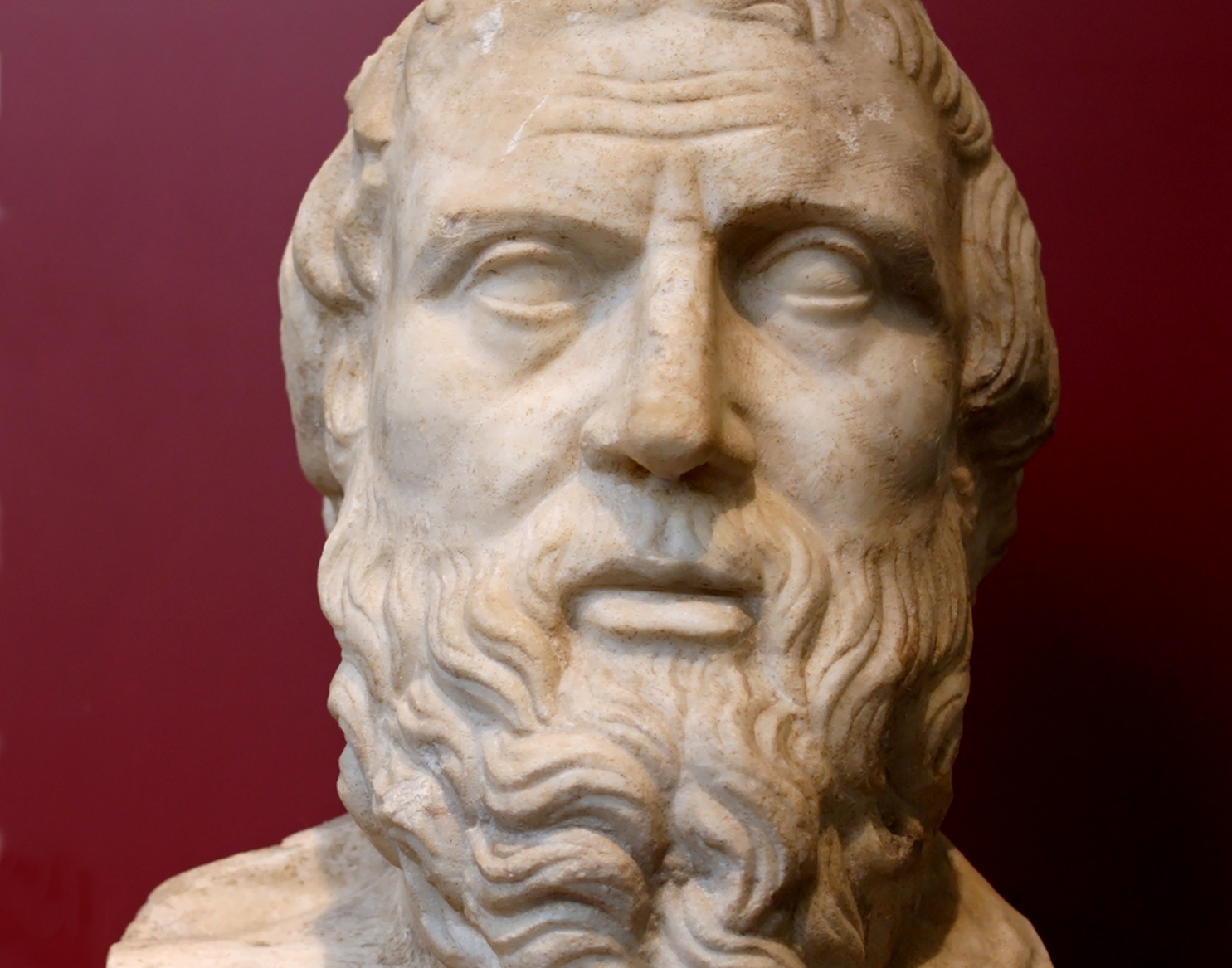
herodotus

Herodotus, who personally observed the Egyptians, was fascinated by them. Here’s an excerpt from The Histories:

The Egyptians who live in the cultivated parts of the country, by their practice of keeping records of the past, have made themselves much the most learned of any nation of which I have had experience. I will describe some of their habits: every month for three successive days they purge themselves, for their health’s sake, with emetics and clysters, in the belief that all diseases come from the food a man eats; and it is a fact — even apart from this precaution — that next to the Libyans they are the healthiest people in the world. I should put this down myself to the absence of changes in the climate; for change, and especially change of weather, is the prime cause of disease.

They eat loaves made from emmer — ‘cyllestes’ is their word for them — and drink a wine made from barley, as they have no vines in the country. Some kinds of fish they eat raw, either dried in the sun, or salted; quails, too, they eat raw, and ducks and various small birds, after pickling them in brine; other sorts of birds and fish, apart from those which they consider sacred, they either roast or boil.

When the rich give a party and the meal is finished, a man carries round amongst the guests a wooden image of a corpse in a coffin, carved and painted to look as much like the real thing as possible, and anything from eighteen inches to three feet long; he shows it to each guest in turn, and says: ‘Look upon this body as you drink and enjoy yourself; for you will be just like it when you are dead.’

Posted in History | Tagged , , , , | 5 Comments

Knickers Watch

Fenster writes:

So many interesting cross-cuts on the creepshot issue.

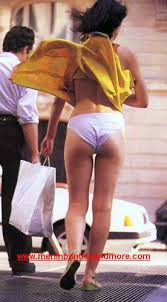
Massachusetts passed a law with practically no objection that creates a reasonable expectation of privacy with respect to private parts.  I don’t doubt your average constituent, male or female, thinks it is unseemly for a guy to snap away at a woman with her skirt hiked up inadvertently.  But I doubt it is that simple.  What are some of the cross-cuts?

For one, what about a guy with a skirt flying, the functional equivalent of Paleo’s last shot?

Under-the-kilt
Offensive or just funny?  Should the guy in the kilt have a right to sue?  Was the photography itself intrusive even if nominally legal?

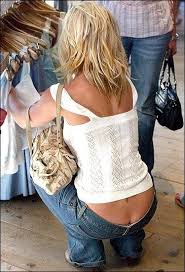
Another possible male-female disparity: butt cracks.  Paleo has asked about whether the taking of butt crack shots would also be deemed creepy.
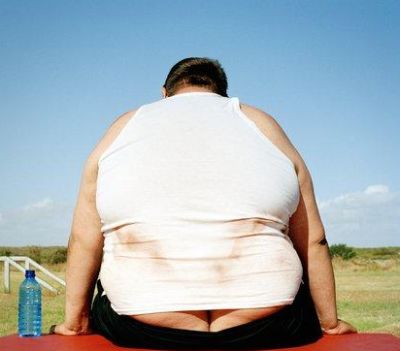
The taking of guy butt crack shots may or may not be creepy, but the shots themselves can be.

The taking of guy butt crack shots may or may not be creepy, but the shots themselves can be.

The initial answer might be no.  For one, you could argue that a typical butt crack is not more than a kind of cleavage of the sort that, on top, is made public all the time.

Top cleavage is often more generous.

Top cleavage is often more generous.

Certainly a guy in speedos is showing a kind of cleavage.

tumblr_mldpcokzt71s5fzsno1_1280

So maybe butt cracks are all right since they only show what any reasonable person might see if one were wearing a bathing suit, which is no big deal.

Maybe, but the element of sexuality now creeps into an otherwise neutral discussion.  Even if both men and women routinely show the first, say, inch or two of butt cleavage, is it troublesome if and when there is a sexual dimension?

bc2

bc3

And does that dimension go away mysteriously when the butt in question has little sex appeal?

bc5

So is this a neutral discussion, or is it inextricably bound up with things that cannot be neatly defined, parsed, analzed and bottled.  Like sex.

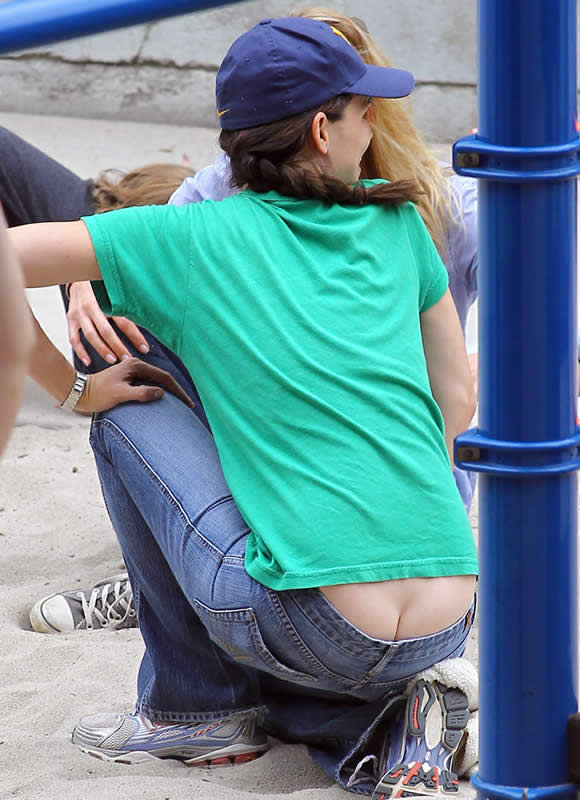
Women’s bodies are often sexualized but not all are sexy.  How about this female butt crack shot?

bc6

I think she had every chance in the world to cover that but was intent on skinny jeans.  Funny?  Yes.  Sexy?  No.  Should the woman be able to take offense?  Put it to a vote.  My guess is that while a majority of Massachusetts residents would support the new law, they would chuckle at this, and say that this is not what they had in mind, even if a reasonable distinction in law would be hard to make.

There’s also the issue of the intrusiveness of the camera man, or woman.  Cleavage is fine, but are there limits to how close you should get to secure a shot?
Go Paleo!

Go Paleo!

or on the angle the shot is taken from?

tumblr_ml7kvwltlP1s5fzsno1_1280

Take the famous shot of Marilyn.

LIBRARY IMAGE OF SEVEN YEAR ITCH

Is this about modesty?  In a way, yes.  After all, she is, like these women, struggling to cover herself with her dress.
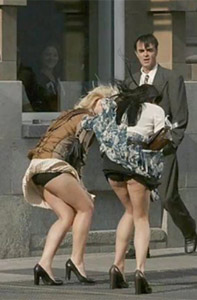
windy2

But, like this woman, she is hardly assiduously single minded about the task.

windy

Both modesty and its opposite are present.

So lurking under the surface of all of this is a likely non-rational social undercurrent having to do with sexuality, and in two dimensions:

–Female more than male

–Sexier more than less sexy

And if sex is present, expect the irrational.  Very hard to draw legal bright lines when matters sexual are present.  It forces one to be logical when logic is not at the heart of it.

Hard to bottle that.  I suspect that as long as sex will have its contradictory qualities–which is, roughly, forever–we will struggle with clarity on both codes of behavior and neutral laws.

Of course, this is not only about sex.

Posted in Art, Photography | 8 Comments

Going Deep

Fenster writes:

David Brooks is more open than the next pundit to considering the world in terms that go beyond the political, and to endorse the notion that while culture and politics are symbiotic, the former often trumps the latter.

So here he is on that theme today, in a column entitled The Deepest Self.  In it, he acknowledges that we rely greatly in today’s world on an evolutionary account of human behavior, but expresses some caveats nonetheless.  One has to do with the reductive ends to which evolutionary thought can be put: this is what the genes suggest underlies our behavior therefore this is who we are.  Of course, we are a lot more than our programming, and much of what we are, and what we have, has come as a result of fighting against instintive tendencies.

So he also frets over a related tendency to view underlying instinctives drives, being “deep down” if you will, as being the deep part of what we are.  No, he argues, that’s the easy part.  The hard part–the part that rightly should be called “deep”–is the part that does the hard work of transcending, or attempting to transcend, our reptile selves.

This evolutionary description has become the primary way we understand ourselves. Deep down we are mammals with unconscious instincts and drives. Up top there’s a relatively recent layer of rationality. Yet in conversation when we say someone is deep, that they have a deep mind or a deep heart, we don’t mean that they are animalistic or impulsive. We mean the opposite. When we say that someone is a deep person, we mean they have achieved a quiet, dependable mind by being rooted in something spiritual and permanent. . . .

There’s great wisdom embedded in this conversational understanding of depth, and it should cause us to amend the System 1/System 2 image of human nature that we are getting from evolutionary biology. Specifically, it should cause us to make a sharp distinction between origins and depth.

We originate with certain biological predispositions. These can include erotic predispositions (we’re aroused by people who send off fertility or status cues), or they can be cognitive (like loss aversion).

But depth, the core of our being, is something we cultivate over time. We form relationships that either turn the core piece of ourselves into something more stable and disciplined or something more fragmented and disorderly. We begin with our natural biases but carve out depths according to the quality of the commitments we make. Our origins are natural; our depths are man-made — engraved by thought and action.

This amendment seems worth making because the strictly evolutionary view of human nature sells humanity short. It leaves the impression that we are just slightly higher animals — thousands of years of evolutionary processes capped by a thin layer of rationality. It lops off entire regions of human possibility.

So much of what we call depth is built through freely chosen suffering. People make commitments — to a nation, faith, calling or loved ones — and endure the sacrifices those commitments demand. Often this depth is built by fighting against natural evolutionary predispositions.

I could not agree more that there’s far too much of a kneejerk tendency to treat biology as destiny.  But I finish Brook’s column with a nagging feeling that he is eliding too neatly over the way it really works.

There’s a kind of ghost in the machine quality to Brooks’ argument.  There’s the machine–that’s the predispositions–and then there is this magical self, too, the mysterious being capable of “freely chosen suffering”, enduring sacrifices and the like.  Could be.

But isn’t a fully naturalistic account a more reasonable one?  One in which both our animal urges and our saintly corrections are bonded together as one?  Isn’t the whole magillah part of the evolutionary process?

Posted in Politics and Economics, Science | Tagged , | 1 Comment

Fenster Gets Upskirted

Fenster writes:

fensupskirt

Posted in Humor | Tagged | Leave a comment

UR as Pogo

Fenster writes:

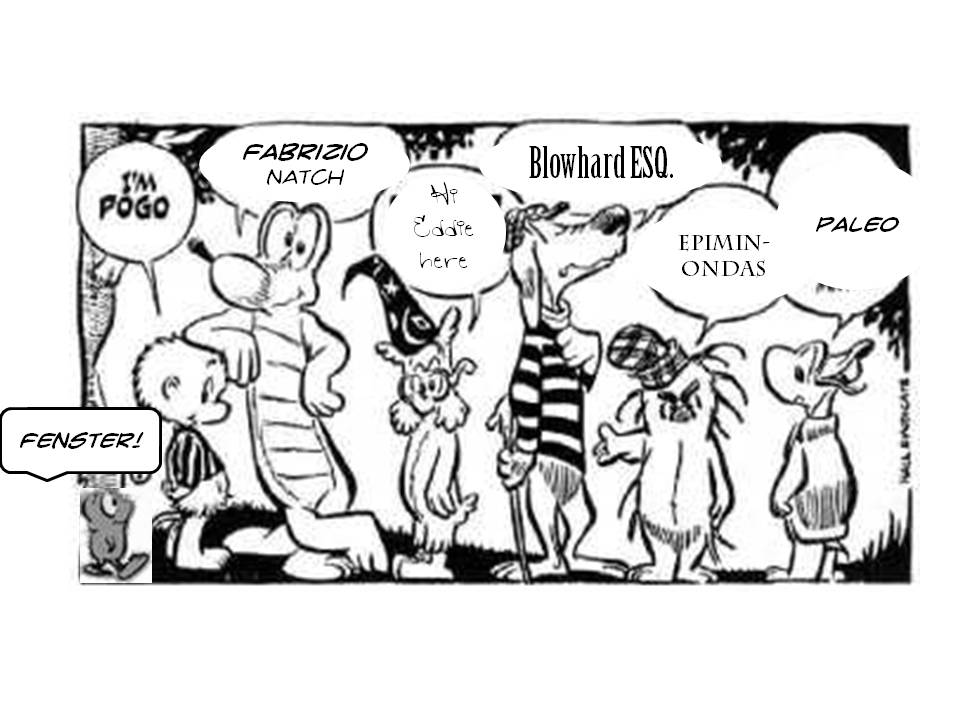
As you may have surmised from my avatar, my last name is Moop, and I am a small, green tree frog that hangs out from time to time with the swamp critters in Pogo.

What you may not have known are the alter egos, the sub-avatars if you will, of my UR colleagues.  I am outing them here for the first time.  They may show up from time to time with their sub-avatars turned on.

urpogo2

Posted in Commercial art, Humor | Tagged | Leave a comment

Movie Poster Du Jour: “Tenebre”

Fabrizio del Wrongo writes:

100_8780

From Spain. Art by the great Francisco Fernandez Zarza-Pérez, aka Jano.

Related

  • There appears to be a documentary about Jano. I’d love to see it.
Posted in Commercial art, Movies | Tagged , , , , , , , , | Leave a comment

Movie Still Du Jour

Blowhard, Esq. writes:

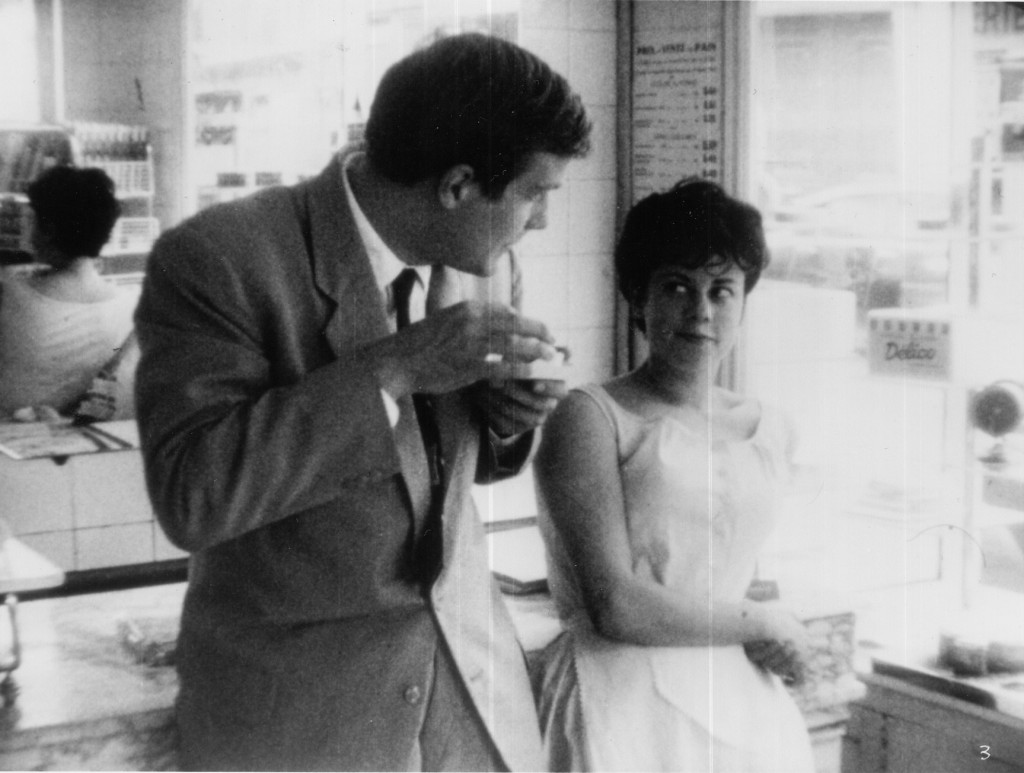
The-Bakery-Girl-of-MonceauBarbet Schroeder and Claudine Soubrier in Eric Rohmer’s LA BOULANGÈRE DE MONCEAU (1963)

Click on the image to enlarge.

Posted in Movies, Performers | Tagged , , , , , | 1 Comment

Music Du Jour: Otis Redding & Friends Stax/Volt Revue in Norway, 1967

Blowhard, Esq. writes:

Posted in Music | Tagged , , , , , , , , , , | 2 Comments